What Makes Alaska Backpacking Different 🏔️
There Are No Trails
When we say “off-trail” in Alaska, we don’t mean you leave the established path to bag a peak or explore a meadow.
We don’t mean following a trail until it fades above treeline, then ambling over the alpine tundra.
We mean there are no trails. None.
We mean there never was a trail to begin with.
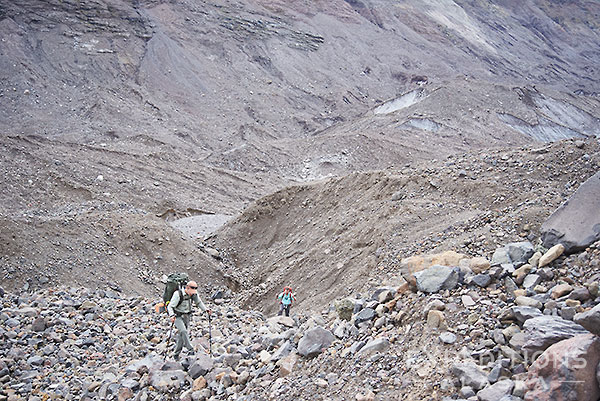
You’re navigating entirely by topographic map, choosing routes through whatever terrain lies between point A and point B. Some days that’s easy walking on alpine tundra. Other days it’s willow thickets up to your chest, ankle-twisting tussocks in boggy muskeg. Other days it’s boulder fields with rocks the size of Volkswagens.
Some days it’s all the above.
If you’re picturing a trail disappearing into alpine meadows where you skip along like the von Trapps, let’s have a talk.
One Mile Per Hour Is Reasonable
Plan on covering roughly one mile per hour. Yes, you read that right. The terrain is that demanding. Glacial rivers rise and fall with the sun. Navigation takes time. River crossings can’t be rushed. Dense brush forces detours. What looks like two miles on a map might take four hours of hard work.
It’s slow. That’s just how it is.
This isn’t a place to rack up mileage. Trip planning here follows a *”you get where you get”* mentality rather than hitting waypoints. Flexibility matters more than daily distance goals.
The Terrain Will Test You
You’ll encounter every type of difficult walking Alaska can throw at you.
Life in the Field ⛺️
The Food
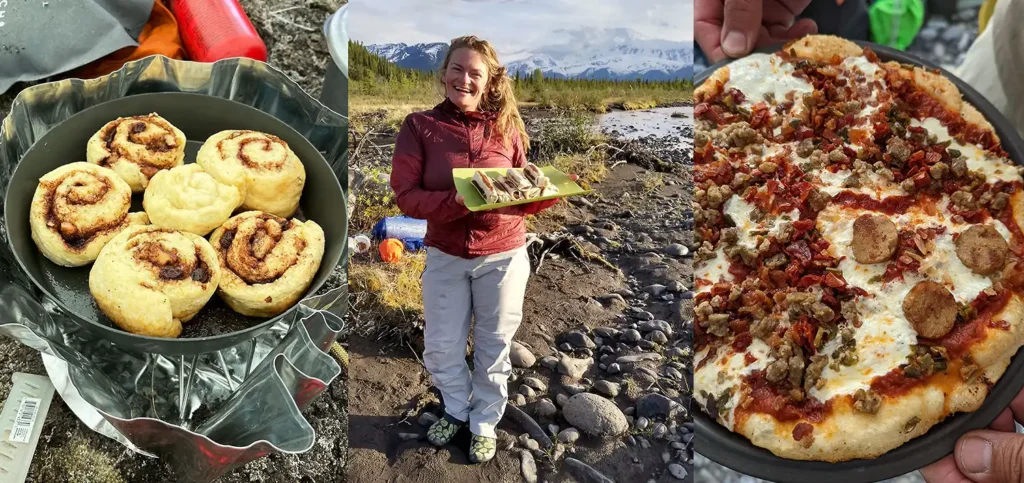
I don’t believe in eating mush for ten days. We eat real food. Fresh veggies for the first few days. Cheeses, sausages, pasta, quinoa. Good coffee. If you have dietary restrictions, we can handle them. Just let us know early.
Nobody, and we mean , does backcountry food better.
The Bush Plane
Your trip starts the moment you climb into a Beaver, a small Cessna or Piper Super Cub. The pilots we work with are the best in the business. They land on gravel bars, beaches, and ridgelines.
It is loud, it is exhilarating, and it is the only way to get where we are going. It’s a flight like nothing else.
The Pace
We don’t march.
If someone spots a caribou, we stop. If the light is perfect on the peaks, we pull out cameras. If you need a break, we take one.
The whole point is being out here. It’s not about checking off mile markers.
🧭 Where We Go
We backpack in some of the far corners of the state. Here are a few.
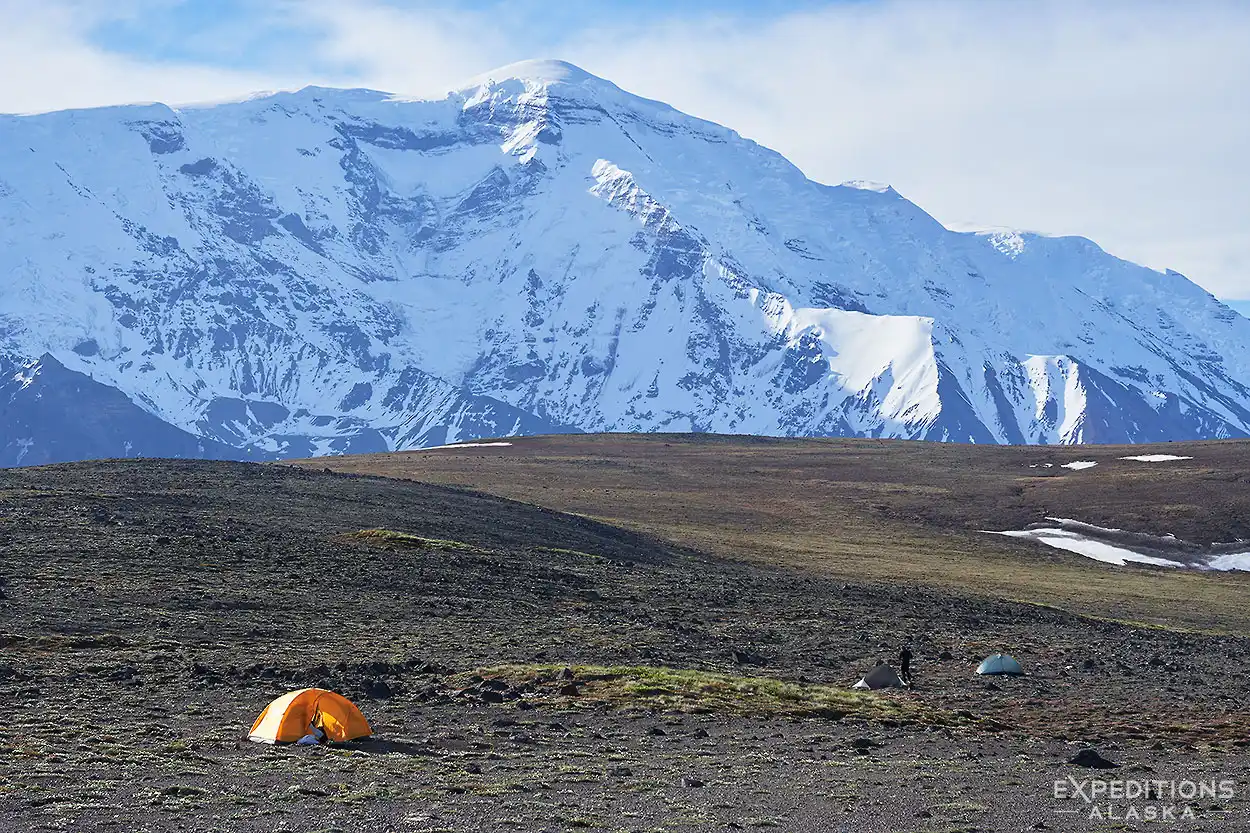
Wrangell-St. Elias National Park
Mountains piled upon mountains.
At 13.2 million acres, Wrangell-St. Elias is the largest national park in the United States (six times the size of Yellowstone). North America’s highest coastal peaks and more glacial ice than the rest of the continental U.S. combined.
Routes range from moderate basecamp trips to advanced traverses crossing multiple passes and glacial terrain. Trip options: Southern Traverse, Goat Trail, Seven Pass Route, Adventure to Oz, Wrangell Ramble.
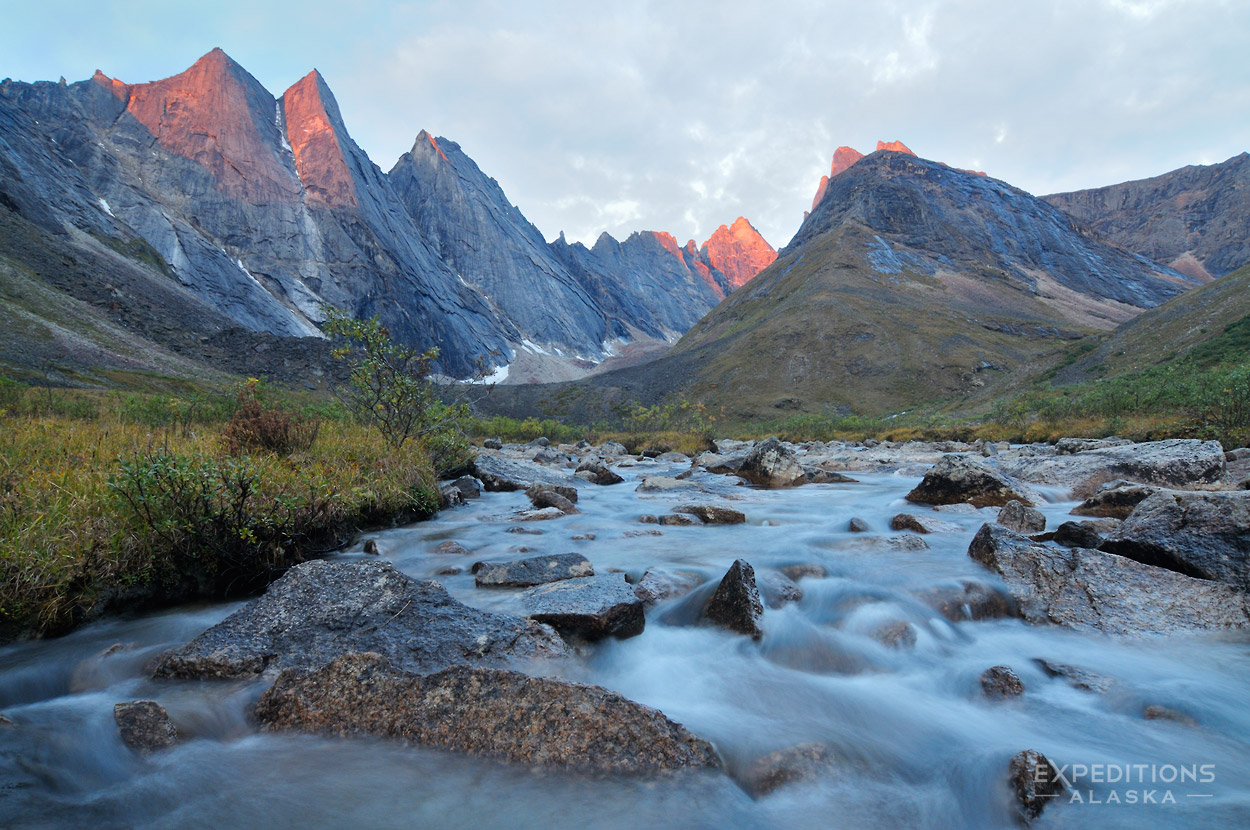
Gates of the Arctic National Park
No roads. No trails. No campgrounds. No buildings.
Gates of the Arctic represents true Arctic wilderness and is one of America’s least-visited national parks. Bush plane access only.
The Arrigetch Peaks are the park’s signature destination: granite spires rising from tundra valleys in the Brooks Range. Midnight sun, caribou migrations, landscapes few people will ever see.
Our Northern Traverse is another classic backpacking trip in the park.
Denali National Park
Denali covers six million acres surrounding North America’s highest peak (20,310 feet).
Most people see Denali from a bus. We see it on foot.
Our Decadent Denali backpacking trip explores the southside; a remote backcountry region of Alaska’s most famous park. The more crowded north side of the park is nice, but nothing comes close to this particular area we explore.
The reward is traveling beneath North America’s highest peak in solitude.
Arctic National Wildlife Refuge
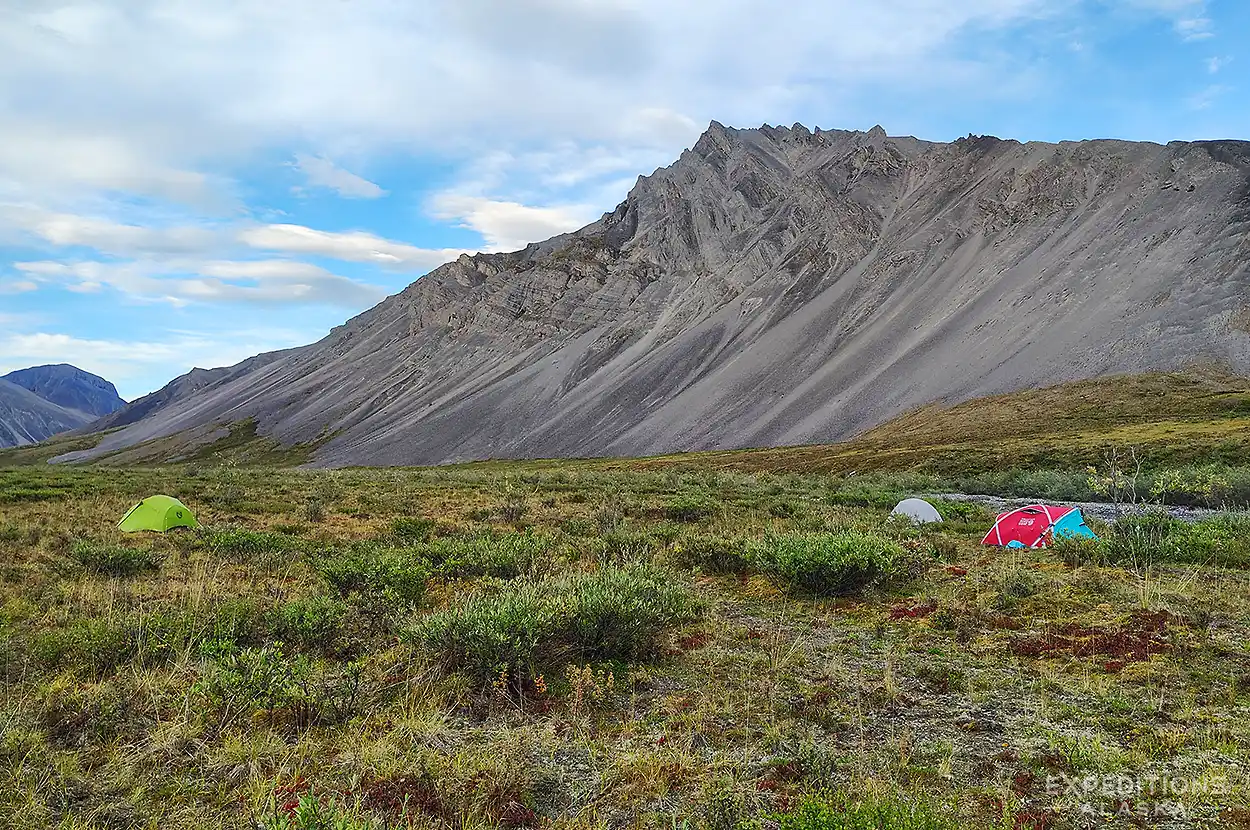
The Arctic Refuge covers 19.6 million acres (roughly the size of South Carolina) and receives approximately 1,000 visitors per year. The refuge protects the only conservation area in North America that encompasses a complete arctic ecosystem, from Brooks Range peaks to coastal plain.
We guide Above the Circle trip (Brooks Range backpacking trip) and have yet to encounter anybody else during one of those hikes.
We also offer the Canning River rafting expedition, a 120-mile journey from the Continental Divide to the Arctic Coastal plain.
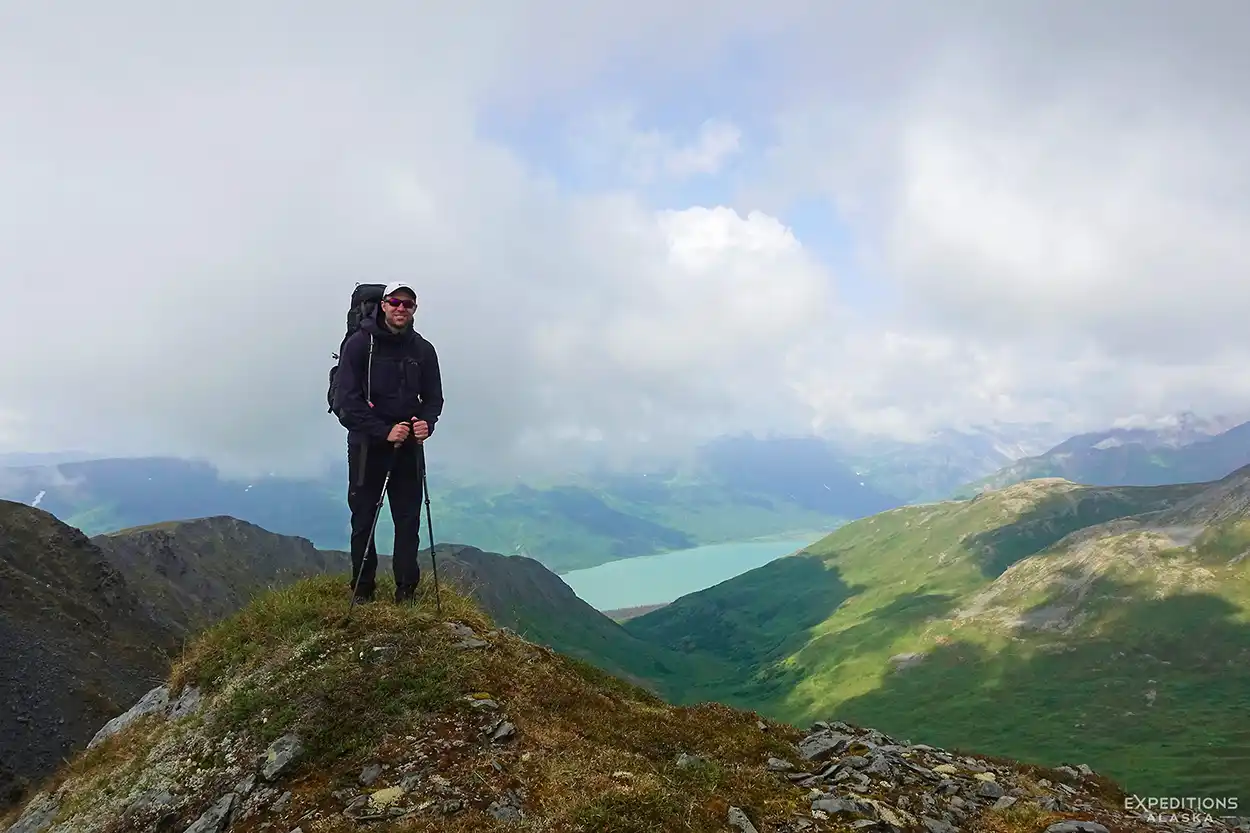
Lake Clark National Park
Lake Clark encompasses four million acres, 150 miles southwest of Anchorage.
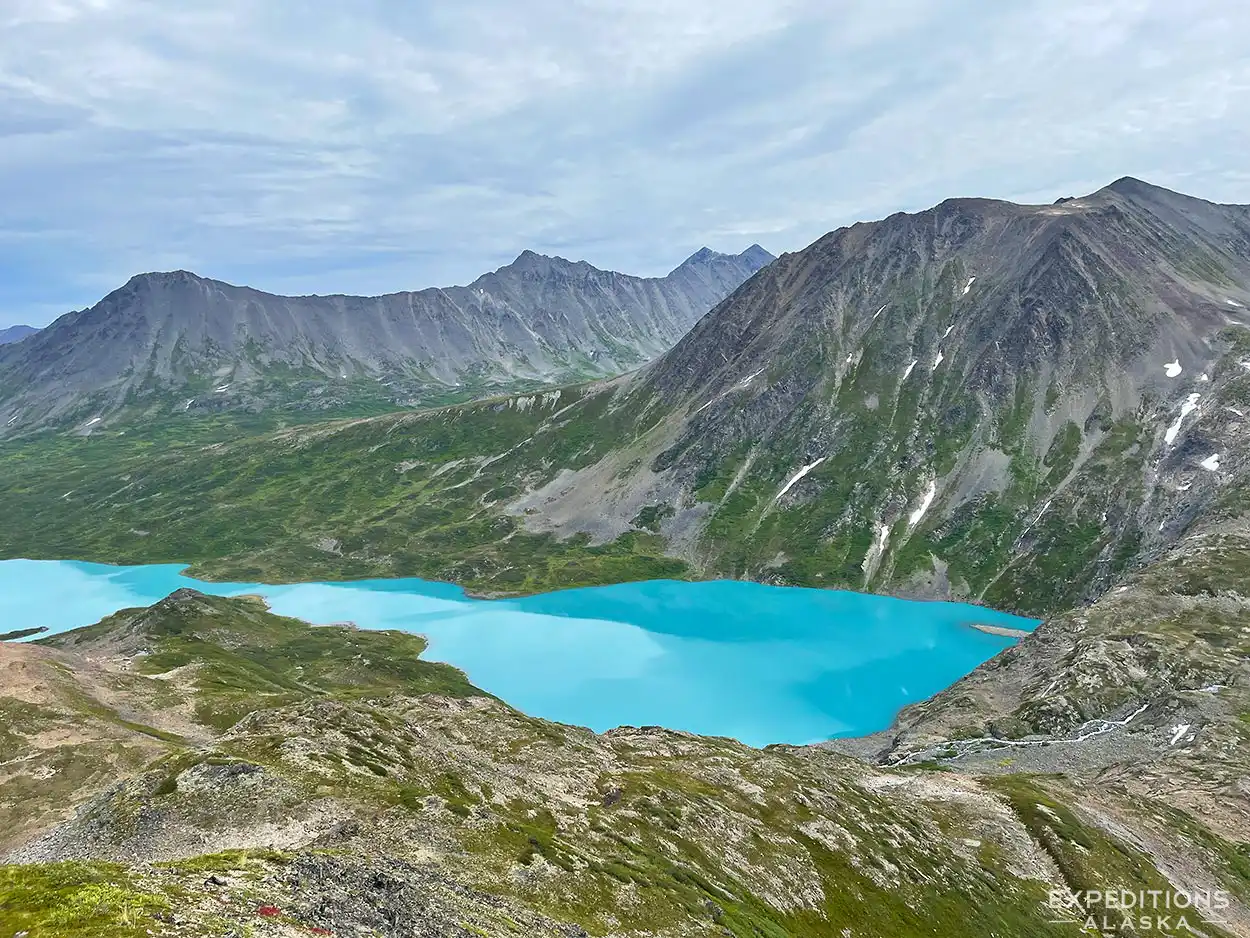
The park receives under 5,000 annual visitors. Geography ranges from coastal rainforest to active volcanoes (Redoubt and Iliamna) to alpine tundra. Twin Lakes dominate the park’s eastern backcountry.
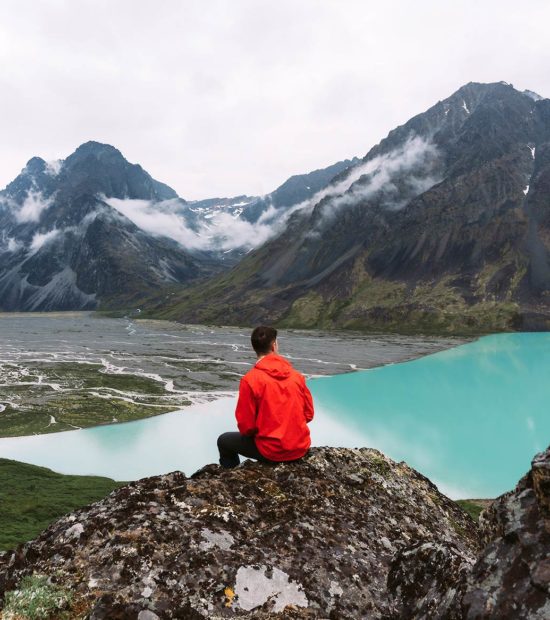
Lake Clark lies south of Anchorage, but it might as well be on another planet. Turquoise lakes backed by active volcanoes. Brown bears fishing for salmon. Alpine tundra that stretches to the horizon.
Turquoise Twins is a classic Alaska bckpacking route. Basecamping in the Turquoise Lake area is another popular trip.
Where Else Do We Go? 👀
Katmai National Park
Brown bear capital of the world. Katmai’s coastal areas hold some of the highest densities of brown bears anywhere, particularly during salmon runs.
Beyond the famous Brooks Falls viewing platforms, the park contains vast backcountry rarely visited.
🗓️ When To Go
Alaska’s backpacking season is short. Snow lingers at elevation into June. The first significant snows usually arrive in late August or early September.
Alaska’s backpacking season is short. Snow lingers at elevation into June. The first significant snows usually arrive in late August or early September, or even earlier.
Most trips run during a 10-week window when weather is (relatively) stable and access is more reliable.
Alaska Summer Season
Realize that the following is **VERY** general. Location and elevation make a huge difference this far north.
Let’s take a look at how the summer and fall backpacking season breaks down in Alaska.
Early June
Trails at lower elevations clear by late May or early June. Higher routes may hold snow through mid-June. The advantage: fewer bugs, incredibly long days, and smaller crowds. The tradeoff: variable conditions, snow patches to navigate, and some routes remain inaccessible. Lakes can still be frozen making float plane accessibility null.
experienced travelers comfortable with snow travel and unpredictable conditions.
Late June and July
Peak season. This is when the season winds up. Weather is warmest (relatively speaking), access is best, and all routes are usually clear of snow. The midnight sun provides 20+ hours of daylight.
The downside: mosquitoes can reach biblical proportions. Depending on where you are, late June and July in Alaska means bugs. Sometimes lots of bugs. Head nets, DEET, long sleeves, and a philosophical acceptance of discomfort.
first-timers, those seeking stable conditions, and anyone who can tolerate mosquitoes.
August
Fall arrives fast in Alaska. By mid-August, the tundra begins turning crimson and gold. Mosquitoes settle down almost overnight. Rain becomes more frequent, but temperatures typically remain reasonable.
Mid-late August brings the first real risk of early snow, especially at higher elevations. Days shorten noticeably but still provide ample light.
photographers, those who hate bugs, and experienced travelers comfortable with variable weather.
Planning & Prep 🏋
Our Difficulty Framework
🥾
3-5 miles per day, minimal elevation gain/loss (under 1,000 feet). Off-trail travel on easier terrain like tundra and valley floors. Good for first-time Alaska backpackers or those wanting a less physically demanding trip. Pack weight 35-45 pounds.
🥾🥾🥾
5-8 miles per day, up to 1,500 feet of elevation gain/loss. Off-trail travel but generally reasonable terrain. Good for experienced backpackers with solid fitness. Some previous off-trail experience helpful. Pack weight 40-50 pounds.
What You’ll Actually Encounter
Beyond the terrain types already mentioned, expect:
The number one hazard. Fast, cold, glacial rivers with zero visibility can be part of Alaska travel. Crossings require technique, timing, and good judgment. We’ll teach you, but this isn’t optional knowledge.
All of Alaska is bear country. You’ll learn bear awareness, food storage, and best practices. Bear spray proficiency is required (we’ll go over it with you).
Choosing Your Trip 🎯
There’s a lot to think about putting a backpacking trip to Alaska together.
Experience & Fitness
Have you backpacked off-trail before? Alaska is a natural progression. If not, start with moderate trips or basecamp options.
Can you comfortably hike 6-8 hours carrying 45 pounds? Multiple days in a row? Over rough terrain? Train specifically if you’re unsure.
Alaska Backpacking Gear
The Critical Stuff
Backpack
65-75 liter capacity minimum (depending on trip length). Must accommodate a bear canister (BearVault BV500 or equivalent) with room for personal gear. External frame or internal, but it needs to carry 45-50 pounds comfortably.
- Guide’s Tip: Go with a pack cover larger than you think you need.
Shelter
Three-season tent is okay. Freestanding is better. Lightweight is fine if it’s genuinely robust.
- Guide’s tip: Replace your cheap crappy tent stakes with Groundhogs or something similar.
Clothing Layers
This is where people often fail. Bring
Base layers (synthetic or wool, never cotton)
- Guide’s Tip: Patagonia R1 rock
Mid-layer insulation (fleece or puffy jacket)
- Guide’s Tip: Montbell down jackets are the bomb.
Footwear
Waterproof hiking boots for most terrain. Your feet are your transportation; protect them. Secondary, closed-toe footwear for river crossings (Crocs (tie them on), sandals, or old running shoes). Do not cross barefoot.
Guide’s Tip: The ultralight trend of hiking in trail runners works on the Pacific Crest Trail. And it work here you’re a good walker. For most folks: when you are side-hilling on scree or navigating tussocks with a 50lb pack, you’ll do better with some ankle support.
What Not to Bring
Cotton We’re not anti-cotton. Just don’t hike in it. No, it doesn’t “kill”, but in cold, wet conditions it’s not the best choice.
Untested Gear Alaska is not the place to discover your new tent leaks or your boots give you blisters.
We provide detailed gear lists specific to each trip. Read them carefully. Follow them exactly. They’re based on 25 years of learning what works and what fails.
There is also a of backpacking gear information on the blog. Use that resource.
What to Know Before You Go
-
What We Handle
Your Guide’s Responsibilities
There are no trail junctions, no blazes, no reassuring signs. Route selection happens in real-time based on terrain, weather, and conditions. Your guide reads the terrain, selects routes, and manages daily navigation. You should be comfortable reading a topographic map so you can follow along and understand where you’re going, but route-finding is on us. We’re exceptional at it.
Guides carry wilderness first aid kits, manage safety decisions, and handle emergency communications. We have a robust training program our guides undertake, and go through this stuff every year.
We manage camp setup systems, food distribution, and group coordination. We’re, in many ways, a logistics company who backpacks. And we’re very good at both.
-
What You Need
You’re responsible for your own comfort and gear management. Pack your own stuff. Stay organized. You’ll have a lot of stuff. Know what’s where. And what it’s for. Take care of yourself first, then help others.
Speak up when you need something. Feeling tired? Say so. Want to push farther? Tell us. Hungry, cold, or hurting? Don’t wait until it’s a problem. Group dynamics work when everyone communicates honestly about their needs and limits.
Set up your tent in wind and rain (we’ll help ya). Stay warm when wet. Cook or be cooked for (you won’t beat our food). Basic wilderness competence.
Carry your pack for 4-8 hours over uneven terrain. Multiple days in a row.
Weather changes plans. Itineraries adapt. The ability to roll with uncertainty matters more than rigid expectations.
-
What You'll Learn
Glacial rivers are opaque, fast, and cold. You’ll learn assessment techniques, timing strategies, and crossing methods. This skill can save your life. How to assess glacial rivers, when to cross, proper technique. We teach this in the field as needed.
Alaska has brown bears, black bears, and (in the far north) polar bears. You need solid understanding of bear behavior, food storage, camp selection, and bear spray use. Covered in pre-trip briefings and reinforced on location.
Tussock walking, moraine travel, brush negotiation. You’ll learn the “Muskeg shuffle” as you go.
-
Advanced/Expert Trip Requirements
You should have crossed cold, fast water before. We’ll teach Alaska-specific techniques, but basic competence is expected.
Ability to read terrain, use compass in whiteout (your guide takes care of this), contribute to route decisions.
Recognize hypothermia symptoms in yourself and others. Manage wet conditions proactively.
Expert routes assume you’ve done challenging off-trail backpacking before, ideally in Alaska.
-
For Experienced Backpackers from Outside Alaska
If you’ve done the John Muir Trail, hiked extensively in the Rockies, or completed long trails in the Lower 48, that’s excellent preparation. But Alaska is different.
The terrain is rougher. The rivers are more serious. The weather more variable.
The remoteness is absolute. There’s no trail to follow when you’re tired, no resupply, no road to bail out to.
Before coming to Alaska, practice on the most difficult terrain you can find. Hike off-trail. Cross cold creeks. Carry a heavy pack over uneven ground. Get comfortable with navigation when nothing looks familiar.
Alaska rewards preparation and humbles assumptions.
🥾 Choose Your Travel: How We Travel
Backpacking
This is the classic expedition. We fly in, the pilot drops us off, and we traverse 30 to 50 miles to a pick-up point.
You carry everything. Camp moves every day or two. The focus is on covering ground and seeing varied landscapes.
Fit hikers who want the satisfaction of a traverse.
Basecamping
We fly into a stunning location and set up a comfortable camp. From there, we do day hikes with light packs.
You can hike as hard or as easy as you want. We can stay out until midnight photographing or sleep in. You get the wilderness immersion without the heavy hauling.
Families, photographers, first-timers, or anyone who wants to enjoy the mountains without grinding miles.
Basepacking
Part basecamp, part backpacking. We establish a base, explore the area for a few days, then move camp and do it again.
Lighter packs than full backpacking, more ground covered than basecamping. You get variety without the daily grind.
Hikers who want more terrain than basecamping offers but less weight than full expedition backpacking.
Training For Your Trip ⛺️
Alaska backpacking demands physical fitness. Start training. Today.
Physical Preparation
You want to be able to hike 6-8 hours carrying 45-50 pounds over uneven terrain. Multiple days in a row.
If you can do weighted hikes on trails or hills near you, do that. Stairs with a loaded pack work too. If you’re landlocked without terrain, focus on leg strength and cardiovascular endurance: whatever gets you ready to move with weight for hours at a time.
Beyond Hiking
- Stairmaster or stair climbing with a loaded pack
- Balance exercises (yoga, single-leg work)
- Core strengthening
- Flexibility work
Mental Preparation 🧠
Alaska rewards the mentally prepared more than the physically strong.
Accept that some days will be hard. Weather might shift plans. Your itinerary might change. The best Alaska trips embrace flexibility rather than fight it.
Safety & Emergency Protocols
Safety comes first. Always. Here’s how we manage risk in Alaska’s backcountry.
Be Careful Out There
Safety comes first. Always. Here’s how we manage risk.
Before Your Trip
- Route planning accounts for weather, terrain, group ability
- Pre-trip consultation addresses concerns and preparation
- Emergency contacts established
- Guide training and safety protocol reviews before every season
- Risk assessment and safety plans for our trips and activities.
In The Field
- . Conservative decision-making about river crossings, weather, route selection
- Take care of yourself before helping others. Stay organized, stay hydrated, stay aware of your own condition. You can’t help the group if you’re compromised.
- Client safety briefings. During pre-trip onboarding and on the ground at your trip departure.
- Multiple satellite communicators on every trip (two-way text, emergency SOS)
- Guides carry wilderness first aid kits (trauma supplies, medications, immobilization gear)
- All guides certified in Wilderness First Responder or higher
- A ready list of “Who To Call?” and “What’s this process?” for emergency situations.
If Something goes Wrong
- Immediate first aid administered
- Situation assessment
- Communication with emergency services if needed
- Evacuation coordination with bush pilots or rescue resources
- Support from Expeditions Alaska personnel throughout the process.
We’ve been doing this for a long time. Our safety record speaks for itself. That said, wilderness travel carries inherent risks. We manage them professionally but can’t eliminate them entirely.
Bears & Wildlife
This is the question everyone asks. “What about the bears?”
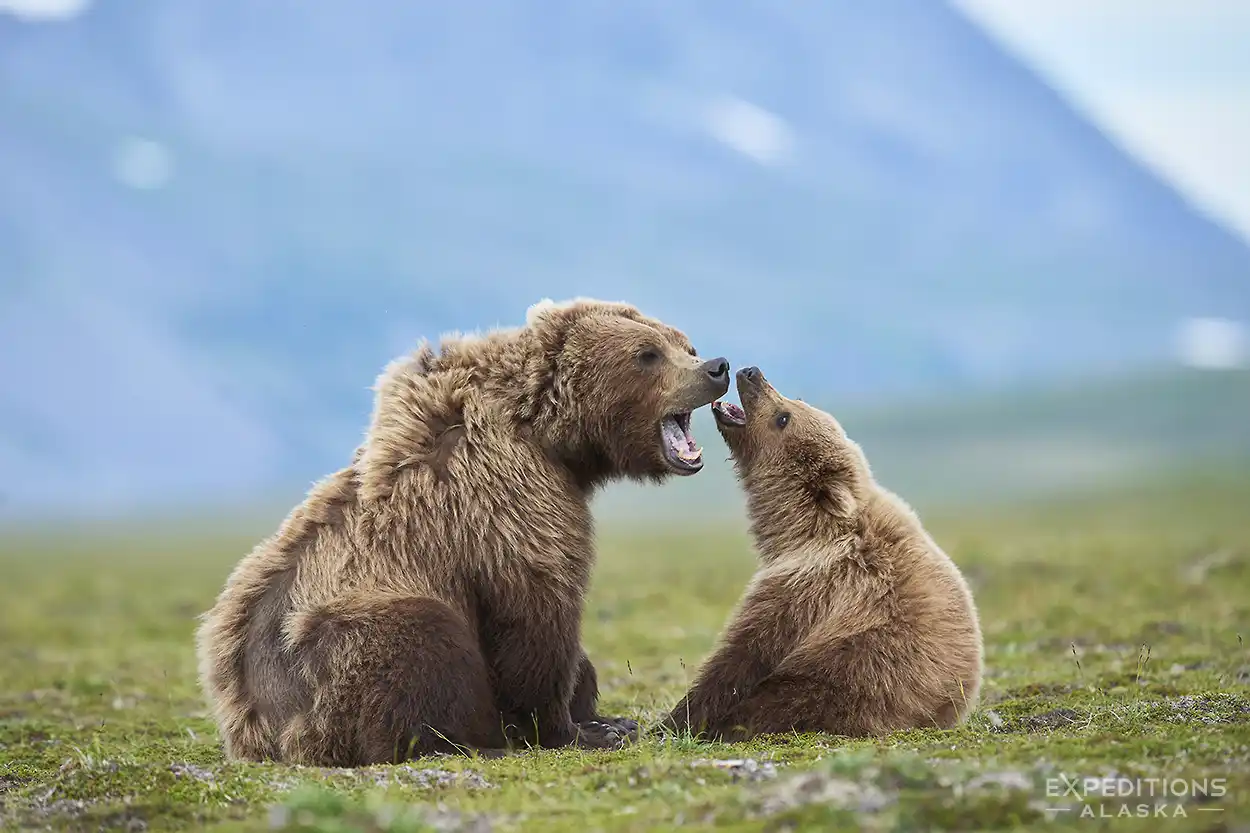
Yes, we travel in bear country. Grizzlies and Black Bears live here. In 20 years of guiding, I have had many encounters, but I have never had to discharge bear spray or a firearm.
How we manage it:
We use bear-resistant food canisters (provided) and keep a spotless kitchen.
We give bears space. We don’t sneak up on them.
Bears generally want nothing to do with a group of humans.
We carry bear spray (we provide it). Your job is to enjoy the sighting. Our job is to manage the safety.
What's Included?
Expeditions Alaska Provides
Expert Guides
Decades of Alaska wilderness experience. Local knowledge. Route expertise.
Safety Systems
Safety protocols honed through decades of guiding, training, education and field experience. Comprehensive risk mitigation program. Excellent safety record. We’re good at what we do. Very good. We’ll look after you.
Route Planning
Detailed pre-trip consultation. Route selection based on your experience, conditions, and goals. Flexibility to adapt in the field.
Group Gear
Tents can be provided. We provide a cook tent for the kitchen. The food add-on includes cook stoves, fuel, cookware, mess kits, etc. Water filters (as needed). We carry most of the heavy stuff. We include hiking poles for everyone on all backpacking trips.
Food
We can provide all your food. Meals and snacks for the entire trip. Calorie-dense, trail-tested menu. Special dietary needs accommodated with advance notice. Or BYO. We’re flexible.
You can read about our food expertise here.
Not Included?
You Provide
Backpack, sleeping bag and pad, clothing, footwear, river crossing shoes, personal items.
You’re carrying 40-50 pounds over difficult terrain. Train accordingly.
Flexibility, patience, and realistic expectations.
Getting yourself to and from Alaska. We’ve got ya from there.
Strongly Recommended but not required. Our recommendation is Travelex.
Earned. Always appreciated. Never expected.
Pack Weight Expectations
Your total pack weight varies by trip length and season. It will definitely vary with what your personal gear setup is. On average, we see this:
30-40 pounds (less food, shorter duration)
45-55 pounds (standard for most trips)
50-60 pounds (maximum food load)
We provide group gear, food, and bear canisters (15-20 pounds depending on trip). You carry personal gear (20-30 pounds). Taller, larger clients may carry slightly more group gear. Smaller clients proportionally less.
Train with 40-45 pounds minimum. Learn what that “feels” like. If your trip is longer, work up to 50+ pounds.
FAQs 🙋🏻
-
Do I need previous Alaska experience?
No, but previous off-trail backpacking experience helps. First-timers should choose moderate trips and come prepared to learn. We’ll teach Alaska-specific skills.
-
How fit do I need to be?
Fit. Trip dependent. You may well be carrying 45-50 pounds over rough terrain for multiple consecutive days.
Train with weighted packs on difficult trails. Build up to 6-hour days.
-
What if weather prevents our planned route?
We adapt. Trips have backup options. Flexibility is built into the planning. Sometimes the best trips are the ones where we improvise.
-
What's the youngest age for kids?
Depends on the trip. Some basecamp trips work for 12+. Backpacking trips generally 16+. Contact us for specific age questions.
-
What if I can't make a river crossing?
We assess crossings as a group. If it’s not safe, we don’t cross. Alternative routes always exist, even if it means backtracking or waiting.
-
Can I bring my own food or gear?
Either/or.
We’re one of the few guide companies here who work with guests who want to do their own food and/or gear.
Food can be included for a small fee and provided for the group. Dietary restrictions accommodated with advance notice. Bring your own gear (we recommend it) or talk to us about what you need.
-
What kind of menu do we get with the food purchase?
We have a comprehensive food form for you to complete and we’ll do our very best from there to put together a menu for the trip that you’ll enjoy.
We do our best to accommodate most dietary requirements, tastes and preferences.
Exact menu will be trip dependent. For a 12 day backpack and packraft you can expect a different constitution of food than you’ll see on a 5 day basecamp trip.
Another thing to remember is Expeditions Alaska isn’t a simple “production line” outfit. Guides all have their own systems and menus and favorites, so we don’t have a generic “here’s your trip menu” at all. Menus vary trip to trip.
What I can tell you is that we do the best backcountry food in Alaska. Bar none. You’ll enjoy good food. Really good food. Whether it’s a great pizza, a dish of Pad Thai or greek salad or a lentil soup, I assure you that you’ll appreciate your guides’ culinary expertise. Good food takes a bit extra effort, but can really help bring your trip experience up a notch. Or three.
This is a common question we get, and an important one. So important, it warrants its own page.
All your questions about our backcountry food answered right here.
-
Trip Deposits Refund Policy
We’re excited to be part of your upcoming expedition. Your reservation reflects a commitment to an awe-inspiring Alaskan adventure. Our dedication to you includes careful planning, experienced curation, and a shared passion for adventure. It’s a commitment to the essence of Alaska.
In the spirit of consistency and transparency, we want to address our no-refund policy for trip deposits. While we understand unforeseen circumstances may arise, our consistent policies ensure fairness to all adventurers. This commitment allows us to maintain trip quality, prioritize safety, and provide the best experience for every participant.
With limited availability due to Alaska’s changing seasons, once you commit to a trip, we commit to it.
Understanding life’s unpredictability, we strongly recommend considering Trip Insurance. This additional layer safeguards your investment, offering peace of mind for the excitement and wonder in the Alaskan wilderness.
Your trust means a lot; our dedication to your adventure is unwavering. Let’s explore Alaska’s backcountry together.
Thank you for choosing us for this journey.
Thank you.
-
Why is there no “Book Now” button here?
We require a conversation before confirming any backcountry trip.
You should as well.
Alaska wilderness travel isn’t like booking a hotel. The terrain is demanding, the conditions are unpredictable, and there’s no bailout option once you’re flown in. We need to understand your experience level, fitness, and what you’re hoping to get from the trip. You need to understand what you’re actually signing up for.
This isn’t gatekeeping. It’s matching. We want to put you on a trip where you’ll thrive, not survive. Some folks are ready for the Seven Pass Route. Others should start with a basecamp trip or something more moderate. A ten-minute conversation helps us figure that out.
Nobody benefits when someone gets in over their head. Not you, not the other clients, not us.
Call or email. We’ll find the right fit.
-
Where are your other Backpacking FAQs and Policy stuff?
There’s a lot of other info on that page that might be of help to you as well in your planning.
-
I Have More Questions
I know you do. I do as well.
I recommend starting with the General Trip FAQ page
More questions? Email me or call me and we’ll go through them.
Upon your reservation I’ll also send out a comprehensive trip information packet that covers just about everything and more you might imagine about your trip.
A Few Unexpected Truths
A few things you should know.
The silence. You think you know what quiet sounds like until you’re in a place like this. The silence is . Just wind, rivers, and your own breathing.
Twenty-four hour daylight messes with sleep. Bring an eye mask. Or embrace it and hike at midnight.
You’ll cross glacial rivers in Crocs or old tennis shoes. This sounds ridiculous until you understand that keeping your boots dry and your feet intact matters more than dignity.
You’ll eat like you’ve never eaten before. Thousands of calories a day, and you’ll still lose weight. The body burns hot in Alaska’s terrain.
Tussocks are exactly as bad as described. Your ankles will hate you. By day three, you’ll have figured out your own rhythm. Hiking poles make the world of difference on terrain that looks deceptively walkable.
Willow thickets inspire creative profanity. They’re grabby, wet, and endless. Morale plummets in thick brush. Don’t fight it. It’s slow going. That’s all. Slow. You’ll be fine.
The meditative quality of terrible terrain. Hour six of moraine hopping, and your mind goes wonderfully blank. It’s a full-body problem. It becomes purely physical.
You’ll laugh about it afterward. The river that looked impassable. The rain that wouldn’t stop. The mosquitoes that found the one gap in your head net. All of it becomes stories. Even the brush.
That pass looks like an hour away? Three hours later you’re still walking toward it. Mountains are bigger than they appear. Distances are deceptive. What looks close isn’t.
The vastness matters.
Featured Backpacking Trips
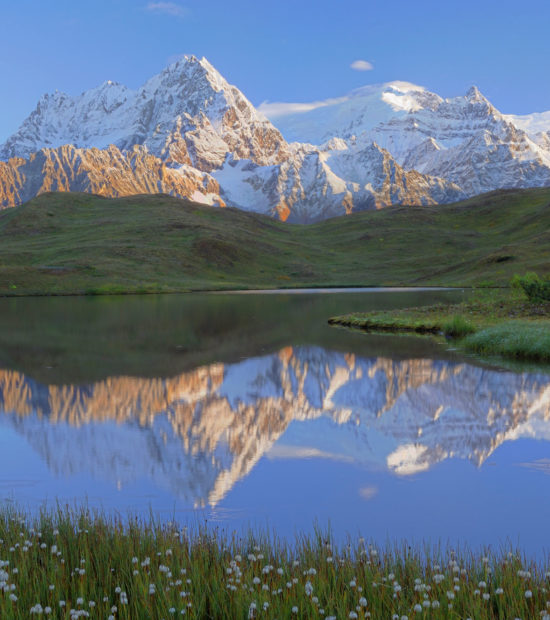
Adventures in Oz
Walk the Wrangell Mountains. The Land of Oz.
Intermediate
On a scale of 1 – 5, five being the most challenging, three hiking boots is smack in the middle.
1 boot = basecamp/dayhike easy
2 boots = easier backpacking trip
3 boots = intermediate level trip
4 boots = intermediate to advanced backpacking
5 boots = ask yourself are you really ready for this?
11 boots = One louder. For when 5 boots just isn’t enough.
Expect whatever level you think might best fit you to be one level on our scale. Hiking here in Alaska is generally a step or three above what you’ll find in the Lower 48 states.
If you consider yourself up for an intermediate level hike, for example, assume that a trip rated intermediate here will probably be a bit tougher than you’re expecting; not impossible, but harder than you think. Intermediate level trips don’t mean you won’t be challenged, won’t struggle at times, and won’t have any easy sections either. On any trip you’ll probably find some easy sections, some harder, and some are challenging.
Also, understand that all these rating are so completely subjective that they’re not entirely all together practical. They’re a loose idea of how the trips might compare to one another, for some people.
Lastly, understand that even a trip we might rate as “intermediate” (3-4 hiking boots) may still have some difficulty at times. Weather changes things. There may be a tough steep climb on the route that takes a few hours.
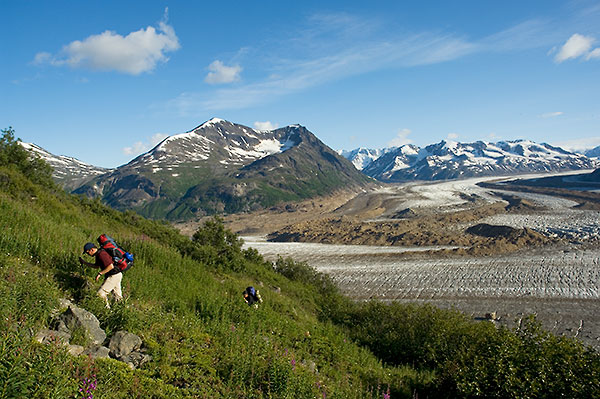
A short but sweet backpacking trip through the Wrangell Mountains. Hike on Kennicott Glacier, up Hidden Valley and camp in the amazing alpine terrain we call Oz.
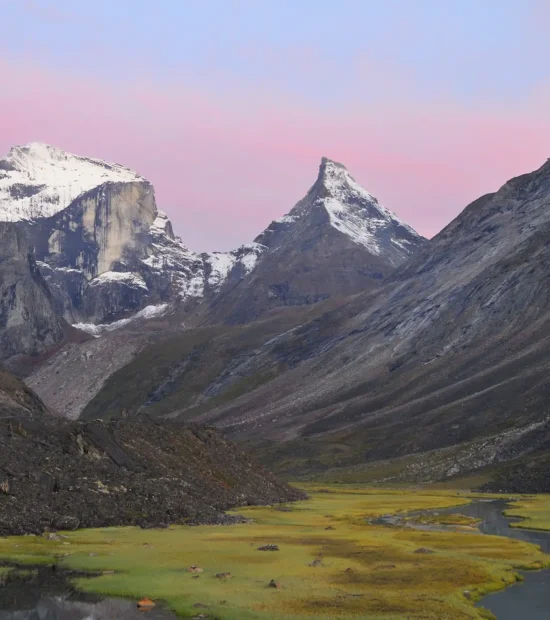
Arrigetch Peaks Backpacking Trip
Access the Alpine. A Remarkable Arctic Adventure.
Challenging
On a scale of 1 – 5, five being the most challenging, four hiking boots is toward the tougher end of the course.
1 boot = basecamp/dayhike easy
2 boots = easier backpacking trip
3 boots = intermediate level trip
4 boots = intermediate to advanced backpacking
5 boots = ask yourself are you really ready for this?
11 boots = One louder. For when 5 boots just isn’t enough.
Expect whatever level you think might best fit you to be one level on our scale. Hiking here in Alaska is generally a step or three above what you’ll find in the Lower 48 states. We might call something intermediate-advanced, and it may well be the toughest trip you’ve ever done in your life. Just understand that these metrics aren’t perfect.
You’ll find some good, easier walking, but also encounter sidehill or moraine and talus, or dense brush such as alder or willow.
The challenges aren’t generally so much in the distance we cover, or the elevation gain and loss. Most backpackers are surprised just how far we do go on a backpacking trip in Alaska. The challenges are in the terrain you’re walking over, and how well you adapt to those. Some people do great walking on boulders, and other people struggle to the very last stone. I can’t tell you how well you’ll do on a specific route, but we’ll do our best to work with you to match you with a trip that fits your experience and backpacking level.
Most people will call these trips tough. They just haven’t done the 5 hiking boot trips.
A backpacking adventure in a place like no other. Hike the Brooks Range and camp beneath the soaring Arrigetch Peaks. And finish with a packraft adventure down the Alatna River.
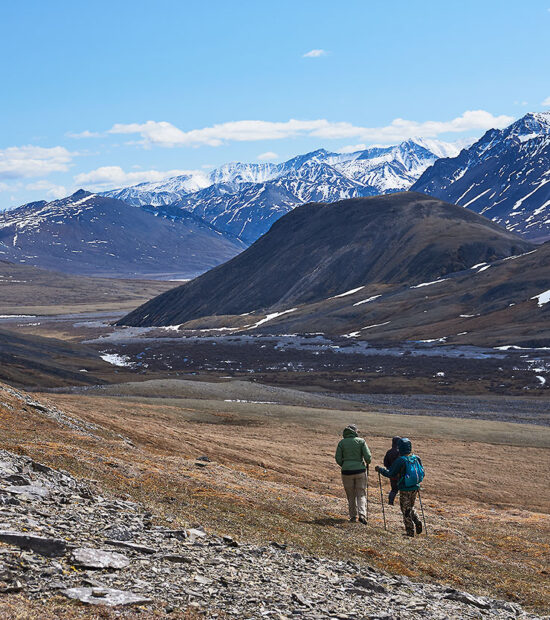
Backpacking the Arctic Refuge
Above the Arctic Circle. Below the radar. Backpacking America’s most contested wilderness.
Intermediate
On a scale of 1 – 5, five being the most challenging, three hiking boots is smack in the middle.
1 boot = basecamp/dayhike easy
2 boots = easier backpacking trip
3 boots = intermediate level trip
4 boots = intermediate to advanced backpacking
5 boots = ask yourself are you really ready for this?
11 boots = One louder. For when 5 boots just isn’t enough.
Expect whatever level you think might best fit you to be one level on our scale. Hiking here in Alaska is generally a step or three above what you’ll find in the Lower 48 states.
If you consider yourself up for an intermediate level hike, for example, assume that a trip rated intermediate here will probably be a bit tougher than you’re expecting; not impossible, but harder than you think. Intermediate level trips don’t mean you won’t be challenged, won’t struggle at times, and won’t have any easy sections either. On any trip you’ll probably find some easy sections, some harder, and some are challenging.
Also, understand that all these rating are so completely subjective that they’re not entirely all together practical. They’re a loose idea of how the trips might compare to one another, for some people.
Lastly, understand that even a trip we might rate as “intermediate” (3-4 hiking boots) may still have some difficulty at times. Weather changes things. There may be a tough steep climb on the route that takes a few hours.
North of the Arctic Circle, deep in the Brooks Range. A week on foot with everything on our backs. The Refuge takes effort to reach. That's why it's still the Refuge.
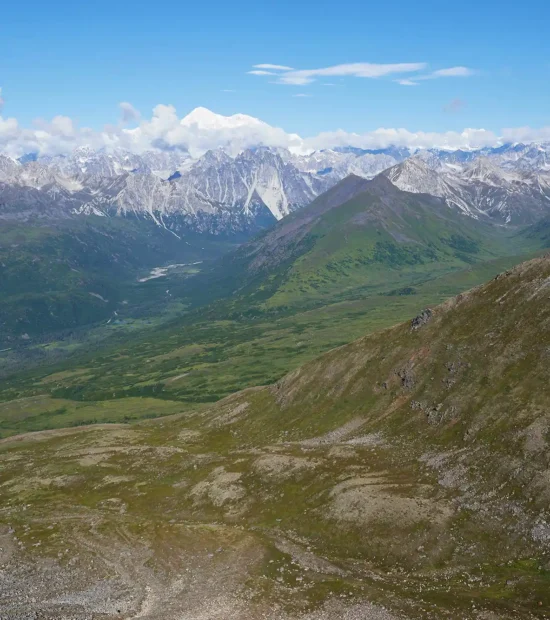
Denali Backpacking Trip
Backpack to the Future. Our newest trip to Alaska’s oldest National Park
Intermediate
On a scale of 1 – 5, five being the most challenging, three hiking boots is smack in the middle.
1 boot = basecamp/dayhike easy
2 boots = easier backpacking trip
3 boots = intermediate level trip
4 boots = intermediate to advanced backpacking
5 boots = ask yourself are you really ready for this?
11 boots = One louder. For when 5 boots just isn’t enough.
Expect whatever level you think might best fit you to be one level on our scale. Hiking here in Alaska is generally a step or three above what you’ll find in the Lower 48 states.
If you consider yourself up for an intermediate level hike, for example, assume that a trip rated intermediate here will probably be a bit tougher than you’re expecting; not impossible, but harder than you think. Intermediate level trips don’t mean you won’t be challenged, won’t struggle at times, and won’t have any easy sections either. On any trip you’ll probably find some easy sections, some harder, and some are challenging.
Also, understand that all these rating are so completely subjective that they’re not entirely all together practical. They’re a loose idea of how the trips might compare to one another, for some people.
Lastly, understand that even a trip we might rate as “intermediate” (3-4 hiking boots) may still have some difficulty at times. Weather changes things. There may be a tough steep climb on the route that takes a few hours.
Our newest trip to Alaska's oldest National Park. Pure Wilderness. This one is for you.
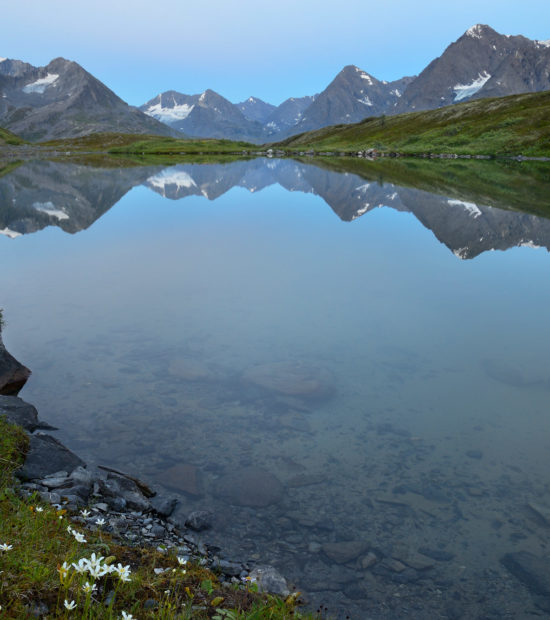
The Southern Traverse
65 miles. No Trail. No people. Just Wild.
Strenuous
On a scale of 1 – 5, five being the most challenging, five hiking boots is right up there.
1 boot = basecamp/dayhike easy
2 boots = easier backpacking trip
3 boots = intermediate level trip
4 boots = intermediate to advanced backpacking
5 boots = ask yourself are you really ready for this?
11 boots = One louder. For when 5 boots just isn’t enough.
Expect whatever level you think might best fit you to be one level LOWER on our scale. Hiking here in Alaska is generally a step or three above what you’ll find in the Lower 48 states.
Expect it to be tougher than you think it will. At least in part, anyway. Some sections will inevitably be easier. Some will make you feel it.
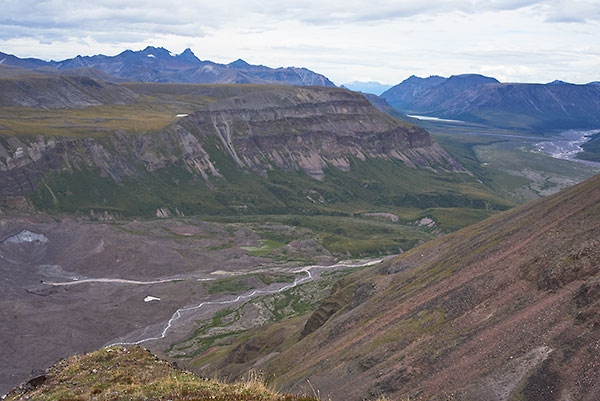
One of the best hikers I’ve walked with, Ben, said it perfectly one day, as we traversed a step sidehill on the Southern Traverse. “Man, Alaska just beats you up, doesn’t it?”
And he’s right. It does. Don’t be fooled by the low mileages and the lower elevations. The catch is the difficulty of traversing rugged country with no trails. However much you think that might impact you, double it.
You need to be athletic, well balanced, in good shape, and an experienced backpacker for this kind of trip. If you’re not that .. well, don’t say you weren’t well warned.
A challenging backpacking trek through the eastern reaches of the Chugach Mountains. Not for the faint of heart. But we'll get you there.
Turquoise Twins
Mountains, lakes, bears and almost nobody. Backpack the Quiet Part.
Intermediate
On a scale of 1 – 5, five being the most challenging, three hiking boots is smack in the middle.
1 boot = basecamp/dayhike easy
2 boots = easier backpacking trip
3 boots = intermediate level trip
4 boots = intermediate to advanced backpacking
5 boots = ask yourself are you really ready for this?
11 boots = One louder. For when 5 boots just isn’t enough.
Expect whatever level you think might best fit you to be one level on our scale. Hiking here in Alaska is generally a step or three above what you’ll find in the Lower 48 states.
If you consider yourself up for an intermediate level hike, for example, assume that a trip rated intermediate here will probably be a bit tougher than you’re expecting; not impossible, but harder than you think. Intermediate level trips don’t mean you won’t be challenged, won’t struggle at times, and won’t have any easy sections either. On any trip you’ll probably find some easy sections, some harder, and some are challenging.
Also, understand that all these rating are so completely subjective that they’re not entirely all together practical. They’re a loose idea of how the trips might compare to one another, for some people.
Lastly, understand that even a trip we might rate as “intermediate” (3-4 hiking boots) may still have some difficulty at times. Weather changes things. There may be a tough steep climb on the route that takes a few hours.
23 miles of off-trail alpine tundra from Turquoise Lake to Twin Lakes in Lake Clark National Park.