Logistics
We meet in Fairbanks the evening before departure.
The following morning, we fly to Bettles on a scheduled bush flight (about 1 hour), then transfer to floatplanes for the 2-hour flight into Gates of the Arctic.
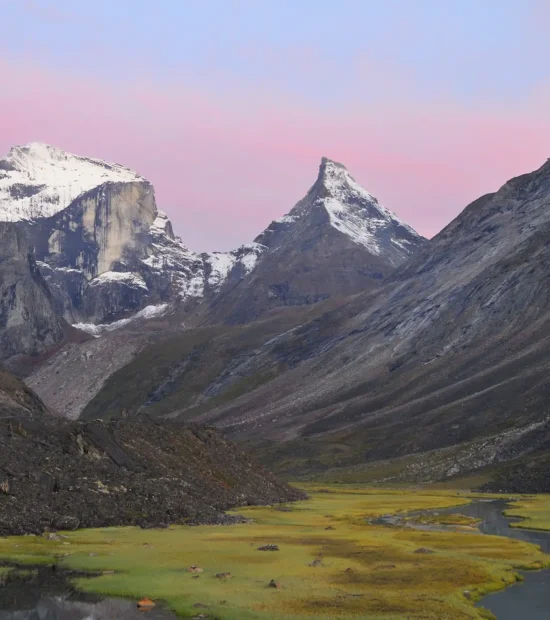
The route threads through the Endicott Mountains past the granite spires of the Arrigetch Peaks and 8,510-foot Mt. Igikpak before landing on Pingo Lake at the edge of the upper Noatak valley.
From Pingo Lake, we portage gear roughly half a mile across tundra to the river and assemble packrafts.
The float trip ends at Lake Matcharak, where another short portage brings us to a floatplane pickup beach.
We overnight in Bettles before flying back to Fairbanks the following morning.
Plan to arrive in Fairbanks the day before and depart the day after.
Trip Details
A 5-7 day packraft expedition through the upper Noatak River in Gates of the Arctic National Park. Easy paddling, outstanding ridge hiking, constant wildlife, and some excellent fishing.
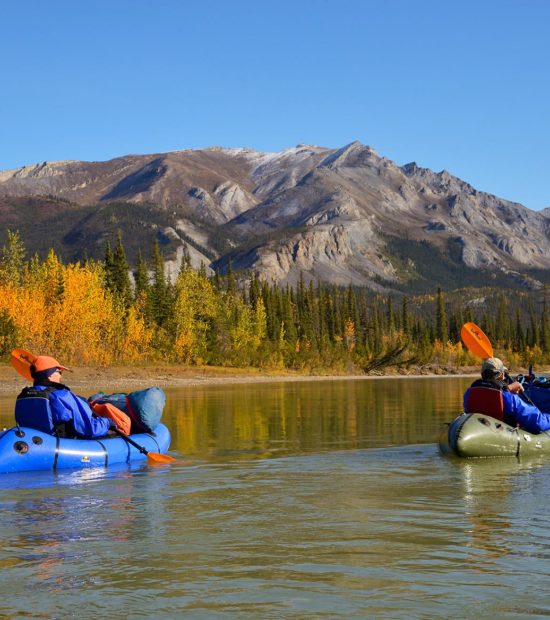
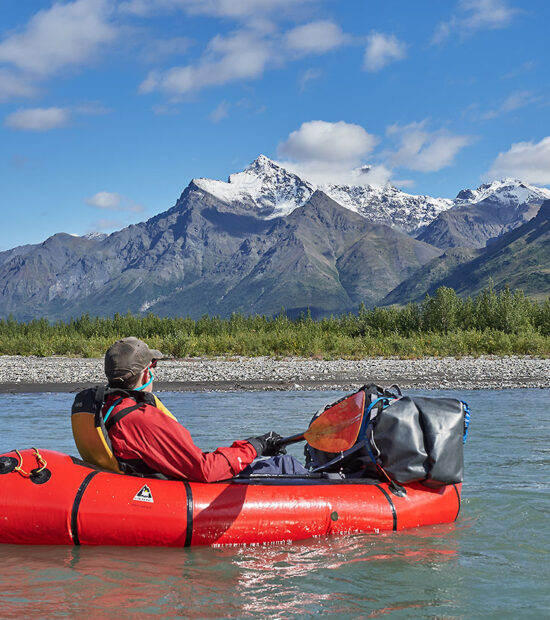
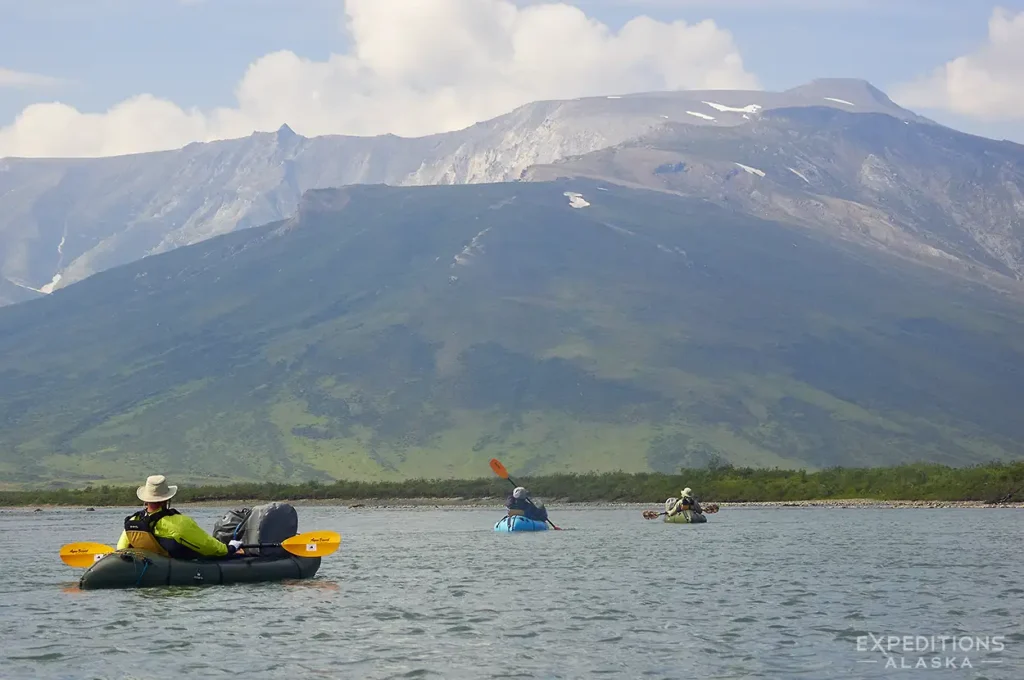
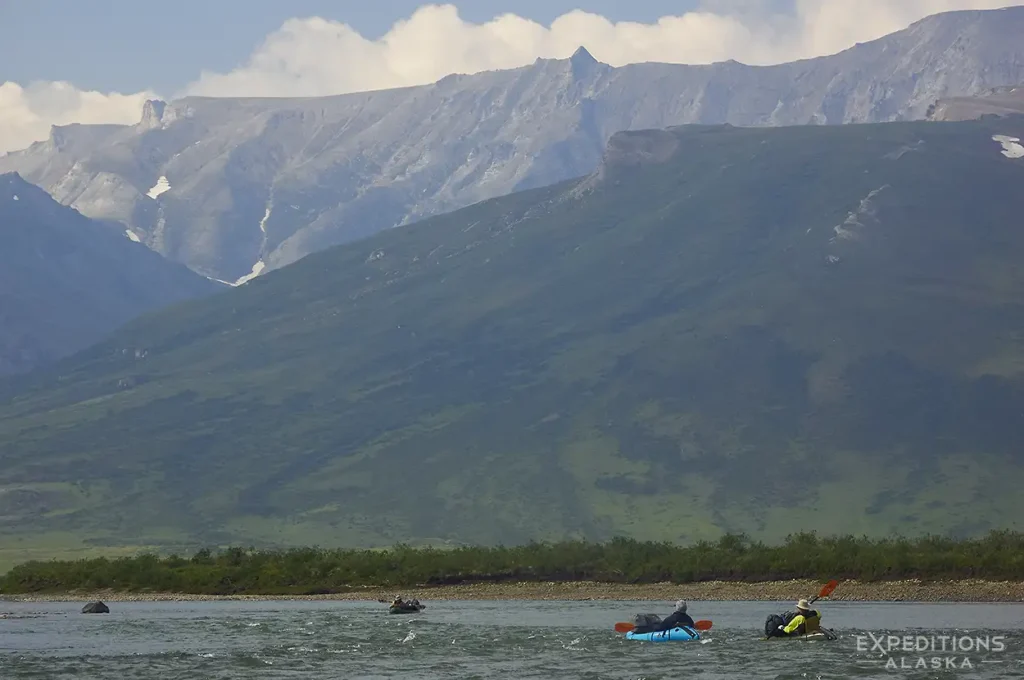
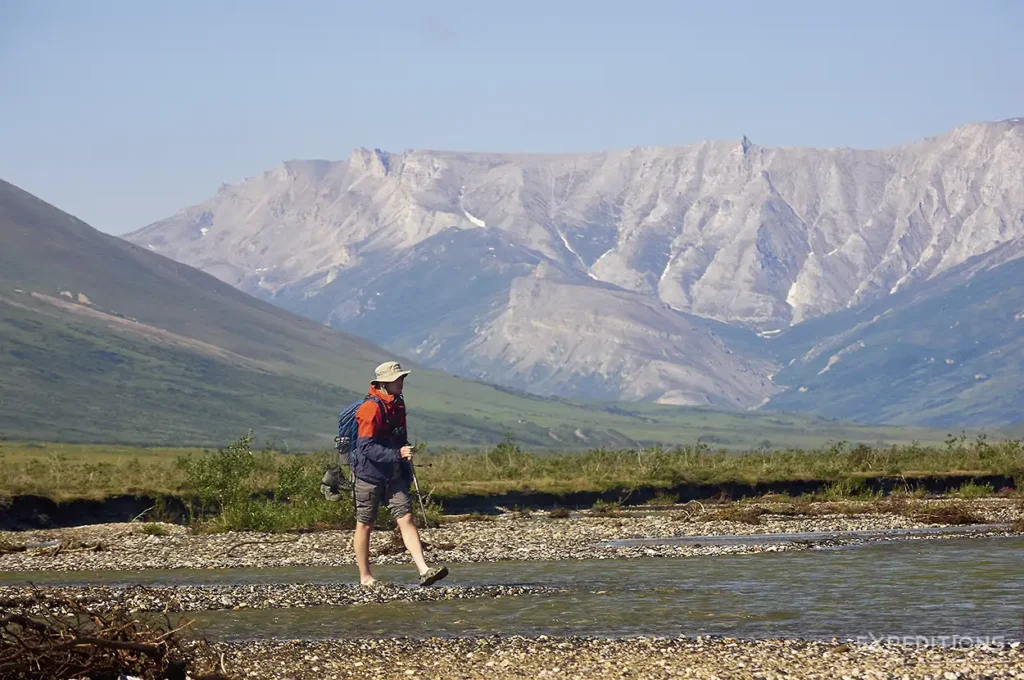
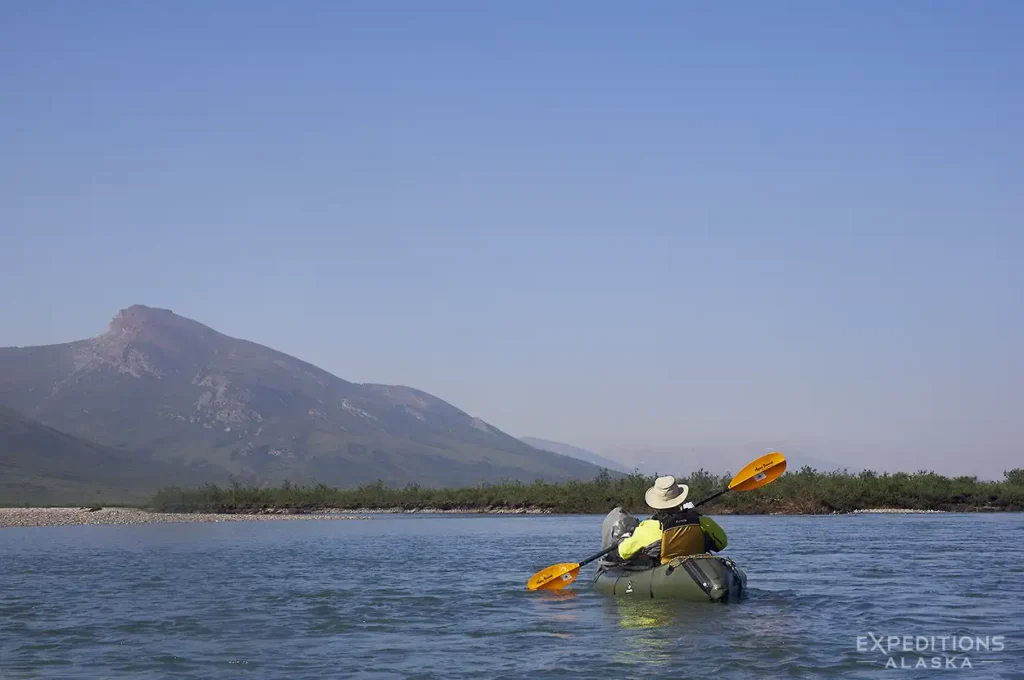
The upper Noatak River moves at a leisurely pace. Some sections require steady paddling; others have enough current to let you drift while scanning the hillsides for wildlife. The water is typically clear, running over gravel bars and through gentle bends. Nothing technical, just steady downstream progress with time to fish and watch for animals.
The real draw is what surrounds the river.
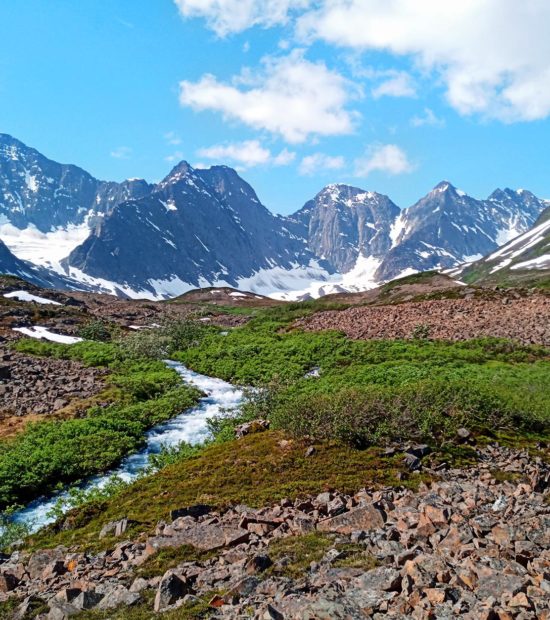
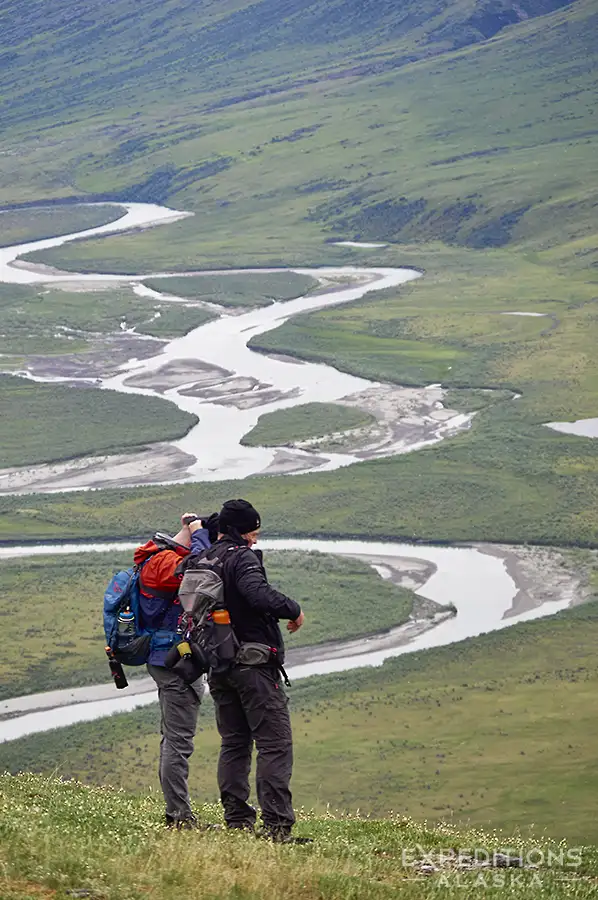
The valley runs 2-5 miles wide, flanked by tundra ridges that climb 2,000+ feet directly from camp.
Our Schedule
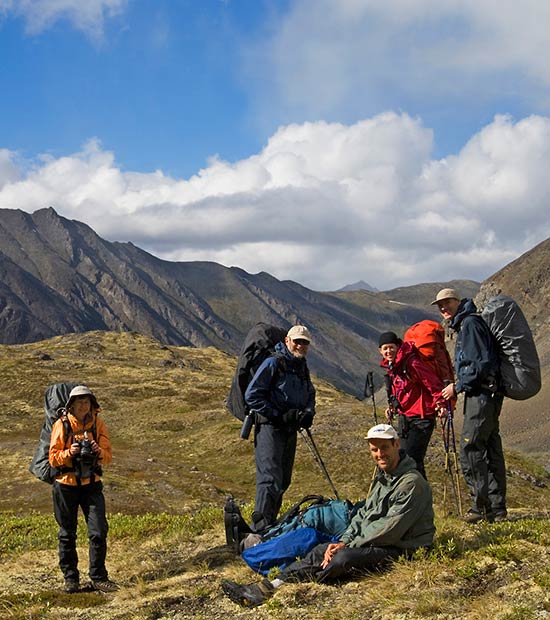
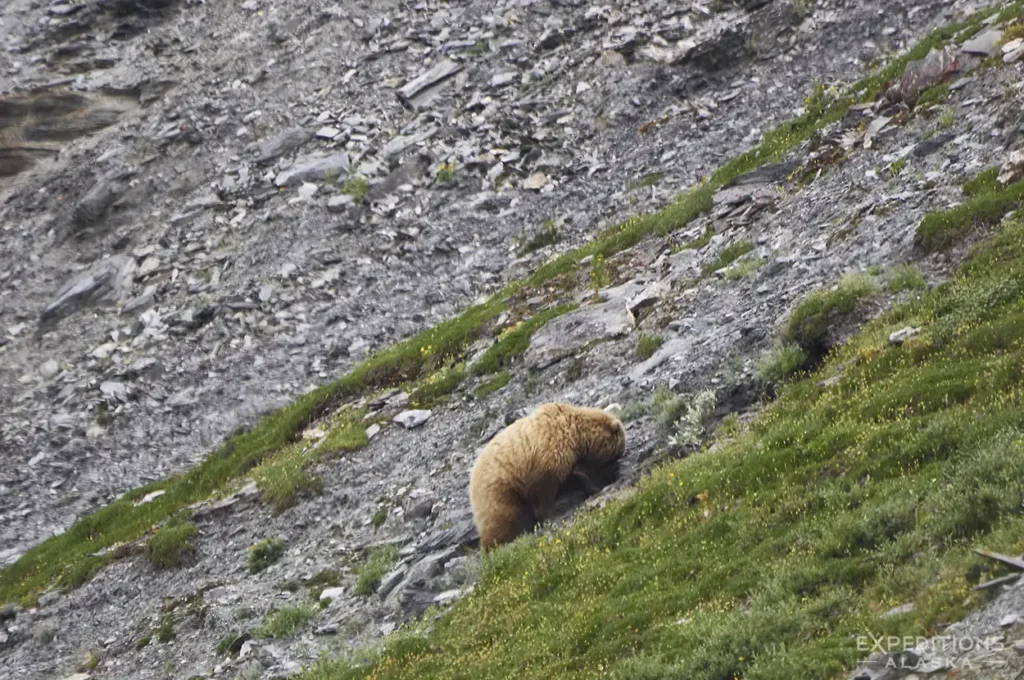
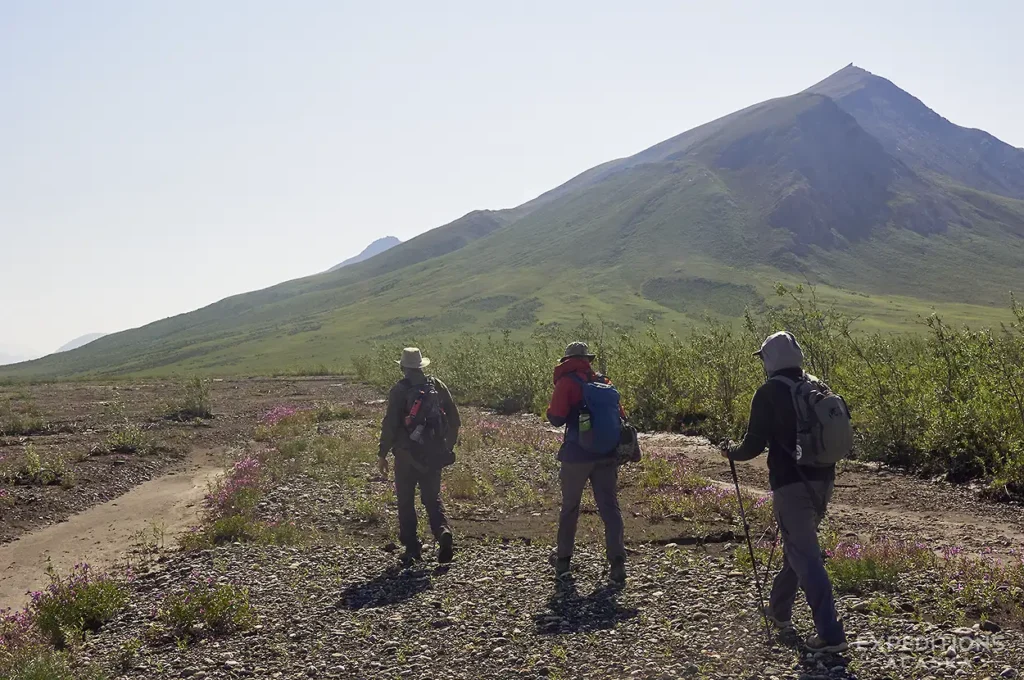
We build in layover days specifically for hiking. Routes follow sheep trails through the cliff bands. Open tundra with views stretching dozens of miles in every direction. Dall sheep roam the upper slopes. Grizzlies dig in the berry patches. Time it right and with some good fortune you’ll watch caribou herds swim the river during migration.
On a recent trip, the group rounded a bend and floated straight into a crossing herd. Dozens of caribou churning through the water, calves struggling to keep up, the whole river alive with movement. Nobody paddled. Everyone just drifted and watched.
Fishing is exceptional. Arctic grayling stack up in the deeper pools and hit small spinners or woolly buggers with enthusiasm. Char (Dolly Varden) can also be present. Guests describe the grayling fishing as “slaying”. Bring a rod.
Head guide Rhane’s note from last season: “Little green spinners slayed the grayling”. He wasn’t exaggerating. Every deep pool holds fish, and they’re not shy.
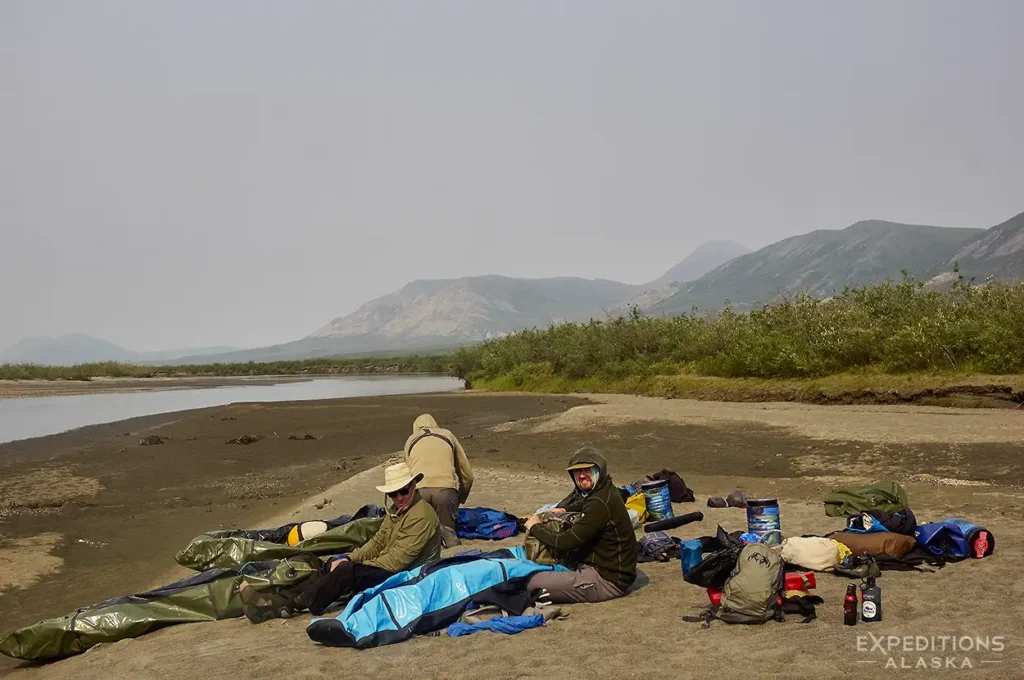
We camp riverside with minimal hauling of gear.
We travel with a full kitchen and prepare hot meals morning and evening. The midnight sun tends to shift schedules later, and groups often settle into an 11am-11pm rhythm. We call these “Arctic Days”.
It’s an unhurried pace that leaves room for long hikes, afternoon naps, and evenings around a driftwood fire.
Tell me About the Noatak River
The upper Noatak River flows west through the central Brooks Range, entirely above the Arctic Circle. Pingo Lake sits at approximately 68°N latitude within Gates of the Arctic National Park. Lake Matcharak lies about 45 river miles downstream, just inside the boundary of Noatak National Preserve. The nearest road is over 100 miles away.
The Noatak River is the only major river in North America whose entire watershed lies within protected wilderness. The one permanent settlement alongside it (the Inupiaq village of Noatak) sits 350 river miles downstream of our trip.
The upper Noatak is the Arctic distilled: clear water, big mountains, few people, wildlife everywhere. In 5-7 days we paddle 45-50 miles through Gates of the Arctic, hike into the mountains, fish pools full of grayling, and camp under the midnight sun.
One of the most intact wild river systems in North America.
It really does feel like stepping back 10,000 years.
Where Are We?
Odds & Ends
The standard trip runs Pingo Lake to Lake Matcharak. For groups wanting more time in the mountains, we can arrange a drop at Twelve Mile Slough or Lucky Six Lake, further upriver, which adds mileage and several additional days in the alpine headwaters.
Extending downstream is also possible. The Cutler River confluence lies about 90 miles below Matcharak and adds a full week of travel through wider, boggier terrain. Below Cutler, the river enters the Grand Canyon and Noatak Canyon sections with deeper pools, nesting peregrine falcons, and some Class II water.
Full-length trips to the village of Noatak (350+ miles) or the coast require 3-4 weeks and significant planning.
Rafting Trip Option
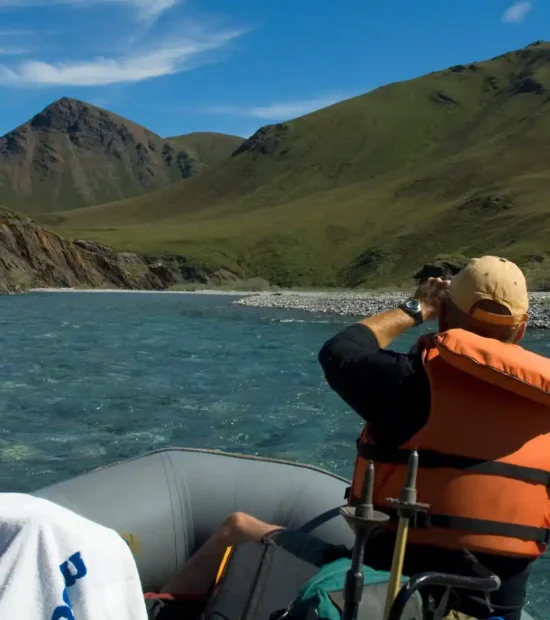
YES, we can and do run this trip as a rafting trip.
If you’d like to inquire about that option, let us know. We’re absolutely happy to switch the boats and raft the Noatak instead of packraft if that suits you better.
Temperatures range from 70s on sunny afternoons to 40s on rainy mornings. Splashwear (provided for you) makes cold paddle days comfortable.
Realize that numbers like this aren’t the whole picture.
70’s in the arctic can “feel” hot. The sun stays up all day, and all night, and is at angle where it just lands hard. If you get a few days in the 70’s in the arctic, you can expect it feel sweltering. Once you’re en route, there’s no shade. So that’s hot.
We’ll give you a detailed packing info doc, and answer all your questions, but you should realize that what 75deg F feels like in one location, say NY, will not at all be what 75deg F feels like somewhere else. And particularly so in the arctic.
It can also be cold. Pack for the worst, and hope for the best.
Light spinning rod with small spinners (green works) or fly rod with woolly buggers. Grayling are aggressive and abundant.
Rhane’s advice is “you can’t go wrong with green and white Dali llama for fishing gear”.
Freestanding backpacking tents work well. We bring sturdier shelter if the forecast looks rough.
Your Gear Requirements
We provide all group gear: packrafts, paddles, PFDs, splashwear, dry bags, kitchen equipment, bear spray, satellite communication, and camp infrastructure.
You bring personal clothing, a small day pack, sleeping bag and pad, and fishing gear if desired.
A detailed packing list is provided after booking.
Itinerary
Your trip MIGHT look like this. But it’s the arctic. And what the arctic can do to the best laid plans of mice and men and visitors is often unpredictable.
Because so many of our trips are a bespoke, customized itinerary, some of the small things can vary. We usually depart out of Coldfoot, but it could be not Bettles instead. Air taxi schedules might mean we overnight there before flying in to the backcountry the next day, or we may fly in directly this same day (Day 1).
These things will vary trip to trip. We will always discuss those with you before you book.
With that caveat, here’s what a typical Noatak River expedition with us might look like. Weather permitting, as always.
And sometimes weather does not permit.
Stay flexible.
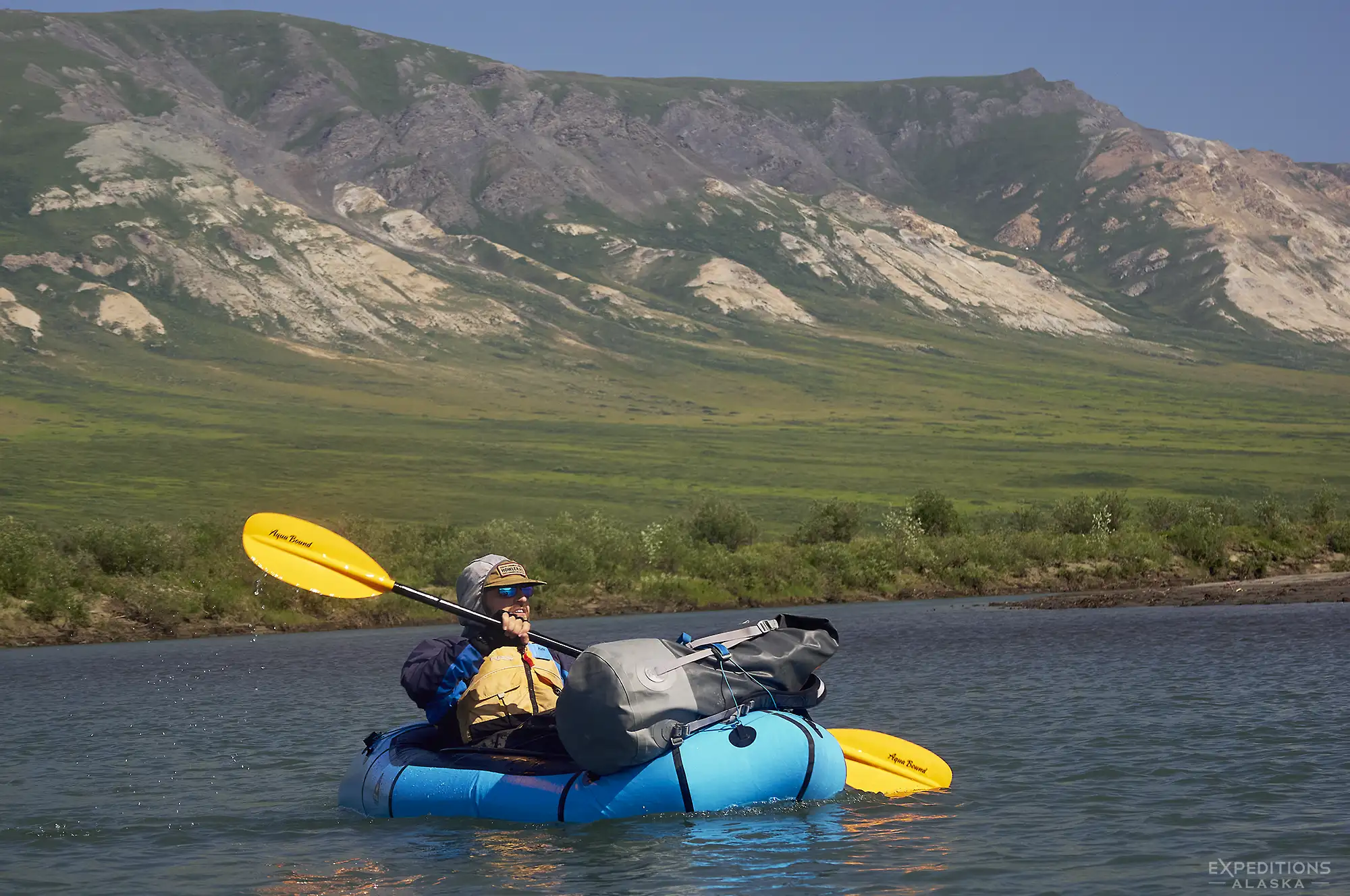
Where the river takes you.
This is what wild looks like.
Most people never see country like this. No roads, no trail. We fly you into Gates of the Arctic, hop on the river with you and together we spend a week in Gates of the Arctic National Park.
Who's It For?
This trip is built for people who want to disappear into real wilderness. If your idea of a great day involves paddling a clear arctic river, hiking and/or spotting for wildlife, catching grayling until your elbow tires, and falling asleep to the sound of loons under a sun that never quite sets, you’ll fit right in.
One guide described a morning last summer: hiking a ridge above camp, the group crawled to a rocky crest and found themselves eye-level with a grizzly grazing the far slope. They watched in silence for twenty minutes before the bear wandered off.
That’s the kind of day the Noatak delivers.
The paddling is straightforward. The hiking is off-trail but the terrain is open. What matters more than technical skill is enthusiasm for being out there and staying flexible when weather shifts.
If you’ve been looking for a trip that delivers genuine backcountry without requiring months of preparation or advanced expedition skills, the upper Noatak River is exactly that. Wild, remote, spectacular, and surprisingly approachable.
This is a trip people talk about for years. The kind of place that recalibrates your sense of what wild means. Come ready to be out there. The river does the rest.
What To Expect
Portages
Getting gear from lake to river and back involves short-hauling loads across tundra (roughly half a mile on each end). It’s honest work and everyone pitches in. Most groups knock it out in a couple hours.
Mosquitoes
Arctic mosquitoes are legendary for a reason. Head nets and bug shirts handle them. Gravel bars and ridgelines offer relief, and the bugs are a small price for having the country to yourself.
Weather
Arctic weather keeps you guessing. Pack layers for anything from warm sun to cold rain. The variety is part of what makes each day different.
Remoteness
No trails, no cell service, no crowds. We carry satellite communication and comprehensive safety gear, but the point is that this is the real thing. That’s why we’re here.


FAQs
-
What gear do I need?
Personal clothing layers, sleeping bag, sleeping pad, and any fishing gear you want to bring.
We provide group equipment including packrafts, kitchen, shelter, and safety gear. Full packing list provided after booking.
-
How about bugs?
Mosquitoes will find you. They’re real, but they’re a part of the Arctic package. Head nets, bug shirts, and repellent handle them. It’s a small trade for having the Arctic to yourself.
The river and the higher country are more comfortable; the tussock-ey muskeg less so.
-
Where is the Noatak River?
The Noatak flows through the western Brooks Range in northwest Alaska, entirely above the Arctic Circle.
The upper river runs through Gates of the Arctic National Park; the middle and lower sections pass through Noatak National Preserve. Our trip covers the headwaters section within Gates of the Arctic.
-
How do we get to the Noatak River?
Fly commercial to Fairbanks, then scheduled bush flight to Coldfoot or Bettles. Then charter floatplane to Pingo Lake.
Return is the reverse. Plan to arrive in Fairbanks the day before and depart no sooner than the day after. Or 2 days afterward. We ALWAYS recommend guests give themselves as much cusion as possible for weather delays when traveling in Arctic Alaska.
-
How much packrafting experience do I need?
Basic comfort in a small boat on moving water. The Noatak here is Class I-II, mostly flatwater with some current.
You should be able to paddle forward efficiently and follow basic current lines.
No whitewater experience required. It’s nick-named “The Slow-Attack” for a reason.
Wind (as is always the case, in any outdoor endeavor) can be a challenge. Strong headwinds can require a bit of oomph.
It’s the arctic. You should expect at least something to be harder than you expected, at some point. That’s part of what the artic is.
-
How far are we paddling each day?
Typically 8-15 river miles on paddle days, depending on current and wind.
Some days we stay in camp and hike instead.
The river is the thread; the country is the point.
-
How hard is the hiking along the Noatak?
The hiking isn’t “hard” by Alaska standards. But it is “off-trail”. That alone means it’s a bit more harder than you expect.
I’m not saying it’s “hard”.
It’s just got a mix of terrain. Most of that is good walking. But it can be a little bit brushy at times. No need to bushwhack, but more brush than tundra. Often the tundra is 18in tall blueberry and dwarf birch. Most outdoors people will find that very doable.
It might, in some areas, be soft or rocky;
Some people will find it slightly harder than they expected. Most will find it no worries.
-
What's the maximum group size?
Our group trips run 3-5 guests plus guides.
If you would like to discuss a private trip for a larger group, ask us directly.
-
What wildlife will we most likely see?
Grizzly bears, Dall sheep, caribou, and arctic ground squirrels are common. Wolves, muskox, and foxes are possible.
Bird life includes loons, gyrfalcons, peregrine falcons, ptarmigan, and various waterfowl.
The fishing is ridiculous.
-
Is this a rafting trip or a packrafting trip?
Packrafting.
BUT – we have run this trip as a rafting trip as well. So your call. Group sizes of 3 or 6 work best. If you want to raft the Noatak not packraft it, just ask.
For packrafting, we use lightweight inflatable boats designed for backcountry travel. Packrafts are smaller and more nimble than traditional rafts, perfect for flying into remote put-ins and portaging between water.
If you’ve paddled a kayak, canoe, or raft, you’ll adapt quickly.
-
Can I join a trip solo?
Absolutely. Many clients travel solo and join group trips. You’ll meet like-minded adventurers.
-
What about packrafting gear?
Expeditions Alaska will outfit your packrafting trip. That includes packraft, spray skirt and boat deck, dry suit or splash wear (trip dependent), neoprene paddling gloves and booties. Whitewater trips include helmets. All paddlers are provided with an approved PFD (Personal Flotation Device).
Dry bags are included for you as well.
Your guide will also carry a tow strap, throw bag and line, plus the usual backcountry safety equipment of sat phones, first aid kits, etc.
If you have your own equipment, you’re welcome to use that instead. Let’s talk about it first and make sure your rig is appropriate for this trip.
-
What’s A Fully Outfitted Trip Involve?
That is trip dependent.
For backpacking trips, a fully outfitted option includes your tent (one or two person tent), all your kitchenware, food and cooking by Expeditions Alaska. A typical trip, up to 12 days long, costs an additional $450.00 per person for the fully outfitted option ($350 for 4 day trips or shorter).
Available “á la carte” options are (per person)
Tent $50.00/tent
Food/cooking $325.00 (up to 4 day trip duration)
Food/cooking $425 (any trip 5 days or longer)For personal items such as a backpack, or sleeping pad, talk to me prior to your trip and we’ll see if we can possibly arrange something. If you need a pack I recommend you rent a backpack from a reputable local outfitter. They can find and fit a pack to you rather than “making do” with one of mine that may or may not be a good fit for you.
Items such as BRFC, bear spray, fuel, hiking poles are included gratis with Expeditions Alaska trips. See What’s Included? for more info.
-
What comes with the Food Add-on?
If you’d like, Expeditions Alaska can handle your backcountry food for the trip. Cost depends on trip length, but it’s typically $325 for a 2-4 day trip, and $425 for a trip 5 days or longer (backcountry days).
We will organize and pack the food, handle all backcountry prep, as well as pots and pans, the stove/s, fuel and your mess kit. Assistance for cleanup and dishes is always appreciated, but not requisite.
NB: this means, if we’re doing food for your trip, you must arrive with requisite space in your backpack for your share of the food. This typically means a BV500, sized 8.7 in. diameter. (22.1cm) x 12.7 in. (32.3cm) height. There’ll also be your mess kit (cup, bowl, cutlery, etc) and maybe some additional group gear, whether it’s a fuel bottle, stove or pan or skillet. In general your guide will carry the bulk of this stuff, but we certainly can’t and don’t intend to carry all of it. So don’t arrive with a backpack packed full, no space left in it, if we’re doing your food for you. Your food goes in your pack.
More info linked on the page below.
All your questions about our backcountry food answered right here.
-
Do we pack for vegan, gluten free, or specialized diets?
Absolutely.
Many of our guides are or have been vegetarian or have dietary needs of their own.
Our food forms are comprehensive and cover any of your meal preferences.
If you are a picky eater, we want to serve you what you want. Don’t be shy. Be as precise in your meal forms as you desire.
-
Do I have to do my dishes if I order food from EXPAK?
It’s helpful if you clean your own dishes. We will provide a kit to clean those dishes. Guides typically take care of pots/pans, but if you choose to help they will never forget you.
A little bit of helpfulness will bring you excellent karma.
-
What kind of menu do we get with the food purchase?
We have a comprehensive food form for you to complete and we’ll do our very best from there to put together a menu for the trip that you’ll enjoy.
We do our best to accommodate most dietary requirements, tastes and preferences.
Exact menu will be trip dependent. For a 12 day backpack and packraft you can expect a different constitution of food than you’ll see on a 5 day basecamp trip.
Another thing to remember is Expeditions Alaska isn’t a simple “production line” outfit. Guides all have their own systems and menus and favorites, so we don’t have a generic “here’s your trip menu” at all. Menus vary trip to trip.
What I can tell you is that we do the best backcountry food in Alaska. Bar none. You’ll enjoy good food. Really good food. Whether it’s a great pizza, a dish of Pad Thai or greek salad or a lentil soup, I assure you that you’ll appreciate your guides’ culinary expertise. Good food takes a bit extra effort, but can really help bring your trip experience up a notch. Or three.
This is a common question we get, and an important one. So important, it warrants its own page.
All your questions about our backcountry food answered right here.
-
What kinds of food do your guides typically make?
This depends on the guide and their preferences, but our staple dishes include (but aren’t limited to)
- backcountry pizza,
- backcountry baking (fresh bread, garlic bread, cinnamon rolls, brownies, cookies),
- fresh backcountry salads with fresh greens if available (arctic dock, mountain bluebell, wild berries),
- fresh fish if available (arctic char and grayling),
- curries,
- pancakes,
- hash-browns, and
- burritos.
Something you’d like to have? Let us know. Mike baked a birthday cake for a guest last summer.
-
What’s Included – Gates trips?
- All multi-day trips (backpacking, basecamping, packrafting, photo tours) out of Fairbanks include transport to/from Fairbanks/Bettles (or Coldfoot, depending on the trip), 1 night accommodations in Bettles, air taxi flights Bettles/The Backcountry, group gear such as cook tents, stoves, fuel, BRFCs, bear spray, etc.
- Hiking poles are included if you don’t have your own.
- We include both a satellite phone for emergencies and one backup emergency contact device, such as Zoleo or Garmin InReach.
- First aid kits, map and compass included. All guides are Wilderness First Responder Certified.
- Storage of your overnight travel gear is limited but available (keep it simple, one small overnight bag).
- Outfitting of equipment such as tents is available. Expeditions Alaska can either fully outfit your trip (all food, tents, etc) or adjust things a la carte if needed.
- Guide gratuities are not included but most appreciated.
- Trip insurance is not included. I strongly encourage you to buy it on your own. Travelex is who we steer people toward.
For a full outline of What’s included/not included, please see this page
-
What to Look for in Trip Insurance for Expeditions Alaska Trips
As with any insurance, the devil, and sometimes the blessing, is in the details. So read over any policy details carefully. Be sure you understand what you’re buying and what you’re not buying.
Here are a few things you want to be clear with, and a few suggestions to help you with your purchase.
-
- : Ensure the policy covers substantial medical costs, as evacuations and remote care can be expensive.
- : Look for coverage (if appropriate) that includes helicopter or airlift transport to the nearest suitable medical facility.
-
- Covers cancellations due to illness, injury, severe weather, or other unexpected events.
- Includes reimbursement for prepaid trip costs if plans are interrupted.
-
- Verify the policy includes search and rescue services in remote or wilderness areas.
- Confirm whether the coverage extends to non-medical emergencies like getting lost or stranded.
-
- Ensure activities like hiking, kayaking, or mountaineering are covered.
- Some policies exclude “high-risk” activities, so verify your specific itinerary is included.
-
- Coverage for lost, stolen, or delayed gear, including specialized outdoor equipment like tents, hiking gear, or cameras.
- Check for coverage limits that align with the value of your gear.
-
- Reimbursement for accommodations and meals if weather or logistical issues delay or cut short your itinerary.
- Missed connection coverage if delays disrupt air travel to remote destinations.
-
- Includes coverage to return you home if a serious medical issue arises during the trip.
-
- Access to a 24/7 hotline for emergencies, including medical, logistical, and legal assistance.
- Look for policies with robust global assistance services experienced in remote locations.
-
- Policies that allow upgrades or adjustments for changes in your travel plans or activities.
- Coverage that includes pre-existing medical conditions if purchased within the insurer’s specified timeframe.
: Share your trip details (destination, activities, and risks) with your insurer to ensure the policy meets the unique demands of a remote Alaska backcountry adventure.
-
-
Why is there no “Book Now” button here?
We require a conversation before confirming any backcountry trip.
You should as well.
Alaska wilderness travel isn’t like booking a hotel. The terrain is demanding, the conditions are unpredictable, and there’s no bailout option once you’re flown in. We need to understand your experience level, fitness, and what you’re hoping to get from the trip. You need to understand what you’re actually signing up for.
This isn’t gatekeeping. It’s matching. We want to put you on a trip where you’ll thrive, not survive. Some folks are ready for the Seven Pass Route. Others should start with a basecamp trip or something more moderate. A ten-minute conversation helps us figure that out.
Nobody benefits when someone gets in over their head. Not you, not the other clients, not us.
Call or email. We’ll find the right fit.
-
What’s Your Reservation and Deposit Process?
Reserving your place on a trip requires a 50% deposit. Deposits are non-refundable. All trips be paid in full 45 days prior to the scheduled departure date.
We can take online payments, either ACH or Credit Cards. Credit Card merchants charge a 2.9% processing fee which is passed on to you if you choose to pay with a card. We can also take Zelle payments, or a check or international wire.
- Credit Card – 2.9% fee
- ACH – No fees
- Zelle – No fees
- Check – No fees
- Wire – No fees
Some trips will have a slightly different process, but that’s the gist of it for most of them. See our Cancellation Policy & Terms post for more info.
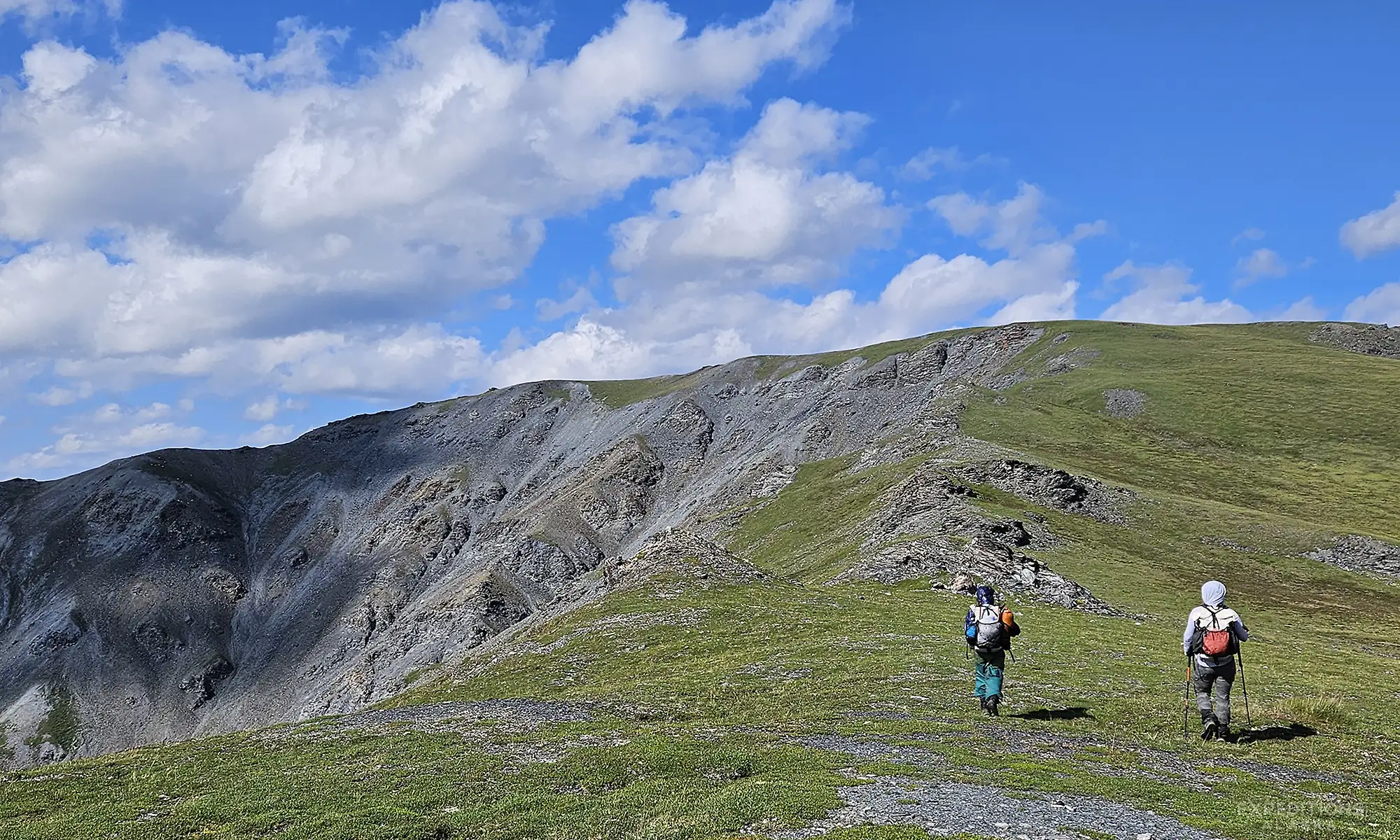
Excellent Hiking
The Arctic doesn’t have to be an expedition. The tundra in the area is great hiking for a wander.
You May Also Like