
Yes. Two unpaved roads enter Wrangell-St. Elias National Park, and most visitors drive in. The McCarthy Road runs 60 miles from Chitina to McCarthy on the south side. The Nabesna Road runs 42 miles from Slana on the north side. Both are gravel, both dead-end inside the park, and the two don’t connect to each other. The park’s interior has no roads.
The McCarthy Road (most popular access)
This is the drive the vast majority of visitors do. Sixty miles of unpaved road built along the bed of the old Copper River and Northwestern Railway. Speeds of 25 to 35 mph are about right. Some people drive it faster, and some of those people end up on the shoulder with a flat tire and a cracked windshield. Washboard sections, loose rock, blind curves, and occasional railroad spikes working up through the gravel are all normal.
Notable along the road: the Kuskulana River bridge, an old railway trestle now retrofitted with a steel roadbed, 238 feet above the water. The views open up around the halfway point. The road ends at the Kennicott River footbridge, where you cross on foot.
Plan three hours on the gravel. Add four hours of paved driving from Anchorage to Chitina. Door to door from Anchorage is about a seven-hour day, not counting stops. Driving the road in under two hours is possible but causes more damage than it saves time. Slow is the right pace.
Road conditions vary a lot through the season
The McCarthy Road’s quality is variable, sometimes within the same week.
Mid-winter can actually be one of the best times to drive it. The potholes fill with compacted snow and a freshly plowed surface can be a comfortable drive.
The worst month is usually April. Spring breakup turns the surface to mud and rotten ice. Overflow ice (groundwater that flows year-round, even at 40 below) builds up on the road through winter and can be two to three feet thick in places. As it thaws and breaks up, sections of road become impassable.
Summer is unpredictable. After the road grader runs through, conditions can be excellent for a week or two. After a few days of heavy rain combined with traffic moving too fast, potholes open up fast and the same drive that was 90 minutes a fortnight ago becomes three or more hours of jolting. Mudslides come down at a few reliable spots. Closures have happened at mile 3, mile 45, mile 50, and mile 58 over the years. Check current road conditions on the Alaska 511 service before you leave Anchorage.
Rental car rules (the most common mistake)
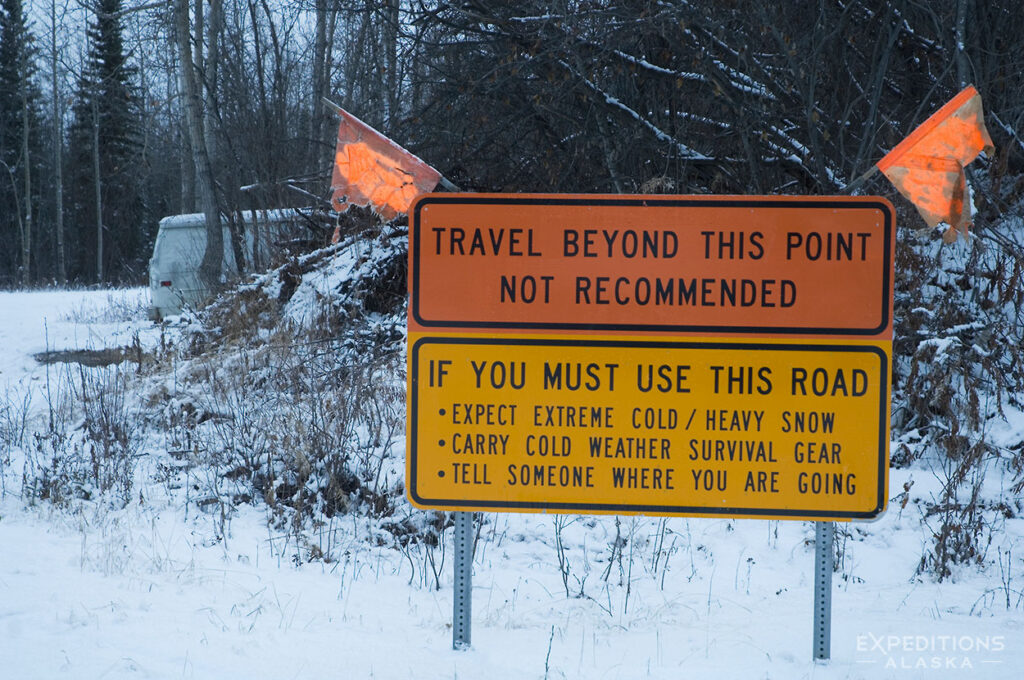
Many rental car companies in Anchorage explicitly prohibit driving on the McCarthy Road. Some void all insurance coverage if you do. This is the most common logistical mistake first-time visitors make. Confirm in writing before you book. Alaska-based rental outfits that specialize in remote-road travel handle this without issue. The big national chains at the Anchorage airport mostly do not.
A real example: in 2014, an RV with one tire too close to the soft shoulder couldn’t get back onto the road. They needed a tow from Glennallen, which ran into the thousands of dollars. Their insurance refused the claim because the rental contract didn’t allow the McCarthy Road. A tow from Glennallen is not a small expense.
The Nabesna Road (the easier drive)
The Nabesna Road is a gentler experience. Forty-two miles off the Tok Cutoff at Slana. The state maintains the first 28 miles, and any vehicle can handle that section in dry conditions. The last 14 miles get rougher and include several creek crossings that want clearance and attention. Most all-wheel-drive vehicles handle the full length without trouble. Sedans should stop at the maintained section.
Wildlife along the Nabesna Road is consistently better than along the McCarthy Road, especially for caribou and moose.
Getting past the road system
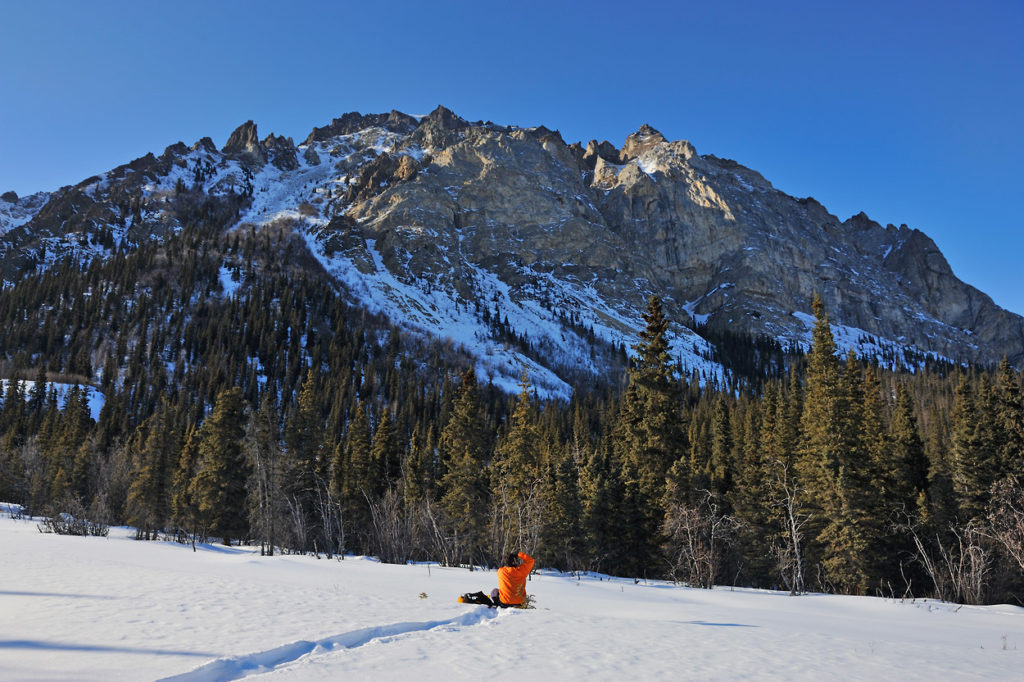
Beyond the two roads, the park is reached on foot, by bush plane, by packraft down a river, or by sea kayak along the Gulf of Alaska coast. The park interior has no roads and isn’t accessible by any vehicle other than a small bush plane.