September and October are the best months to see polar bears in Alaska. The reliable destination is Kaktovik on Barter Island, on the north coast of the Arctic National Wildlife Refuge. Bears gather there in fall for two reasons: the Beaufort Sea ice starts forming in the intertidal zone, and the Iñupiat village’s traditional bowhead whale harvest leaves carcasses on the spit east of town that draw bears in. Most polar bear photo trips in Alaska target a 3-4 week window in this period.
Why fall
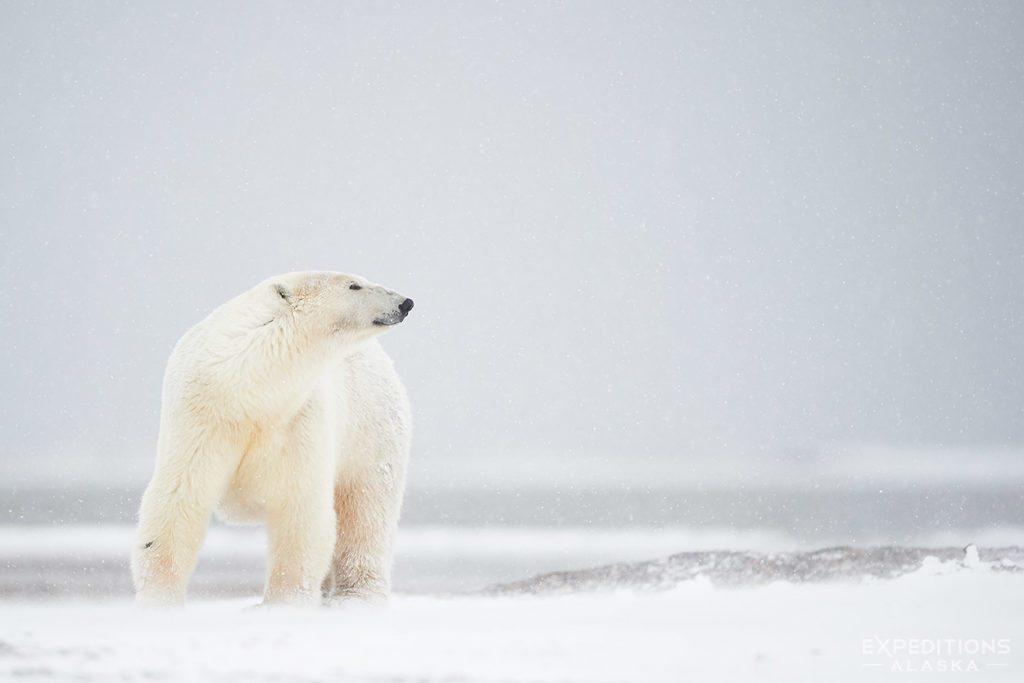
Polar bears spend most of the year on the sea ice hunting seals. In summer, the ice retreats far north of the Alaska coast, taking most of the bears with it. By late August and into September, the ice begins reforming. The intertidal zone along the Beaufort Sea coast, where fresh river water mixes with salt water, freezes earlier than open ocean. Bears wait at the coast for the pack ice to set up so they can return to seal hunting on the ice.
At the same time, Kaktovik’s whale hunt happens in early to mid September. The community is allowed three bowhead whales per year under federal subsistence regulations. The harvested carcasses are processed and the remains placed on a spit east of the village. This concentrated food source draws bears in from along the coast.
The combination of waiting bears and a food source produces the densest seasonal concentration of polar bears anywhere on the Alaska coast.
When the window opens and closes
Early September: bears are arriving at the coast. Ice still hasn’t formed. Whale harvest may be in progress or just completed. Some bears present, often singles and family groups.
Mid to late September: peak season in most years. Bear numbers high. Bears settled in around the spit and along the barrier islands.
Early October: bears still present. Shorter days, colder, ice forming more aggressively. Bears begin to disperse as ice allows them to hunt seals again.
Late October into November: most bears gone. Ice has set up enough for them to return to the pack ice and hunt.
Year-to-year variation is real. Warm falls delay the ice. A late freeze keeps bears on shore longer. A late bowhead harvest holds them around the spit longer. Each year is its own.
What you actually do
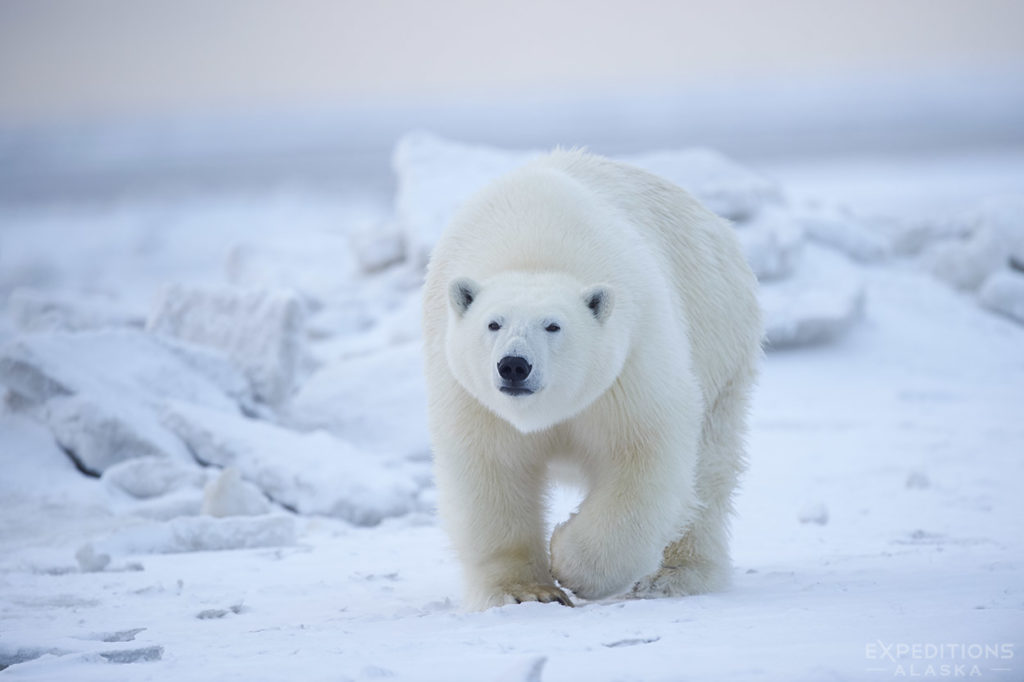
Most polar bear viewing at Kaktovik happens from boats. Local Iñupiat-run boat operators run small boats out into the lagoons, along the barrier islands, and around the spit. Bears can be a few yards from the boat. Land-based viewing from the village is more limited.
This is the standard polar bear photography destination in Alaska. Trips fill up months in advance. The window for guided photography tours is September-October.
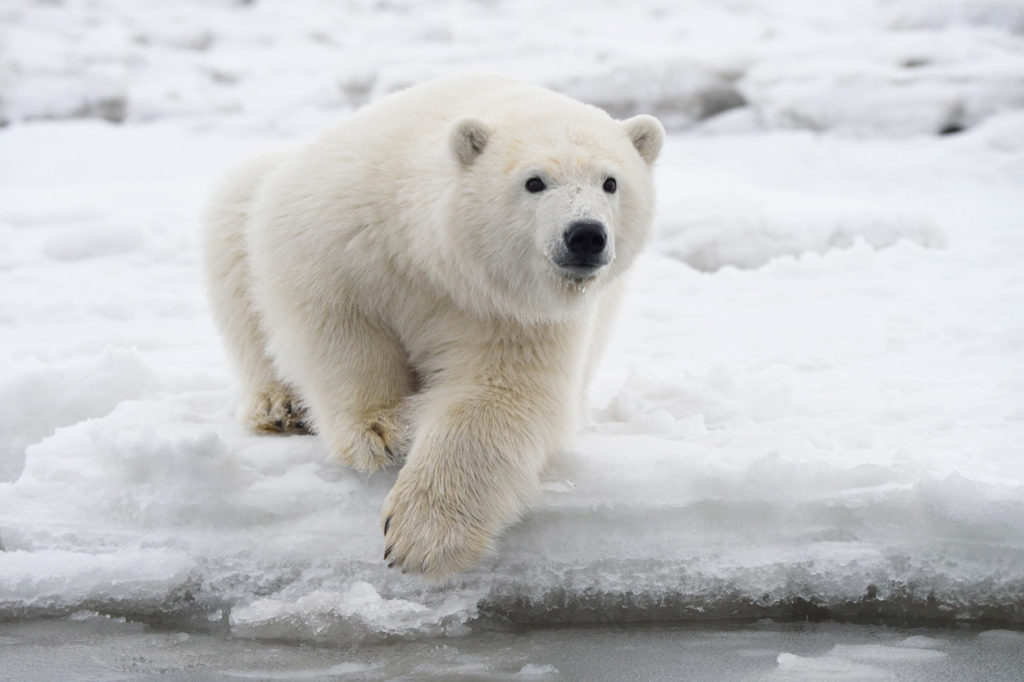
In the best years, the September-October window delivers about everything you’d hope for. Our 2013 trip in particular was the most active polar bear viewing we’ve ever had on Barter Island. Snow came early that fall, bear numbers were up, and a lot of young bears were around playing with each other and approaching the boats. For more on what good days at Kaktovik can look like, see where is the best place in Alaska to see polar bears. The USGS Polar Bear Research Program has the underlying science on bear movement and seasonality.
Download our free polar bear ebook
If you like polar bears, check out our free polar bear ebook.