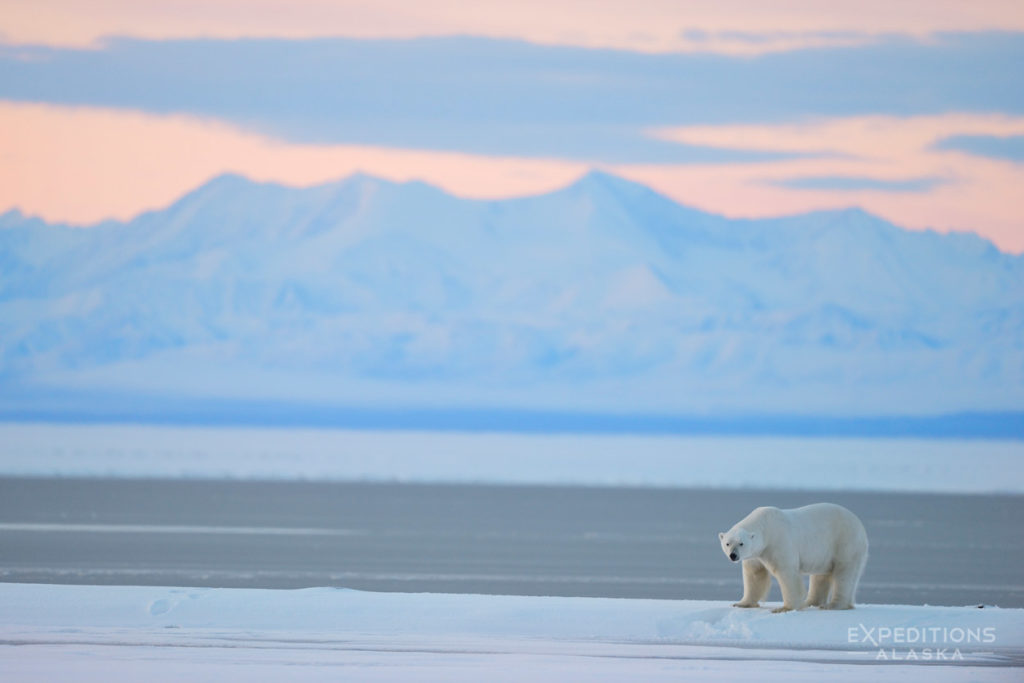
Yes, polar bears live along the Beaufort Sea coast of the Arctic National Wildlife Refuge. They’re present along the Arctic coast year-round, but visibility on land peaks in the fall around Kaktovik on Barter Island. In summer most bears are out on the sea ice or far offshore. By September and October they start moving toward the coast as the sea ice forms up and the village’s bowhead whale harvest concentrates a food source on the spit east of town.
When and where to see them
Polar bears are present along the ANWR coast all year, but seasonal patterns shape what you can actually see.
In summer, most bears are out on the sea ice hunting seals or have moved with the ice pack far offshore. Sightings on land happen but aren’t routine. Bears that do come ashore in summer are usually scavenging, looking for an easier meal than ice hunting.
In late September and October, bears gather around Kaktovik on the east side of Barter Island. Two things are happening. The sea ice is starting to form in the intertidal zone where fresh water mixes with salt and freezes earlier than open water. Bears wait there for the pack ice to set up so they can get back to seal hunting. At the same time, the Iñupiat village’s traditional bowhead whale harvest (Kaktovik is allowed three bowheads a year) leaves carcasses and scraps on what locals call “the spit” or “the bone pile” east of the village. That food draws bears in.
Through the winter, the bears are out on the formed sea ice. Spring sees some sightings around the coast as ice breaks up.
Where the viewing happens
Boat-based polar bear viewing out of Kaktovik in fall is one of the most reliable polar bear photography opportunities in Alaska. Local Iñupiat-run operators take small boats out into the lagoons and along the barrier islands. Bears are sometimes a few yards from the boat. Land-based viewing from town is more limited and depends on bear movement.
Polar bear photography tours from Kaktovik run in the September-October window. The trips are weather-dependent and bear-dependent. Sightings aren’t guaranteed any single day, but a multi-day trip in the right window puts you in the best position there is for polar bear viewing in Alaska. The USFWS polar bear program page has the official biology and conservation context.
Photographing polar bears
Polar bears are different from brown bears and black bears in their behavior toward humans. They’re more curious and more directly attentive. A young bear will sometimes walk straight at the boat, sniffing, weighing the situation. That makes them a fantastic photographic subject because they give you so much personality to work with. First-year cubs in particular are unbelievably curious and a favorite subject.