Pebble Mine could devastate Katmai’s brown bears by damaging the salmon run they depend on. The proposed mine sits at the headwaters of Bristol Bay, home to the world’s largest sockeye salmon fishery. Katmai bears eat that salmon and grow into the biggest bears on earth because of it. Damage the salmon, and you damage the bears, the ecosystem, and the Native communities that depend on both.
Bristol Bay is the salmon heart of the Pacific
Bristol Bay lies to the west of the Alaska Peninsula and Katmai National Park. Naknek Lake, where our fall bear tours are based, drains into Bristol Bay. The bay itself supports the largest wild sockeye salmon fishery on earth, with major runs of chum, king, and silver salmon in the same watersheds. All five species of Pacific salmon live in these waters.
People have been here for at least 9,000 years for the same reason the bears are. The salmon runs are the ecological anchor of the entire region.
The salmon-bear chain
The mechanism connecting the mine to the bears is direct. Bristol Bay’s salmon feed everything at the top of the food web in southwestern Alaska. Bears, eagles, wolves, seals, sea lions, whales, and the Native communities that have lived off the runs for millennia all draw calories from the salmon.
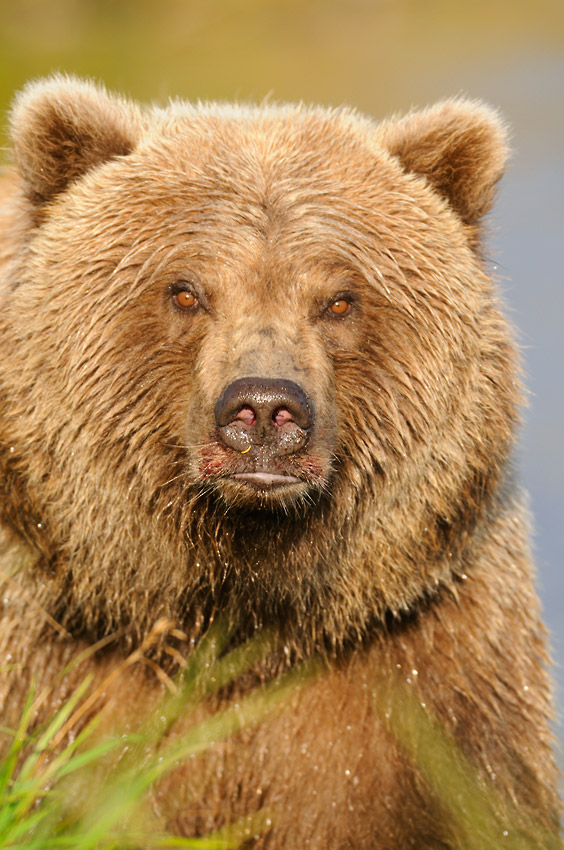
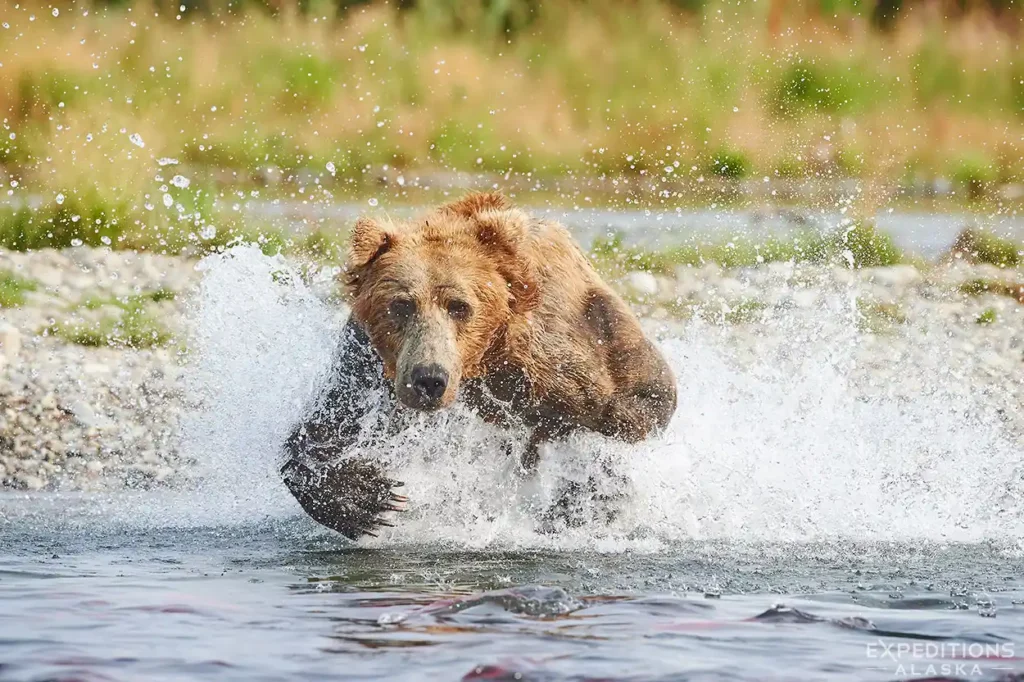
The bears specifically feed on the richest salmon diet of any bears anywhere in the world. That’s precisely why both the individual bears and the bear population are so large in Katmai. Take the salmon out of the picture and both numbers collapse. Not because the bears starve immediately, but because the coastal ecosystem that supports 1,500-pound boars and 30-square-mile home ranges only works with salmon in it.
Salmon also fertilize the surrounding forest. Their carcasses feed grasses, flowers, and trees. Even animals that don’t eat salmon directly (moose, snowshoe hares) benefit from the nutrient influx. It’s a keystone system.
What the EPA and independent geologists say
The proposed Pebble Mine is a large low-grade copper, gold, and molybdenum sulfide deposit near Lake Clark and Lake Iliamna. Because the deposit is low grade, extracting it requires a very large-scale operation. Estimated mine waste is roughly 10 billion tons of tailings, stored behind large dams at the headwaters of Bristol Bay in perpetuity.
According to the EPA scientific assessment, up to 90 miles “of salmon-supporting streams and 1,300 to 5,350 acres of wetlands, ponds, and lakes” would be erased by the mine itself, before you get to any tailings failure. The EPA has stated the mine would likely have “significant and irreversible negative impacts on the Bristol Bay watershed and its abundant salmon fisheries.”
The seismic problem
The mine site sits in an active seismic zone. My friends Hig and Erin, who run Ground Truth Trekking, have written a detailed critique of Pebble’s own seismic hazard analysis. The short version: the developers concluded that a nearby fault line (the Lake Clark Fault) is inactive and diverges away from the mine site. That conclusion doesn’t match either their own data or existing geological literature. The location and activity of that fault near Pebble is, at best, unknown.
There’s simply no way to build an earthquake-proof tailings dam that has to hold in perpetuity. And any large tailings dam that has to be maintained in perpetuity presents a permanent risk to everything downstream.
Why this matters for the Katmai bears specifically
Bristol Bay drains through the watersheds that feed the streams and rivers Katmai’s bears fish. A tailings failure, or even the ongoing habitat loss the mine itself would cause, would degrade the fishery. Salmon are highly sensitive to pollution. Bears are highly dependent on salmon. Katmai’s coastal brown bears are the endpoint of a chain that starts with clean upstream water.
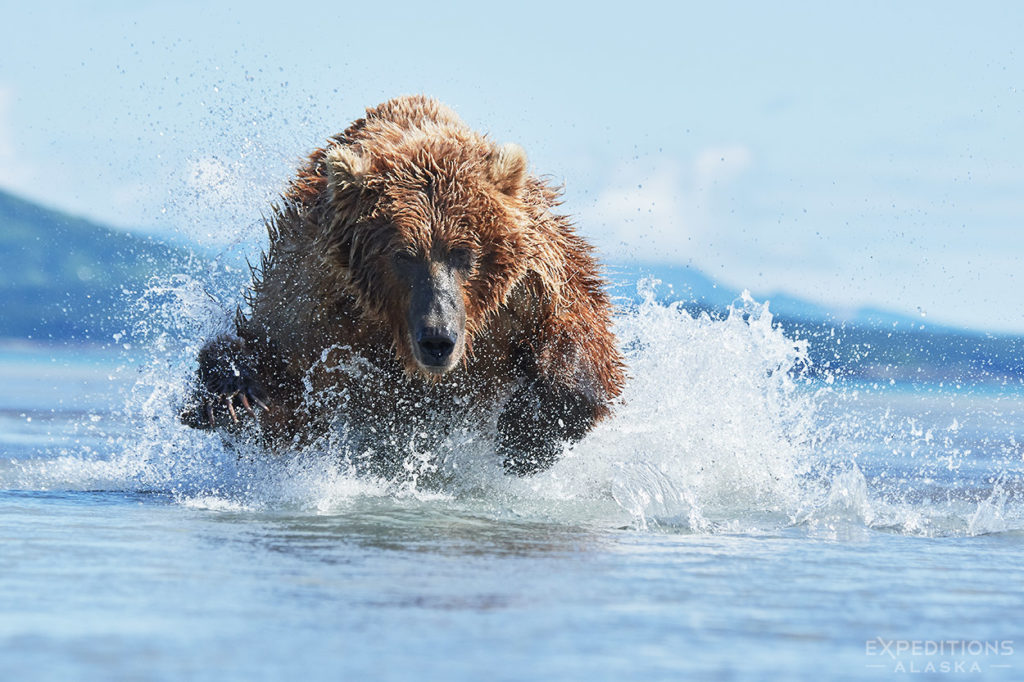
If the salmon numbers decline, the bears we photograph every September wouldn’t disappear overnight, but the density and size of the population would shift. The 1,500-pound boars we watch pulling salmon from the riffles are only possible because Bristol Bay’s salmon runs are what they are today.
What to do about it
The organizations working on this are worth supporting.
Save Bristol Bay was formed at the insistence of Trout Unlimited to protect the fishery. Their site has current status and how to weigh in.
Ground Truth Trekking, run by Erin and Hig, does deep independent analysis of Alaska resource development questions. Hig is a geologist, Erin a microbiologist. Their work on Pebble’s seismic hazard analysis is the most rigorous public critique of the project.
Our Bristol Bay is a Native-led coalition of communities dependent on the Bristol Bay fishery for subsistence and cultural continuity.
I believe it matters, as photographers, guides, and visitors to this country, that we raise our voices against any project that would trade an ecosystem this rich for a low-grade ore body. The Katmai bears may well depend on it.