
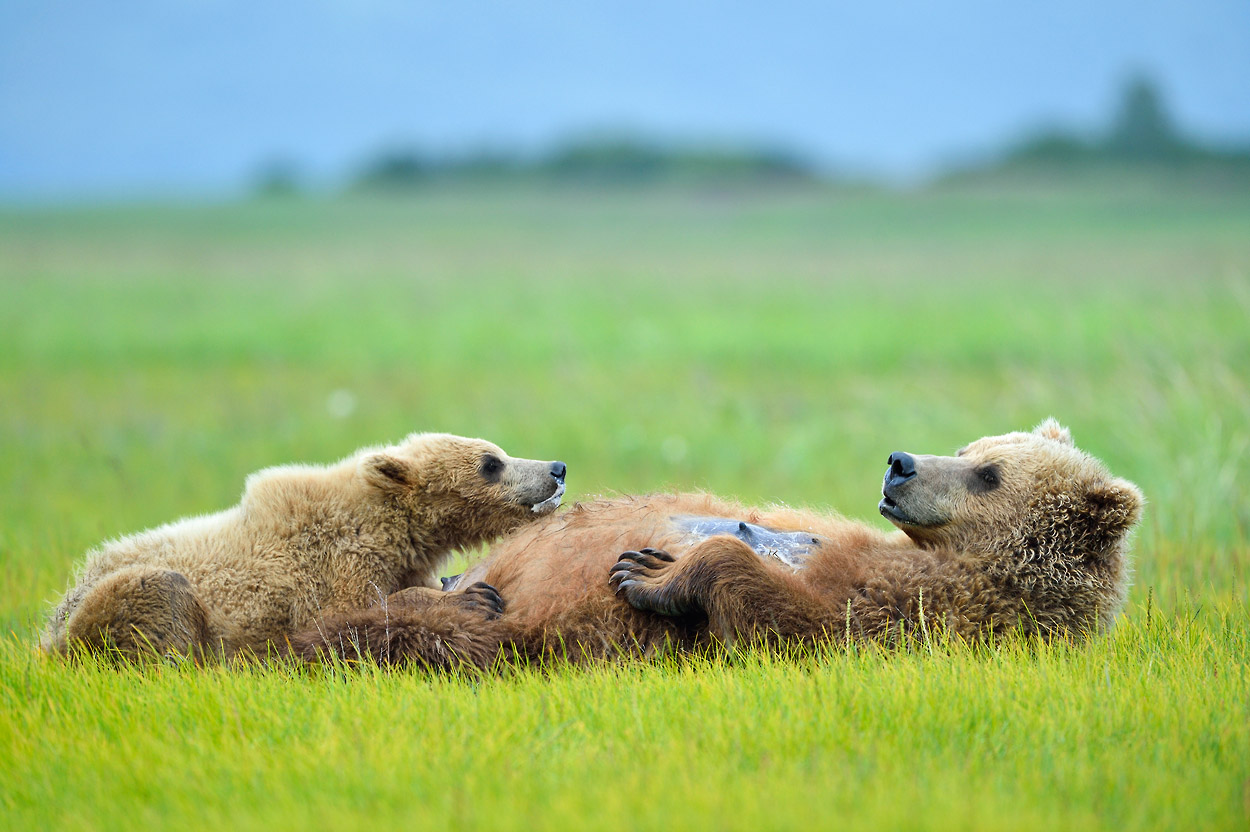
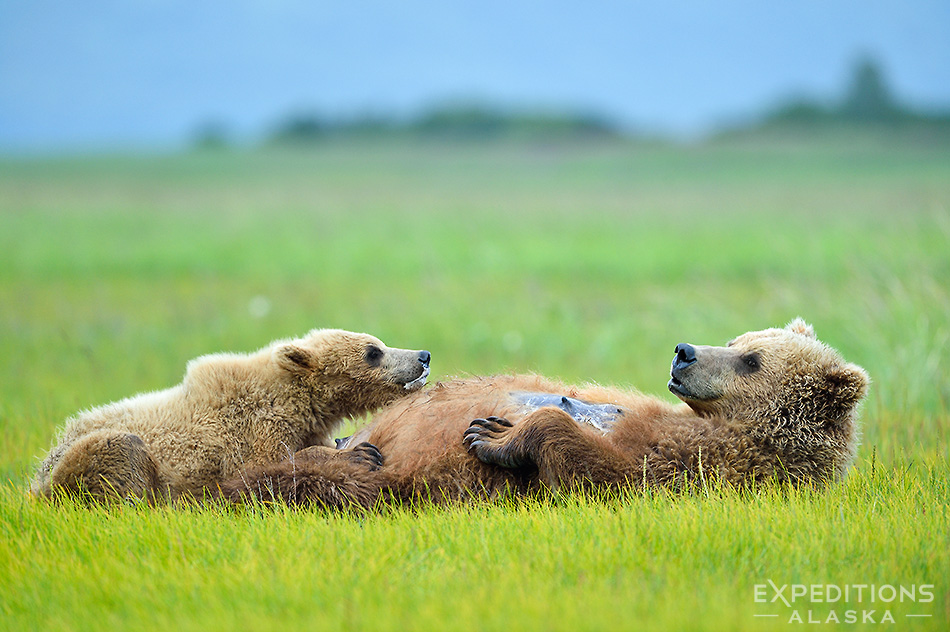
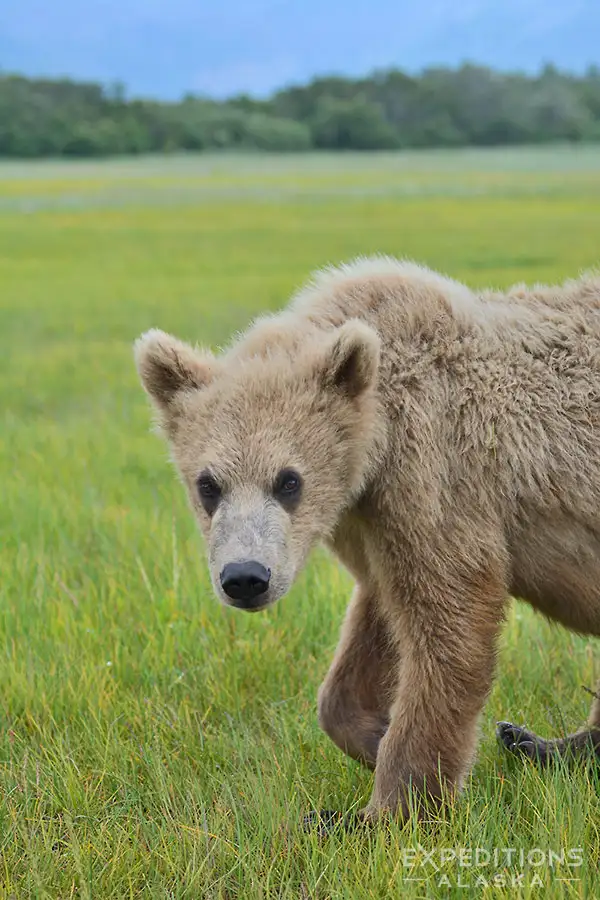
A brown bear sow nurses her year-old cub on the sedge grass flats at Hallo Bay, in Katmai National Park. She has two cubs this season. This one had just been nursing when I made this photo, while the other sibling, a male, had already taken his fill and wandered over to a nearby wood pile to explore and climb around on.
I can’t think of an animal I enjoy photographing as much as bears. Brown, black, white, or otherwise. They’re often remarkably tolerant of us and all our frenetic clicking and gasps of excitement over what to them is, I’m sure, very ordinary daily life.
How Long Do Brown Bear Cubs Nurse?
Brown bear cubs nurse for anywhere from about 2 to 3 years. It starts inside the winter den, right after birth, when cubs weigh barely a pound and a half and their eyes are still closed. They can’t do much more than crawl and find a nipple.
Those early months in the den, the cubs take in only a small fraction of their total yearly milk. The real change happens after the family emerges in spring. Milk production increases dramatically, and by peak lactation in June and July a single brown bear cub is taking in around 45 ounces of milk per day, according to wildlife biologist Sean Farley’s research on bear lactation for ADF&G. That’s a lot of milk for something that weighed a pound and a half a few months earlier.
A sow has six nipples. The newborns nurse from the lowest pair first. As the cubs get bigger they shift to the upper four, and the sow often stops producing from the bottom two altogether. I’ve watched this progression play out over the course of a summer, same sow, same cubs, and you can see the shift happen as the cubs grow.
What Does It Sound Like?
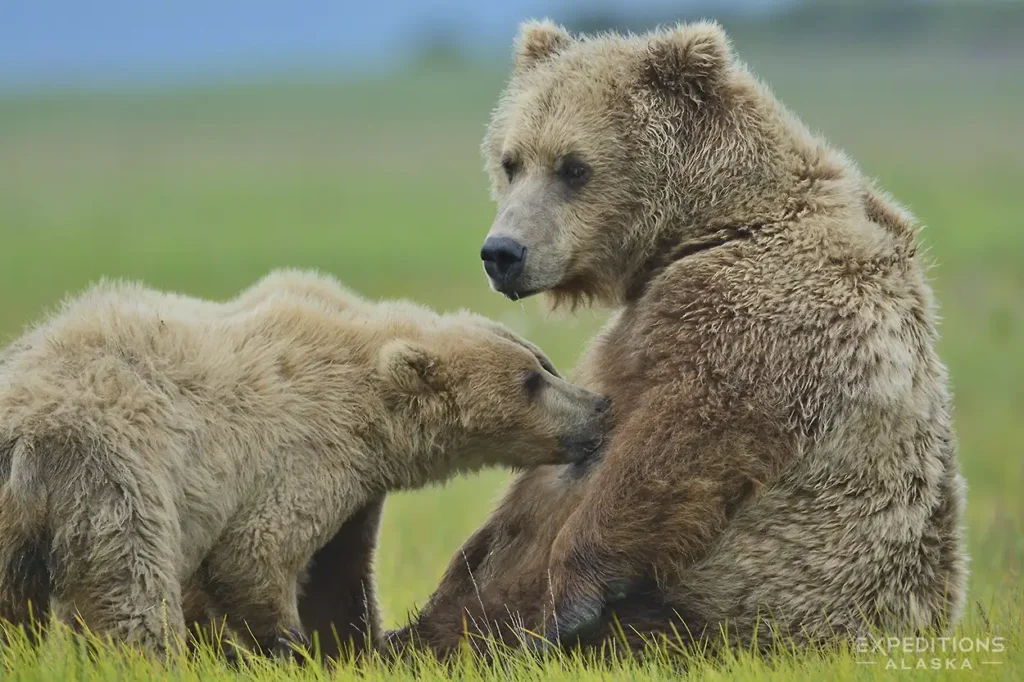
This is the part that surprises people. If you’ve never been close to brown bear cubs nursing, it’s hard to convey. They growl and purr and moan while they nurse, making this low motor-like hum. Every cub has its own voice. When a sow has multiple cubs nursing at once, the result is a layered chorus of sounds coming from a tangled mess of fur.
I once watched four cubs nurse simultaneously from their mother. It was a symphony of rumbles and squeaks and contented growling. Pretty incredible when you’re standing twenty feet away and can feel the vibration of it.
Four cubs from one sow is not as uncommon as people think. I’ve seen it a number of times over the years out here. Twins are most typical, and single cubs are common for first-time mothers, but litters of three and four happen regularly in coastal Alaska where the food supply is strong.
Sows and Cubs at Hallo Bay
Hallo Bay sits on the Pacific coast of Katmai National Park. Wide sedge grass flats, good visibility, rich coastal forage before salmon arrive. Sows with cubs are drawn to the open terrain because they can spot approaching threats, particularly adult males. Male bears will kill cubs to bring a female back into breeding condition, and it’s one of the most common natural causes of cub mortality. Sows don’t mess around when it comes to defense. I’ve watched them charge males twice their size without hesitation.
A sow brown bear doesn’t breed while she’s raising cubs, so each litter represents a multi-year commitment. Two years, sometimes three. That’s a long time to be vigilant, to nurse, to teach cubs where to forage, when to run, and what to avoid. It’s also why a sow with cubs is the most dangerous bear encounter in North America. Give them space. Always.
There’s always something happening at Hallo Bay. Sows nursing on the flats. Yearlings wrestling on driftwood. Spring cubs tasting their first mouthful of sedge grass. It’s one of my favorite places to photograph bears after 20 years of coming out here.
Photographing wildlife is an endless array of different experiences. If wildlife photography is your gig, check out this article for a comprehensive guide on how to be better at it. I’ll bet you a dollar there’s at least something in it you didn’t know or hadn’t thought of.
Next year I’ll be at Hallo Bay in early August, running the Alaska Brown Bears and Coastal Wildlife Tour. We run this tour at different times every year, so be sure to watch the trip page for upcoming scheduled dates. And you can always visit this page for a look at all of our Alaska Photo Tours.
In case you didn’t see it, here’s a video of some incredible action from one of these bear tours.
Cheers
Carl
Like Bears? You’ll Love Our Newsletter
We keep it fun, informative and interesting. No spam. No nonsense. Just tales from Alaska and cool stuff from this amaazing place we get to experience.
"*" indicates required fields