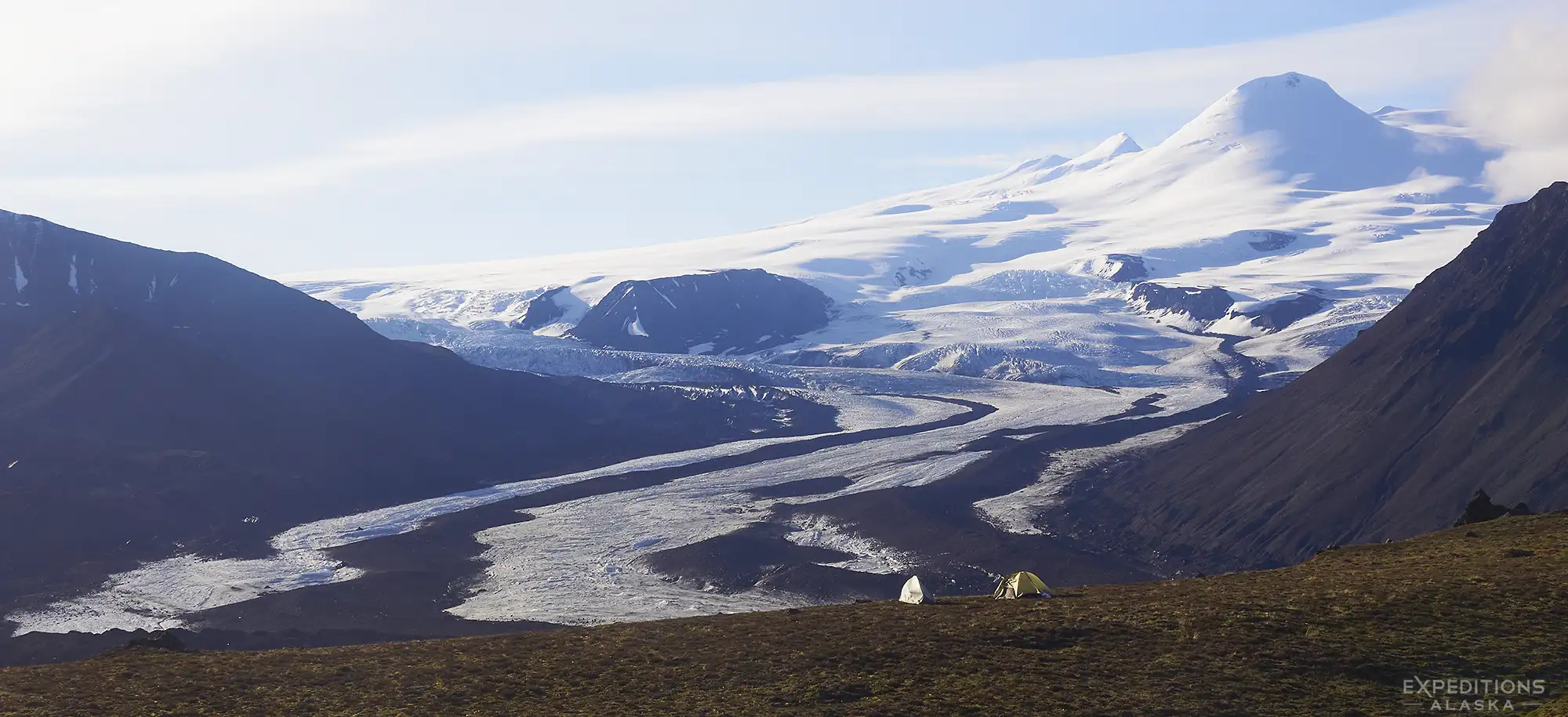
Scale is what makes Wrangell-St. Elias National Park special. At 13.2 million acres, it’s the largest national park in the United States, bigger than Yellowstone, Yosemite, and Switzerland combined, and it contains nine of the sixteen highest peaks in the country. It’s also one of the least-visited parks in the system, which is the other half of what makes it different.
Four mountain ranges meet inside the park boundary. The Wrangells, the St. Elias, the Chugach, and the eastern edge of the Alaska Range. They pile into each other and create a landscape with a depth you don’t find anywhere else in North America. Mt. St. Elias climbs to 18,008 feet out of the ocean. Mt. Blackburn sits at 16,390. Malaspina Glacier, spilling out onto the coast, is bigger than the state of Rhode Island. The Bagley Icefield runs over a hundred miles end to end and stays buried under snow year round.
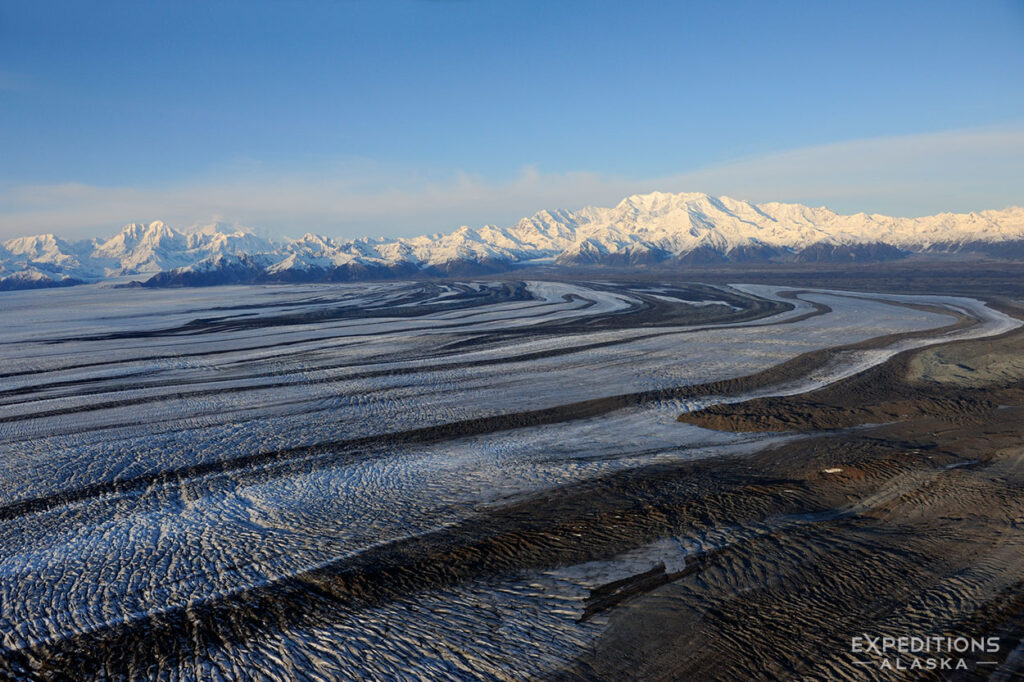
The other half of the park’s character is how rural it still is. Two gravel roads poke in from the edges and stop. There’s no interior highway, no grand loop, no shuttle system, and no plan to ever build one. The wilderness designation covers more acres than any other unit in the National Park System. Wrangell-St. Elias gets about the same number of annual visitors as Yellowstone logs in a single week. Most of our backcountry trips here go a full week without crossing another boot print.
Mining history is part of what’s special too. The Kennecott copper mill, fourteen stories tall and perched at the foot of Root Glacier, sat abandoned for more than fifty years before the Park Service started stabilizing it. It’s one of the best-preserved industrial ghost towns in the country. You can walk through it today. You can still see the forge tools in the machine shop.
We’ve been guiding in Wrangell-St. Elias for over twenty-five years. We still find valleys we haven’t walked. That’s a useful measure of what the place is. Most national parks give you the sense that you’ve seen them. This one doesn’t. You can stand on one ridge, look around, and know you’re seeing a thousand more ridges that nobody has named, let alone mapped.
If you want to start planning a visit, our Wrangell-St. Elias National Park guide covers how to get there and what to see, and our guided backpacking trips take you into the country past the roads.
Subscribe
Stay up to date with all the latest goings on as well as information and notes from the field with Expeditions Alaska. The magnificent newsletter "Ramblings" ~ It's like having Alaska land in your inbox.
"*" indicates required fields