
Visit The Wild
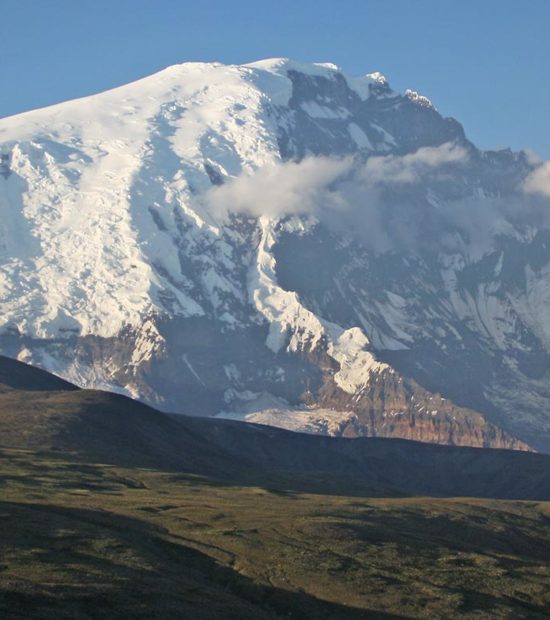
Hey Folks Off-trail backpacking It doesn’t mean what you might think it means. What do we mean, here in Alaska, when we say “off-trail’? Well, what we mean is “no trail”. It’s not the same thing as backpacking through the mountains for a few days on a nice trail, hitting the open alpine terrain where […]
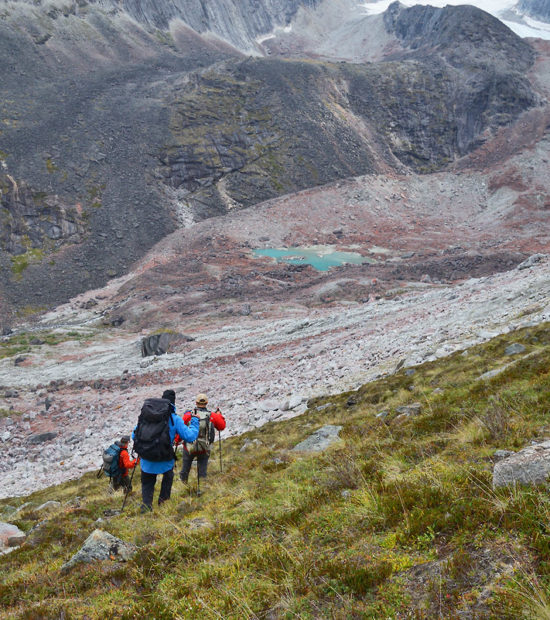
Alaska backpacking demands trekking poles. After years guiding trips across boulder fields, glacier moraines, and steep brushy terrain, I’ve learned that poles aren’t optional here. We traverse miles of talus, cross snowfields, and sidehill through terrain with little to no trail. That pole on your uphill side becomes critical for balance with a heavy pack. Poles also double as tent supports for cooking shelters and ultralight tents. I prefer cork handles and often use just one pole, though that’s personal preference. For Alaska’s challenging terrain, trekking poles make the difference between struggling and enjoying the trek.
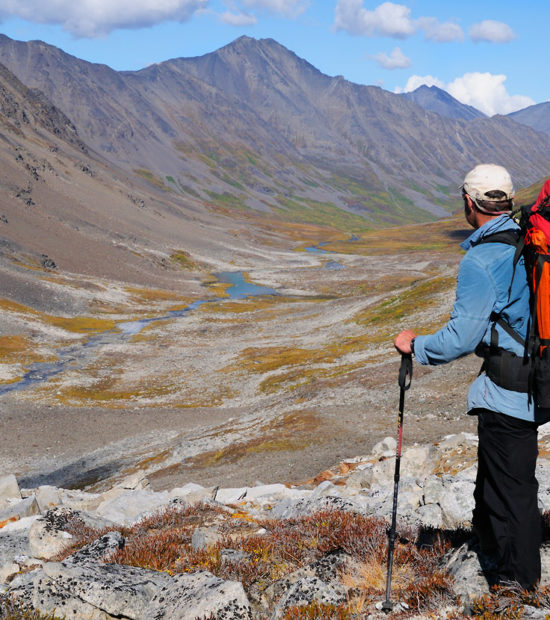
After two decades guiding Alaska backpacking trips, I can’t recommend hiking poles enough. Research shows they significantly reduce muscle soreness and injury risk while improving stability on Alaska’s challenging off-trail terrain—from boulder fields to river crossings. Here’s why poles are essential gear for Alaska backcountry travel.
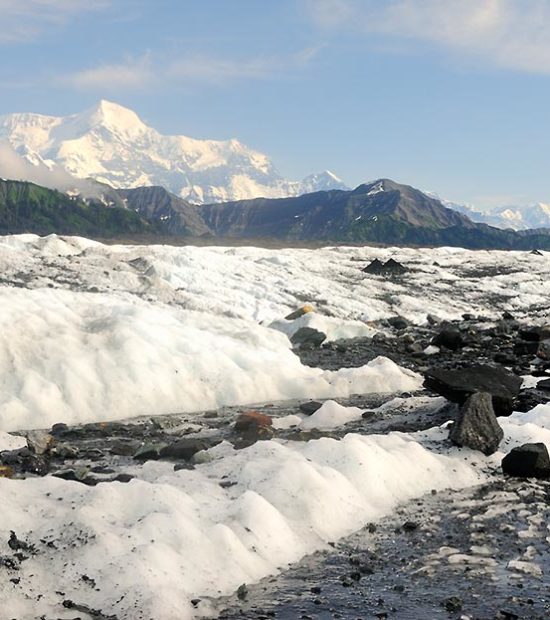
Solo winter hike on Kennicott Glacier’s west side reveals striking blue ice. Practical guidance on glacier travel safety, crampon selection, crevasse awareness, and the light physics behind deep blue glacial ice near McCarthy, Alaska.
Hiking Alaska’s trail-less wilderness means dealing with moraine, talus, and scree—miles of unstable rocks that test your balance more than your fitness. Frost-heaved boulders, slippery slopes, and unforgiving terrain demand attention, hiking poles, and practice. Confidence matters more than technique. Go slow, tread light, and learn to trust your footing.