
Introduction to Wrangell-St. Elias National Park
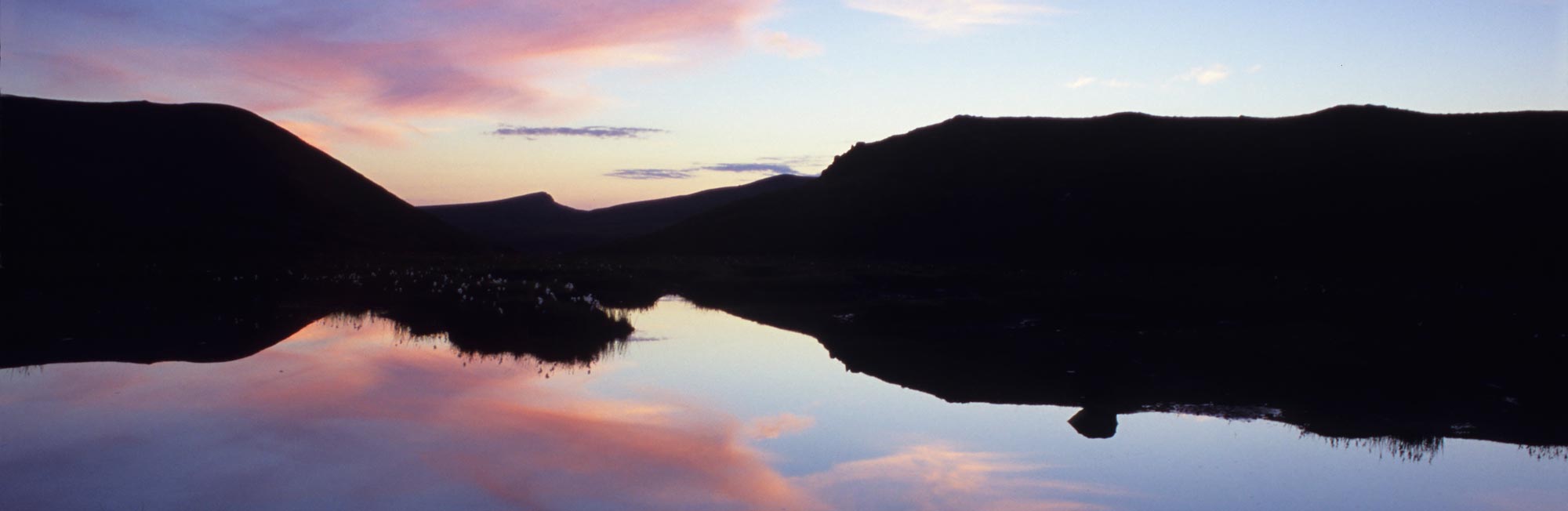
I thought I might write a small post here about my favorite National Park, Wrangell-St. Elias National Park. Though it’s the largest National Park in North America, and possibly the most impressive as well, it’s relatively little visited. Many people have never even heard the words Wrangell-St. Elias National Park.
This spectacular park gets (as of 2007) less than 40 000 visitors a year. Denali National Park gets close to a million, and parks in the Lower 48 states such as the Smokies or Yellowstone get in the vicinity of 10 million annually.
That’s just a small part of why we love it so much!
Size and Significance
The Largest National Park in North America
Wrangell-St. Elias National Park is nearly times larger than Yellowstone National park, at 14 million acres of wild, remote, gorgeous country.
World Heritage Recognition
- Established as a National Park in 1980.
- Declared a World Heritage Site in 1979.
- Forms a 24-million-acre international wilderness with Glacier Bay NP, Tatshenshini-Alsek Provincial Park, and Kluane NP in Canada—the largest internationally protected area in the world.
Mountains and Peaks
Iconic Summits
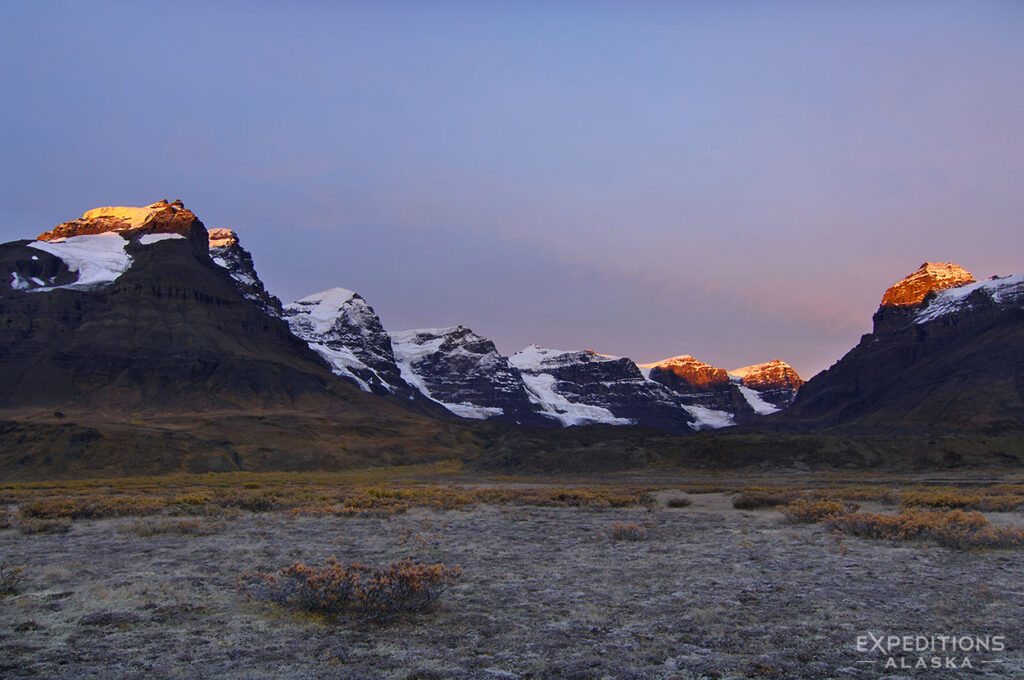
So what do you get for all these big numbers? Big mountains, big glaciers, big rivers, big country! Wrangell St. Elias National Park is home to 9 of the 16 highest peaks in the United States, including Mt. St. Elias and Mt. Blackburn.
Mt. Logan, the highest peak in Canada, and second highest mountain in North America to Denali sits right over the border and is clearly visible from much of the park. Other commonly seen mountains in the park include Mt. Sanford, Mt. Wrangell, Mt. Drum and Mt. Bona.
Nowhere in North America stand a comparable range of big mountains.
Glaciers and Icefields
Major Glacial Features
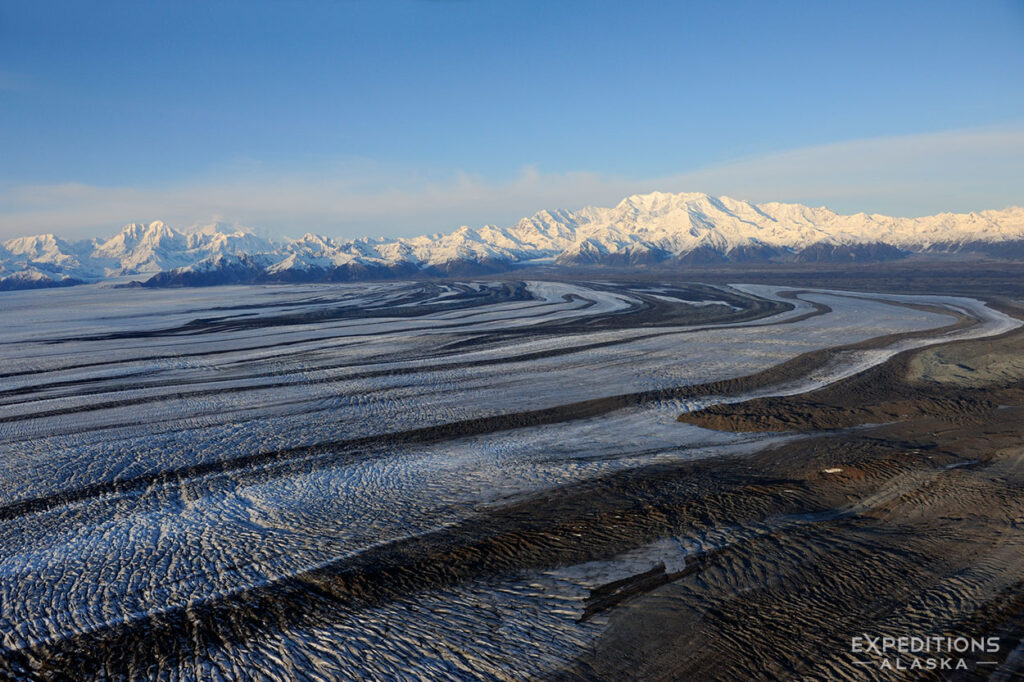
Along with big mountains, Wrangell-St. Elias is home to more glaciers and some of the largest non-polar icefields in the world.
The Bagley Icefield is nearly 125 miles long, and Malaspina Glacier is is larger than Rhode Island. There are countless unnamed peaks and mountains and glaciers in the park, many of them unclimbed and unexplored.
Hiking and Backpacking in the Park
Trail Overview
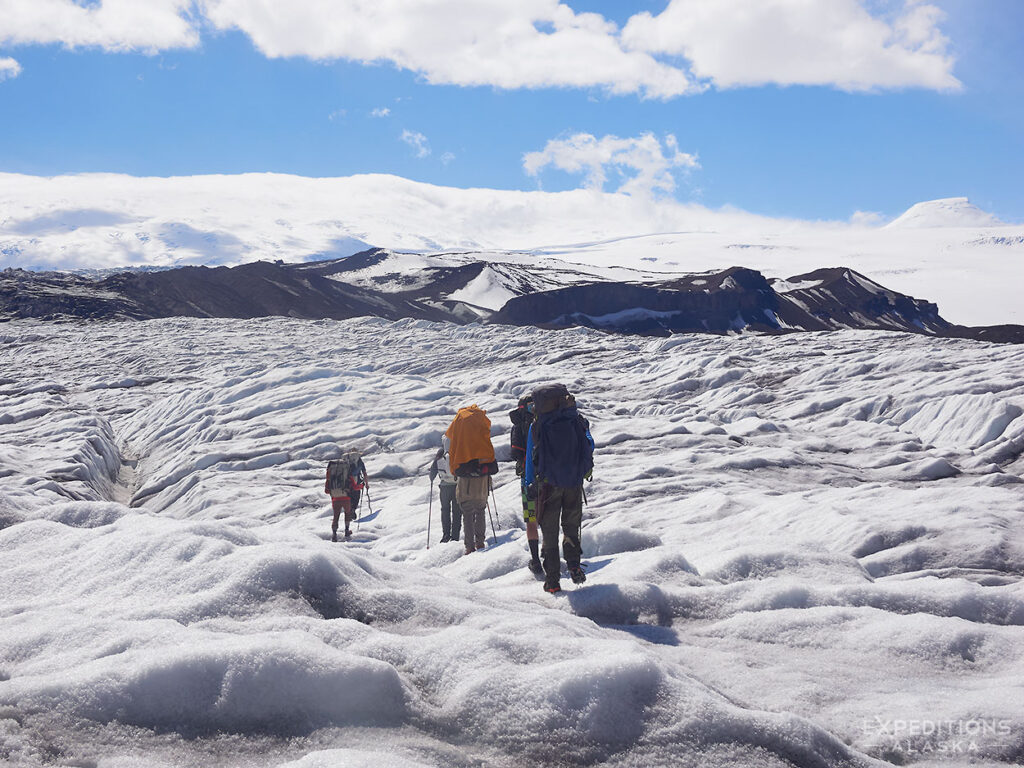
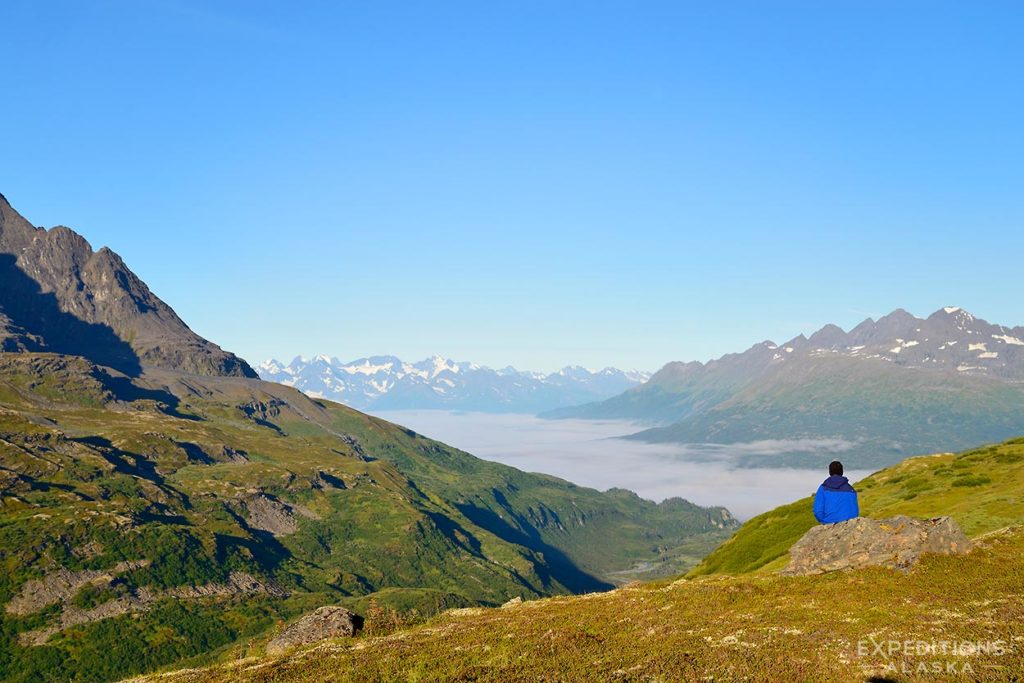
For hiking and backpacking, this park offers perhaps the greatest walking anywhere in North America.
There are few maintained trails in the park, though a number of more popular routes are relatively easy to follow. The high country, above treeline, provides visitors with sublime views of the greatest collection of mountain ranges in North America:
- the Wrangell Mountains
- the Chugach Mountains
- the St. Elias Mountains
- the Alaska range all come together here.
Exploring Wrangell-St. Elias: Northern and Southern Regions
The wilderness of Wrangell-St. Elias is typically explored through two distinct regions. Each offers unique backcountry experiences shaped by the park’s geography and access points.
Access and Visitation
Most visitors enter the park via two main routes: the park’s central and southern portion from the McCarthy Road. This old road branches off the Richardson Highway along the park’s western boundary and leads to the southern region.
Your other choice is the Nabesna Road in the north, accessible from the Tok Cutoff/Alaska Highway. Your choice of entry point will largely determine which region you explore. Both options deliver extraordinary wilderness adventures.
1. The Southern Region
The southern area immerses you in the park’s most dramatic alpine terrain. Here, heavily glaciated peaks rise from valley floors, creating some of Alaska’s most rugged mountain landscapes. The climate tends to be wetter, supporting denser vegetation in the lower elevations before giving way to ice and rock above. This region sees more visitors due to the historic mining town of McCarthy and the accessibility of iconic destinations like the Kennecott Mines and Root Glacier.
Popular backpack routes in this area are The Goat Trail and the Seven Pass. The Nizina River is a great Packraft trip.
1 (a) The Most Southern Shores of Wrangell-St. Elias National Park
All the way south of the Chugach Mountains you’ll find the southern border of the park. Explore the legendary Lost Coast by foot and packraft, or paddle and sea kayak the magical Icy Bay. Some hardy folks venture across the Malaspina Glacier for an epic traverse. All 4-5 days just to cross the ice.
2. The Northern Region
The northern backcountry offers a different character. Trails and routes often wind through boreal forest before ascending to expansive alpine plateaus like Jaeger Mesa and Capital Mountain. These broad, open highlands provide sweeping vistas and easier cross-country travel compared to the tighter valleys of the south. The vegetation is generally less dense, and the terrain feels more open and subarctic.
Sanford Plateau is one of the more popular backpacking trips in this area. There are also options right from the road such as Lost Creek or Trail Creek, and hiking routes like Skookum Volcano trail.
The tundra here is more “muskeg-ey” than the central and southern parts of the park. It’s (typically) less brushy and more open terrain. Good walking at times but it varies a lot.
This terrain can be deceptively challenging. What looks like a simple flat amble might be a big of a slog across muskeg. Mirriam Webster defines muskeg as BOG
- especially : a sphagnum bog of northern North America often with tussocks
- a usually thick deposit of partially decayed vegetable matter of wet boreal regions
If you’re unsure exactly what muskeg is, it might not be for you.
One Park, Two Personalities
For larger groups, the south side might be a better option, because many of the routes are only accessible via bush plane, and the landing strips on the northern side of Wrangell St. Elias National Park are mostly for smaller planes like a SuperCub. Those planes can only take one person plus a backpack at a time, meaning its costlier and takes longer to get in and out. The southern side of the park has larger strips that can land larger planes, cutting down time and money.
Regardless of which region you choose, you’ll witness the towering peaks that define this wilderness. Numerous mountains exceed 16,000 feet. Both areas reward backpackers with solitude, wildlife encounters, and some of the most spectacular mountain scenery in North America.
Ecosystems and Wildlife
Diverse Ecosystems
There is also an incredible array of econiches within the park, from the coastal climes of Icy Bay and Yakutat Bay.
Continental zones include the Copper River basin and the boreal forest of the lower altitude regions of the park, and transitional zones of the higher alpine and subalpine regions make this park a home for a diversity of wildlife, plants and geology.
The park hosts nearly all of the vegetation types found in nonarctic Alaska –
- lower bog and wetlands,
- Coastal Spruce-Hemlock forest are closer to the coast,
- Closed Spruce-Hardwood Forest are widespread, and
- alpine tundra is common in the higher elevations.
Wildlife & Birds of Wrangell-St. Elias National Park
Huge Sockeye salmon runs on the Copper River every summer and fall provide a feast of nutrients for a variety of birds and wildlife every summer, making the Copper River Basin one of the richest ecosystems in interior Alaska.
Black and Grizzly bears are common, wolves, fox, coyote, wolverine, lynx, marten, moose, caribou, Dall sheep, mountain goats, marmots, red and arctic ground squirrels and a host of other small mammals roam this wild country.
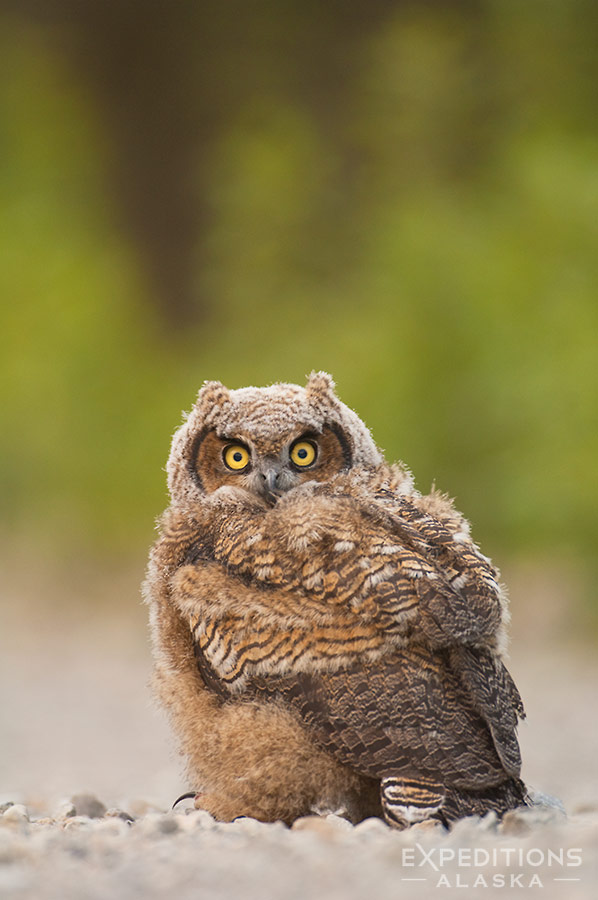
Large birds of prey, such as Golden eagles, Bald Eagles, Peregrine Falcons, Gyrfalcons, Great Gray, Great Horned Owls, Snowy Owls and many more patrol the skies. Over 125 species of birds are found within the park.
Unique Geological Features
Wrangell-St. Elias National Park is a stew of tectonic wonder.
- Volcanic and tectonic formations
- Mud volcanoes
- Rock glaciers
- Icefields
- Hot springs
Safety
I’d suggest the park is not a great place for the novice backcountry traveller to visit, unless they get some detailed advice prior to the trip. There are some places that make a great hike for even inexperienced backpackers, but there are many that are not so good – check in with someone first!
Archaeology
Wrangell St. Elias is also home to an interesting archaeological history, but I’ll have to write about that in another post.
Conclusion
Wrangell–St. Elias National Park is a wilderness of superlatives: massive mountains, vast glaciers, diverse ecosystems, and some of the best hiking in North America.
For serious backcountry travelers, it offers unmatched adventure and beauty, though preparation and knowledge are essential for safe exploration.
Cheers
Carl