Three Primary Alaska Brown Bear Photography Destinations
Katmai National Park: Brooks River & Beyond
Katmai delivers some of the most iconic Alaska bear photography, particularly along Brooks River where brown bears fish for salmon. The elevated platforms at Brooks Falls provide stable shooting positions with unobstructed views of bears fishing directly below.
When the salmon run peaks in July, a dozen or more bears may work the falls simultaneously, creating opportunities for dramatic action shots and competitive interactions. However, the primary photography focus is Brooks River itself, where bears work the entire stretch of water from the lake to the falls.
The platforms solve one problem and create another. You get guaranteed bear activity and excellent sight lines, but you’re sharing space with other photographers during peak season. Platform positions are first-come, first-served, and the prime spots fill early. The NPS have a relatively new “no tripods on the platform” regulation which is a bummer for those of us more serious about images and interested in finding new ways to shoot a bear in the river (slower shutter speeds, etc). If you want the classic Brooks Falls shot, you’ll be working around other people.
Beyond Brooks Falls, Katmai offers less-crowded options. Geographic Harbor, Hallo Bay and the coastal areas of the park provide wilderness bear viewing with smaller groups and more flexibility in positioning. The bears are less habituated than at Brooks River, which means more space between you and them. Access is more expensive. Getting to these places is a bit of a project. More on that later.
Best months: July for peak salmon run activity at Brooks River. September for fall feeding and autumn colors with fewer crowds. June for early-season bears on the coast.
Access: Floatplane from Anchorage to Brooks Camp, or air taxi to remote coastal camps. Day trips run $800-900. Multi-day photography camps start around $4,500 for 5 days.
Photography advantages: Predictable bear concentrations, iconic locations, stable shooting platforms.
Limitations: Crowding at Brooks Falls during peak season, platform restrictions on movement and positioning.
Kodiak Island: Wilderness Brown Bear Photography
Kodiak Island supports the largest brown bears in the world. The genetic isolation and rich salmon runs produce bears that regularly exceed 1,200 pounds. The difference isn’t always visible in your viewfinder. These are big animals, but they’re not noticeably larger than the Katmai bears across Shelikof Strait. Photographing them in wilderness settings without platforms or crowds creates a different kind of image than the Brooks Falls catalog shots.
The Kodiak National Wildlife Refuge covers much of the island’s southwestern portion, protecting critical bear habitat and salmon streams. Access is by chartered floatplane or boat, typically to remote beaches or inland lakes. The photography is more opportunistic than at Katmai. Bears come to you when they’re ready. That unpredictability requires flexibility and patience, but it also produces moments that feel genuinely wild.
Habitat variety is another advantage. Tidal flats, alpine meadows, old-growth rainforest, and rocky coastlines all exist within relatively small areas. A single day might include bears grazing on sedge grass at low tide, fishing in clear streams, and moving through thick brush. The backgrounds and lighting conditions shift constantly, giving you more diverse shooting opportunities than a single-location tour.
Best months: May and June for spring cubs and coastal grazing. July and August for salmon runs. September for fall feeding and lower visitor numbers.
Access: Charter flights from Kodiak town to remote coastal areas or inland lakes. Cost typically runs $1,000-1,500/day for guided photography trips.
Photography advantages: Largest bears, wilderness settings, habitat diversity, fewer photographers.
Limitations: Less predictable bear encounters than Katmai, more weather-dependent access, requires more patience.
Lake Clark National Park: Intimate Small-Group Experience
Lake Clark sits between Katmai and Kodiak in terms of bear concentrations and accessibility, but it offers something interesting as well: intimate, small-group bear photography on tidal flats and beaches where you can position yourself for behavioral sequences without platforms or crowds.
Silver Salmon Creek and Chinitna Bay are the primary bear viewing areas. Both locations feature coastal brown bears feeding on clams, sedge grass, and salmon in settings that allow for close-range photography with proper protocols. The bears in these areas have become habituated to small groups of photographers, and skilled guides can position groups to let bears approach naturally rather than forcing proximity.
The tidal flat environment creates unique photographic opportunities. Bears feeding at low tide, moving across mud flats with mountains in the background, and interacting with eagles and foxes competing for the same food sources. The light on the coast shifts differently than inland locations, with fog, mist, and coastal weather creating atmospheric conditions that add depth to compositions.
This said, I’ll offer this personalized opinion: bears clamming on tidal flats don’t make for great images. Great experiences, great to watch and video, but the photography isn’t, imo, the greatest.
Best months: June through September, with July and August offering peak bear activity.
Access: Floatplane from Anchorage or Homer to coastal camps. Cost typically $3,500-5,000 for 3-4 day trips.
Photography advantages: Beach and tidal flat settings, smaller groups, flexible positioning, approachable bears with proper protocols.
Limitations: Fewer bears than Katmai during peak season, weather can limit access and photography days.
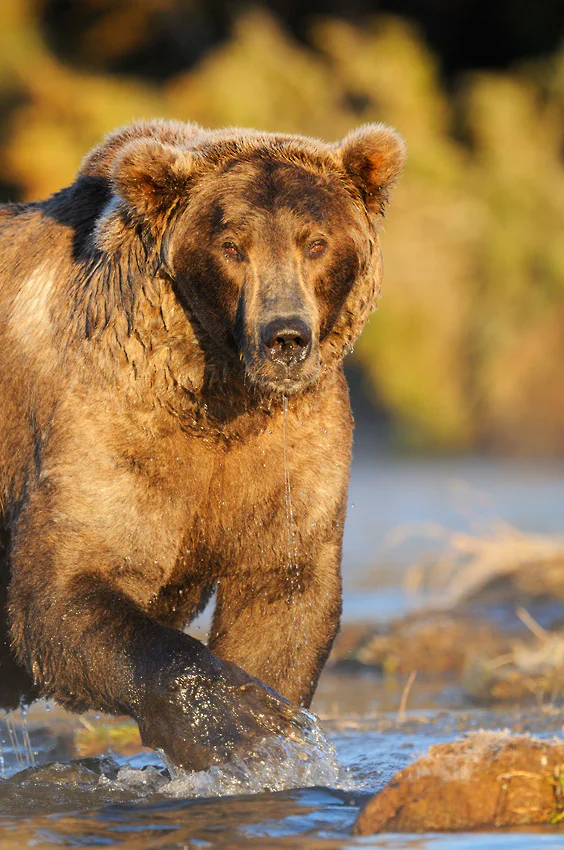
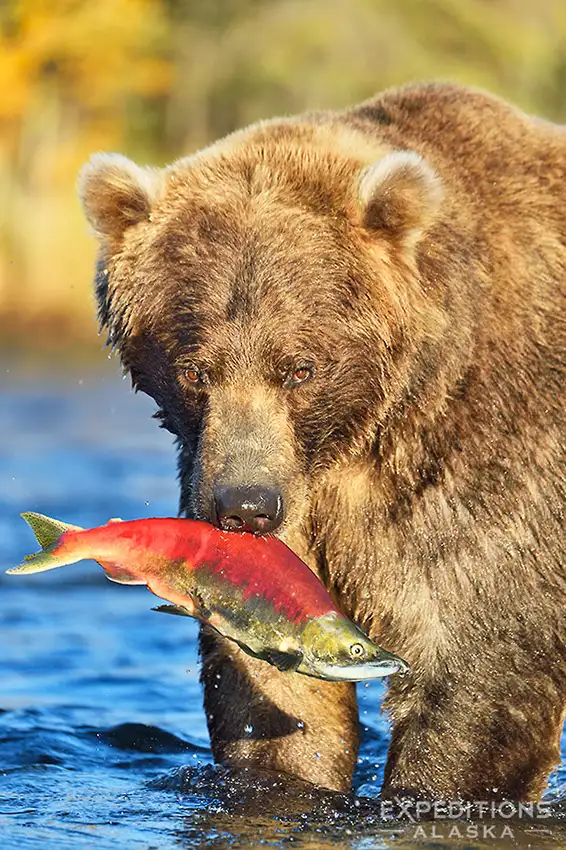
Bears in Action
When to Go: Seasonal Strategy for Bear Photographers
May-June: Spring Cubs & Coastal Grazing
Spring in Alaska’s bear country brings newborn cubs and mothers emerging from dens. The photography opportunities center on family groups, with sows teaching cubs to forage on sedge grasses and dig for clams on coastal flats. The cubs at this age are playful, curious, and small enough that the size contrast with their mothers creates compelling compositions.
The landscape in spring is green. Bright, almost neon green in some places, particularly on the sedge meadows where bears concentrate. That vibrant background gives spring bear images a different feel than the earth tones of summer or the golds and reds of fall. It’s also the quietest season for bear photography. Fewer tours operate in May and June, so you’ll encounter less competition for shooting positions.
Light conditions favor photographers in late spring. Days are long, approaching continuous daylight above the Arctic Circle by mid-June. The sun stays low enough in the sky that the harsh overhead lighting of midsummer hasn’t arrived yet. You get soft, directional light for most of the day, and when the sun does climb higher, it’s filtered through coastal fog and marine layer that acts as a natural diffuser.
The challenges are weather and accessibility. Snow may still block higher elevation areas in May. Rain is common. Bush plane access can be limited by weather, and you’ll need to build flexibility into your schedule for delays. Bears are also more dispersed in spring than during salmon runs, so patience is required. This is not the season for guaranteed action shots every day.
Best for: Cub photography, green landscape backgrounds, soft lighting conditions, solitude.
July: Peak Salmon Run – Brooks Falls Prime Time
July is when Alaska bear photography hits its peak volume. Salmon enter the streams in massive numbers, bears concentrate at waterfalls and rapids to intercept them, and the action is predictable enough to build a trip around. Brooks Falls in Katmai becomes a production line: bears fishing, catching, missing, fighting over positions, and occasionally snatching salmon out of the air mid-leap.
The photography advantages are obvious. Action is constant. You can shoot behavioral sequences showing the entire fishing process from approach to catch. Bear interactions increase with density, creating opportunities for social dynamics, dominance displays, and competition. If your goal is dramatic wildlife action photography, July at Katmai delivers.
The lighting in July is challenging. The sun circles the sky without setting, which means no traditional golden hour and no blue hour. Midday brings harsh, overhead light that flattens subjects and creates difficult exposure situations with bright sky and dark bear fur. You’ll shoot a lot in the middle of the day simply because that’s when bears are active, and you’ll need to expose for the highlights and recover shadow detail in post-processing.
Crowding is the other July reality. Brooks Falls platforms fill early and stay full. You may wait hours for a prime shooting position. Other photographers will be shoulder-to-shoulder with you. If you value solitude and uncrowded shooting conditions, July at Brooks is not your season. The tradeoff is that you’re guaranteed bear activity and you’ll come home with action shots.
Other locations in July offer alternatives. Kodiak, Lake Clark, and coastal Katmai areas have active bears without Brooks-level crowds. The salmon runs are strong across the state, so bears are concentrated and predictable without the platform restrictions.
Best for: Action photography, fishing behavior, bear interactions, guaranteed activity.
August-September: Fall Feeding & Changing Light
Late summer and early fall bring changes that shift the photographic opportunities substantially. Bears enter hyperphagia, the period of maximum feeding before winter. They’re eating constantly, packing on fat, and their behavior becomes more focused and less playful. Sows with cubs are particularly active, knowing their young need to gain weight before denning.
The landscape transitions from green to gold and red. Tundra berries ripen and change color. The first snow dusts higher peaks. Fall colors in Alaska are brief but intense, and timing a bear photography trip to coincide with peak color requires careful planning and some luck. Late August through mid-September is the target window, but weather and elevation create significant variation.
Light quality improves dramatically after the midnight sun period ends. By late August, darkness returns at night, which means actual sunrise and sunset. Golden hour comes back. Blue hour appears. The soft, warm light that photographers prefer returns to the daily schedule, and you can time your shooting to coincide with it rather than dealing with overhead Arctic sun all day.
Northern lights become possible in September. Clear nights with active auroras can create opportunities for combining bear photography with night sky work, though this requires specialized skills and equipment. It also requires bears that are active or at least visible during twilight hours, which is less predictable than daytime feeding.
Crowds thin as September progresses. By mid-September, peak season tours have ended, and you’ll encounter far fewer photographers at most locations. Weather becomes less reliable and bush plane access more challenging, but the tradeoff is solitude and autumn conditions that create images distinct from the summer catalog.
Best for: Fall colors, atmospheric conditions, improved light quality, northern lights potential, fewer crowds.
Weather Reality Check
Alaska weather makes planning difficult because of variance, not likelihood. An average temperature of 55-60°F tells you almost nothing useful. Coastal areas in summer can hit 70°F or drop to 40°F. September in Katmai can be 55°F and sunny or 20°F with snow. The range matters more than the average.
Wind and rain amplify cold. 45°F with 20mph coastal wind feels miserable. 35°F and calm in the interior feels manageable. Plan and pack for the extremes, not the averages. Bring layers that work from 30°F to 70°F, because you might see both in the same week.
Summer tours (July-August) generally run warmer with extended daylight. Shooting opportunities can extend past midnight during solstice periods. Fall tours (September-October) bring colder temps, earlier darkness, shorter days, and increased chance of snow. But “generally” doesn’t mean “reliably.” Last year’s Bears of Summer trip was hot. The year before was cold and wet. Coastal conditions differ from interior conditions. Katmai Coast weather patterns don’t match Brooks River patterns.
Photography-Focused Tours vs General Bear Viewing
Not all bear tours are built for photographers, and the distinction matters. A general bear viewing tour prioritizes guaranteed sightings, often with larger groups and shorter time windows at each location. The guide’s job is to show everyone a bear and get back on schedule. That approach works fine for people who want to see bears and check the box. It doesn’t work for photographers who need time, positioning, and light.
Photography-focused tours operate differently. Group sizes stay small, typically four to six photographers, sometimes fewer. Time at locations extends to allow for waiting on behavior rather than just documenting presence. Guides understand composition, lighting, and the difference between a snapshot and a shot worth processing. They position groups for cleaner backgrounds, better angles, and behavioral opportunities rather than just proximity.
Equipment considerations factor in as well. Photography tours account for tripod space, lens size, and the reality that everyone wants the same shooting position when a bear does something interesting. General viewing tours may not provide adequate space for serious camera gear, and some explicitly prohibit tripods.
The cost difference reflects these priorities. Photography-specific tours typically run 20 to 30 percent higher than general viewing tours to the same locations. You’re paying for smaller groups, longer field time, and guides with photography experience rather than just wildlife biology credentials.
Do you need a photography-specific tour? If you’re shooting with a telephoto longer than 300mm, want more than basic wildlife snapshots, or plan to spend time processing and printing the images afterward, the answer is probably yes. If you’re shooting with a phone or a compact camera and bear photos are a bonus on a larger Alaska trip, a general viewing tour will serve you fine.
Guided vs Independent Bear Photography
Most photographers visiting Alaska for bear work use guided tours, and there are solid reasons for that beyond convenience. Bear behavior knowledge, location access, safety protocols, and the logistics of bush plane coordination all favor working with experienced guides, particularly on a first trip.
Guided tours provide positioning expertise that takes years to develop. A good bear photography guide reads animal body language, anticipates movement, and positions groups for behavioral opportunities rather than just proximity. They know which bears tolerate close approach and which require more space. They understand tidal cycles, salmon run timing, and how weather affects bear activity. That accumulated knowledge translates directly into better shooting opportunities and fewer hours spent waiting in the wrong location.
Access is another factor. Some prime bear photography areas require guided entry or are effectively accessible only through specific lodges and camps. Brooks Falls has platform space available to independent visitors, but the logistics of getting there, securing lodging, and competing for shooting positions without local knowledge can consume the first day or two of a short trip. Guided operations handle those details and put you in position to shoot from arrival.
Safety protocols matter in bear country, particularly in areas without developed infrastructure. Guides carry deterrents, understand bear behavior in ways that prevent conflicts before they start, and manage group dynamics to avoid situations where inexperienced photographers push too close or create problems. That risk management isn’t just about physical safety. It’s also about protecting the resource and ensuring that bear viewing areas remain accessible to future visitors.
The cost premium for guided tours reflects these services. A multi-day guided bear photography trip runs $3,500 to $6,000 for all-inclusive packages covering flights, lodging, meals, and guide expertise. Independent trips cost $1,000 to $2,000 for the same duration if you have the skills and experience to operate safely in remote bear habitat.
Independent bear photography trips are viable for experienced wilderness photographers who understand the protocols, have arranged bush plane access, and know how to camp in bear country. Kodiak National Wildlife Refuge allows independent access with proper permits. Some Katmai backcountry areas are open to skilled travelers. Lake Clark permits independent camping in certain zones.
If you’re considering independent bear photography, the honest assessment is whether you have the following: extensive backcountry camping experience in grizzly country, bear safety training beyond basic theory, the ability to read bear body language and behavior, floatplane or boat access already arranged, bear-resistant food storage, and the judgment to know when to back off rather than push for a shot. If any of those pieces are uncertain, use a guide.
Note About Camping Out
If you’re backcountry camping in Alaska, not all locations are the same. You NEED to know how to wilderness camp, and you need to be fully aware of weather and what it does. I’ve watched a number of other tour operators and tours get CRUSHED by wind. Wind they knew was coming (forecasted). They and their gear weren’t prepared for it. And they probably won’t be next year either.
What It Actually Costs
Alaska bear photo tours span a wide cost range depending on location, duration, and service level. Understanding the pricing structure helps set realistic budgets and avoid surprises.
Day tours from hub towns represent the entry-level option. Flying from Homer to Katmai for a single day of bear viewing runs $700 to $900 per person. You get six to eight hours on the ground, weather permitting, and return the same day. The advantage is lower cost and no camping gear required. The limitation is that a single weather delay cancels the entire trip, and you’re working within tight time windows that don’t allow for patient photography or waiting on specific behaviors.
Multi-day photography tours, typically three to five days, are the most common format. All-inclusive camps at locations like Lake Clark, coastal Katmai, or Kodiak run $3,500 to $6,000 per person. That price covers floatplane transportation, tent or cabin lodging, all meals, guide services, and access to prime bear viewing areas.
Group sizes usually stay between four and eight photographers. These trips provide enough time to work through weather delays and wait for behavioral opportunities rather than just documenting bear presence.
Premium week-long boat or lodge-based expeditions with specialized instruction cost $8,000 to $12,000 per person. You’re paying for extended field time, private guides, smaller groups, and the logistical complexity of moving between different bear habitats. Some operations offer one-on-one photography instruction as part of these packages.
Independent trip costs depend entirely on your resourcefulness and existing skills. Bush plane charters to remote areas cost $800 to $1,200 per person round trip. Camping permits range from free in some national park backcountry areas to $50 for multi-day stays in state refuges. Bear-resistant food container rental adds $50 to $100 for a trip. If you have the backcountry experience and safety skills to operate independently, you can run a five to seven day bear photography trip for $1,000 to $2,000 total. That cost advantage only applies if you already know what you’re doing.
Hidden costs to factor in: Travel to Alaska (flights to Anchorage or Fairbanks), lodging before and after your bear trip, gear you may need to purchase or rent, tips for guides (typically 10 to 15 percent for multi-day trips), and contingency budget for weather delays. Bush plane flights operate on weather, not schedules, and you may need extra days at either end of your trip.
Camera Gear & Settings for Alaska Bear Photography
A telephoto lens is non-negotiable for Alaska bear photography. National Park Service regulations generally require 50 yards distance from bears, and ethical photography means not altering bear behavior to get closer shots. That distance requirement dictates your gear choices.
Lens recommendations: 400mm is the practical minimum for filling the frame with a bear at regulation distance. 600mm is better. If you’re shooting crop sensor, a 100-400mm zoom gets you into workable range with the focal length multiplier. Full frame cameras need longer glass. Prime lenses (400mm f/2.8, 500mm f/4, 600mm f/4) deliver better image quality than zooms but cost significantly more and weigh considerably more. Zoom lenses (100-400mm, 150-600mm, 200-600mm) offer flexibility for different distances and compositional approaches.
Camera body priorities: Fast, accurate autofocus is essential for tracking moving bears. High ISO performance matters for early morning and late evening shooting in coastal weather. Frame rate helps for action sequences when bears are fishing or interacting. Weather sealing is not optional. Alaska coastal weather is wet, and your camera will be exposed to rain, mist, and salt spray.
Tripod versus monopod: Both have uses. Tripods provide stability for long lenses and allow for slower shutter speeds when bears are stationary. Monopods offer mobility for tracking action and repositioning quickly when bear behavior changes. Many photographers bring both and choose based on the situation. Carbon fiber saves weight on bush plane trips with strict load limits.
Weather protection is mandatory. Rain covers for camera and lens, lens hoods to keep spray off the front element, dry bags for storage between shooting sessions. Alaska coastal weather changes fast, and you need gear that functions when conditions deteriorate.
Camera settings for bear photography: Shutter speed of 1/1000 second minimum for bears in motion. Fishing bears, running bears, and interactive behavior all require fast shutter speeds to freeze action. You can drop to 1/500 or slower for stationary subjects, but err on the side of faster speeds until you’re confident reading bear movement.
Aperture choice depends on your compositional goals. f/5.6 to f/8 works well for single bears, providing enough depth of field to keep the entire animal sharp while blurring backgrounds. f/11 or smaller brings groups of bears into focus when you want to show social dynamics. Shoot wide open (f/4, f/2.8) for maximum background blur and subject isolation, but watch your focus accuracy.
ISO strategy: Use auto ISO in changing light conditions, which describes most Alaska coastal weather. Set your minimum shutter speed and maximum ISO, and let the camera adjust as clouds move and light shifts. Bears don’t wait for you to dial in new exposure settings.
Autofocus modes: Continuous autofocus (AI Servo on Canon, AF-C on Nikon and Sony) for any bear movement. Single-point AF for stationary subjects where you control exactly what’s sharp. Zone or area AF for tracking bears through frame.
What not to bring: Flash photography is prohibited in national parks and wildlife refuges. It also disturbs bears and ruins the experience for other photographers. Drones are illegal in national parks and most bear viewing areas. They’re also terrible for bear photography because they alter behavior and create dangerous situations. Leave them home.
Excessive gear creates problems on bush plane trips with weight limits and in field conditions where you need mobility. Bring what you’ll actually use, not everything you own.
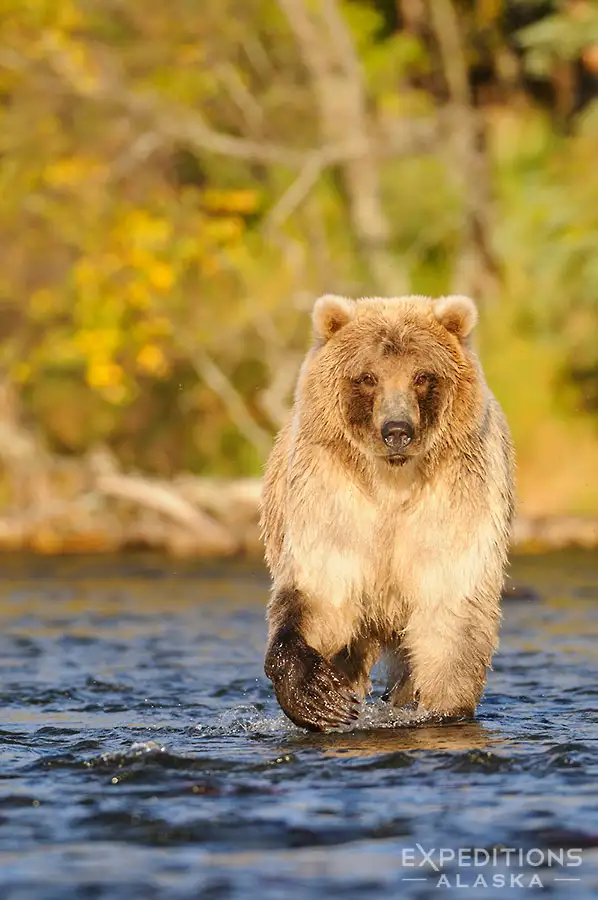
Bear Photo Moments
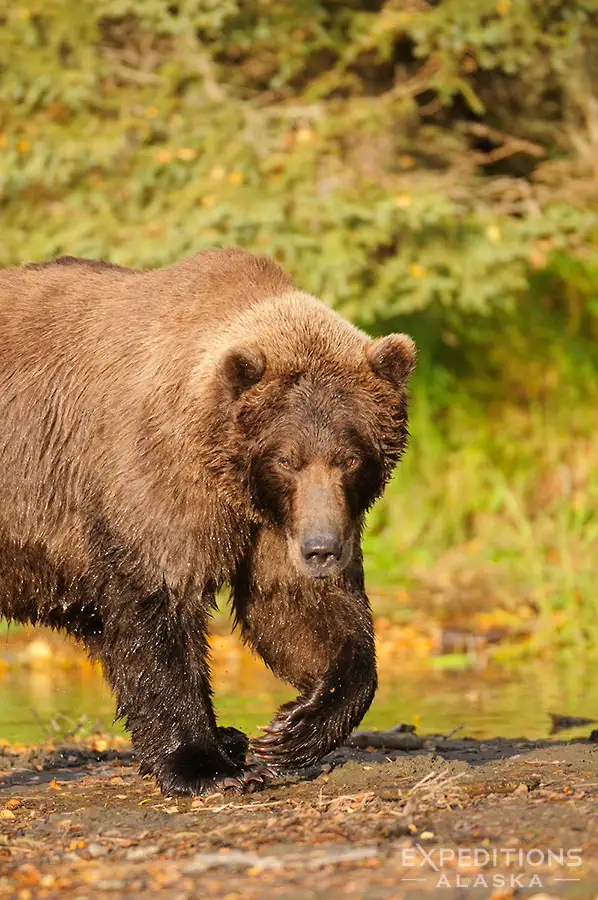
Safety, Ethics & Respect
Bear photography in Alaska operates within a framework of regulations, ethical standards, and practical safety protocols that matter both for your wellbeing and for the continued viability of bear viewing areas.
NPS regulations prohibit approaching bears within 50 yards. If a bear approaches you, that’s typically acceptable. However, if a bear on a concentrated food source (actively feeding on salmon or carcass) comes within 50 yards, you must back away and give space. Rangers interpret ‘concentrated food source’ differently and inconsistently. Enforcement has evolved over time. The short version: give bears space, especially feeding bears.
Violating distance regulations can result in citations, removal from viewing areas, and permanent bans from national parks. The regulation exists because bears that become habituated to close human presence may eventually need to be relocated or destroyed if they become food-conditioned or aggressive.
Photography ethics extend beyond regulatory minimums. Don’t alter bear behavior to get shots. That means no calling bears, no using food or scent as attractants, no approaching feeding or nursing mothers, and no positioning yourself to block travel routes or force bears to detour around you. If a bear changes direction or stops what it’s doing because of your presence, you’re too close or you’ve positioned yourself wrong.
The goal is neutral interaction. Bears see you, they know you’re there, but you’re not in their way and you’re not challenging them. Skilled photographers and guides achieve this by reading bear body language, selecting positions that don’t block preferred paths, and maintaining consistent, predictable behavior that bears learn to interpret as non-threatening.
Bear safety in the field starts with awareness. Pay attention to terrain, wind direction, and bear movement patterns. Avoid surprising bears by making noise when visibility is limited and traveling in areas where bears might be resting or feeding without line of sight. Stay in groups. A cohesive group of four to six people is far less likely to experience conflict with a bear than individuals spread across a location.
Bear spray is standard equipment for guides in Alaska bear country. If you’re photographing independently, carry it accessible, know how to deploy it, and understand that the effective range is roughly 15 to 20 feet. Bear spray works, but it’s a last resort for situations that went wrong. Proper positioning and awareness prevent most conflicts before they reach that point.
Food storage in bear country means bear-resistant containers for anything with scent: food, toiletries, trash. This isn’t optional in national parks, and it’s critical anywhere bears are present. A bear that gets human food becomes a problem bear, and problem bears get shot. Your lunch left in a backpack can result in a dead bear.
Understanding bear body language helps distinguish curiosity from aggression and prevents situations where photographers misread intent and either push too close or panic unnecessarily. A bear making direct eye contact while moving toward you is communicating something different than a bear that glances your direction while continuing to feed. Most perceived charges are bluff charges or redirected aggression from conflicts with other bears. Actual predatory behavior toward humans is extremely rare but looks completely different from defensive posturing.
Leave No Trace principles apply fully in bear photography areas. Pack out all trash, even small items. Don’t trample vegetation to get better shooting angles. Stay on established paths and viewing areas where they exist. The pristine quality of Alaska bear habitat is part of what makes the photography compelling. Degrading it for short-term convenience undermines the resource for everyone.
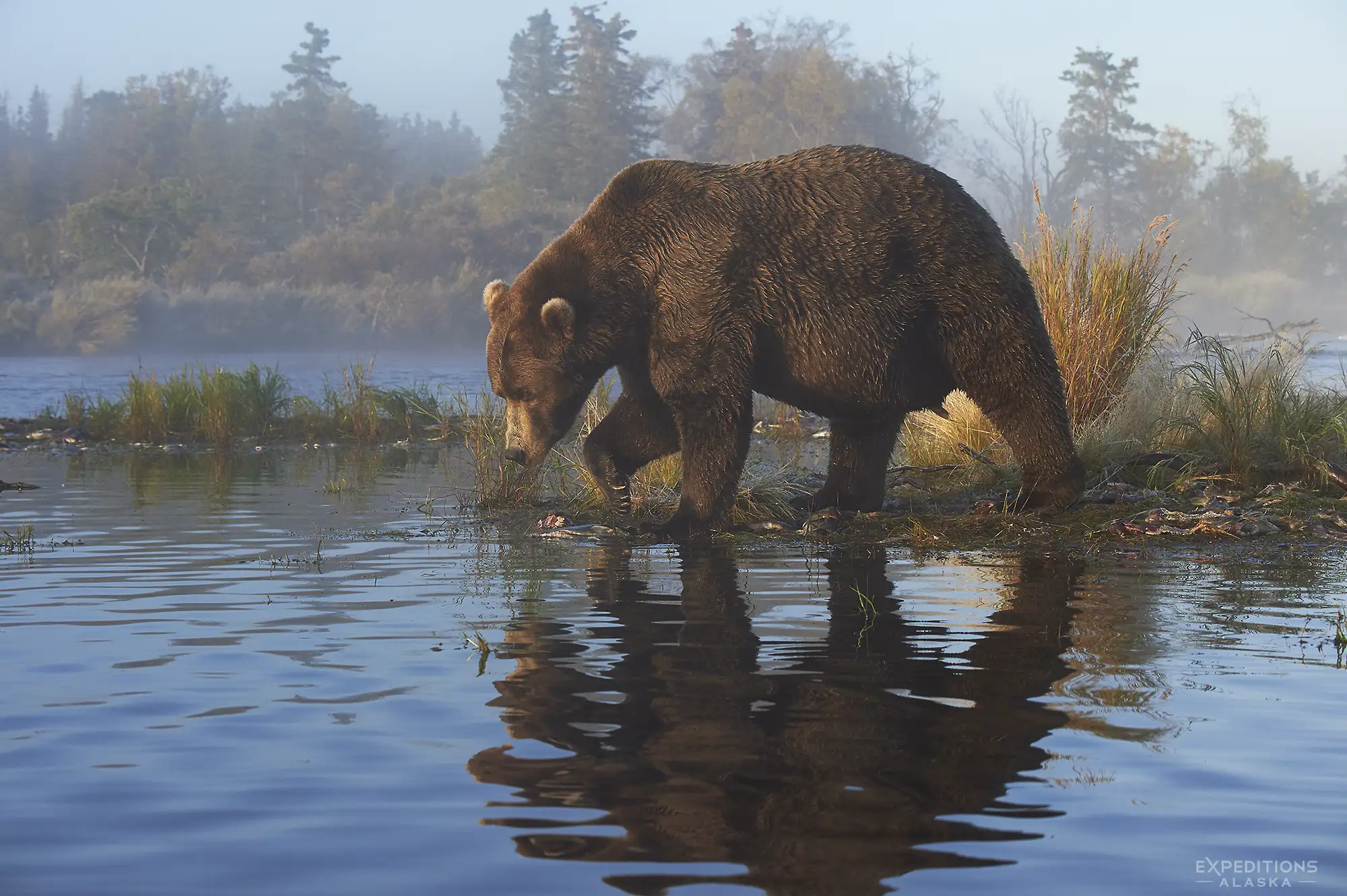
“The grizzly is a symbol of what is right with the world”.
~ Charles Jonkel (American bear biologist)
Choosing a Tour Operator: What to Look For
The Alaska bear tour market includes operators ranging from wilderness logistics services to full-service photography workshops, and the differences matter for what you’ll experience and what images you’ll produce.
Red flags that should make you cautious: Guarantees of specific shots or behaviors. No reputable operator promises you’ll get a bear catching a salmon at Brooks Falls or a sow with triplets nursing on a beach. Bears are wild animals and their behavior is unpredictable. Any operator making specific photographic guarantees either doesn’t understand bear behavior or is willing to misrepresent reality to close sales.
No photography experience or credentials mentioned in guide bios suggests the operation is focused on general bear viewing rather than photography-specific tours. That’s fine if you want to see bears, but problematic if you need positioning, timing, and technical knowledge for serious photography.
Large group sizes, typically ten or more people, make photography difficult. You’re competing for shooting positions, dealing with other people in your frame, and accommodating the schedule of a crowd rather than working with the natural rhythm of bear activity.
Vague itineraries without specific location information or daily schedules may indicate the operator lacks detailed knowledge of bear patterns and is planning to improvise in the field. Some flexibility is necessary because weather and bear behavior change, but a skilled operator should have specific primary and backup locations based on seasonal patterns.
No weather contingency plans or cancellation policies that penalize you for operator-controlled delays signal poor planning and potential conflict when conditions prevent flying or accessing viewing areas.
Green flags that indicate competent operations: Guides with demonstrated photography backgrounds. This means portfolios showing their own bear photography work, credentials from photography organizations, or documented experience teaching photography workshops. Wildlife biology knowledge is valuable, but photography-specific tours need guides who understand composition, lighting, and camera technique.
Small group sizes, ideally six or fewer for dedicated photography tours. This provides adequate shooting space, reduces impact on bear behavior, and allows guides to provide individual attention to photographers with different skill levels.
Specific location and timing strategy based on seasonal bear patterns. A good operator explains why they’re taking you to particular locations during specific date ranges and what behaviors you’re likely to encounter. They should also have backup plans for different scenarios (weather delays, unusual bear movements, crowding at primary locations).
Flexible scheduling that accommodates weather and bear activity rather than rigid adherence to a predetermined timeline. Some structure is necessary, but the best operators adjust daily plans based on current conditions and opportunities.
Strong safety record and transparent protocols for bear encounters, medical emergencies, and evacuation procedures. Ask about guide training, emergency communication systems, and what happens if something goes wrong.
Client photo galleries showing actual results from recent trips. Review these carefully. Are the images what you want to create? Do they show the variety of behaviors and conditions you’re hoping to photograph? Are they recent (within the last two years) or recycled from years past?
Questions to ask before booking
- (Want to hear: 6 or fewer for photography tours, though boat-based tours will usually be more.)
- (Want to hear: Specific names, portfolios, years of experience)
- (Want to hear: Clear terms, reasonable flexibility for weather, protection if the operator cancels)
- (Want to hear: Dedicated photography if that’s what you’re paying for)
- (Want to hear: Hours, not minutes, with flexibility to extend if bear activity warrants)
- (Want to hear: Specific alternatives with reasoning)
We’ve been guiding Alaska bear photography trips for over 25 years, with groups limited to five photographers and guides who shoot professionally in addition to guiding. You can see our current bear photography tours and trip reports from recent seasons on our Alaska bear tours page.
Beyond Bears: Bonus Wildlife Photography Opportunities
Alaska bear photography trips can deliver more than bears, and sometimes the best images from these trips feature the supporting cast and landscape context.
HOWEVER
Let me be clear
Most Alaska bear photo tours and bear viewing tours are not going to produce a wealth of opportunities for other wildlife photos.
Why not?
Because any area you see a lot of large hungry brown bears probably is not going to hold a lot of moose or caribou or sheep or other animals.
That said, you might see …
Bald eagles are constant companions at salmon streams. They follow fishing bears, waiting for scraps and competing with each other for position. When bears are inactive or distant, eagles provide excellent subjects. Their interactions with bears, the fishing behavior, and the dramatic aerial combat over salmon carcasses all create compelling images.
Red foxes appear opportunistically in some areas, particularly around coastal camps where they scavenge. They’re curious, photogenic, and substantially easier to photograph than bears because they tolerate closer approach. A fox investigating camp or patrolling the beach for food creates a completely different kind of wildlife image than the bear work.
Salmon themselves offer photography opportunities in clear streams where you can shoot from above or attempt underwater work. The sheer volume of fish during peak runs is visually striking, and the combination of salmon, bears, and eagles competing for the same resource tells the ecological story of Alaska coastal systems.
Moose appear in some areas, particularly Lake Clark and inland Katmai locations. They’re less dramatic than bears but provide size contrast and different behavior to document.
Seabirds, including puffins, murres, and various gull species, congregate around coastal bear viewing areas. They’re often overlooked because bears command attention, but they’re accessible, active, and excellent subjects for flight photography practice.
The landscape photography opportunities in Alaska bear country rival the wildlife work. Volcanic peaks, tidal flats at sunrise, glacial rivers, autumn tundra, and fog rolling through coastal valleys all create images that establish sense of place and provide compositional variety beyond bear portraits. Some of the most memorable images from bear photography trips are the establishing shots that show the scale and character of the habitat.
This diversity answers the question: is it worth it if bears aren’t active every day? Yes. Alaska wildlife and landscape photography delivers regardless of what the bears are doing on any given day.
The Bear FAQs
-
What is the best month to photograph bears in Alaska?
July offers peak salmon run action at Katmai’s Brooks Falls, with guaranteed bear activity and dramatic fishing behavior.
June provides spring cubs, fewer crowds, and green landscape backgrounds.
September brings fall colors, improved lighting conditions, and northern lights potential.
The best month depends on what you want to photograph: action and guaranteed activity favor July, atmospheric conditions and solitude favor September, cubs and soft light favor June.
-
Do I need a telephoto lens for bear photography in Alaska?
Yes. National Park Service regulations require 50 yards minimum distance from bears, which means you need at least 400mm focal length to fill the frame adequately. 600mm is better.
Ethical photography means maintaining distance that doesn’t alter bear behavior, which reinforces the need for long lenses. Zoom lenses in the 100-400mm or 150-600mm range work well for most photographers. Prime telephotos deliver better image quality but cost and weigh significantly more.
-
How much do Alaska bear photo tours cost?
Day tours from hub towns cost $700 to $900 per person for six to eight hours. Multi-day photography camps run $3,500 to $6,000 per person for three to five days, including flights, lodging, meals, and guides.
Premium week-long expeditions with specialized instruction cost $8,000 to $12,000 per person. Independent trips for experienced photographers with backcountry skills cost $1,000 to $2,000 for five to seven days, covering bush plane charters and permits.
-
Is Katmai or Kodiak better for bear photography?
Katmai offers guaranteed bear activity, iconic Brooks Falls shots, and developed viewing platforms, but deals with crowds during peak season and restricted shooting positions.
Kodiak provides the largest bears, wilderness settings with diverse habitat, and fewer photographers, but requires more patience for unpredictable encounters and more flexibility with weather delays.
Choose Katmai for first trips, guaranteed action, and classic Alaska bear images. Choose Kodiak for something a little different and (depending on location) fewer people.
-
Can I photograph bears independently without a guide?
In some locations, yes, but it requires extensive backcountry experience, bear safety knowledge, and proper permits.
Kodiak National Wildlife Refuge allows independent access. Katmai backcountry areas permit independent travel with advance planning. Lake Clark has zones open to skilled photographers camping independently.
However, most photographers use guided tours for first trips because guides provide positioning expertise, safety protocols, location access, and logistical support that take years to develop independently.
If you’re considering independent bear photography, honestly assess whether you have the wilderness skills, bear behavior knowledge, and emergency preparedness to operate safely in remote grizzly habitat.
One word of note: backcountry camping in Katmai can knock you down.
You might get lucky and have the perfect weather, or even very good weather, and think it’s super easy.
You might not. I’ve also seen it blow 65mph and destroy camps. You need to know what you’re doing, what you’re getting yourself in for and how to manage for that or you could end up in a world of hurt.
-
What camera settings work best for bear photography?
Fast shutter speeds of 1/1000 second or faster for bears in motion, particularly fishing bears or interactive behavior.
Aperture of f/5.6 to f/8 provides adequate depth of field for single bears while maintaining background blur. Use f/11 or smaller for groups when you want multiple bears sharp.
Auto ISO helps manage changing coastal light conditions. But if the light isn’t changing, I’m a fan of fully manual.
Continuous autofocus modes (AI Servo, AF-C) for tracking moving bears. Weather protection for camera and lens is mandatory given Alaska coastal conditions.
Bring rain covers, lens hoods, and dry bags.
-
More Questions About Our Bear Photography Tours?
This guide covers what Alaska bear photography requires and what to expect at different locations and seasons.
If you’re planning a guided trip with us, you probably have questions about specific itineraries, group sizes, what’s included, gear requirements, deposits, and cancellation policies.
For specific itineraries, you’d want to look at each particular trip page. All the details for a given trip will be posted on that trips webpage.
For more general things like our deposits, cancellations and policies, etc, this FAQ page has got you covered.
-
What’s the difference between the four bear photo tours?
All four are in Katmai National Park. None involve backpacking. Bugs possible but generally manageable.
Boat-based. Stay aboard a 100′ yacht, go ashore daily. Multiple bays, plus seals, otters, eagles. Minimal hiking, all fitness levels. Departs Kodiak.
Comfortable camping with Park Service infrastructure. Photography instruction emphasis. Bear portraits, cubs, pre-hibernation feeding. Minimal hiking. Departs King Salmon.
Primitive camping, interior Katmai. Active salmon chasing in creeks. More human traffic than Mist trip. Variable hiking. Departs King Salmon.
Primitive camping, remote coast. Volcanic backdrops, tidal flats, very few people. Can be cold and wet. Easy to moderate hiking. Departs Homer.Full comparison guide between these bear tours can be found here →
Conclusion
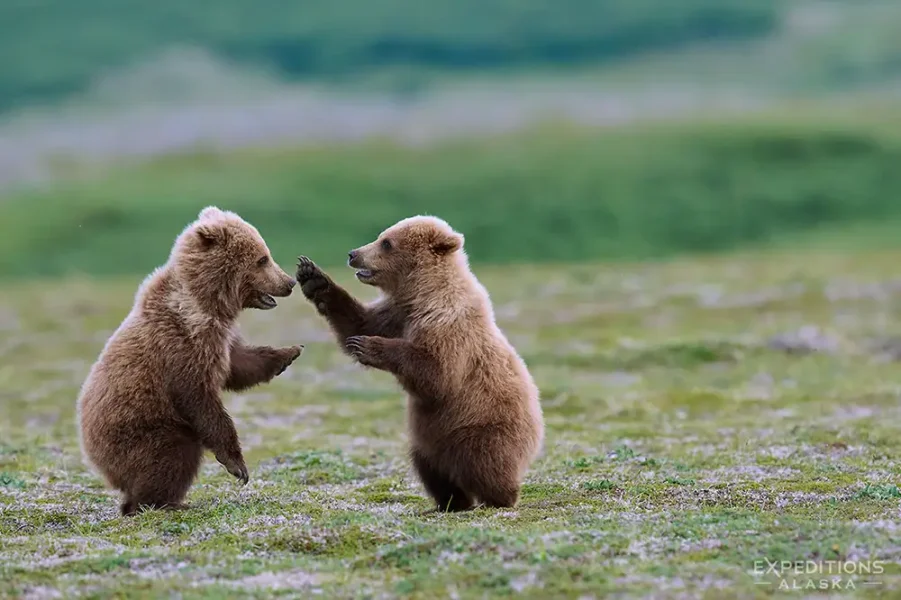
Alaska bear photography comes down to location, timing, and approach. Katmai delivers iconic shots and guaranteed activity with crowds. Kodiak provides wilderness settings and massive bears with unpredictability. Lake Clark offers intimate small-group experiences on coastal flats. July brings peak salmon run action. June provides spring cubs and solitude. September delivers fall colors and improved light.
Choose guided tours for first trips, access to prime locations, and expertise that translates to better images. Consider independent photography if you have extensive backcountry experience and understand bear safety protocols. Book early. The best bear photography tours fill six to twelve months in advance, particularly for prime July dates at Katmai.
Alaska bear photography isn’t just about the shots you’ll bring home. It’s about standing on a tidal flat at dawn watching a sow teach cubs to dig for clams while bald eagles circle overhead and mountains emerge from coastal fog. The images document the experience. The experience is what stays with you.
It would be fitting, I think, if among the last manmade tracks on earth would be found the huge footprints of the great brown bear.
~ Earl Fleming (American naturalist, 1958)