
See What Isn't There
Don’t shoot what’s in front of you.
Learn to look.
To look is to see.
The challenge is to see what isn’t real. To see what doesn’t exist.
Yet.
Visualization
See what’s in front of you, and find a way to make it happen. This may be waiting for the light to change. It may mean moving yourself to 3’ to the left. It may mean moving yourself 300 yards to the left. It may mean getting a little lower. It may mean coming back tomorrow.
What it doesn’t mean is putting your camera to your eye and pulling the trigger.
This is, essentially, what folks mean when they talk about “learning to see”. Or “visualizing”.
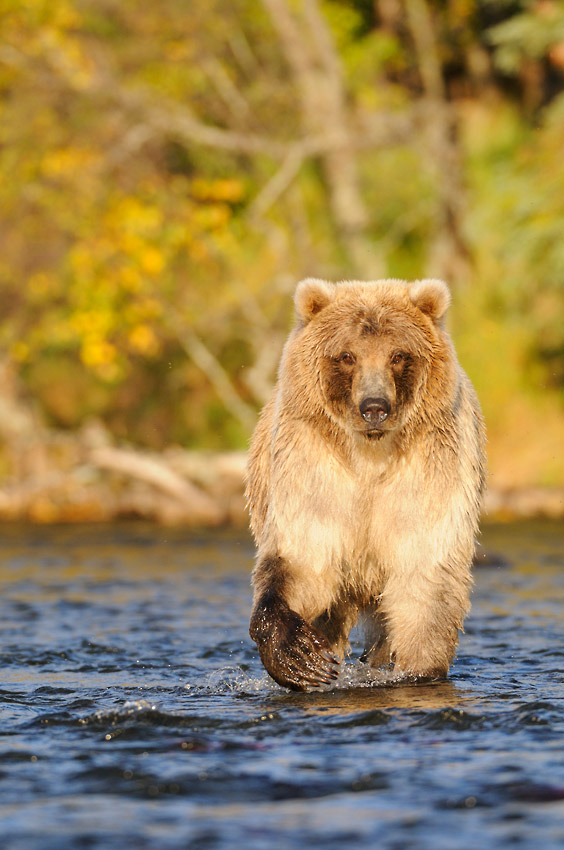
The bear walks out of the woods in front of you and in all probability doesn’t arrive perfectly in the absolute best possible spot with the perfect composition ready to go. It may well be moving the perfect location.
In this case your job is to see that, and position and ready yourself for photo.
You have to think ahead of the game. You have to visualize what has not yet happened. Be ready to create an image of . Pointing your camera at the bear simply because you can see the bear isn’t the path to make strong photographs.
It’s NOT Luck
Visualizing isn’t looking at what is in front of you.
By definition, visualizing is seeing it in your mind’s eye. It’s not watching it unfold and shooting as fast as you can. That’s called luck.
None of my favorite images were made because I just happened to be in the right place at the right time and the subject walked right into the perfect spot.
None of them.
And it’s true to say that almost none of any of my images are made that way. And, dare I suggest it, that’s true of virtually no really strong wildlife images.
The frame below is a good example.
Keeping an eye to the light, the background, the caribou, all the pieces of the scene at once and imagining what might happen, then putting myself in position for that if and when it happens is the key to making, versus taking, photographs.
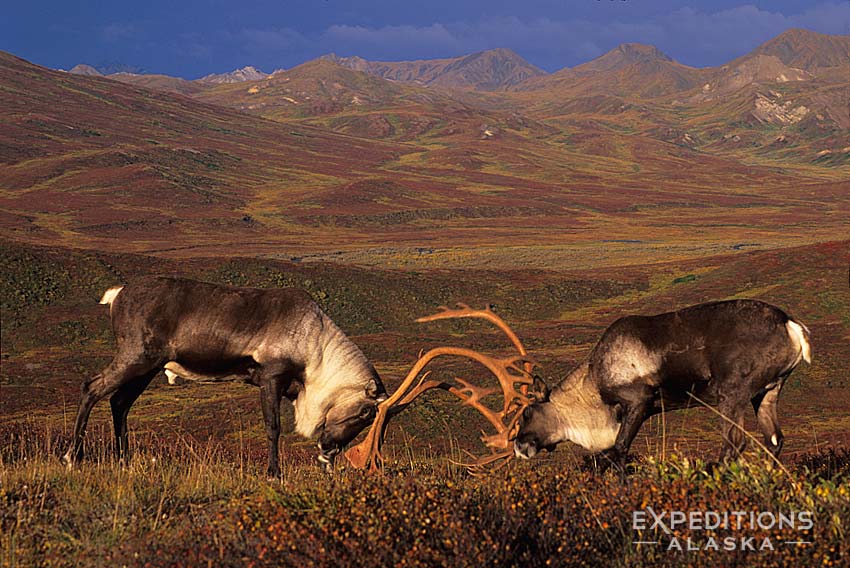
This was a very dramatic situation, with moving pieces everywhere. There were probably over a hundred caribou moving across the tundra. Stuff like this doesn’t just line up for people. Photographers it line up.
Our job is to see what might unfold and figure how to capture that with our equipment.
Anything else is just pointing and shooting with fancy overpriced gear.
Purpose
Focus.
Pick a subject, and work it. A shotgun approach to a trip, trying to shoot lots of different subjects is more likely to just yield a bunch of mediocre images.
Spend time with your subject. The best images typically will take time. Give yourself that opportunity to really make something special happen.
Too many people, to me, seem to come to Alaska and want to shoot “everything”.
It doesn’t happen like that. And it certainly doesn’t happen .
You’ll come home with stronger images if you put your energy and your time towards a subject and work on it.
Stay with it.
Most of the time
… we miss
I have untold thousands of boring photos. What I was hoping might happen didn’t happen. That’s the luck of the draw.
Sometimes, when the universe wants to throw us a bone, we get something nice.
Those are the moments we aim for.
My focus, as much as I can, on a photo tour is to think about where we need to be, when. And sometimes where not to be.
We don’t always get that right. But it’s the singularly most critical part of what we do. It’s a constant decision-making process.
We all have great gear. Certainly, good enough gear. Modern cameras make metering and focusing and shooting relatively easy. The hard part is being where you need to be when the “thing” happens.
That comes from, in part, learning more about your subject and your environment. For sure. But it also comes from learning to look for what’s to happen rather than being solely driven by what happening.
Most of the time, what is already happening is too late. It’s a decoy.
Imagine what unfold. And get after it.
More with less
Less is more.
We all know this saying, but most of us rarely apply it.
When it comes to camera gear, most of us have WAY too much. I know I do. But I’m trying to shoot with less gear and more consideration to what I want the image to be. Often I’ll bring one lens on an outing and shoot with that. Or not shoot and watch.
I’ll have my gear in the bag at camp, for sure. But when I saddle up and walk out looking to photograph? I just bring a few things. I want to spend less energy (mental and physical) worrying about gear choices and more focus on putting an image together.
And the results are almost always better.
Keep it simple.
Brevity is the soul of wit.