Image of the Month: February 2012

February 6th, 2012 by Carl D
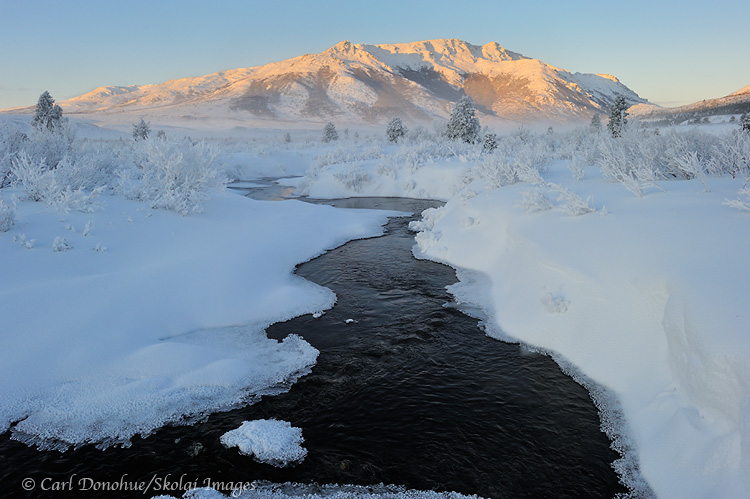
Jenny Creek, near the Savage River, in winter, remains free of ice and flowing, even at minus 40degree F temperatures. Denali National Park and Preserve is a winter wonderland in January, fresh snow and hoar ice blankets the land. Mt. Margaret, Denali National Park and Preserve, Alaska.
Jenny Creek, near the Savage River, in winter, remains free of ice and flowing, even at minus 40degree F temperatures. Denali National Park and Preserve is a winter wonderland in January, fresh snow and hoar ice blankets the land. Mt. Margaret, Denali National Park and Preserve, Alaska. Please click on the image above to view a larger version of this photo.

Hey Folks,

From my trip to Denali National Park and preserve over the New Year, here’s Mt. Margaret and Jenny Creek, near the Savage River.

Not too many people get to see Denali like this, so it was a real treat to spend some time there. Wonderful trip.

Here’s to a great year.

Cheers

Carl


Pebble Mine and Protecting Pebble Creek

January 20th, 2012 by Carl D
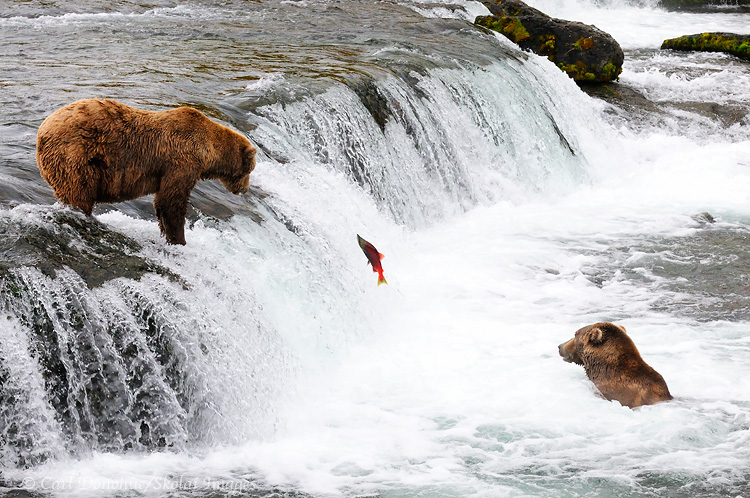
Brown bears at Brooks Falls, in Katmai National Park, watch a spawning Sockeye Salmon attempt to leap up the waterfall. Brown bear, or grizzly bear (Ursus arctos), Katmai National Park and Preserve, Alaska.
Brown bears at Brooks Falls, in Katmai National Park, watch a spawning Sockeye Salmon attempt to leap up the waterfall. Brown bear, or grizzly bear (Ursus arctos), Katmai National Park and Preserve, Alaska. Please click on the image above to view a larger version of this photo.

Hey Folks,

Many of you may or may not be aware of this critical issue. A proposed open-pit mine in Alaska, in the heart of the Bristol Bay watershed, potentially threatens some of the wildest and vital land in Alaska. The salmon fishery of Bristol Bay is one of the world’s most productive fisheries. It is also the pulse of a vibrant and productive ecosystem that’s home to the great coastal brown bears of Katmai National Park and surrounding regions. The bears we love to see and photograph grow fat on the riches of spawning salmon. The bald eagles that gather in the thousands every summer here thrive on spawning salmon.

The proposed mine, the Pebble Limited Partnership, would create a “10-square-mile-wide containment pond are intended to hold between 2.5 billion and 10 billion tons of mine waste that Pebble would produce over its lifetime”, a 700′ tall dam wall and several miles in length. One of the largest mines in the world, it’s expected to span a 20 mile swathe of Alaska State land. The acidic nature of the waste would require environmental treatment and monitoring for years to come. The potential devastation if something goes awry here, in the land of frequent volcanic and seismic activity, would be immeasurable. Continue reading…


Brown bear photography

January 15th, 2012 by Carl D
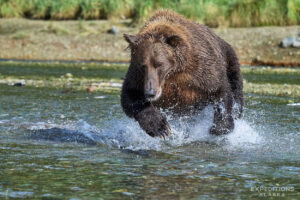
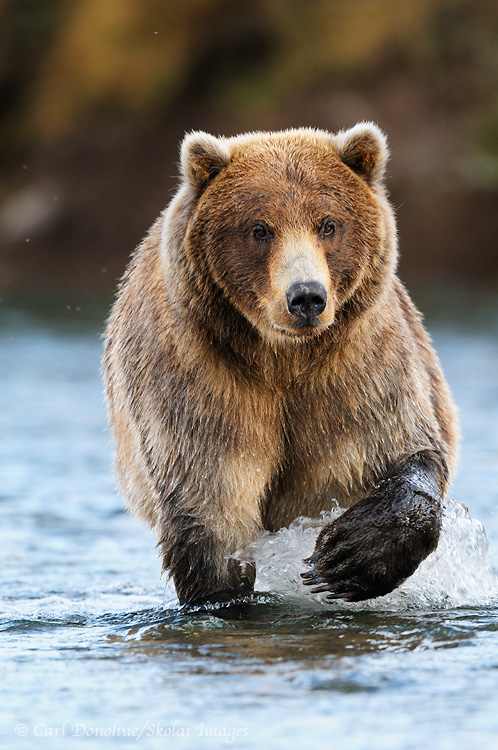
A male brown bear, Ursus arctos, approaches up river, fishing for spawning sockeye salmon, Katmai National Park and Preserve, Alaska.
A male brown bear, Ursus arctos, approaches up river, fishing for spawning sockeye salmon, Katmai National Park and Preserve, Alaska. Please click on the image above to view a larger version of this photo.

Hey Folks,

I thought I’d post another image from our Katmai brown bear photo tour last fall.

I’ve shot this bear for so many years now; it’s awesome to go back and revisit these bears year to year, particularly the bears that are so great to photograph as this one.

[Update: It’s now 2025 and we photographed him yet again this past fall. Too cool to see this be around for so long. He’s nearly 20 now.]

A Growing Bear

When I first started photographing this bear, he was a young subadult, just out on his own. He’s nearly doubled in size over the last few years, and now is a good size bear, though still has a number of pounds to gain before he reaches his full size.

Bears & Personality

One thing that becomes so readily apparent when photographing bears is how truly individual they are. They can be as different from one to another as we are. Some bears will walk right on by, fishing and wandering the river, with little more than a sideways glance at us, while others wont’ come close at all, and seem to always keep an eye on people around the area.

How to Operate Around Bears

This means a lot when it comes to things like how to act in bear country.

Context is Everything

It means the generalized ‘protocols’ that we read about and hear are, while valuable, not set in stone. It’s more important to pay attention to the bear.

Closely watch the bear’s signals. This is more helpful than thinking about some line in a book at that said “In situation A, you should do B”.

Hard and fast rules rarely hold true, but never more so, perhaps, than when dealing with 1000lb+ predators.

Continue reading…

Image of the Month, Jan, 2012; Lunar eclipse

December 31st, 2011 by Carl D

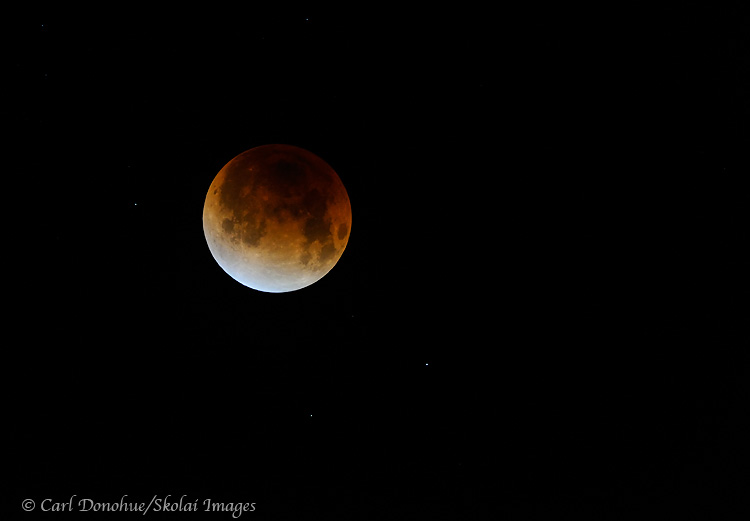
The moon glows in the difused light of a full lunar eclipse.
The full moon glows in the diffused light of a full lunar eclipse. Please click on the image above to view a larger version of this photo.

Hey Folks,

Welcome to 2012!

This image of the lunar eclipse was taken in December. What a cool phenomenon that was to see.

I hope you enjoy this shot, taken from Glenn Alps way too early in the morning.

Cheers

Carl


Holiday stockings and Seasons’ Greetings

December 25th, 2011 by Carl D
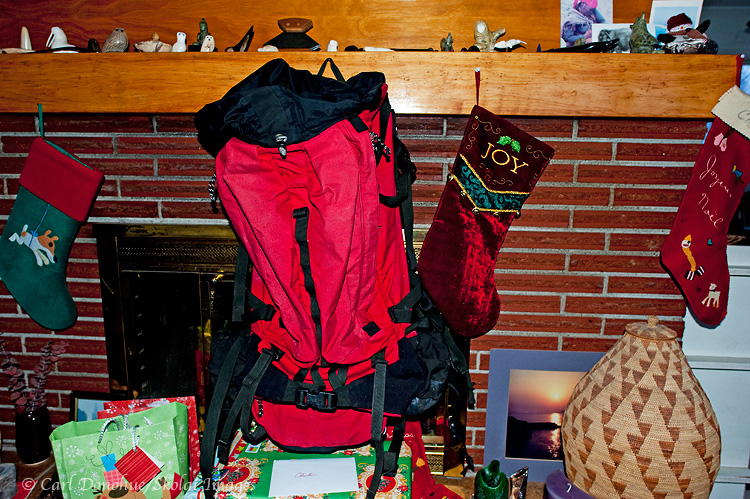
Holiday greetings, from Expeditions Alaska

Hey Folks,

How was your festive season? I finally got around to putting up my stocking just yesterday. Mine’s the one in the middle

Happy holidays folks. Have a great day.

Cheers

Carl
PS: someone asked about my pack. It’s a Mystery Ranch G5000. Used it on every backpacking trip I’ve made over the last 10 years.


Free Wrangell-St. Elias winter ski/photography trip

December 23rd, 2011 by Carl D
Snowshoeing in winter in the boreal forest of Wrangell-St. Elias National Park and Preserve, Alaska.

A Holiday Season Special – Spring Equinox Celebration

Please note: – 10:00pm Jan 17th; entries are now closed. The drawing takes place the morning of the 18th – see below for details!!!


OK, this one is so simple it’s ridiculous.

In the best of the holiday spirit, here’s what I’m doing. I’m offering a free trip to Wrangell – St. Elias National Park. This offer is open to any who who think they’d enjoy a trip like this. The more people that enter, the more people will win.

If fewer than 250 people enter, I’ll give away a trip for free to 2 people. If I get more than 250 people enter, I’ll give away 4 free spots on the trip.

Wrangell – St. Elias National Park. 6 nights in a backcountry cabin; days spent snowshoeing, cross country skiing, and/or hiking, enjoying some winter landscape photography, possible northern lights photography and the quietest, peaceful-est cabin you never been to. Here’s what you need to know.

The Trip

We leave Anchorage, drive 5 hours to Wrangell-St. Elias National Park. 5 nights in the cabin, March 18-23, and return to Anchorage on March 24. During the day, we can either snowshoe, cross country ski, or, depending on weather and snow conditions, hike.

We’ll have the van nearby so we can easily saunter down to the van, drive 10 miles down the road, snowshoe all day, drive back to the cabin and enjoy the comfort of a wood stove, hot food and a quiet like no other. Next day, we can do the same in the other direction.

The exploratory opportunities are literally endless here. Winter landscape photography opportunities abound. This is a massive landscape; Mt Sanford rises over 16 000′ right out the window. It’s also an intimate boreal forest, for some great shooting opportunities. There’s a decent chance of seeing moose in the area, and possibly caribou. The northern lights are a strong possibility; displays are typically strongest and most active right around the Equinox, so this timing is optimal for great northern lights viewing/photography. There are never any guarantees with the aurora, of course.

Price: Normally $1400.00 per person, this year 2, or possibly 4 people get to come out for free.

Dates: March 18-23, 2012

My holiday gift and thank you to everyone who’s supported what I do.

Requirements to enter

Continue reading…

Why Hiking Poles Are Essential for Alaska Backpacking

December 5th, 2011 by Carl D
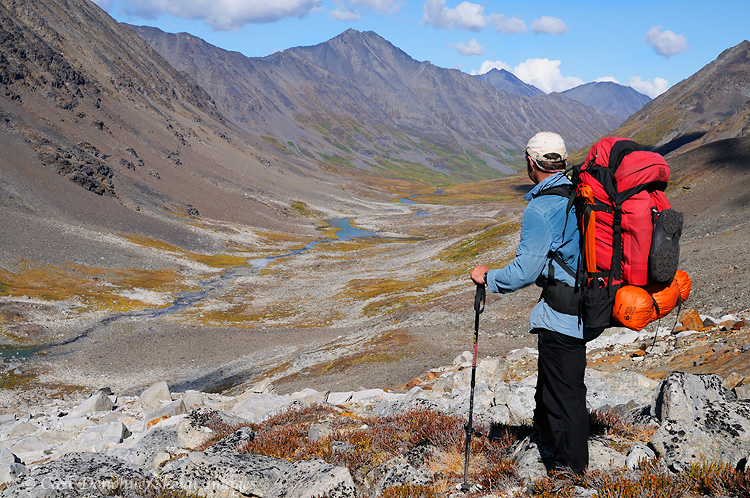
Backpacker with Hiking Pole, Wrangell-St. Elias National Park and Preserve, Alaska.
Hiker backpacking with hiking pole, Seven Pass route, Wrangell-St. Elias National Park and Preserve, Alaska.

Hey Folks,

One question I receive at least a few times every year concerns hiking poles, or trekking poles, so I thought it might be a good choice to write about here on the blog.

I can’t recommend them enough for anyone interested in doing some backpacking here in Alaska. I use one, a Leki Makalu that I’ve had for more years than I care to think about. And I bring it every time I’m backpacking in Alaska; every time.

Most folks, of course, use 2. I think that’s probably a sound way to go. I use one, and that’s what works for me. But 2 is probably a good call.

The Science Behind Hiking Poles

Hiking poles deliver real benefits when traveling off-trail, which is what most Alaska backcountry travel is. Science Daily had a great article recently about this. — “trekking-poles help hikers maintain muscle function while significantly reducing soreness in the days following a hike”.

I definitely find this to be the case; so much that I can’t remember the last time I did not take a hiking pole when I headed off. It’s a fundamental part of my gear now.

Reduced Muscle Damage and Faster Recovery

“The results showed that there was significantly less muscle soreness in the group using trekking poles. This group demonstrated a reduced loss of strength and a faster recovery immediately after the trek compared to the control group. Self-rated soreness peaked at 24-hours in both groups but was significantly lower in the trekking-pole group, both at this point and at the 48-hour point.

In addition, levels of the enzyme creatine kinase (which indicates muscle damage) were much higher at the 24-hour point in the non-pole group, while the trekking-pole group’s levels were close to the pre-trekking levels. This shows that the muscle damage they were experiencing was negligible.”

and it only gets better:

Injury Prevention on Multi-Day Treks

” the combined benefits of using trekking poles in reducing load to the lower limbs, increasing stability and reducing muscle damage could also help avoid injury on subsequent days trekking. It is often the reduced reaction time and position sense, associated with damaged muscles that cause the falls and trips that can lead to further injury in mountainous or uneven terrain.”

Real-World Benefits in Alaska Terrain

  1. What I see with people on trips is the vastly improved balance and confidence on uneven terrain.
  2. Hiking poles are invaluable on boulder fields, such as moraine and talus slopes, or crossing steep scree slopes.
  3. River crossings are much improved.

Simply traversing a hillside, the ground covered in wet grass, where you can’t see the footing clearly, can be extremely dodgy with a 40-50 pound backpack on; those hiking poles give you an extra contact with the ground, and much greater stability. Your hike will be much more fun. So take the load off, and grab yourself some.

Choosing the Right Poles

Don’t skimp; hiking poles DO break, so a good solid pole, like Leki’s Makalu or Black Diamond’s Trail trekking pole are great. I like the Black Diamond pole with their fliplock mechanism. I tend to NOT view the hiking pole as a place to look to save weight; so don’t skimp on a cheap pole, and I’d advise against one of the most ultralite poles you can find; as a general rule, ultralite = flimsy. Buy something sturdy.

I don’t find the ‘trail shock’ component to be terribly beneficial, but they can be nice. That’s mostly a function of personal preference, in my opinion. Either way should be fine there.

The Bottom Line

Take this as not just my opinion, but scientifically backed recommendation; bring your hiking poles. You’ll be glad you did.

Cheers

Carl

PS: Added. Here’s another GREAT reason to carry a hiking pole. Air guitar.


Image of the Month: Dec 2011

December 1st, 2011 by Carl D

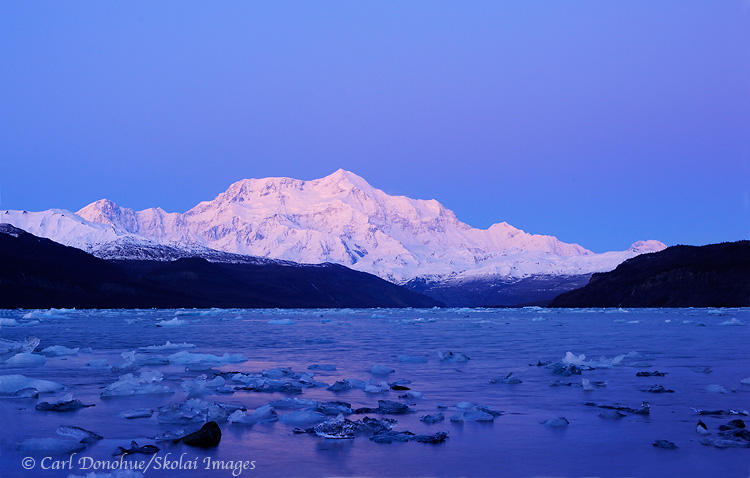
Evening light, after dusk, on Mount Saint Elias and Icy Bay, Wrangell-St. Elias National Park and Preserve, Alaska.

Hey Folks,

We’ll end the “Image of the Month” series for 2011 with a look at my favorite mountain; Mt. St. Elias. Taken after sunset from Icy Bay, Wrangell-St. Elias National Park and Preserve.

Have a great holiday season everyone, and all the best for the the coming year. Let’s make it a big one, eh?

Cheers

Carl


Google Earth; the NEW navigation?

November 28th, 2011 by Carl D

Hey Folks,

One topic I thought I might write about here that readers might enjoy has to do with navigation; every backcountry traveler has  had issues with getting lost, even if only briefly, and being unsure of direction. So we learn how to read a compass and topographic map. And w learn how to pay attention to our terrain and landscape. We learn about geology and landform features to help us navigate. We learn how to pay attention to the sky, and the sun. Some of us even look skyward after dark and learn to read the constellations.

More recently, we’ve acquired and learned GPS technologies, for pinpoint accuracy, and for better navigation in adverse situations (clouds and fog, flat, featureless terrain, etc).  But even this amazing GPS stuff is years old now. So what’s the “new” navigation technology? Continue reading…


Tips for aurora borealis photography – part 3

November 21st, 2011 by Carl D
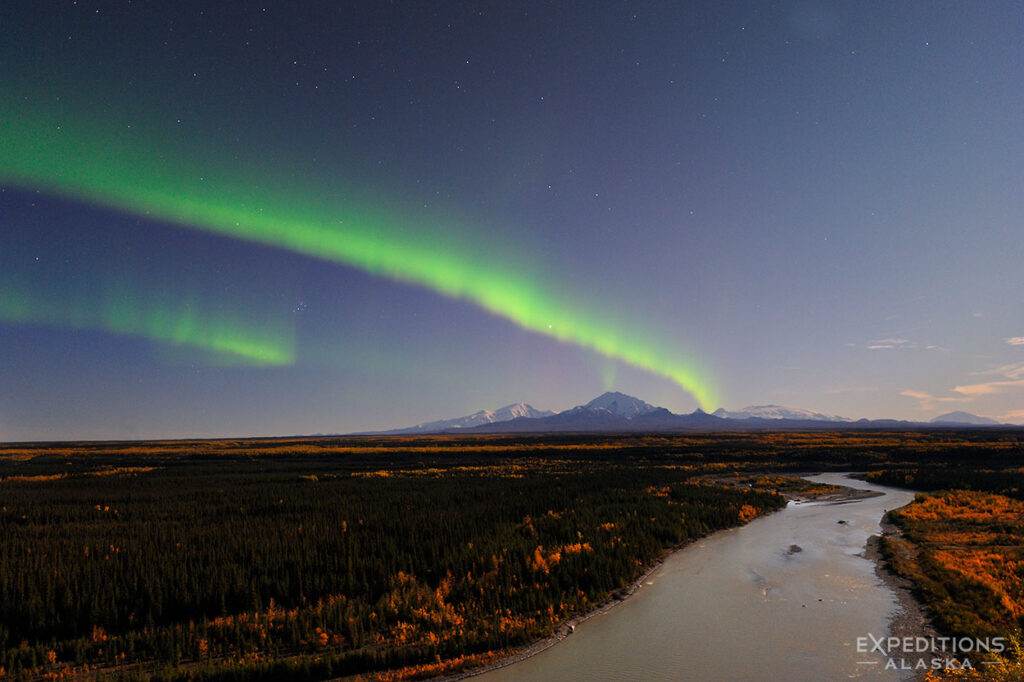
Northern lights, over the Copper River, and Mount Sanford, Mount Drum and Mount Wrangell, Wrangell-St. Elias National Park and Preserve, Alaska.
Northern lights, over the Copper River, and Mount Sanford, Mount Drum and Mount Wrangell, Wrangell-St. Elias National Park and Preserve, Alaska. Please click on the image above to view a larger version of this photo.

Hey Folks,

Part 3 of my complete guide on aurora borealis photography. So far, on Page 1, we’ve covered the initial stuff. Finding the aurora borealis, scouting your locations during the day to find potential composition sites, what clothes you need to keep warm and comfortable, the importance of bringing along a good headlamp.

Page 2 addresses the question of what camera gear you need when photographing the northern lights, and what camera settings are most useful. Page 2 also covers a broader range of issues you’re likely to run into, like how to find critical focus in the dark northern sky. Page 3, to wrap things up,  begins with some thoughts on composing your aurora borealis photos. You can learn this kind of stuff on Alaska Photo Tours.

Continue reading…

Expeditions Alaska
Visit the wild