Happy Holidays
December 24th, 2007 by Carl DHey Folks,
Just a quick note to anyone out there to say we wish you all the Happiest of Holidays, and all the best to you and yours for the coming year.
Warmest Regards
Carl and Expeditions Alaska
Hey Folks,
Just a quick note to anyone out there to say we wish you all the Happiest of Holidays, and all the best to you and yours for the coming year.
Warmest Regards
Carl and Expeditions Alaska
Hey Folks,
I just thought I’d post a quick note here and let you know of the updates recently done to the website. We’ve made a few aesthetic additions to the site, hopefully making a little more enjoyable for you to browse around. The first thing you might like to see is the automated slide show I did from the Images of the Month for 2007. Also, the Eye of the Beholder gallery in finished.
I put a small slide show on the home page, and added a slide show of images from part of the Bremner to Tebay trip. Check that out for sure!
We also made a few minor changes here and there, and will be finishing up some of the other odds and ends while we’re at it. If you see any glaring errors, feel free to drop us a line and we’ll get on it.
Also, you might want to look over at Skolai Images and look at some of the updates there. And if you really want to look at a lot of photos from the park, check out the Wrangell-St. Elias Stock Photos page.
Well, that’s about it for now. I hope you enjoy the new stuff on the site. Oh, and the picture here is my friend Santiago Ibanez, from Peru, smokin’ on a surf wave on the Baker River, or Rio Baker, in Patagonia, Chile. The Baker River is an incredible river, and we had a fantastic trip there in April 2007.
Thanks, and all the best.
Cheers
Carl

Hey Folks,
Editor’s Note (2025): This article was originally written in 2007 and reflects the photography technology of that era. While the core principles about protecting gear, reducing weight, and capturing shots remain timeless, modern photographers now benefit from mirrorless cameras, high-capacity SD cards, and lightweight carbon fiber gear. The fundamental advice about accessibility and deliberate shooting still applies.
As I’m updating the website, I’m redoing some old blog pages, and won’t be writing content on the old (now deleted) pages – so I’m going to transfer some of the past notes I’ve written on the image of the month pages to the blog. That way it’s all in one place. It’s searchable, and much better organized. We’ve also added a great Complete Guide to Wildlife Photography Tips and Techniques article here.
Here’s another piece I wrote a while back about backpacking and photography. Some of the issues are how to pack camera gear, how to keep camera gear weight down, the hassles of digital cameras, and how to ‘get your shots’.
Continue reading…
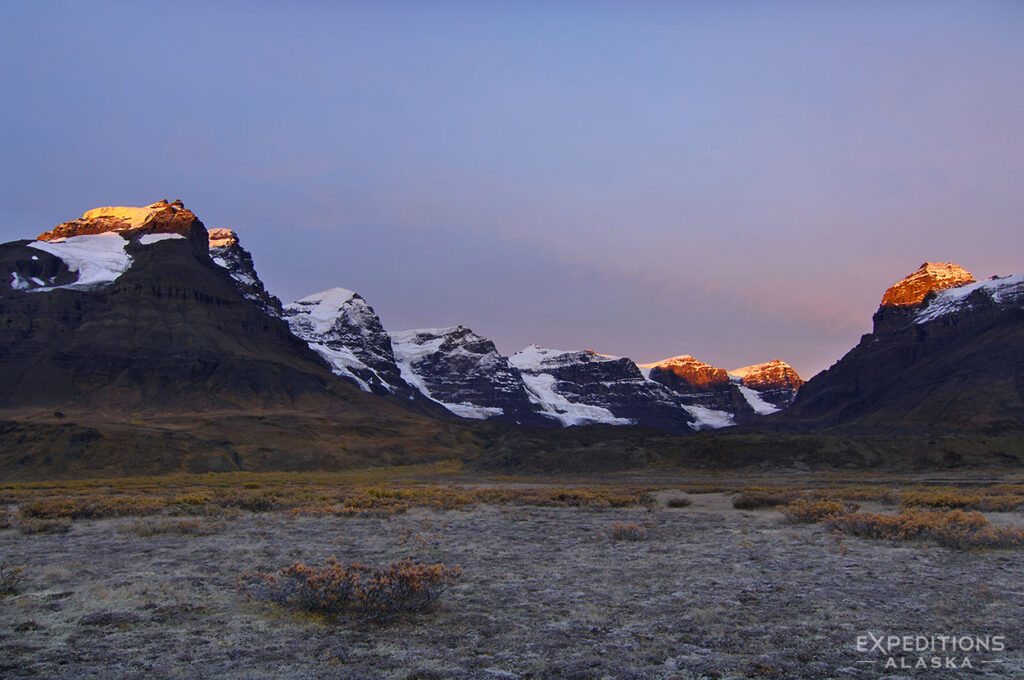
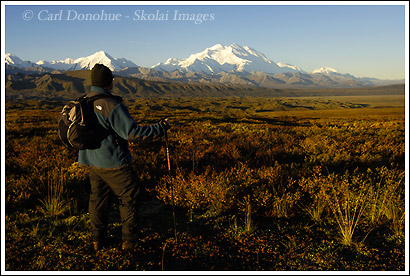
I thought I might write a small post here about my favorite National Park, Wrangell-St. Elias National Park. Though it’s the largest National Park in North America, and possibly the most impressive as well, it’s relatively little visited. Many people have never even heard the words Wrangell-St. Elias National Park.
This spectacular park gets (as of 2007) less than 40 000 visitors a year. Denali National Park gets close to a million, and parks in the Lower 48 states such as the Smokies or Yellowstone get in the vicinity of 10 million annually.
That’s just a small part of why we love it so much!
Wrangell-St. Elias National Park is nearly times larger than Yellowstone National park, at 14 million acres of wild, remote, gorgeous country.
Continue reading…
Hey Folks
Another question (or set of questions) I get asked a lot has to do with rain gear.
What’s appropriate, what’s necessary, what’s not OK, what works, what doesn’t, etc.
I think rain gear is another of those things where many people can make do with less. I wouldn’t advise anyone to venture out on a multiday backpacking trip in Alaska under-prepared.
But I would say that spending more money on higher-end gear isn’t necessarily something you need to do. I’ve used a number of different shells, from lighter-weight jackets like the Marmot Precip to heavier (and way pricier) Gore-Tex XCR shells by Arcteryx. Whilst I will admit the Arcteryx stuff is awesome, I think it’s more than most people need.
Continue reading…
Hey Folks,
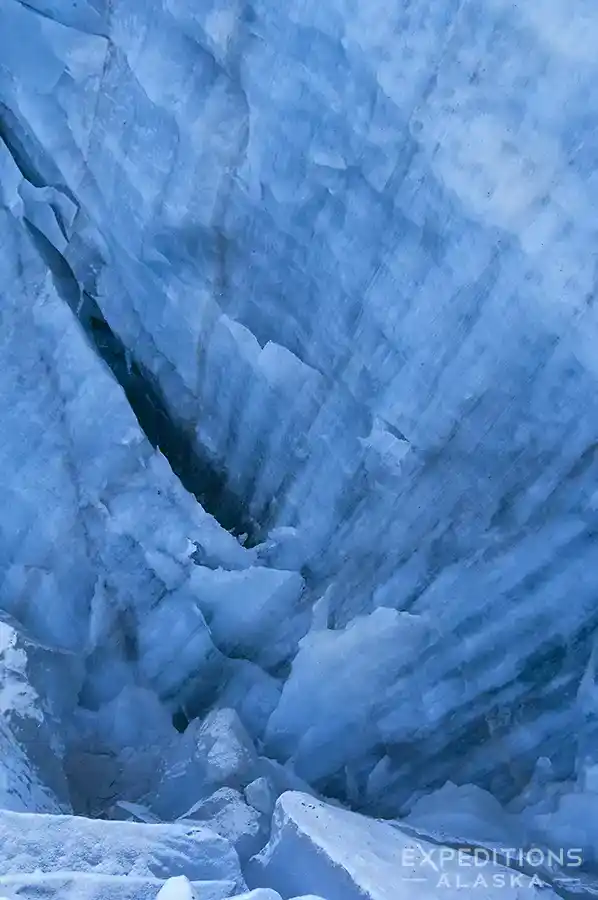
Here’s a photo I took of the Kennicott Glacier, not far from the small town of McCarthy, in Wrangell St. Elias National Park, Alaska. I was exploring the west side of the glacier, which is much less frequently hiked and travelled than the east side. With a little luck and some perseverance, I found a few places where I managed to scrape out some decent photos.
Hiking around glaciers requires care, particularly if you’re hiking solo. I guess hiking anywhere, anytime, requires care, but particularly solo trips. Glacial travel is a significant safety issue, and one we spend considerable time on in our Guide Training program. Here’s a look at the list of glacial travel items we discuss and train on pre-season.
That said, I do love being out exploring the backcountry on my own – it’s a particular way of connecting with the land that is immeasurably different to trips with other people.
Continue reading…Hey Folks
Recently someone asked me about some photography tips, and I thought that might make a good post for a blog. (*Update; we now have an entire category of posts on this subject, so you’ll plenty of reading at the above url). There’s obviously way too much stuff to talk about in one post, so I’ll just make this one specific to shooting landscapes on backpacking trips.
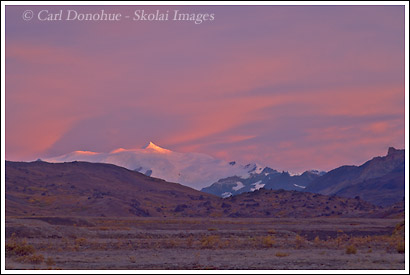
Hopefully this will help you bring home some better images from your trips. The image I’ve posted here is from one of our Alaska Landscapes Photo Tours to Skolai Pass. The scene is of Regal Mountain, a 13 845′ high shield volcano, or stratovolcano, in the Wrangell Mountains, seen from Skolai Pass, Wrangell St. Elias National Park. Regal Mountain is most commonly seen from the west, from the Root Glacier near McCarthy. Because the mountain is so covered with glaciers, it’s hardly been studied at all by geologists. It’s a WAY cool mountain!
First thing is suck it up and bring your tripod. Even a little lightweight tripod is WAY better than no tripod at all. These days you can buy an ultralight tripod that’ll really help you out. Like everything else, it seems, you pay more dollars for every ounce you lose.
Continue reading…The winner is Down sleeping bags.
Down sleeping bags are a better choice for backpacking trips than synthetic sleeping bags.
I get asked all the time which kind insulation fill is best for a sleeping bag for someone planning an Alaska backpacking trip. Like almost all these kinds of questions (such as what size backpack you need), the answer is pretty subjective, and I really don’t think it matters too much. It also depends somewhat on your choice of sleepwear and also your sleeping pad choice. It’s an important topic.
What matters is that you make the decision that best fits your particular set of circumstances. That said, here are a few notes that may help you in your decision-making. I own both down and synthetic bags, and I honestly don’t find the type of fill to be the deciding factor in how much I like a bag.
Continue reading…
Hey Folks,
I think a 20deg bag is essential for a summer trip in Alaska. 32deg bags, and warmer, often aren’t warm enough for alpine trips here. In fact, a 15 deg bag is even a good idea. it varies a lot with the individual, and also with the temperatures for any given trip, obviously.
Temperatures can easily dip into the 32deg range, even in mid-summer, and while this isn’t too often, it’s not uncommon. If you’re planning a trip with for the shoulder season, such as late Aug/early Sept, even a 10deg bag isn’t overkill.
Continue reading…
Hey Folks
Backpacks are, of course, an integral piece of gear for a backpacking trip. What kind of backpack works best for you is not for me to say, but I can give you some information that might help you.
I like internal frame backpacks. I think they carry better than external frames, particularly for off-trail hiking such as the Southern Traverse. A well-fitted internal frame pack will ride on your back closer, with less movement, and also allow you to walk in a more upright position, as the packweight, being closer to your back, doesn’t need to be offset by you leaning forward. Great for off-trail backpacking. On the other hand, one of my best friends hikes with an external frame backpack, and he loves them. Chocolate and strawberry, I suppose.
Continue reading…