Brown bear photography

January 15th, 2012 by Carl D
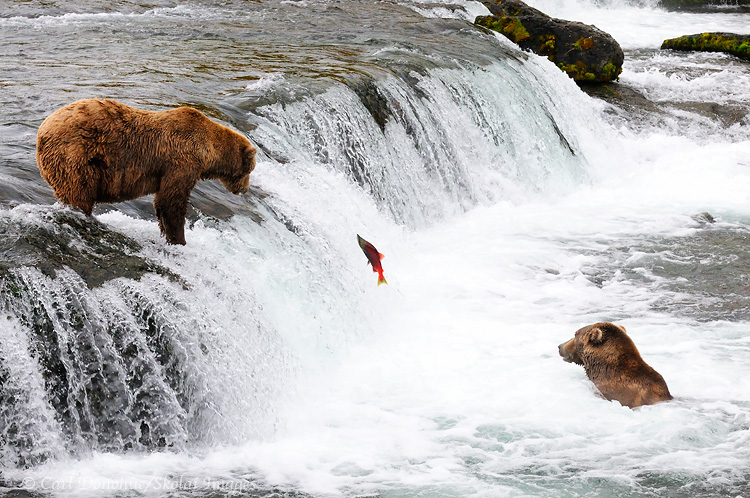
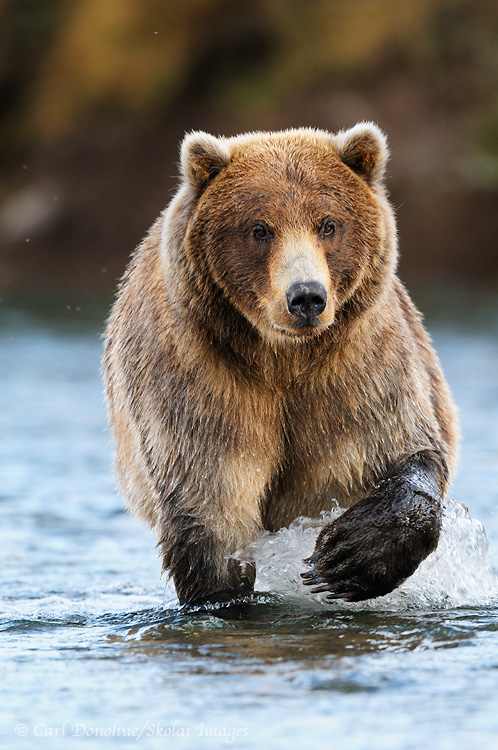
A male brown bear, Ursus arctos, approaches up river, fishing for spawning sockeye salmon, Katmai National Park and Preserve, Alaska.

Wildlife Photography is something else, eh?

I thought I’d post another image from our Katmai brown bear photo tour last fall.

I’ve shot this bear for so many years now; it’s awesome to go back and revisit these bears year to year, particularly the bears that are so great to photograph as this one.

[Update: It’s now 2025 and we photographed him yet again this past fall. Too cool to see this be around for so long. He’s nearly 20 now. And again in 2026!]

A Growing Bear

When I first started photographing this bear, he was a young subadult, just out on his own. He’s nearly doubled in size over the last few years, and now is a good size bear, though still has a number of pounds to gain before he reaches his full size.

Bears & Personality

One thing that becomes so readily apparent when photographing bears is how truly individual they are. They can be as different from one to another as we are. Some bears will walk right on by, fishing and wandering the river, with little more than a sideways glance at us, while others wont’ come close at all, and seem to always keep an eye on people around the area.

How to Operate Around Bears

This means a lot when it comes to things like how to act in bear country.

Context is Everything

It means the generalized ‘protocols’ that we read about and hear are, while valuable, not set in stone. It’s more important to pay attention to the bear.

Closely watch the bear’s signals. This is more helpful than thinking about some line in a book at that said “In situation A, you should do B”.

Hard and fast rules rarely hold true, but never more so, perhaps, than when dealing with 1000lb+ predators.

Continue reading…

Free Wrangell-St. Elias winter ski/photography trip

December 23rd, 2011 by Carl D
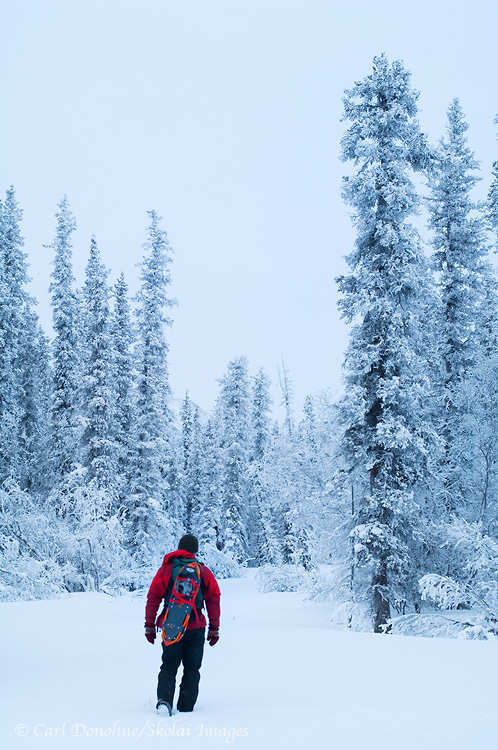
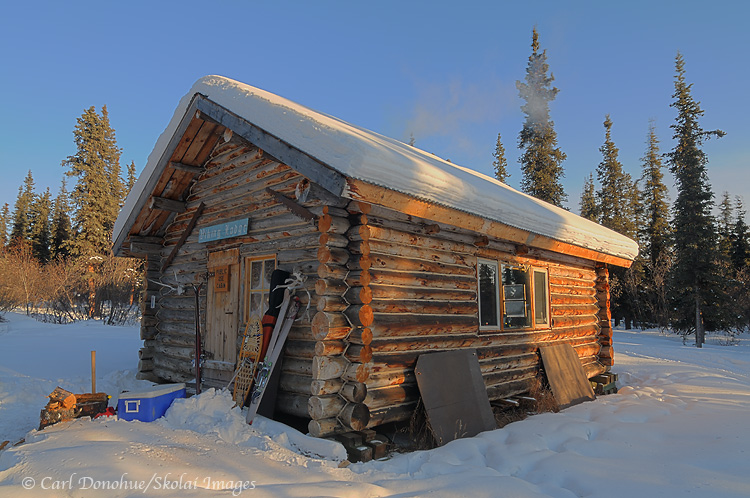
Snowshoeing in winter in the boreal forest of Wrangell-St. Elias National Park and Preserve, Alaska.

A Holiday Season Special – Spring Equinox Celebration

Please note: – 10:00pm Jan 17th; entries are now closed. The drawing takes place the morning of the 18th – see below for details!!!


OK, this one is so simple it’s ridiculous.

In the best of the holiday spirit, here’s what I’m doing. I’m offering a free trip to Wrangell – St. Elias National Park. This offer is open to any who who think they’d enjoy a trip like this. The more people that enter, the more people will win.

If fewer than 250 people enter, I’ll give away a trip for free to 2 people. If I get more than 250 people enter, I’ll give away 4 free spots on the trip.

Wrangell – St. Elias National Park. 6 nights in a backcountry cabin; days spent snowshoeing, cross country skiing, and/or hiking, enjoying some winter landscape photography, possible northern lights photography and the quietest, peaceful-est cabin you never been to. Here’s what you need to know.

The Trip

We leave Anchorage, drive 5 hours to Wrangell-St. Elias National Park. 5 nights in the cabin, March 18-23, and return to Anchorage on March 24. During the day, we can either snowshoe, cross country ski, or, depending on weather and snow conditions, hike.

We’ll have the van nearby so we can easily saunter down to the van, drive 10 miles down the road, snowshoe all day, drive back to the cabin and enjoy the comfort of a wood stove, hot food and a quiet like no other. Next day, we can do the same in the other direction.

The exploratory opportunities are literally endless here. Winter landscape photography opportunities abound. This is a massive landscape; Mt Sanford rises over 16 000′ right out the window. It’s also an intimate boreal forest, for some great shooting opportunities. There’s a decent chance of seeing moose in the area, and possibly caribou. The northern lights are a strong possibility; displays are typically strongest and most active right around the Equinox, so this timing is optimal for great northern lights viewing/photography. There are never any guarantees with the aurora, of course.

Price: Normally $1400.00 per person, this year 2, or possibly 4 people get to come out for free.

Dates: March 18-23, 2012

My holiday gift and thank you to everyone who’s supported what I do.

Requirements to enter

Continue reading…

Why Hiking Poles Are Essential for Alaska Backpacking

December 5th, 2011 by Carl D
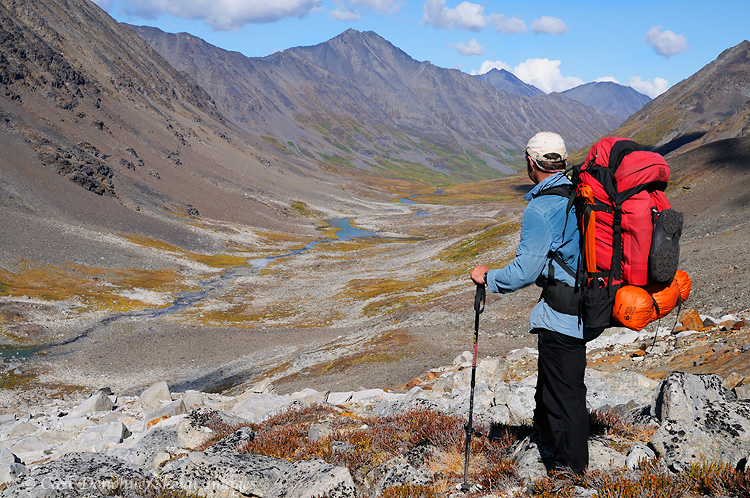
Backpacker with Hiking Pole, Wrangell-St. Elias National Park and Preserve, Alaska.
Hiker backpacking with hiking pole, Seven Pass route, Wrangell-St. Elias National Park and Preserve, Alaska.

Hey Folks,

One question I’m frequently asked pertains to hiking poles and how important they are for backpacking here in Alaska.

In short, I’d suggest they’re more than useful – almost mandatory.

Of course, few things in the mountains are ever so objective. What’s right for me might not be right for you, and what’s right on August 15 might not be right on August 16 (or even 3 hours later on August 15). But as a general rule, I’d urge anyone coming to Alaska to backpack, particularly someone on their first trip here, to count on using hiking poles.

I can’t recommend them enough. I use one pole – a Black Diamond Alpine pole – with the flip lock design and carbide tip. I’ve had for more years than I care to think about. I bring it every time I’m backpacking in Alaska. Every time. Most folks use two, and that’s probably a sound way to go. Two is probably a good call. One is what works for me.

The Real Challenge: Sidehilling

Jon, pictured above, is a great hiker. In super shape, athletic, well-balanced – safe to say he’s a much better hiker than the average backpacker. Much better. He cruised the Bremner Mines to Tebay Lakes route with virtually no trouble at all, and that’s a tough walk by almost anyone’s metrics. Even Jon mentioned how useful the hiking poles were for him on this trip.

Continue reading…

Google Earth; the NEW navigation?

November 28th, 2011 by Carl D

Hey Folks,

One topic I thought I might write about here that readers might enjoy has to do with backcountry navigation for backpackers, pack rafters, etc; every off-trail backpacker has had issues with getting lost, even if only briefly, and being unsure of direction. So we learn how to read a compass and topographic map. We learn how to pay attention to our terrain and landscape. We learn about geology and landform features to help us navigate. We learn how to pay attention to the sky, and the sun.

Some of us even look skyward after dark and learn to read the constellations.

More recently, we’ve acquired and learned GPS technologies, for pinpoint accuracy, and for better navigation in adverse situations (clouds and fog, flat, featureless terrain, etc).  But even this amazing GPS stuff is years old now. So what’s the “new” navigation technology?

Continue reading…

Tips for aurora borealis photography – part 3

November 21st, 2011 by Carl D
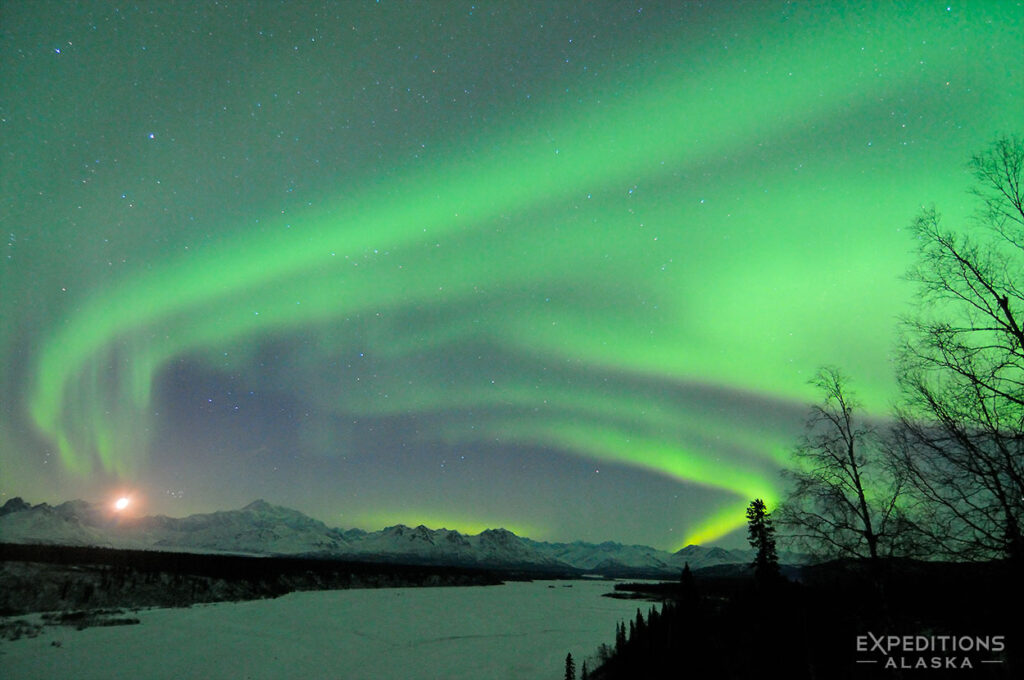
Northern lights, over the Copper River, and Mount Sanford, Mount Drum and Mount Wrangell, Wrangell-St. Elias National Park and Preserve, Alaska.
Northern lights, over the Copper River, and Mount Sanford, Mount Drum and Mount Wrangell, Wrangell-St. Elias National Park and Preserve, Alaska. Please click on the image above to view a larger version of this photo.

Hey Folks,

Part 3 of my complete guide on aurora borealis photography. So far, on Page 1, we’ve covered the initial stuff. Finding the aurora borealis, scouting your locations during the day to find potential composition sites, what clothes you need to keep warm and comfortable, the importance of bringing along a good headlamp.

Page 2 addresses the question of what camera gear you need when photographing the northern lights, and what camera settings are most useful. Page 2 also covers a broader range of issues you’re likely to run into, like how to find critical focus in the dark northern sky. Page 3, to wrap things up,  begins with some thoughts on composing your aurora borealis photos. You can learn this kind of stuff on Alaska Photo Tours.

Continue reading…

How to photograph the northern lights – part 2

November 21st, 2011 by Carl D
Northern lights over Mt. Denali, Denali National Park.

Hey Folks

Page 2 of my complete guide to photographing the northern lights. We got started on Page 1 with a discussion on where you might find the aurora borealis, and then on scouting your locations during the day. Clothing to keep you warm in the cold polar winter and the importance of a good headlamp choice round out Page 1. We’ll start this page with a look at camera gear choices and considerations.

Updated: this post was edited and updated Dec 2025

Continue reading…

How to Photograph the Aurora Borealis – Part 1

November 21st, 2011 by Carl D
Photographing the aurora borealis in September, surrounded by fall colors, Chugach Mountains, Glenn Highway, Alaska.

Hey Folks,

The aurora borealis is one of those experiences we can have that stay with us a long, long time. Not just in our minds and memories, but in our body, in our hearts, in our soul, in our very being; witnessing the aurora borealis stays with us in how we see the world around us.

It’s a moving and powerful event, and I’m always grateful and humbled by the moment. It is that incredible.

Photographing the aurora borealis? That’s a different story entirely.

One that raises blood pressure, triggers depression and exhilaration in equal measure, and brings frostbite, tiredness, insomnia, and too many other ailments to mention.

It’s difficult, extremely challenging, and infuriating. It’s cold. It’s dark. The aurora borealis is often fleeting, ever changing, and virtually impossible to rigidly predict.

It requires a clear, or nearly clear, sky. That means long hours of waiting, photographing, deleting, photographing, waiting, not photographing, shivering, mumbling, drinking coffee. It means fighting to stay awake and tearing your hair out over location choices all before you even get the tripod out of the truck.

In short, photographing the northern lights is not easy.

This three-part guide will help you plan for and work around the struggles that await. It’s still up to you, your camera, and the gods of luck to bring home the images, but this should make it easier. If you see anything repeated here, that repetition is intentional. Add your thoughts and questions in the comments.

When you’ve finished the article, you can download a free ebook (with more info and articles) and feel free to check out my northern lights photo gallery as well.

Continue reading…

Backpacking Wrangell-St. Elias’ coastline

November 9th, 2011 by Carl D
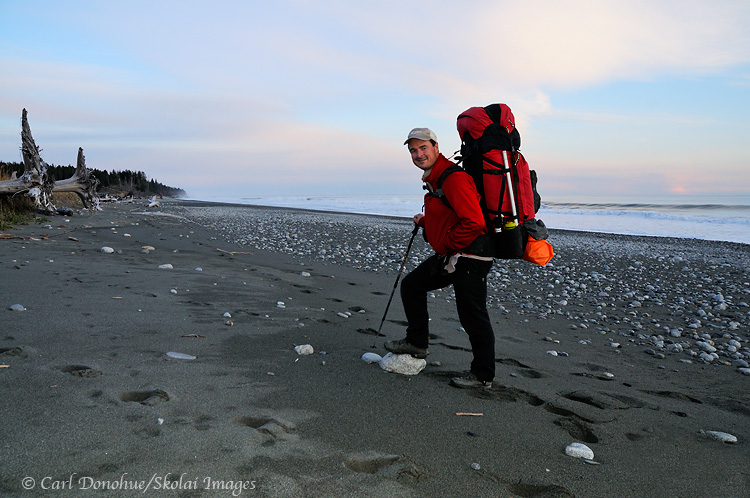
Backpacking on the coast, Wrangell-St. Elias National Park and Preserve, Alaska.
Setting out for a month long backpack along the coastline of Wrangell-St. Elias National Park and Preserve, Alaska.

Hey Folks,

Wow; what a cool trip this last one was. A month along the coastline and borders of the Malaspina Glacier in Wrangell-St. Elias National Park’s southeastern reaches, near our famous Lost Coast.

This photo is my first night on the beach, right after the air taxi departed, I shouldered the heavy pack, posed for an image, and set off down the beach to find a campsite. Dark comes quickly this time of year in Alaska.

I caught up with friends Erin and Hig from Ground Truth Trekking, and their 2 kids Katmai and Lituya, the following afternoon. I spent most of the rest of my trip with them, and then the last 10 days or so in the Icy Bay area, trying to get a nice sunset photo of Mt. St. Elias from that area. Seemed like things were still getting going when before I knew it, the month was over and I had to fly back to the city. Time flies, eh?

Continue reading…

Waterfall, Wrangell-St. Elias National Park, Alaska.

August 10th, 2011 by Carl D

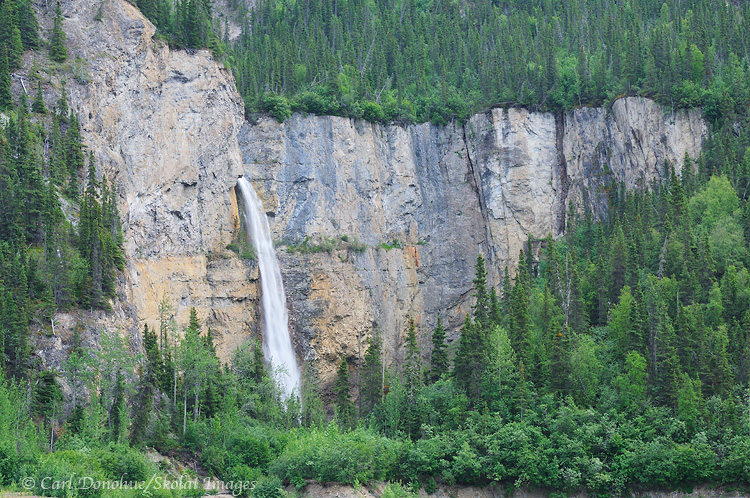
Waterfall, Wrangell-St. Elias National Park and Preserve, Alaska.

Hey Folks,

Here’s another waterfall photo from a trip I took to Wrangell-St. Elias National Park and Preserve early this summer. This is a waterfall I’ve flown over many times, along the Nizina River, but never had the opportunity to shoot it. This summer we took a trip to the Nizina Glacier and hiked around the area a bit, shooting a few waterfalls, flowers, the glacier and surrounding landscape. Overall, a productive and fun trip and a fantastic place to visit.

Cheers

Carl


Pack your sleeping bag

April 9th, 2011 by Carl D
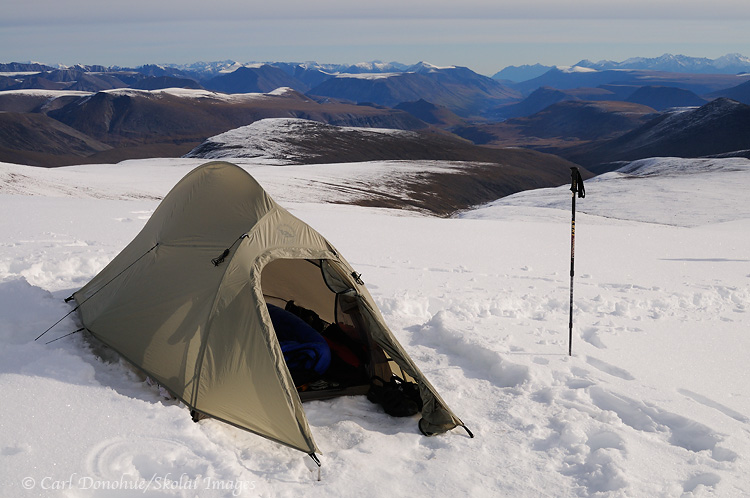
Backcountry campsite, Wrangell-St. Elias National Park, Alaska
A snowy campsite on the high alpine tundra of Wrangell-St. Elias National Park. Termination dust covers the ground, or fresh fall snow, and Mt Jarvis (13 421′) of the Wrangell Mountains stands dominating behind. Backcountry campsite, Wrangell-St. Elias National Park and Preserve, Alaska. From a backpacking trip in September.

Hey folks

A lot of people planning their Alaska backpacking trip inquire about the “best” sleeping bag to bring; i.e., what temperature rating to bring. My recommendation has always been for a warmer bag than many people typically expect. My advice for a summer camping bag in Alaska is 20deg F, (about -6deg C) and no warmer.

That is, 20deg Fahrenheit minimum! Do NOT bring a 32deg F bag (0deg C).

Surely it’s not going to be below freezing in July, I hear folks respond?

Well, hopefully not. But it certainly can be, especially if we hike up in the high country at all (which we typically do, because that’s where the views are, and where the brush isn’t). And the altitude needn’t be that high; 5000 feet is alpine country in Alaska.

But the reasons for a warm bag go beyond merely snow and cold. Some folks will say they’d rather bring a warmer bag, like a 32deg F bag, as it’s lighter weight, and they can always wear extra clothes to bed if need be. They’ll be bringing warm clothes along anyway, right? Sometimes, this is true. But there can easily be times when it is not true. How about your fleece jacket is wet? Or you lose it (yes, I’ve seen that happen)? 

Continue reading…

Expeditions Alaska
Visit the wild