Our Bear Tours
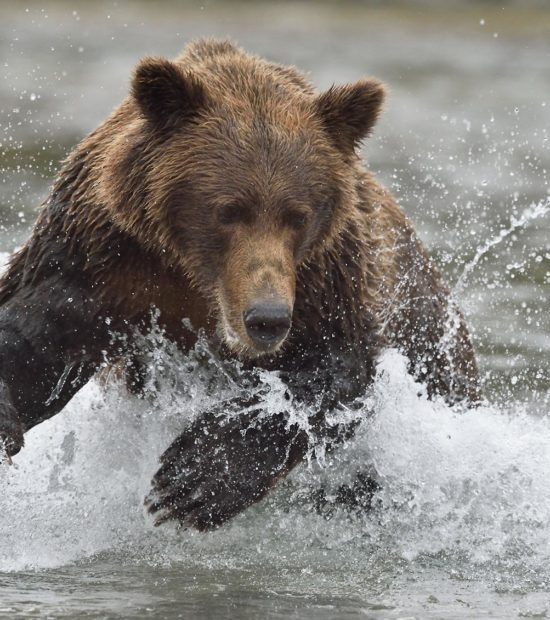

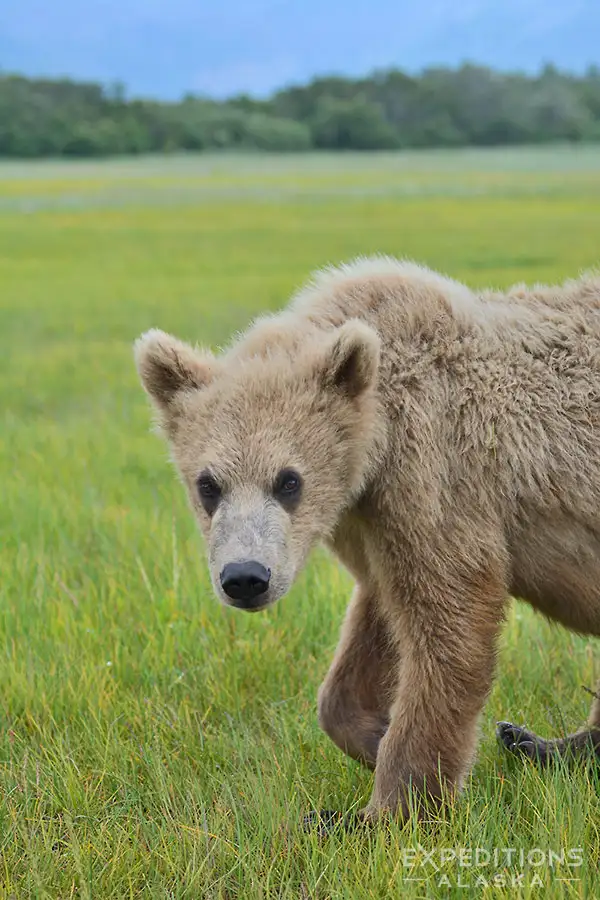
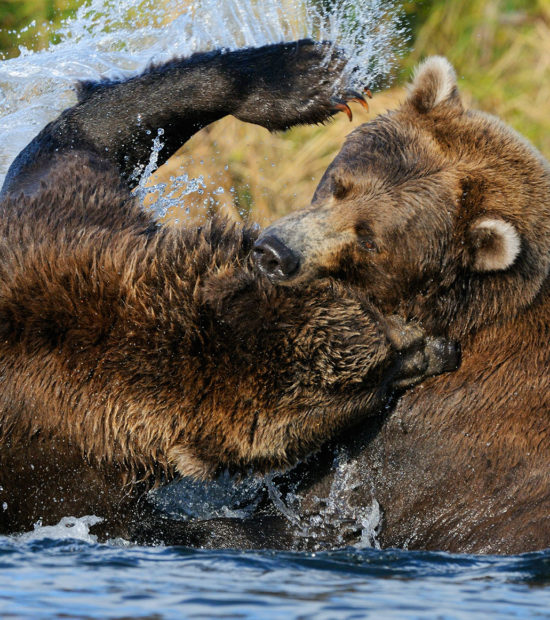
This is the boat trip, and it’s the most comfortable way to photograph Katmai’s bears.
We charter Le Canard, a 100-foot vessel that serves as both home base and transport along the Katmai coast. Captain Johnny runs the boat and his staff handles meals. You sleep in a real bed, eat at a table, charge your batteries, and go to shore by skiff each day to photograph.
The mobility is the thing. Instead of camping at one location and shooting whatever shows up, we move. Hallo Bay one day, Geographic Harbor the next, Kukak Bay if the bears are working the streams there. If we find a spot that’s producing, we stay. If it goes quiet, we pull anchor and try somewhere else. That flexibility is something none of the camping trips can offer.
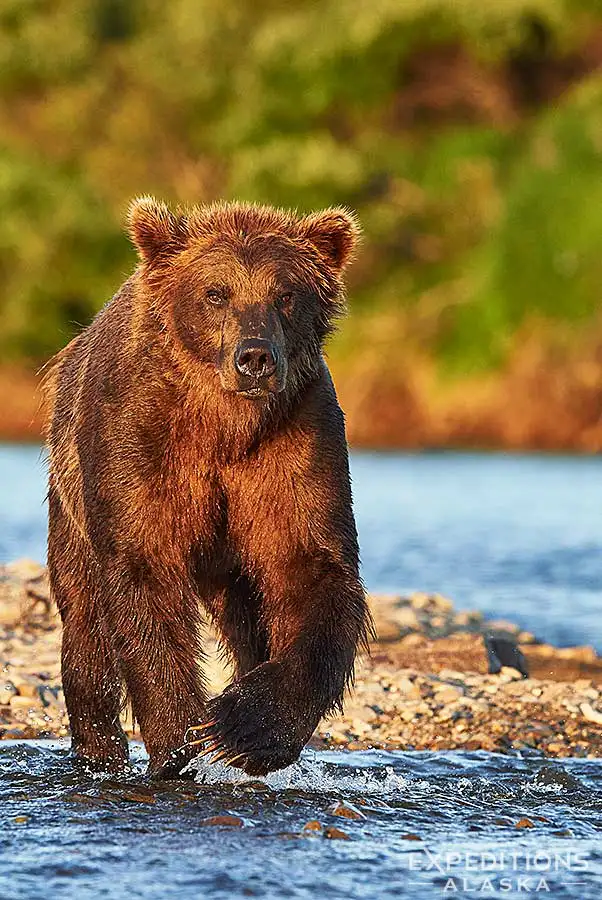
This is wilderness camping during the great sockeye salmon run. No boat. No lodge. No infrastructure. You’re camped at one of the major bear congregations in interior Katmai National Park, and you’re living among them for a week.
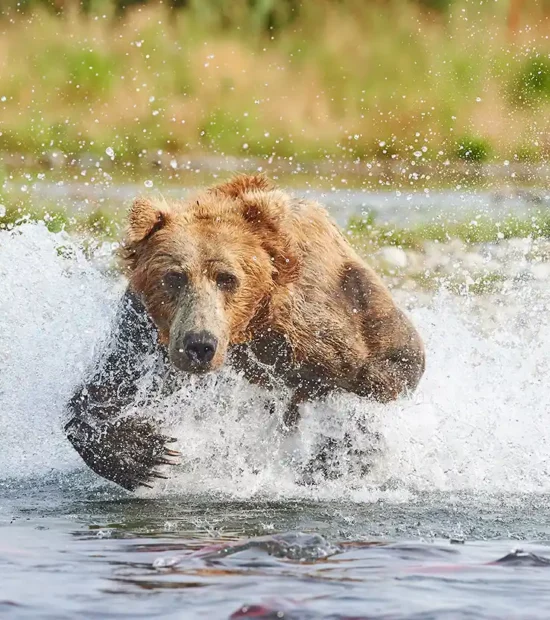
When the salmon are running, the bears are there. Big boars working the deep pools, sows with cubs hanging on the margins, subadults getting chased off the prime spots. The action is constant during peak run, and you’re photographing it from river level, often in waders, at close range with proper protocols.
The camp is primitive. No outhouse, no shelters, no power outlets. But you’re not carrying it in on your back. Gear flies in by bush plane and camp is set up at a fixed location. Meals are cooked for you. The camping is basic but the logistics aren’t backpacking.
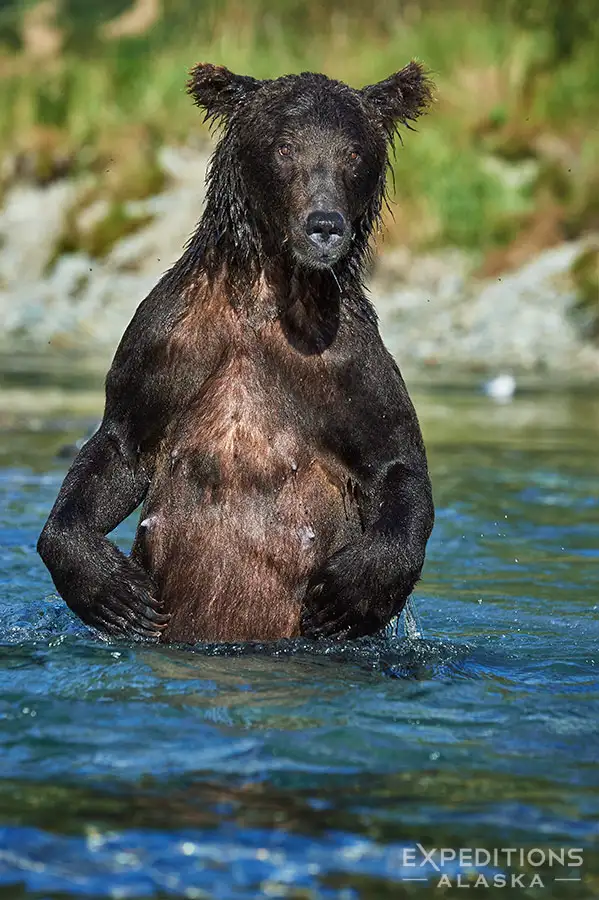
This is the remote one. Getting here is an adventure by itself, a bush plane charter from Homer across the Cook Inlet to a stretch of the Katmai coast that sees almost nobody.
No infrastructure means no infrastructure. No outhouse. No shelters. No cell service. No power. You need to be battery-independent for the duration. Bring enough charged batteries to last the week, because there’s nowhere to plug in.
What you get in exchange is extraordinary. Shallow coastal creeks full of spawning salmon and hungry bears working them hard. Mountain backdrops that are, without exaggeration, some of the most dramatic in Katmai. And almost no other people. The occasional float plane might pass overhead, but on the ground, it’s your group and the bears. That solitude changes the photography. It changes the experience. The bears behave differently when they’re not habituated to a rotating cast of viewing groups.
We’ve had luck with wolves here too, though I don’t specifically promote the trip for that. Wolves appear when they choose to appear.
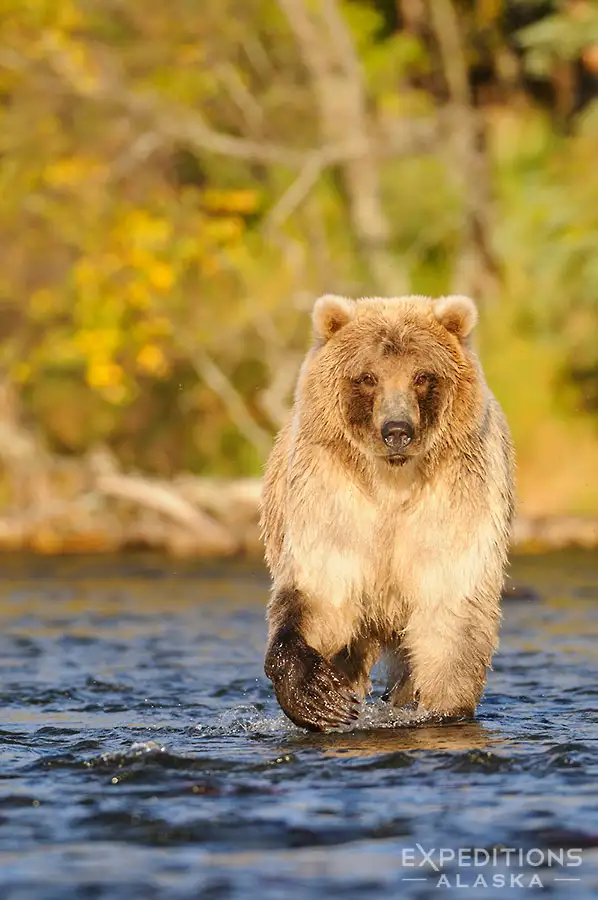
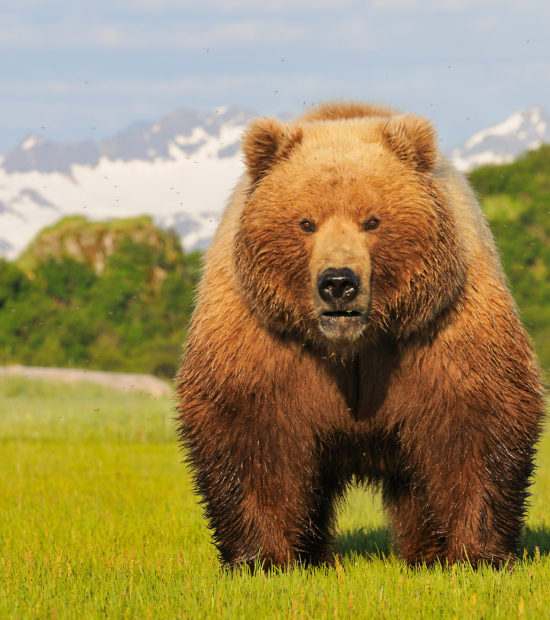
September. The bears are enormous. They’ve been eating all summer and they look it. This is the time of year the internet votes on Fat Bear Week for a reason, these animals are at peak mass before hibernation, and photographing them in that condition produces images with a visual impact the summer trips can’t match.
This trip camps near some NPS infrastructure, which makes it the most comfortable of the three camping options. There’s an outhouse. Covered shelters. You can recharge your camera gear. For photographers who want the camping experience in bear country without going full primitive, this is the sweet spot.
The photography leans toward portraits and river work. Bears fishing for the last salmon of the season, sows pushing cubs to put on weight, big boars holding their prime spots. Fall light is better than summer light. By September, darkness returns at night, which means actual sunrise and sunset instead of the flat overhead light of July. The tundra starts turning color. Some of the best images I’ve made in Katmai have come in September.
Four trips sounds like a lot until you start asking yourself a few questions. Most people narrow it to one or two pretty quickly.
If the answer is no, or even “I’d rather not”, the decision is made. Brown Bears & Coastal Wildlife is the only non-camping option. You sleep on the boat, eat meals prepared by the crew, and go to shore each day by skiff to photograph. It’s also the trip with the most variety: multiple bays, marine mammals, eagles, and coastal scenery alongside the bears. View the Coastal Wildlife trip →
No outhouse. No shelters. No power. If that sounds fine to you, both Brown Bears of Summer and Grizzlies in the Mist are options. If you want a proper outhouse and the ability to recharge batteries, Fat Bears in the Fall is the camping trip with infrastructure. View Fat Bears in the Fall →
Grizzlies in the Mist is the most isolated trip we run. Almost no other people. Very little plane traffic. The bears behave differently in that kind of quiet. Brown Bears of Summer sees more human traffic (fishermen, other tours). The boat trip moves between bays but you’ll encounter other operators at popular locations like Hallo Bay. Fat Bears in the Fall is near NPS facilities, so some ranger and visitor presence. If being alone with the bears matters to you, Grizzlies in the Mist is the answer.
Bears chasing salmon in rivers: Brown Bears of Summer or Grizzlies in the Mist (summer salmon run action). Fat Bears in the Fall also has river photography but with bigger bears and better light.
Bears in dramatic coastal landscapes: Brown Bears & Coastal Wildlife (multiple Katmai coast locations) or Grizzlies in the Mist (stunning mountain backdrops).
Bear portraits and close behavioral work: Fat Bears in the Fall. The September pace and workshop atmosphere lend themselves to patient, detailed work.
Bears with cubs: Brown Bears & Coastal Wildlife (summer) for sows with spring cubs. Fat Bears in the Fall for sows pushing cubs to fatten up before denning.
Every trip requires you to be on your feet with camera gear. The question is how much and over what kind of ground.
On the boat trip (Coastal Wildlife), the walking on shore is generally flat and easy. The challenge for some folks can be getting from the skiff to shore, depending on the tide and bay. You’ll be wearing chest waders. You may need to wade through knee-deep water over soft sand, sometimes a few hundred yards, sometimes not at all. Good balance and reasonable leg strength matter more than cardiovascular fitness.
Fat Bears in the Fall is mostly good walking, but can have you on uneven ground at times each day, moving between spots along the river and around camp. You should be able to walk well and comfortably. You don’t need to be a strong hiker, but you can’t be someone who struggles carrying your gear several miles a day. This trip is great for someone who might not want to venture out with the group each session, but spend the afternoon in camp or at the ranger station, on the platforms, etc. You don’t need waders for this trip.
Grizzlies in the Mist is similar walking to Fat Bears, mostly flat coastal ground, but the remoteness changes the equation. There’s no quick way out if something goes wrong physically. There are fewer resources to provide alternatives for you if you can’t keep up with the group or you want an afternoon off. There’s no viewing platform you can rest safely on while the group ventures a couple miles down the river. Your comfort with the conditions matters as much as your fitness. Yes, bring waders.
Brown Bears of Summer is similarly mixed. It can ask the most, but depending on where the activity is and exactly what the bears are doing, it can be the easiest. Some days it’s a short easy walk to the river and the bears are right there, and a short walk back. Some days we might walk several miles across the tundra, in our chest waders and boots, to get to the river and then move up or down the river depending on where the bear activity seems best for us. You need to be in good shape. On some days you may hike for hours over uneven tundra and river margins to reach the bears. The group’s ability to move determines what’s possible on any given day. Yes, bring waders.
If you’re unsure where you fall, call us. These are real conversations we have with every client, and we’d rather sort out what works best before the trip than during it.
Brown Bears & Coastal Wildlife is the most straightforward introduction. No camping, logistics are handled by the boat crew, and you’re focused entirely on photography. Fat Bears in the Fall has the strongest workshop atmosphere with instruction built into the pace, and the NPS infrastructure makes the camping side more approachable. The two remote camping trips (Brown Bears of Summer and Grizzlies in the Mist) are better suited to photographers who already have some comfort in backcountry settings.
Fat Bears in the Fall is the least expensive. Brown Bears of Summer is next and Grizzlies in the Mist is the most expensive of the camping options (pricing on these trips is driven here largely by logistic costs, NOT photographic value, etc.). The boat-based Coastal Wildlife trip is the most expensive. All prices include charter flights, food, and accommodations. For exact and current pricing, dates and availability, please check each individual trip page.
For a more conversational breakdown of the differences, see our 4 Different Brown Bear Tours: What are the differences? in the FAQs below.
Three of our four bear tours are camping trips, and “camping” probably isn’t the right word for what we do. You’re not roughing it. You’re positioned for the best possible light without sacrificing the recovery you need to shoot well all day.
In Alaska, your tent is your life-support system. For Grizzlies in the Mist and Bears of Summer, we use Hilleberg black label four-season mountaineering tents. In our decades of experience these are the best tents on the market for high winds and rough coastal weather. Combine that with our extensive backcountry alpine camping adventure experience (It’s what we do), and you’re in good hands.
We’ve watched other operators’ tents shred in a blow. Last year I walked past one nearby camp, eyeballed their gear and the way they set their tents, and said to one of our guests “they better hope it doesn’t blow”. 2 days later they had 2-3 tents destroyed by 65 mph winds.
Ours stay put.
Fat Bears in the Fall we bring larger teepee-style shelters with standing room and wide doorways, since the campsite is more protected. Wind isn’t quite the same issue there.
Everyone sleeps on (and LOVES) six-inch thick insulated Exped foam pads. Comfortable and warm. Nobody complains about the sleeping.
The food is another area we really separate ourselves. We have a dedicated camp cook, four-burner stoves, and coolers full of real ingredients. Dinner might be lasagna, Thai chicken and rice, or real pizza baked fresh in camp. Desserts most nights. Breakfast could be cinnamon rolls (fresh baked) or bacon and eggs.
French press coffee is ready before anyone asks for it in the morning. Snacks run all day. We collect dietary needs from every client beforehand and build the meal plan around them. Some operators at these same locations charge comparable prices and hand people a freeze-dried bag for dinner. That’s not how we do things.
Guide’s Note:
Over the years we’ve run dozens and dozens of bear tours. Our food has always been great on these trips, from way back on our very first bear tour in 2005. Over the years, it’s only gotten better and better and better. Currently, it’s exceptional. You’ll eat well with us.
Be sure to check out the FAQ below and the post there about our menu and food operation.
The kitchen shelter is the center of camp. It’s a large four-season structure, big enough for the whole group to gather, eat, dry out, or just sit and talk after a long afternoon on the river. We bring camp chairs and tables for food, etc. It’s a great setup.
Camp runs inside an electric bear fence. Food is stored in bear-proof containers per NPS and our own protocol. We carry satellite phone and InReach, bear spray in the field, and both guides hold Wilderness First Responder certification with a full BLS kit.
The safety infrastructure is serious, but it stays in the background. You won’t feel like you’re on a managed expedition. You’ll feel like you’re camping in bear country with people who know what they’re doing.
The daily schedule follows the bears and the light, not a clock. Good light hitting the river at 6 AM? We head out before breakfast. Socked in and blowing sideways? We wait it out over coffee and go when it breaks. We might eat early to catch a sunset session, or stay out late and eat when we get back. No rigid itinerary. Every day is different.
That flexibility isn’t for everyone. But if you’re the kind of photographer who understands why this matters, who gets that the light and the bears don’t follow a posted schedule, you’ll appreciate the way we run things. A pre-set itinerary is comfortable. It’s also how you miss the best moments.
In 2025 we had a trip where (for a few days) we were out the gate before 6am, back by 8:30am to eat, back out again for a few hours after breakfast, back for lunch, a rest and early dinner before heading out at 7:30pm til 11:30pm for some gorgeous late evening shooting. When the weather turned, out scheduled turn around completely, getting up at 8am, eating, going out for a few hours, back for lunch, then out from 2pm til 7:30pm before back to camp for a dinner and wind down.
And if you want to chill in camp and skip a session or two, that’s perfectly fine as well.
For the full breakdown on what to bring, logistics, and trip-specific details, see the individual trip pages linked above.
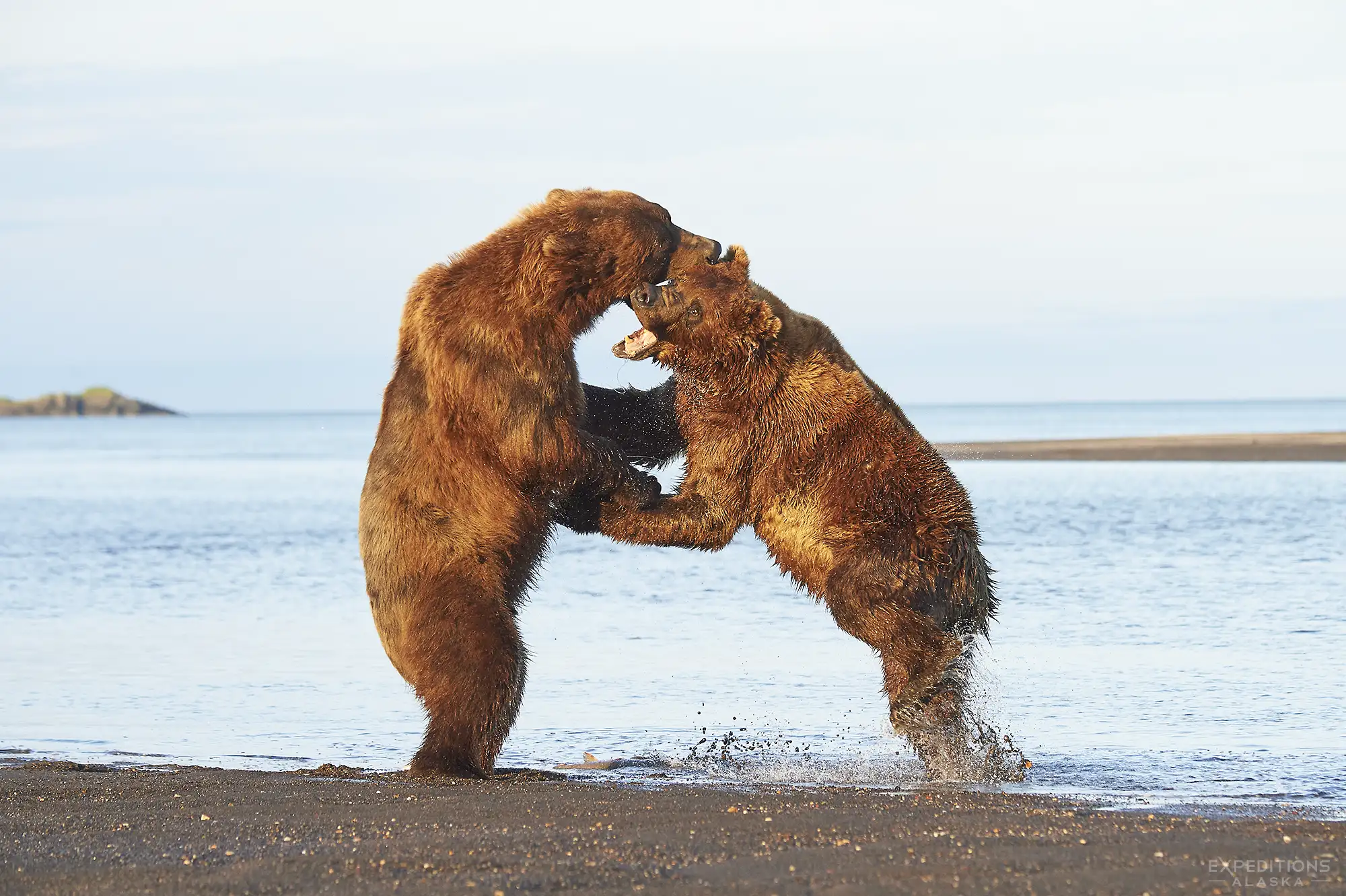
“Those who have packed far up into grizzly country know that the presence of even one grizzly on the land elevates the mountains, deepens the canyons, chills the winds, brightens the stars, darkens the forest, and quickens the pulse of all who enter it”.
~ John Muir
All four bear tours operate in Katmai National Park and Preserve. All four are photography-focused, not general bear viewing tours with cameras along for the ride. The schedule, the positioning, the pace, all of it is built around making images.
Groups are small. This is an owner-operated business, and I guide every bear trip personally. You’re not getting handed off to a seasonal hire.
All trips include charter flights in and out (from the relevant departure city), all food and meals during the trip, camping equipment or boat accommodations, and guide services. You provide your own camera gear, sleeping bag (for camping trips), and travel to the departure city.
None of these trips involve backpacking. You don’t carry camping gear on your back. Everything flies in by bush plane or arrives on the boat.
Bug levels are generally mild across all four trips, though everything is relative in Alaska.
We have a perfect wildlife safety record across every bear tour we’ve ever run. We’ve had hundreds of guests join us over multiple decades of these tours. Safety protocols are covered in detail in our pre-trip information packets once you book, and we run a thorough orientation at the start of every trip.
I have not only taken, but helped configure and advise for the Bear Safety and Guide Excellence Certification Program offered by Katmai Service Providers, a professional organization of commercial operators inside Katmai National Park.
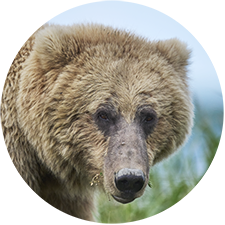
It depends on what you want to photograph. July and August bring peak salmon runs and the most active bear behavior: fishing, chasing, competing for position. September brings the fattest bears, better light (actual sunrise and sunset return), fall colors, and fewer people. Our four tours span July through September to cover these different windows. For a full seasonal breakdown, see our Complete Guide to Alaska Bear Photo Tours.
Our tours range from $4,400 to $9,800 per person depending on the trip. All prices include charter flights, food, accommodations (tent or boat), and guide services. Travel to the departure city (Kodiak, King Salmon, or Homer) is not included.
Katmai holds the world’s largest protected brown bear population, estimated at around 2,200 bears. During salmon runs, you can observe dozens of bears in a single day.
The concentration and predictability of bear activity here is unmatched anywhere. All four of our bear tours operate in Katmai because nothing else comes close for photography.
Every trip is different. The boat-based Coastal Wildlife tour is the least physically demanding on shore, though you may need to wade through knee-deep water in waders to get from the skiff to the beach, depending on the tide. Fat Bears in the Fall requires you to walk well on uneven ground for hours, but doesn’t demand serious hiking fitness. The two remote camping trips ask more: Brown Bears of Summer may involve hiking for hours to reach the bears, and Grizzlies in the Mist adds the stakes of genuine remoteness to similar physical demands. If you’re unsure, call us. We have this conversation with every client.
A telephoto lens is essential. NPS regulations require staying at least 50 yards from bears, and you need enough reach to fill the frame at that distance. 400mm is the practical minimum. We provide detailed gear recommendations in our pre-trip information packets. For a comprehensive gear breakdown, see our guide to bear photography equipment.
There are no roads into Katmai. Each of our four tours departs from a different Alaska hub town: Kodiak (Coastal Wildlife trip), King Salmon (Bears of Summer and Fat Bears in the Fall), or Homer (Grizzlies in the Mist). You fly commercially to that town and we handle the bush plane charter from there. Most people route through Anchorage.
It varies trip to trip with what we need to provide, etc. You’ll have to check out each trip webpage for exact details.
It varies. We have a comprehensive food info form all guests complete and then we make decisions on what to prep based on the input we get from guests. Obviously some limitations will apply and we can’t meet all requests; but we do an excellent job of accommodating various food allergies and restrictions and diets, etc.
From 2025, a typical menu might include
You’ll eat well. Some folks even joke we should have our very own “Katmai Fat Bear Competition”.
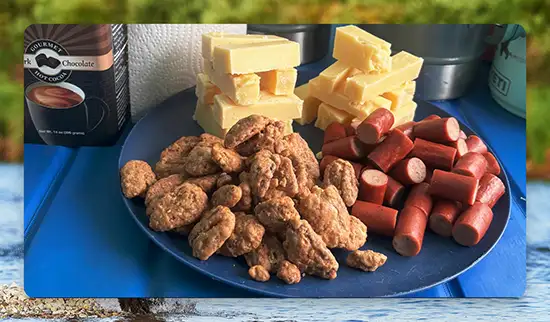
Snacktime!
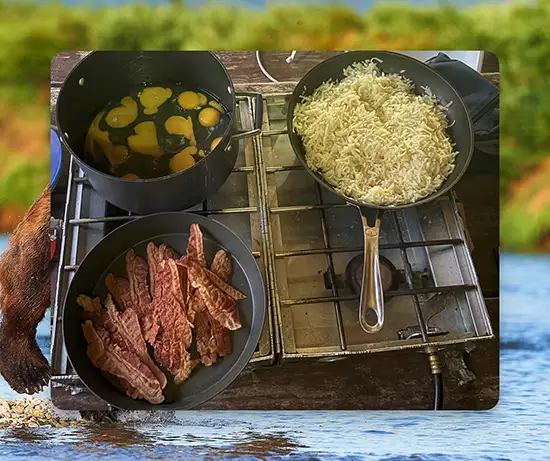
We call it “bearkfast”.
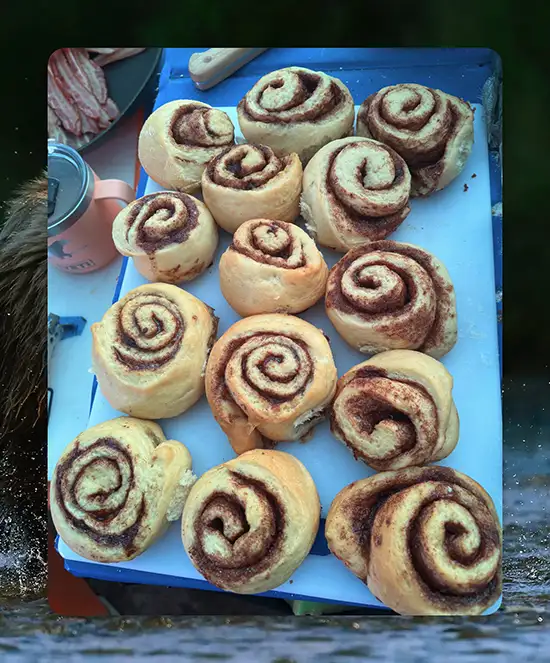
Cinnamon rolls.

Lasagna coming up!
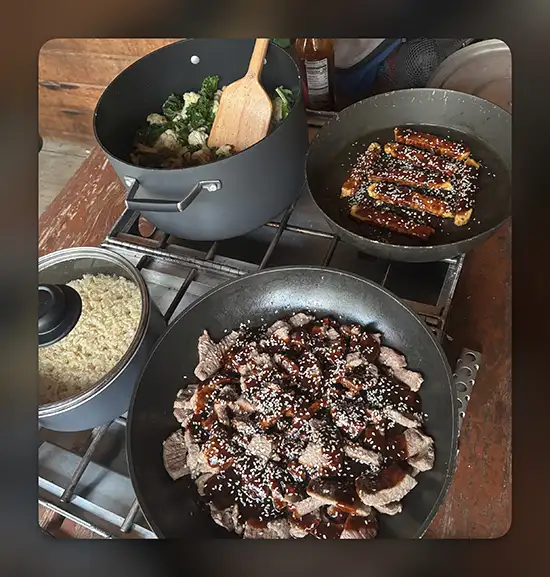
Chicken stir fry.
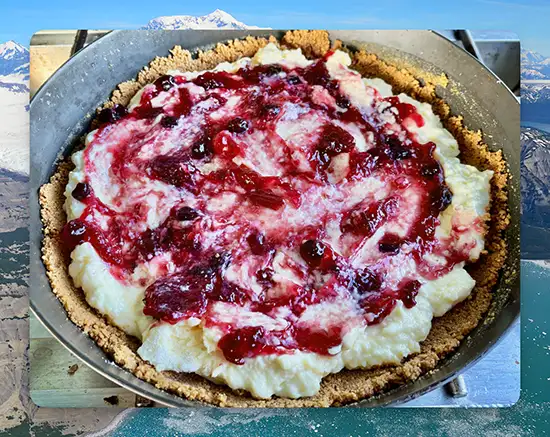
Cheesecake.
Well, this could be quite a discussion. And it varies somewhat, year to year. Trips change and situations change really a bit more rapidly and frequently than you imagine. But this post will hopefully help clarify some of the differences between each of our brown bear tours a bit.
I’ll mention each trip and then outline a few of the factors unique to that trip as well as what some of the differences might be:
The Brown Bears and Coastal Wildlife Tour is NOT a camping trip. On this tour we stay on board a 100′ boat and are well taken care of by Captain Johnny and his crew. Great people.
You can charge your batteries, laptop, etc as well as yourself on the comforts of Johnny’s boat.
We travel stretches of the Katmai Coast, going to shore each day to photograph the bears. We typically go to at least 2 or 3 different bays, but this does depend on weather, conditions, bear activity, etc, etc.
This trip we also aim to find some other creatures; primarily marine mammals like seals and sea otter, as well as eagles. We’ve had some decent luck with wolves on this tours as well. Superb backgrounds and mountain scenery.
Hiking and difficulty level is low. This trip works well for most folks, beginners to experienced, and you do not need to be in great shape.
Departs from and returns to Kodiak, AK.
The Grizzlies in the Fall Tour is the most “luxurious of those, with (limited) National Park Service services available, and some infrastructure to help your comfort somewhat. An outhouse, covered shelters, etc. It’s pretty comfortable and easy camping conditions for just about anyone. Being later in the year it is likely to be the cooler of the tours.
We spend some time in the river, but due recent park service changes and increasing visitation levels we don’t do that as much as we used to.
This trip works great for instruction and learning photography. Non-hikers and those with mild mobility concerns will be OK on this trip. But you can expect to walk several miles each day. The walking is generally pretty decent (i.e., not challenging).
Great for bear portraits, cubs and great big fat bears.
Yes you can recharge you camera gear.
Excellent for camera and photography instruction and more of a workshop today.
Departs from and returns to King Salmon, AK.
The Grizzlies in the Mist Tour is as remote as remote gets, no infrastructure or services or facilities of any kind. Camping is primitive, not designated sites or anything. No outhouse, etc.
Photography is excellent. Shallow waters, smaller creeks and hungry bears combined with abundant spawning salmon equal excellent photo opportunities for bears chasing salmon. Very, very few people or plane traffic. Incredible mountain backdrops. Have had some luck with wolves on this trip, but not something I specifically promote it for. They’re a treat that appears as they choose.
Hiking is easy-moderate.
Coastal Alaska can be wet, and it can be cold; we’ve had frosts at least twice here.
You have to be battery power independent.
Departs from and returns to Homer, AK.
The Bears of Summer Tour is another remote wilderness setting. No infrastructure of any kind.
The photography is great. Bears chasing salmon. Big bears, little bears, awesome backdrops and Alaska wilderness scenery.
More human traffic than the grizzlies in the mist trip. Mostly fishermen, but some bear viewing and photography tours as well. Camping is primitive.
Hiking is variable. It can work well for those a bit out of shape, but works really well if we have a group of people who can walk and be mobile. We may not have to, but it’s always nice to have that option.
Weather can be windy, but generally isn’t terribly cold.
Departs from and returns to King Salmon, AK.
All these tours are in Katmai National Park. None of them involve backpacking with camping gear. All can be buggy, but generally none of them are even what I would call “moderate” for bugs. Everything’s relative though.
There’s no way this kind of short post can answer all your questions, but hopefully this outlines most of the significant differences between each of these brown bear photo tours.
If you want a deeper dive and comparison for our bear tours, you should definitely check out this page.
Yeah, for sure. Most everything is covered here .