Gates of the Arctic National Park and the Arctic National Wildlife Refuge are two different protected areas, managed by two different federal agencies, with different boundaries, different ecosystems, and different reasons people go to them. They sit next to each other in northern Alaska. Both are wilderness with no roads. Both are reached primarily by bush plane. The two get confused constantly because of similar geography, similar names, and similar wildness, but they aren’t the same place and the trip you’d take to one isn’t the trip you’d take to the other.
The basic differences
| Gates of the Arctic | ANWR | |
|---|---|---|
| Designation | National Park & Preserve | National Wildlife Refuge |
| Managing agency | National Park Service (NPS) | U.S. Fish and Wildlife Service (USFWS) |
| Size | 8.4 million acres | 19.286 million acres |
| Established | 1980 (ANILCA); designated NM 1978 | 1960 (Range); 1980 (current Refuge) |
| Coast access | No, entirely inland | Yes, Beaufort Sea coast |
| Settlement inside boundary | Anaktuvuk Pass (Iñupiat village) | None (Kaktovik just off the coast) |
| Polar bears | Effectively no | Yes, along the coast |
What each one is
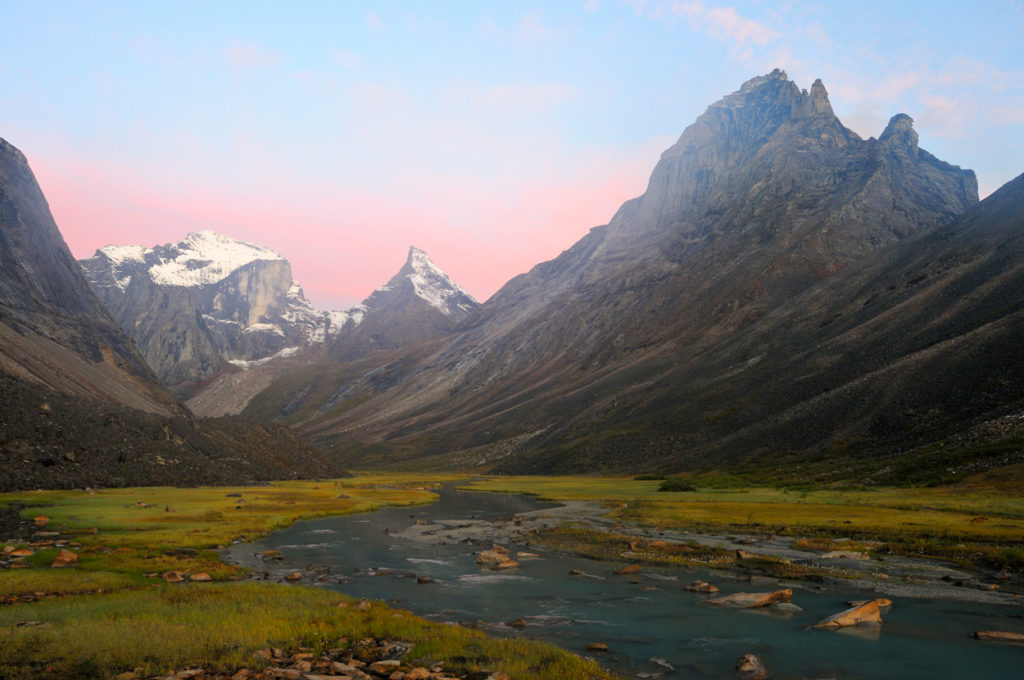
Gates of the Arctic sits in the central Brooks Range, straddling the divide between the boreal forest on the south side and the tundra on the north. It’s a National Park & Preserve, meaning the protections and management framework are NPS-style: visitor centers in Bettles and Coldfoot, ranger staffing, formalized wilderness designations within. Anaktuvuk Pass, a Nunamiut Iñupiat village of about 300 people, sits inside the park boundary. The park is famous for its central Brooks Range scenery, the Arrigetch Peaks, and being one of the least-visited national parks in the U.S. system.
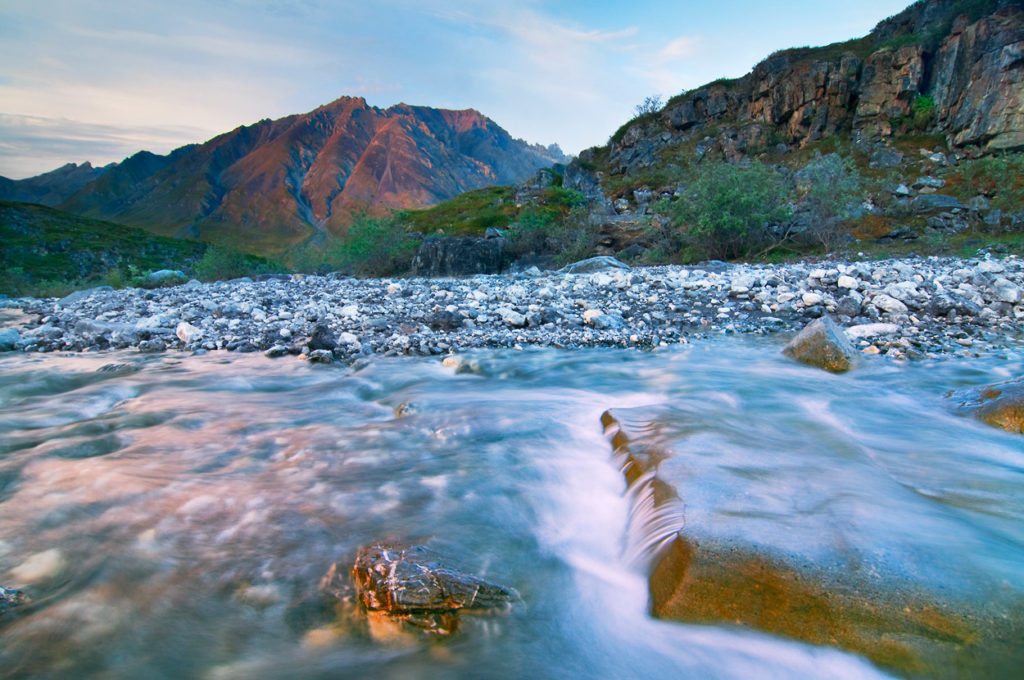
ANWR sits east of Gates and runs from the central Brooks Range all the way north to the Beaufort Sea coast. It’s a National Wildlife Refuge, which means USFWS-style management focused on wildlife and habitat rather than visitor infrastructure. It’s roughly two and a half times the size of Gates. The Brooks Range crosses through it, but the defining feature is the coastal plain on the north side, the 1002 area, where the Porcupine Caribou Herd calves and which has been the center of decades of oil development debate. Polar bears live along the Beaufort coast at Kaktovik. There’s almost no visitor infrastructure inside the refuge.
ANWR
Gates of the Arctic National Park
Where the trips overlap and where they don’t
Both areas use bush charter for access. Both involve true backcountry travel without developed trail systems. Both have grizzlies, moose, dall sheep, caribou, and most of the same bird life. Both can be visited for backpacking, packrafting, or rafting trips. From the visitor’s standpoint these similarities are real.
The differences that change a trip:
ANWR coastal plain and Beaufort Sea coast. There’s nothing comparable in Gates. If you want to see polar bears, the Porcupine Caribou Herd at calving, or stand on the Arctic Ocean coast, you’re in ANWR.
Gates Brooks Range scenery. The central Brooks Range, the Arrigetch Peaks, the major north-south river drainages like the Alatna and Noatak: these are Gates’ geography. ANWR has Brooks Range too but the scenery is different and (for most ANWR visitors) the trip is about the coastal plain, not the mountains.
Visitor support. Gates has visitor centers and rangers. ANWR has a joint visitor center with Gates in Coldfoot, but inside the refuge there’s nothing. Less hand-holding, more self-reliance.
Wildlife emphasis. ANWR is set up around wildlife conservation as the primary purpose. Gates is a national park where wildlife coexists with the broader recreational mandate. For wildlife photographers, ANWR’s coast and 1002 area are the higher-value targets.
Which one to pick
If your interest is the Porcupine Caribou Herd, polar bears, the Beaufort Sea, or the 1002 area: ANWR.
If your interest is the central Brooks Range, the Arrigetch Peaks, packrafting major Alaska rivers like the Alatna or Noatak, or visiting Anaktuvuk Pass: Gates.
Guided trips into both areas are available. Most people who come back for a second northern Alaska trip want the one they didn’t do the first time. For the official side-by-side, the NPS Gates of the Arctic page and the USFWS Arctic Refuge page are the agency starting points.