
Most working wildlife photographers use a mix of manual and semi-automatic modes. The pros tend to default to manual exposure with auto ISO, full manual when conditions are stable, and aperture priority when light is changing fast. Manual is the foundation. The other modes are tools you reach for once you understand the fundamentals that manual teaches you.
What “use manual mode” actually means in practice
There’s manual mode and there’s manual mode. Old-school full manual, where you set ISO, shutter speed, and aperture by hand and watch the meter. Manual with auto ISO, where you lock shutter and aperture and let the camera move ISO to balance the exposure. And aperture priority or shutter priority for situations where one variable matters more than the other two. Working photographers move between all of these depending on the situation. Almost nobody shoots full auto.
Why we recommend learning full manual first
This is the part most photographers want to skip. Full manual is the fastest way to learn the relationship between ISO, shutter speed, and aperture. It’s like cooking. If you learn with a pan and a stove, you understand what’s actually happening to your meal. Buy a frozen pizza and reheat it on auto and you’ll eat, but you won’t know what made it work.
Once those fundamentals are in your hands, you can switch to whatever mode the moment calls for. Without them, you’re guessing every time the light does something the camera didn’t expect. Backlit fur. Snow against dark forest. A bear walking through dappled spruce shadow. These are the exposures auto modes routinely get wrong, and they’re exactly the moments you most want a frame.
What we actually shoot in the field
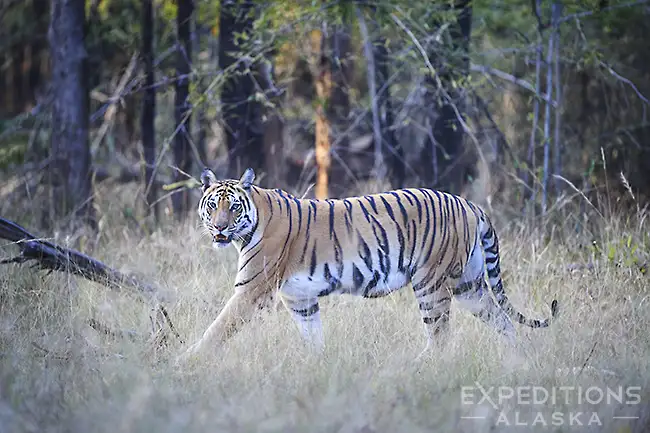
Most of our shooting is manual exposure with auto ISO, locked at a shutter speed fast enough for the subject and an aperture that gets the depth of field we want. The camera moves ISO as the light shifts. When light is stable and we have time to think, we go full manual. When we’re in fast-changing light or working a panic situation, aperture priority gets used. Pure auto, almost never.
How to learn manual without going to Alaska to do it
You don’t need a wildlife scene in front of you to practice manual exposure. You don’t need a long lens. You don’t need to leave the house. Set the camera on the table, point it at a window, point it at the dog, point it at a coffee cup. Adjust ISO and watch what happens. Adjust shutter speed and watch what happens. Adjust aperture and watch what happens. Repeat until the relationship between the three is in your hands without you having to think about it. That work is invisible from the outside, and it’s most of what separates photographers who get the frame from photographers who don’t.