
A great wildlife photograph shows behavior, light, and a sense of place at the same time. The animal does something. The light does something. The setting tells you where you are and why it matters. Sharp eyes and a clean background are baseline. Story, gesture, and atmosphere are what separate a record shot from a photograph.
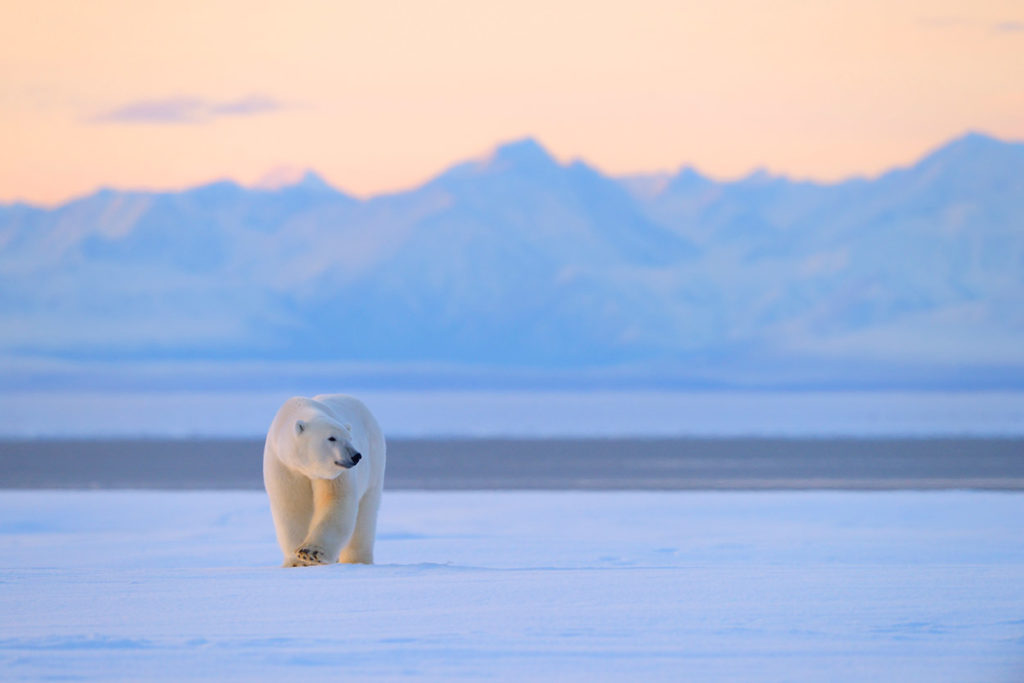
The polar bear photo above has some great light, a nicely balance composition, and a balanced color palette. It has a sense of a place yet the bear is large enough in the frame to hold your eye.
Behaviors over Portraits
The species portrait is the entry point. Eyes sharp, animal centered, background clean. It’s where everyone starts and where most images and photographers stop. The photographs that hold up over time tend to show the animal doing something specific. Pulling a salmon. Feeding a cub. Bedded down with another animal of its species. Looking off at something we can sense but can’t see. The viewer has to be able to read what’s happening, not just what’s there.
Light that earns its place in the frame
A flat-lit broadside of an animal is information, not a photograph. The image with sidelight raking across fur, or backlight catching breath on a cold morning, or a shaft of sun cutting through a forest opening onto a single subject, that’s where wildlife photography becomes photography. Direction and quality of light do as much work as the subject does.
A real sense of place
This is where most wildlife images fall down. The lens compresses everything into a tight box around the animal and removes the location entirely. A coyote in dry sage looks the same as a coyote in coastal rainforest. The photograph that shows you which one you’re looking at, with the spruce or the sage or the tundra reading clearly in the frame, says more. We work hard to keep the place visible, even when the animal is the subject.
Composition that doesn’t shout
Most of the rules people repeat about composition are restatements of one underlying idea. Lead the eye to the subject without forcing it. Negative space, edges where light meets shadow, color contrast, leading lines. They all do the same job. The image doesn’t tell you what to look at. It guides you there. When composition is doing its work you don’t notice it.
Restraint in the edit
The strong image is usually the one that’s been pushed less. Saturation that mirrors what the eye saw. Contrast that holds detail in fur and feather. Sharpening that doesn’t crunch the edges. The audience has gotten good at recognizing over-processed wildlife work, and the heavy hand always reads. Soft edits age better than hard ones.