
A wildlife photographer’s day is mostly walking and waiting. Pre-dawn travel to a location, hours of watching, short windows of action, then editing and backing up files. On a good day we make a handful of frames worth keeping. On many days we make none. The fieldwork happens around weather, animal patterns, light, and tides.
Up before the animals
Most days start in the dark. We want to be in position before the light is. That can mean a 3 or 4 a.m. start in summer (in Alaska) sometimes earlier on the coast. Animals are most active in the cool ends of the day. The window between when there’s enough light to shoot and when the heat shuts everything down can be short.
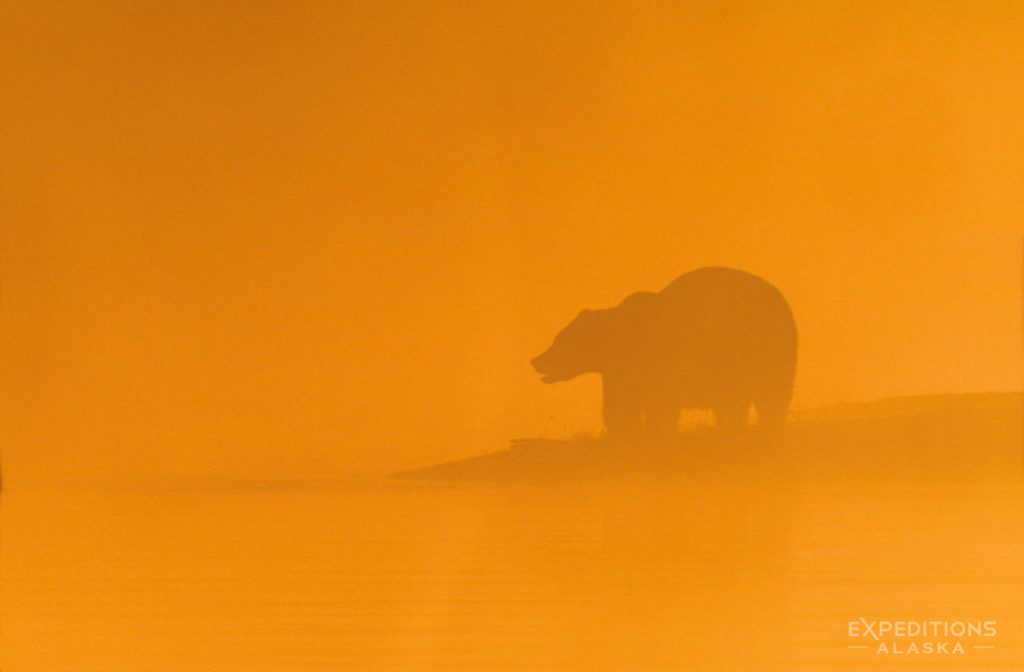
Brown bears seem to be more active in the evening than the morning. That’s been my experience, especially on the Katmai Coast. So get your rest early, and stay out late!
Hours of watching
The actual shooting on a day in the field might be five minutes, twenty minutes, an hour. The rest is observation. Where is the animal moving. What’s the wind doing. Where will the light be in two hours. Are there other animals around shifting how this one is behaving. We’re not bored when nothing is happening. We’re working. The reading of the situation is the work.
A short window, then it’s gone
Action tends to come in bursts. A bear catches a salmon. A wolf walks through a frame. A mother grizzly stops to nurse a cub. These windows last seconds to minutes. Everything before that is preparation for being ready. Everything after is sitting with the rest of the day and seeing if it happens again.
Backups, edits, and admin
Back at camp or the lodge, files come off the cards onto two separate drives. Edits get a quick first pass. Field notes go into a journal so I remember the weather, the location, and the species behavior when I look at the file in six months. Camera batteries get charged, lenses get cleaned of salt or dust, the next day’s plan gets sketched out.
The off-season is when the writing happens
Half of this work is what happens when we’re not in the field. Sorting archives, writing posts, prepping for the next season’s trips, editing client tours. People imagine wildlife photography as the field days. The field days are a small slice of the calendar for most working photographers.
Smart phones have become an invaluable resource in the field. I use my Voice Memos app and some ai to provide a transcription later.
All. The. Time.
What it’s not
It’s not chasing animals. It’s not driving roads looking for things. It’s not getting lucky once and posting that frame for a year. It’s a slow, repetitive practice with a lot of empty hours and a few that pay for the rest.