
Why lightweight boats unlock Alaska’s most remote wilderness
Gates of the Arctic National Park has no roads, no trails, and no services. At 8.4 million acres, it’s one of the largest wilderness areas in the United States, and getting there requires either a very long walk or a small plane.
This is where packrafts shine.
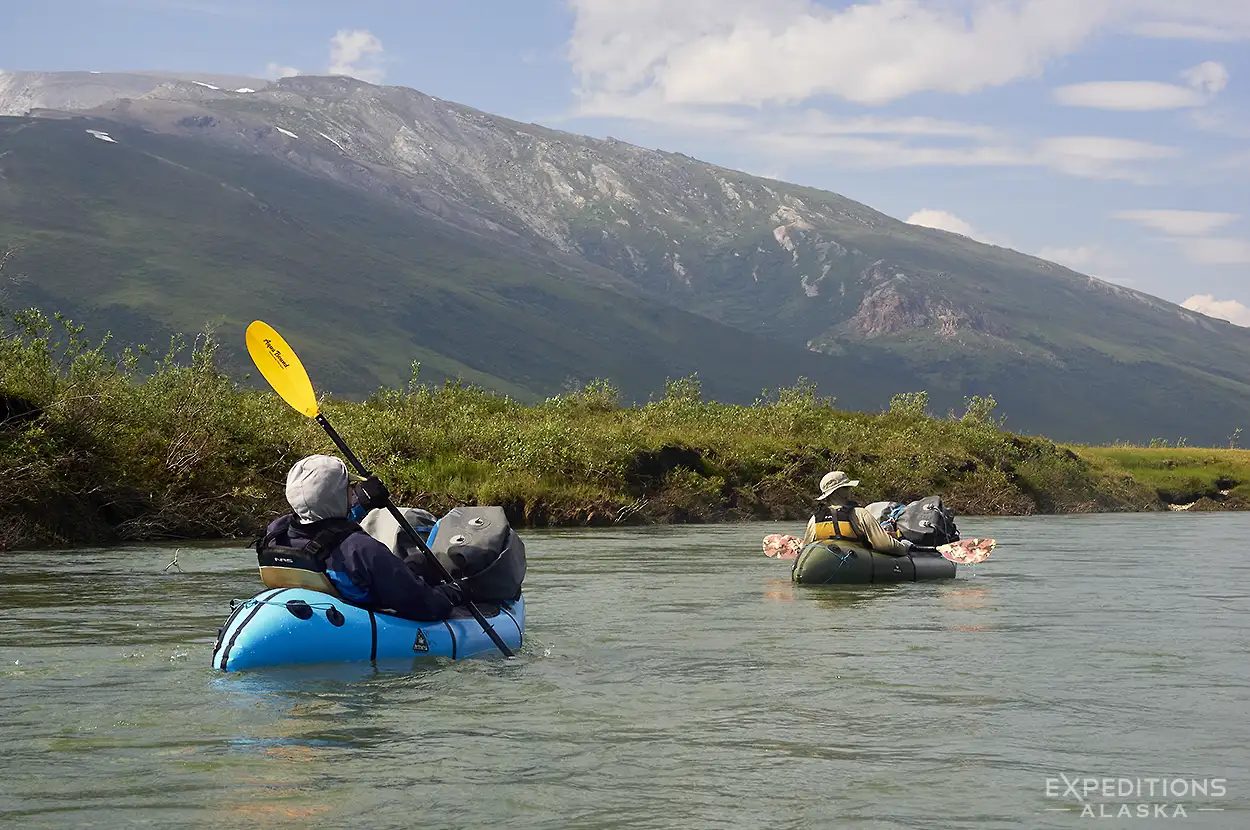
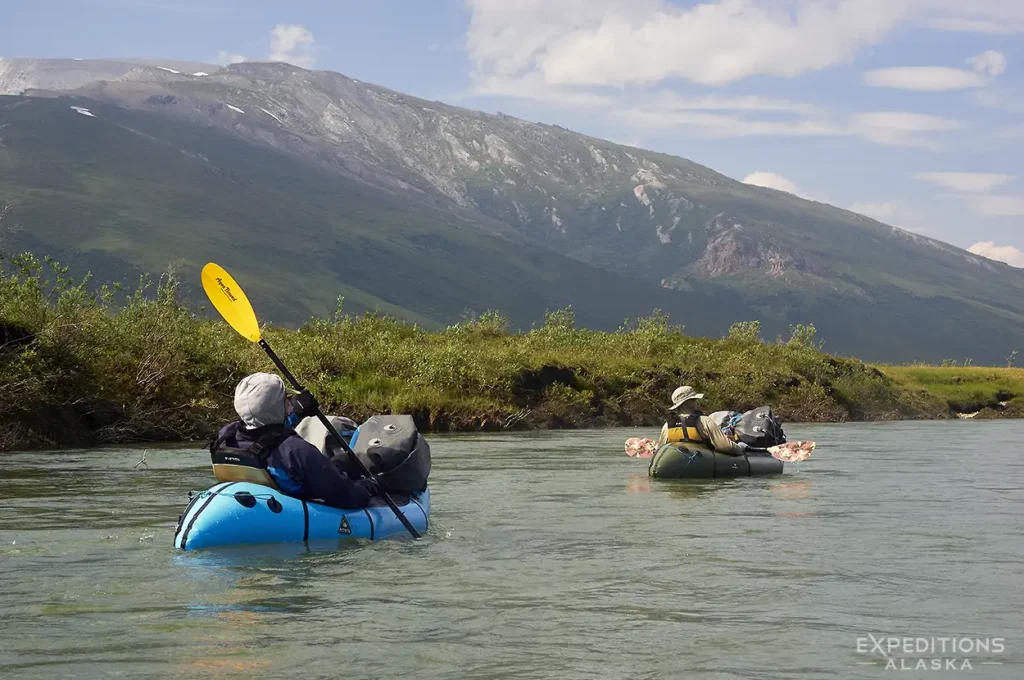
A packraft is a lightweight inflatable boat, typically weighing 4-8 pounds, that can be rolled up and carried in a backpack. When you reach water, you inflate it and paddle. When you reach land, you deflate it and walk. The combination of backpacking and paddling opens terrain that neither activity alone can access.
In the Arctic, where floatplanes have strict weight limits and portages are unavoidable, packrafts make trips possible that would be impractical with traditional boats. You can fly into a remote lake, hike to a river, paddle for days, then hike out to a different pickup point. The boat goes where you go.
Why the Arctic?
Alaska has thousands of rivers, but the ones above the Arctic Circle are different.
First, they’re empty. Gates of the Arctic sees roughly 10,000 visitors per year. The Great Smoky Mountains, less than one-tenth the size, sees 11 million. On an Arctic river trip, you might not see another human being for a week.
Second, they’re intact. The rivers of the Brooks Range flow through ecosystems that have never been dammed, diverted, logged, or developed. The water is clean enough to drink. The wildlife populations are complete: wolves, bears, caribou, sheep, all present in natural numbers. This is wilderness the way it existed before industrial civilization.
Third, they’re accessible. Counterintuitive, perhaps, given the remoteness, but the same floatplanes that serve bush communities can drop paddlers at headwater lakes and pick them up downstream. It’s expensive but straightforward. No weeks of bushwhacking required.
Classic Arctic Packraft Routes
The Noatak River is the most popular Arctic float in Alaska, and for good reason. It drains the largest undisturbed watershed in North America, flows entirely above the Arctic Circle, and offers 400 miles of Wild and Scenic water from the headwaters in Gates of the Arctic to the coast. The upper section, from Pingo Lake to Lake Matcharak, provides 45-50 miles of easy Class I-II paddling through spectacular mountain scenery, with excellent hiking, fishing, and wildlife. Most groups complete it in 5-7 days.
The Alatna River shares a trailhead with the Noatak near the continental divide. It flows south through Gates of the Arctic, paralleling the Arrigetch Peaks, one of the most dramatic granite formations in the Arctic. The upper Alatna is Class I-II with one notable rapid near Ram Creek that may require scouting or portaging. It’s a good complement to the Noatak for paddlers who want to see both sides of the Brooks Range.
The John River flows south from Anaktuvuk Pass through classic Brooks Range scenery. It’s one of the more accessible Arctic rivers, with put-ins possible from the Dalton Highway, and offers a mix of flatwater and Class II rapids. The upper John passes through Dall sheep habitat and offers good fishing.
The Kobuk River lies west of the Noatak and flows through Kobuk Valley National Park. It’s known for the Great Kobuk Sand Dunes and Onion Portage, an archaeological site where humans have hunted caribou for at least 10,000 years. The Kobuk is generally easier than the Noatak, with slower water and a broader valley.
The North Fork of the Koyukuk is the river that inspired the name “Gates of the Arctic“. Frigid Crags and Boreal Mountain form the “gates” where the river cuts through the mountains. It’s a classic Brooks Range float with Class II water and excellent scenery, accessible from Bettles. This is our Beyond the Gates packrafting trip.
What Makes Arctic Packrafting Different
Logistics are complex. Getting to and from the river requires coordinating floatplane charters, often with multiple shuttle flights to move people and gear. Weather delays are common. You need contingency plans and extra food.
Portages are real. Most Arctic float trips begin and end with portages between lakes and rivers. Expect to haul gear across tussocks, through willows, and over uneven tundra. The boat is the easy part; the rest of your kit is not.
Weather is variable. Arctic summers can produce hot, sunny days or cold rain and wind. Pack for both. Hypothermia can be a risk if you capsize in cold water. Most experienced Arctic paddlers wear splashwear, or splash jackets at minimum.
Days are endless. Above the Arctic Circle in summer, the sun barely sets. This messes with sleep schedules and creates unusual light. Many groups shift to an 11am-11pm rhythm, taking advantage of the midnight sun.
Bugs are intense. Arctic mosquitoes are legendary. Head nets and bug shirts are essential, especially during portages and in sheltered areas. Gravel bars and windy ridges offer relief.
Wildlife is everywhere. Grizzly bears, caribou, muskox, wolves, Dall sheep. You will see large mammals. Keep food stored properly, carry bear spray, and give animals space.
What It’s Actually Like
Here’s what a day on an Arctic packraft trip actually looks like, pulled from a guide’s notes last July:
“Light snow on the first day and next morning, then the clouds cleared out and it got steadily smokier as it warmed up. There were some big lenticulars forming on the last day—glad we made it out before we saw what they were going to bring.”
That’s the Arctic: snow, sun, smoke, and storm clouds all in one week. You pack for everything because you’ll see everything.
The fishing, though, makes up for any weather. Same guide, same trip:
“Fucking amazing fishing. Little green spinners or woolly buggers slayed the grayling.”
He’s not exaggerating. Every deep pool holds fish. Most groups stop casting not because the fish stop biting but because arms get tired.
And the wildlife? On a rest day, the group watched a grizzly work a hillside for the better part of an hour; chasing ground squirrels, digging, scratching itself against rocks. No drama, no conflict, just a bear being a bear in a landscape where bears have been doing exactly that for thousands of years.
Planning an Arctic Packraft Trip
Timing: Late June through August is the typical season. Earlier trips have more snow and ice; later trips have better fall colors but colder weather. Mid-July to mid-August is peak.
Access: Most Brooks Range rivers are accessed from Bettles (east side) or Kotzebue (west side). Both are reached by scheduled bush flights from Fairbanks. From there, charter floatplanes take you to put-in lakes.
Permits: Independent travelers don’t need permits for most Arctic rivers, but commercial groups (including guided trips) require permits from the National Park Service.
Food caching: Longer trips may require food caches dropped at midpoints. This adds logistical complexity and cost but enables multi-week expeditions.
Communication: Satellite messengers (InReach, Zoleo, etc.) are essential. There is no cell service, no one to call for help, and evacuation depends on being able to reach a pilot.
Skill level: Most Arctic rivers are Class I-II, suitable for paddlers with basic boat-handling skills. The challenge is less about whitewater than about self-sufficiency, wilderness judgment, and adaptability.
Going Guided
An experienced outfitter handles the logistics: flights, food, group gear, route planning, emergency communication. You show up in Fairbanks with your personal kit and follow the guides into the wilderness.
For first-time Arctic travelers, going guided makes sense. The logistics are genuinely complex, and local knowledge matters. A good guide knows where to camp, where the fishing is best, which ridges offer the best hiking, and how to read a weather forecast that’s about to strand everyone for three days.
Guided trips also keep group sizes small. Most Arctic outfitters run trips of 6-8 guests, which reduces impact and maintains the wilderness character of the experience.
The Case for Packrafts
You could paddle the Noatak in a canoe. People have for decades. But packrafts offer advantages that traditional boats don’t.
Weight: A packraft weighs 5-8 pounds. A canoe weighs 50-80 pounds. When you’re flying into the backcountry on a floatplane with strict weight limits, every pound matters.
Portability: A packraft fits in your backpack. A canoe does not. This opens routes that combine hiking and paddling, or that require portages through difficult terrain.
Versatility: Packrafts handle everything from flatwater to moderate whitewater. They’re nimble, responsive, and surprisingly durable. On an Arctic river with variable conditions, this versatility matters.
Simplicity: Inflate, paddle, deflate, walk. No trailers, no roof racks, no vehicle shuttles. The boat is just another piece of gear.
For the remote rivers of the Brooks Range, packrafts are the tool that matches the terrain. Light enough to fly, tough enough to paddle, portable enough to carry. They unlock the Arctic in ways that heavier boats simply can’t.
Cheers
Carl
Expeditions Alaska offers guided packraft trips on the Noatak River and other Arctic drainages. Experience Gates of the Arctic National Park with small groups, expert guides, and all gear provided.