Wrangell-St. Elias National Park – Overview

December 5th, 2007 by Carl D
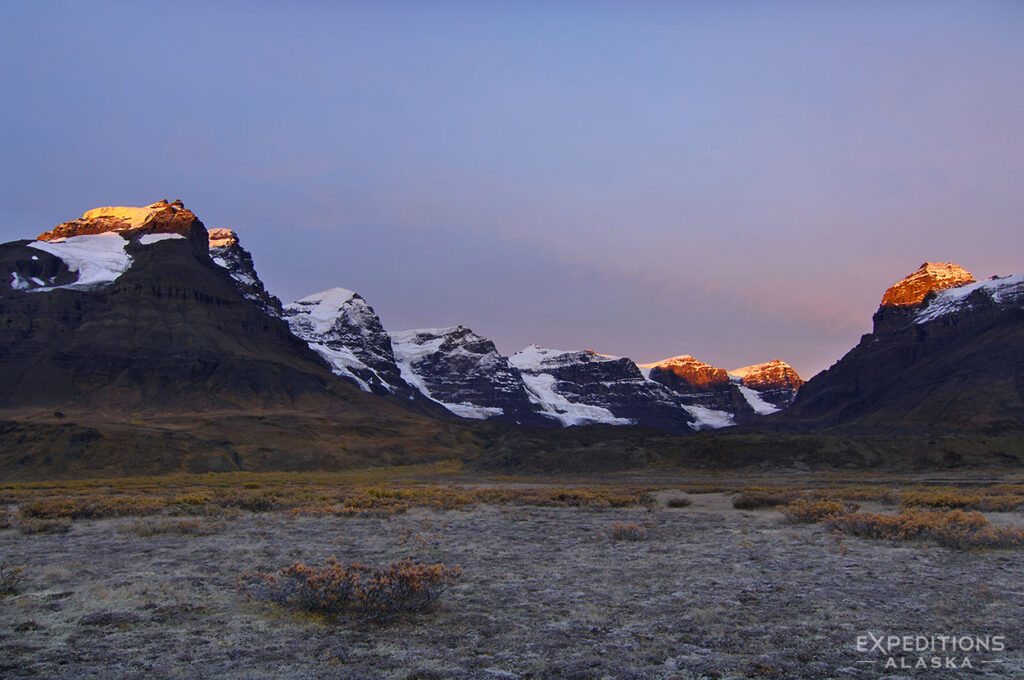
Hole in the Wall, Skolai Pass, Wrangell-St. Elias National Park
Dawn lights up Hole in the Wall, near Skolai Pass, Wrangell-St. Elias National Park, Alaska.

Introduction to Wrangell-St. Elias National Park

I thought I might write a small post here about my favorite National Park, Wrangell-St. Elias National Park. Though it’s the largest National Park in North America, and possibly the most impressive as well, it’s relatively little visited. Many people have never even heard the words Wrangell-St. Elias National Park.

This spectacular park gets (as of 2007) less than 40 000 visitors a year. Denali National Park gets close to a million, and parks in the Lower 48 states such as the Smokies or Yellowstone get in the vicinity of 10 million annually.

That’s just a small part of why we love it so much!

Size and Significance

The Largest National Park in North America

Wrangell-St. Elias National Park is nearly times larger than Yellowstone National park, at 14 million acres of wild, remote, gorgeous country.

Continue reading…

Alaska Backpacking Rain Gear; Keeping Dry

December 1st, 2007 by Carl D
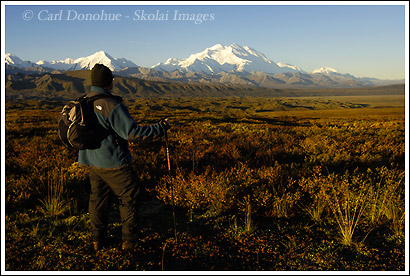
Hiking in front of the mountain, Mt. McKinley, Denali National Park, Alaska.
Some days, like this one here in Denali National Park, we don’t need rain gear at all. Other days we’re not so lucky.

Hey Folks

Another question (or set of questions) I get asked a lot has to do with rain gear.

What’s appropriate, what’s necessary, what’s not OK, what works, what doesn’t, etc.

I think rain gear is another of those things where many people can make do with less. I wouldn’t advise anyone to venture out on a multiday backpacking trip in Alaska under-prepared.

But I would say that spending more money on higher-end gear isn’t necessarily something you need to do. I’ve used a number of different shells, from lighter-weight jackets like the Marmot Precip to heavier (and way pricier) Gore-Tex XCR shells by Arcteryx. Whilst I will admit the Arcteryx stuff is awesome, I think it’s more than most people need.

Continue reading…

Kennicott Glacier, Wrangell St. Elias National Park, Alaska

November 30th, 2007 by Carl D
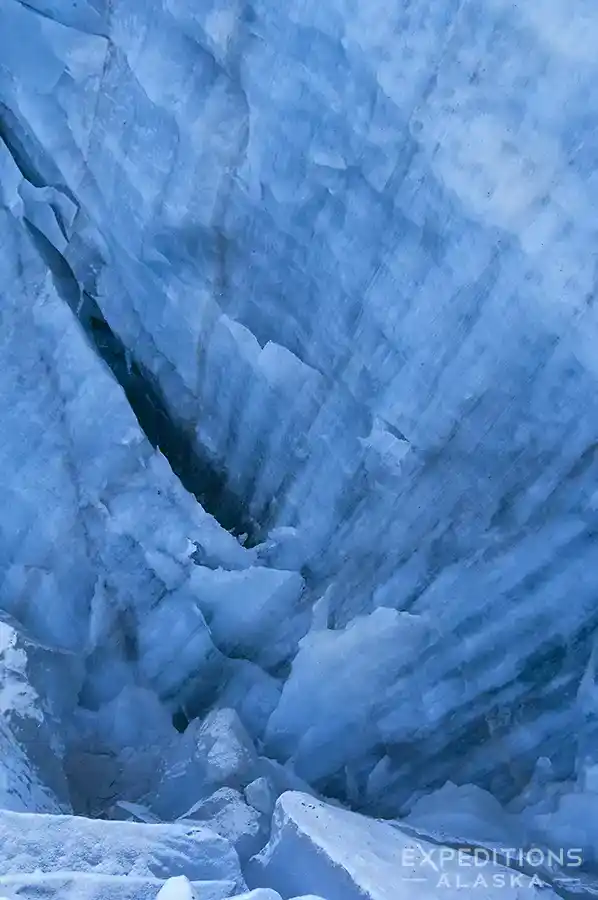
Deep blue ice on Kennicott Glacier in winter, Wrangell-St. Elias National Park near McCarthy, Alaska
Some really blue ice on Kennicott Glacier during winter. Wrangell-St. Elias National Park.

Hey Folks,

Here’s a photo I took of the Kennicott Glacier, not far from the small town of McCarthy, in Wrangell St. Elias National Park, Alaska. I was exploring the west side of the glacier, which is much less frequently hiked and travelled than the east side. With a little luck and some perseverance, I found a few places where I managed to scrape out some decent photos.

Hiking on Glaciers

Hiking around glaciers requires care, particularly if you’re hiking solo. I guess hiking anywhere, anytime, requires care, but particularly solo trips. Glacial travel is a significant safety issue, and one we spend considerable time on in our Guide Training program. Here’s a look at the list of glacial travel items we discuss and train on pre-season.

That said, I do love being out exploring the backcountry on my own – it’s a particular way of connecting with the land that is immeasurably different to trips with other people.

Continue reading…

Backcountry Photography Tips

November 28th, 2007 by Carl D
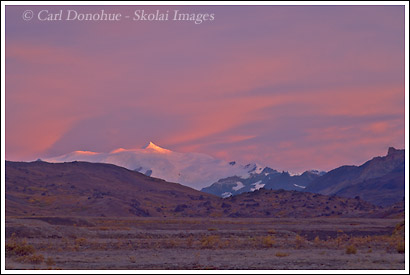
Sunrise over Regal Mountain, Wrangell St. Elias National Park, Alaska.

Hey Folks

Landscape Photography Tips for Backcountry Photography

Recently someone asked me about some photography tips, and I thought that might make a good post for a blog. (*Update; we now have an entire category of posts on this subject, so you’ll plenty of reading at the above url). There’s obviously way too much stuff to talk about in one post, so I’ll just make this one specific to shooting landscapes on backpacking trips.

Hopefully this will help you bring home some better images from your trips. The image I’ve posted here is from one of our Alaska Landscapes Photo Tours to Skolai Pass. The scene is of Regal Mountain, a 13 845′ high shield volcano, or stratovolcano, in the Wrangell Mountains, seen from Skolai Pass, Wrangell St. Elias National Park. Regal Mountain is most commonly seen from the west, from the Root Glacier near McCarthy. Because the mountain is so covered with glaciers, it’s hardly been studied at all by geologists. It’s a WAY cool mountain!

Bring a Tripod

First thing is suck it up and bring your tripod. Even a little lightweight tripod is WAY better than no tripod at all. These days you can buy an ultralight tripod that’ll really help you out. Like everything else, it seems, you pay more dollars for every ounce you lose.

Continue reading…

Down Versus Synthetic Sleeping Bags – What to Choose?

November 26th, 2007 by Carl D
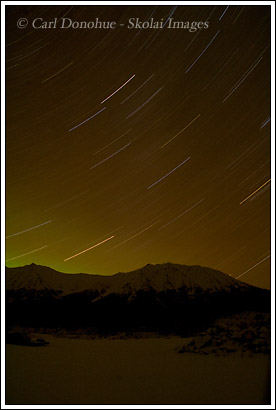
Star Trails over McCarthy, Wrangell St. Elias National Park, Alaska.
Star Trails over McCarthy and the Wrangell Mountains in Wrangell-St. Elias National Park.

TL;DR

The winner is Down sleeping bags.

Down sleeping bags are a better choice for backpacking trips than synthetic sleeping bags.

I get asked all the time which kind insulation fill is best for a sleeping bag for someone planning an Alaska backpacking trip. Like almost all these kinds of questions (such as what size backpack you need), the answer is pretty subjective,  and I really don’t think it matters too much. It also depends somewhat on your choice of sleepwear and also your sleeping pad choice. It’s an important topic.

What matters is that you make the decision that best fits your particular set of circumstances. That said, here are a few notes that may help you in your decision-making. I own both down and synthetic bags, and I honestly don’t find the type of fill to be the deciding factor in how much I like a bag.

Continue reading…

Sleeping bags and Sleeping Pads

November 23rd, 2007 by Carl D
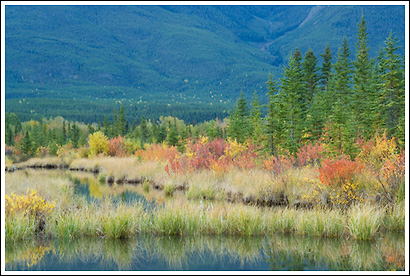
Boreal forest, Banff National Park, Alberta, Canada.

Hey Folks,

Temperature Ratings for Alaska Summer Backpacking

I think a 20deg bag is essential for a summer trip in Alaska. 32deg bags, and warmer, often aren’t warm enough for alpine trips here. In fact, a 15 deg bag is even a good idea. it varies a lot with the individual, and also with the temperatures for any given trip, obviously.

Temperatures can easily dip into the 32deg range, even in mid-summer, and while this isn’t too often, it’s not uncommon. If you’re planning a trip with for the shoulder season, such as late Aug/early Sept, even a 10deg bag isn’t overkill.

Continue reading…

Backpacks – What do I need?

November 23rd, 2007 by Carl D
Mt Churchill and Mt Bona, Russell Glacier, near Goat Trail backpacking trip in Wrangell St. Elias National Park, Alaska.
An aerial view of Russell Glacier, Mt Bona and Mt Churchill, in Alaska’s Wrangell-St. Elias National Park.

Hey Folks

Backpacks are, of course, an integral piece of gear for a backpacking trip. What kind of backpack works best for you is not for me to say, but I can give you some information that might help you.

Internal Frame vs External Frame Backpacks

I like internal frame backpacks. I think they carry better than external frames, particularly for off-trail hiking such as the Southern Traverse. A well-fitted internal frame pack will ride on your back closer, with less movement, and also allow you to walk in a more upright position, as the packweight, being closer to your back, doesn’t need to be offset by you leaning forward. Great for off-trail backpacking. On the other hand, one of my best friends hikes with an external frame backpack, and he loves them. Chocolate and strawberry, I suppose.

Continue reading…

Backpacking off-trail, Wrangell-St. Elias National Park

November 7th, 2007 by Carl D
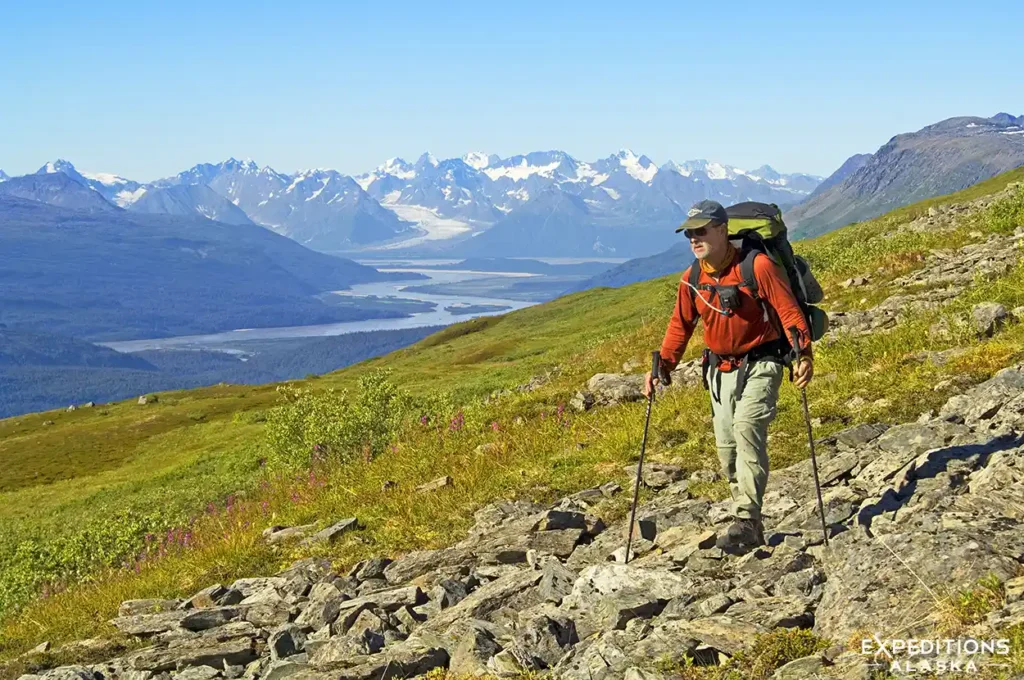
Backpacker hiking Southern Traverse backpacking trip Bremner River, Wrangell-St. Elias National Park, Alaska.
Mark enjoying the view

Hey Folks

I’ll talk here briefly about one of the common (if not the most common) issues people seem to have backpacking in Alaska.

It’s The Terrain, Folks

Sure, trips can be strenuous and hard in terms of endurance and cardiovascular fitness, but a more common issue for people is hiking over uneven terrain. For those folks who are used to backpacking and hiking on trails, such as in the Lower 48, the trailless mountains of Alaska pose a new challenge.

Talus, Moraine, Scree; Backpacking Over Rocks

One of the things some people struggle with is hiking over a moraine, or a talus slope, like this one here. A moraine is a glacial formed pile of rocks. Sometimes, that pile might be huge, miles across. Sometimes it’s much smaller.

A talus slope, such as this one overlooking the Bremner River near where it joins up with the Copper River in the Chugach Mountains, Wrangell St. Elias National Park, is usually formed by a rock slide. Talus and scree are actually the same thing, but talus usually is used to refer to larger rocks, and scree smaller stones. They’re often unstable, because

Continue reading…

Mountain Hardwear Skyledge 2 backpacking tent

November 1st, 2007 by Carl D

Hey Folks,

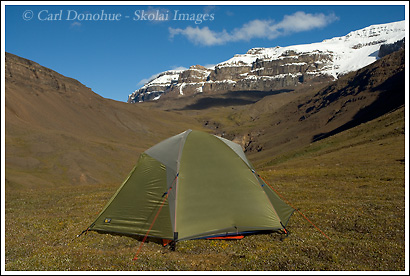
Welcome to the beginning of a lot of chatter about backpacking gear. The first thread is about tents. Specifically, MY tent, the Mountain Hardwear Skyledge 2. I can’t recommend this tent highly enough.

1 – it’s reasonably light. Any 2 person tent that comes to close to 4lbs is light, IMO.
2 – it’s super-easy to set up and take down. Ridiculously easy.

Continue reading…

Denali Summit, Denali National Park, Alaska

October 17th, 2007 by Carl D
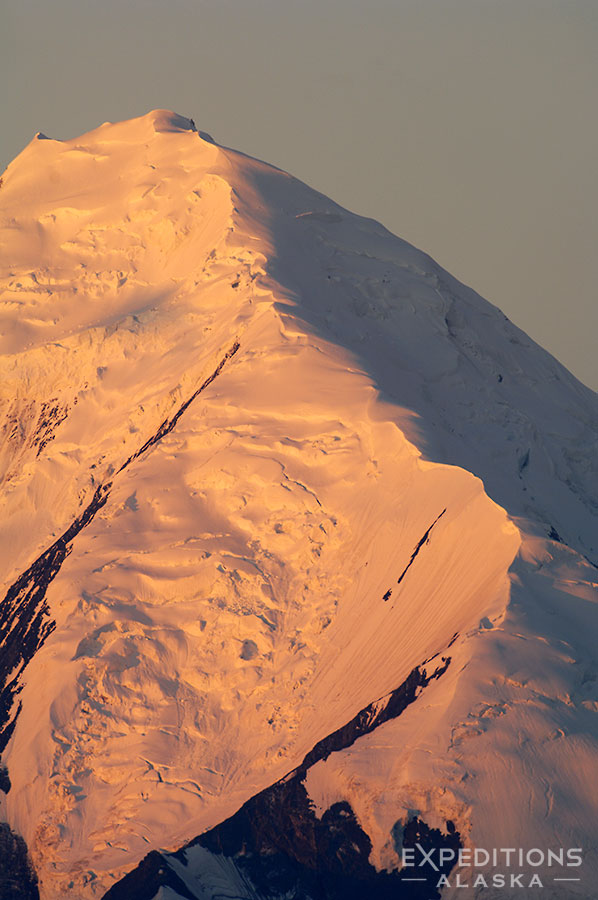
“Denali”, or Mt. Denali, Denali National Park, Alaska.

Alpenglow on Denali

OK OK OK .. I’ll quit posting Denali, or Mt. McKinley, photos in a little while! I’m just glad I finally got some!  

This one was kind of unusual for me. I do like this kind of abstract mountain peak photo, but normally I don’t shoot photos like this when the light is really happening. On this particular morning, I had been camped in this location in Denali National Park for several days, already had a number of decent images of alpenglow on the mountain with wider lenses, and decided I would ‘go for it’.

I’m glad I did because I got this one and a couple of other similar images that I really like. The alpenglow was warm and juicy, a real treat. 

I used my 500mm lens on my full-frame camera, giving me an effective focal length of 750mm, which required some patience and technique to get a sharp image. The shutter speed was not as fast as I might’ve hoped for, but with some effort I managed to get some sharp photos.

Why I Call It Denali, Not Mt. McKinley

I get asked a lot about whether I call the mountain Denali or Mt. McKinley. I almost never use Mt. McKinley, the mountain’s official name, but almost always go with the local name, Denali. For those of you who don’t know the history of the 2 names, I’ll offer a summary here:

The people who lived in the area prior to the Europeans were Athabascan people, and the name they used for the mountain is “Denali” – it translates, closely, in English as “The Great One”, or “The High One”. The official name, given to the mountain in 1896, is a reference to the former Governor of Ohio, and later President of the US, William McKinley.

The State of Alaska recognises the name Denali, but the official US name is Mt. McKinley.

What’s interesting to me is the difference of abstraction here. One group of people named the mountain after what it is, a great, or high mountain; a tribute to the mountain itself, its grandeur and its majesty. Our culture has failed to do this, and instead named the mountain after one of our own, a senator and later president.

We do this too often, I think. 

The Names We Give Mountains

And it goes further than this; the peak that sits just to the south of Denali, Mt. Foraker, is named after a Senator from Ohio, Joseph Foraker. Again, we can look to the native people for a name that best fits the mountain and mountain range: the name “Menlale”, translates as “Denali’s wife”, or “Sultana”, meaning “the woman” – both a reference to the mountain being slightly smaller than nearby Denali, but equally respecting the mountain itself.

This is one of the most striking examples of how our culture fails to value the land for what it is. We only recognize its utilitarian value, its value to us. We tend to name places and features of the landscape after people we admire – maybe a symbol of respect to people, but a complete disrespect to the land on which we live.

It’s also a lack of respect for the people who lived in the area before us. We fail to honor the names they had for the characters and features they shared the land with. When European settlers arrived here, humans had already given names for the animals and plants, the mountains, streams and watersheds. Our unwillingness to honor those names is just one example of a complete lack of respect for the people who lived here.

For these reasons, I prefer Denali, and Menlale, or Sultana. My mum said she likes those names, too.

Cheers

Carl

PS: You can see more photos from Denali National Park here.


Expeditions Alaska
Visit the wild