Packrafting Trip
Packrafting and the Arrigetch Peaks
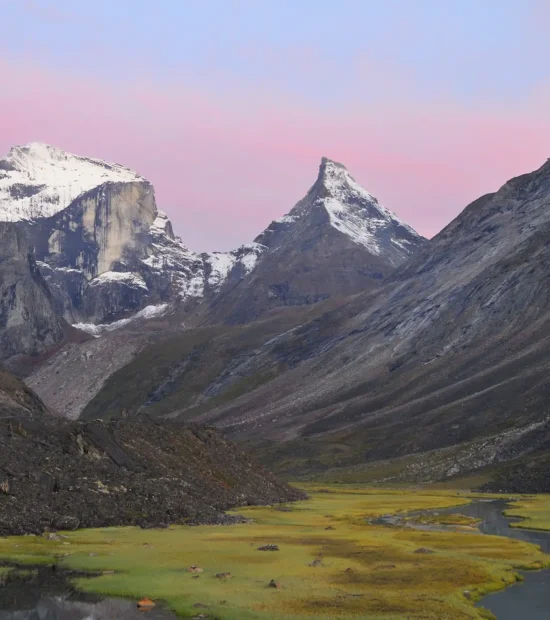
The Alatna works beautifully as a standalone trip: fly in, float for two to four days, fly out. But it’s also the perfect finish to our Arrigetch Peaks backpacking trip. After a week hiking the high country, you come down to the Alatna and trade your boots for a paddle. The contrast between the granite spires of the Arrigetch and the wide river valley below is something else.
We can also run it in reverse for experienced paddlers: start further upriver, packraft down to Arrigetch Creek, stash the boats, and hike up into the peaks. Ask about that option if it interests you.
The Alatna River packrafting option adds 2-4 days to the hike. The two day option is the most popular, and a nice intro to packrafting for those who’ve never traveled this way before.
Rivers have historically been the highway of the Alaskan wilderness. During winter travel they offer an open, brush free frozen route to ski, snowshoe or snow machine along.
In summertime, Alaskan rivers become an ever better option. Canoes and rafts were long favored by early European explorers in Alaska.
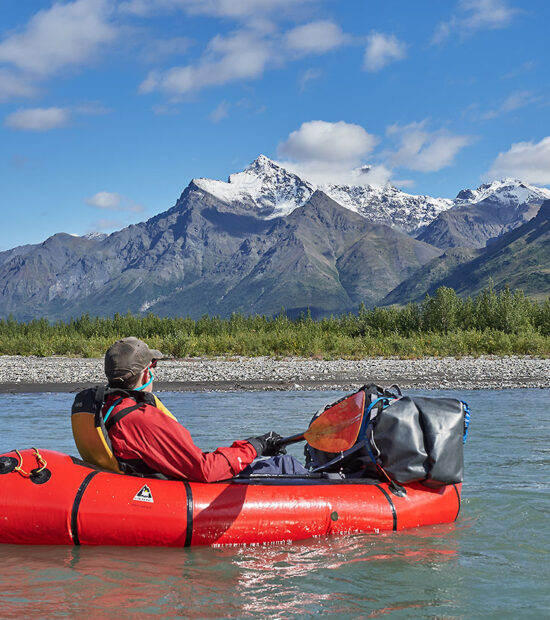
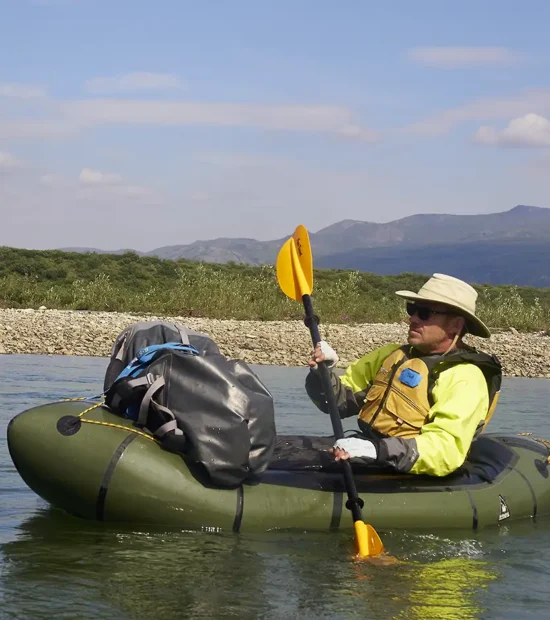
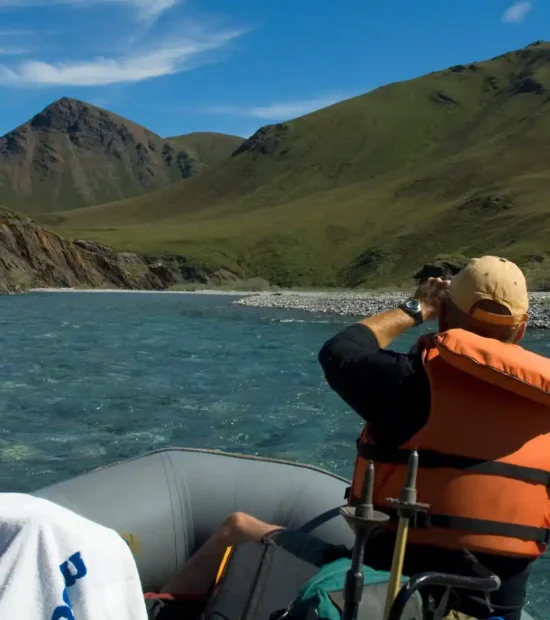
Today, the packraft is the vessel of choice. Small, portable and light, they’re easy enough to roll and carry on even multiway portages. Versatile and flexible enough to handle even serious whitewater, they also excel on simple flatwater float, such as this stretch of the Alatna River.
All packrafting gear is included. Boats, paddles, PFDs, dry bags, splash tops and pants, booties or neoprene socks and gloves. If you have your own packraft, you’re welcome to bring it. We’ll spend time at the start getting everyone comfortable with rigging and basic technique before we push off.
Alatna Packraft Video
Alatna River FAQ Section
-
Do I need packrafting experience for this trip?
No.
This is one of the best trips we offer for people with zero packrafting experience. The Alatna is gentle Class I water, and we cover technique and river safety before we start floating.
-
How About the packrafting gear?
Expeditions Alaska provides all packrafting gear: packrafts, paddles, PFDs, dry bags, splashwear, footwear and gloves.
If you have your own boat, you’re welcome to bring it. You’ll need your own personal clothing, base layers, and hiking clothes.
-
Outfitted or not?
Your call. We can include your tent and all the food and cookware, or you can handle your own. See our What’s Included page for details.
-
Are there dayhiking options available?
Depends how much time you want to take. We can add a day or two and do some hiking. The Alatna River valley has a wide, forested floor with good walking. If you’re up for it, we can climb the nearby ridges for views.
-
Tell me about Portaging?
There are two. At the start, we portage from Circle Lake to the river. It’s a couple hundred yards, flat ground, but it takes a few trips back and forth with gear and boats.
You should be comfortable carrying 20-30 pounds for short distances.
At the end, we portage from the river to Takahula Lake, about a quarter mile on a good trail. Neither portage is strenuous, but both require some physical effort.
-
Can anybody do this?
It’s Alaska. That means it will more than likely vary a trip to trip.
We trip to plan for a simple itinerary, but we also have to understand everyone arrives for a trip in different places of health, ages, mobility and capability. So it’s not for everyone.
The paddling is about as easy as easy gets (generally – wind and weather and conditions can change that).
But primitive camping in Alaska can often involve a variables that demand more of you than you were expecting. This isn’t uncommon.
If you have mobility problems, aren’t capable of walking happily through the forest, no trail, for a few hundreds yards carrying some equipment, and helping out around camp, this might not be a great vacation choice for you.
That said, we’ve had 12 year kids do just fine on this trip. We’ve had people in their 70’s do this trip just fine.
But we’ve also had people arrive expecting one thing and found another. It’s rare, but it happen. So be honest with yourself and with us about your capabilities.
-
A combination?
The best option is to do the Arrigetch Peaks backpacking trip first, then finish with the Alatna River packraft.
We can also run it in reverse for experienced paddlers: packraft down to Arrigetch Creek, stash the boats, and hike up into the peaks. Ask about that.
-
Is it buggy?
Can be. Late June is the worst. My preference is August and September: fewer bugs, and great fall colors.
Bring a headnet and repellent regardless.
-
Do we see much wildlife?
Both black bears and grizzly bears use the Alatna corridor. We’ve had them walk right by camp. Moose are common at the water’s edge.
We’ve heard wolves howling at night and seen river otters in the current. Good chances for wildlife on most trips.
-
What’s Included – Gates trips?
- All multi-day trips (backpacking, basecamping, packrafting, photo tours) out of Fairbanks include transport to/from Fairbanks/Bettles (or Coldfoot, depending on the trip), 1 night accommodations in Bettles, air taxi flights Bettles/The Backcountry, group gear such as cook tents, stoves, fuel, BRFCs, bear spray, etc.
- Hiking poles are included if you don’t have your own.
- We include both a satellite phone for emergencies and one backup emergency contact device, such as Zoleo or Garmin InReach.
- First aid kits, map and compass included. All guides are Wilderness First Responder Certified.
- Storage of your overnight travel gear is limited but available (keep it simple, one small overnight bag).
- Outfitting of equipment such as tents is available. Expeditions Alaska can either fully outfit your trip (all food, tents, etc) or adjust things a la carte if needed.
- Guide gratuities are not included but most appreciated.
- Trip insurance is not included. I strongly encourage you to buy it on your own. Travelex is who we steer people toward.
For a full outline of What’s included/not included, please see this page
-
What’s A Fully Outfitted Trip Involve?
That is trip dependent.
For backpacking trips, a fully outfitted option includes your tent (one or two person tent), all your kitchenware, food and cooking by Expeditions Alaska. A typical trip, up to 12 days long, costs an additional $450.00 per person for the fully outfitted option ($350 for 4 day trips or shorter).
Available “á la carte” options are (per person)
Tent $50.00/tent
Food/cooking $325.00 (up to 4 day trip duration)
Food/cooking $425 (any trip 5 days or longer)For personal items such as a backpack, or sleeping pad, talk to me prior to your trip and we’ll see if we can possibly arrange something. If you need a pack I recommend you rent a backpack from a reputable local outfitter. They can find and fit a pack to you rather than “making do” with one of mine that may or may not be a good fit for you.
Items such as BRFC, bear spray, fuel, hiking poles are included gratis with Expeditions Alaska trips. See What’s Included? for more info.
-
What comes with the Food Add-on?
If you’d like, Expeditions Alaska can handle your backcountry food for the trip. Cost depends on trip length, but it’s typically $325 for a 2-4 day trip, and $425 for a trip 5 days or longer (backcountry days).
We will organize and pack the food, handle all backcountry prep, as well as pots and pans, the stove/s, fuel and your mess kit. Assistance for cleanup and dishes is always appreciated, but not requisite.
NB: this means, if we’re doing food for your trip, you must arrive with requisite space in your backpack for your share of the food. This typically means a BV500, sized 8.7 in. diameter. (22.1cm) x 12.7 in. (32.3cm) height. There’ll also be your mess kit (cup, bowl, cutlery, etc) and maybe some additional group gear, whether it’s a fuel bottle, stove or pan or skillet. In general your guide will carry the bulk of this stuff, but we certainly can’t and don’t intend to carry all of it. So don’t arrive with a backpack packed full, no space left in it, if we’re doing your food for you. Your food goes in your pack.
More info linked on the page below.
All your questions about our backcountry food answered right here.
-
What kind of menu do we get with the food purchase?
We have a comprehensive food form for you to complete and we’ll do our very best from there to put together a menu for the trip that you’ll enjoy.
We do our best to accommodate most dietary requirements, tastes and preferences.
Exact menu will be trip dependent. For a 12 day backpack and packraft you can expect a different constitution of food than you’ll see on a 5 day basecamp trip.
Another thing to remember is Expeditions Alaska isn’t a simple “production line” outfit. Guides all have their own systems and menus and favorites, so we don’t have a generic “here’s your trip menu” at all. Menus vary trip to trip.
What I can tell you is that we do the best backcountry food in Alaska. Bar none. You’ll enjoy good food. Really good food. Whether it’s a great pizza, a dish of Pad Thai or greek salad or a lentil soup, I assure you that you’ll appreciate your guides’ culinary expertise. Good food takes a bit extra effort, but can really help bring your trip experience up a notch. Or three.
This is a common question we get, and an important one. So important, it warrants its own page.
All your questions about our backcountry food answered right here.
-
I still have more questions
We all do. Questions are good. That’s how we learn. Either give me a call or send me an email and we’ll go through them.
We have a great trip portal that we invite you to upon your reservation. We’ll have a ton of info for you there, and a great group of responsive people who can usually answer all your questions.
Cheers.
Where Are We?
You May Also Like