Chitistone River, the Goat Trail, Wrangell-St. Elias

January 24th, 2026 by Carl D
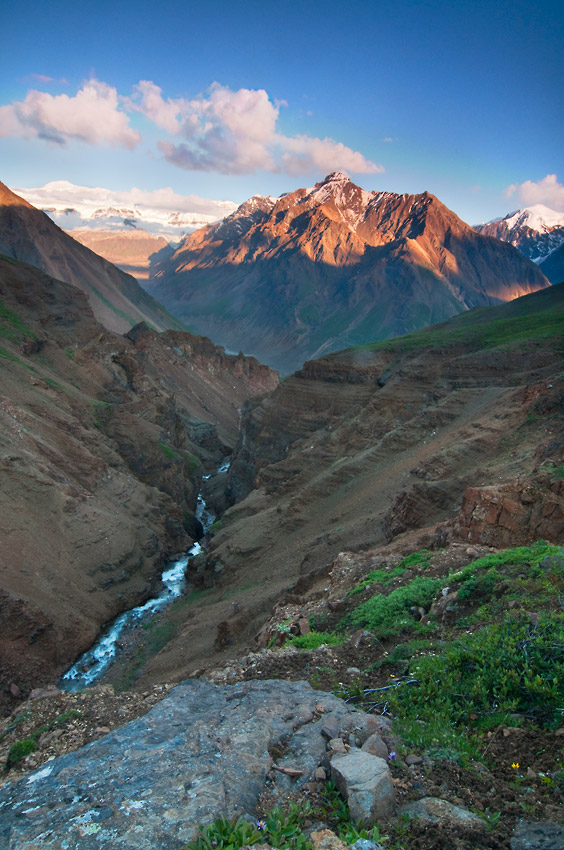
View across Chitistone Canyon and University Range, Wrangell-St. Elias National Park backpacking trip, Alaska.
Sunset over the Chitistone Valley and University Peaks. Mount Bona stands in the background.

A trip report from one of my favorite backpacking trips: The Goat Trail and a hike down Chitistone River.

One gorgeous evening, a 2 mile hike (one-way) from camp and some more photos that I had been hoping for some time now to make. Lucky me!

We just trekked from Skolai Pass, in Wrangell St. Elias National Park and Preserve, to ‘Wolverine‘, a landing strip high above the Chitistone Valley, over the relatively popular ‘Goat Trail‘.

This is a classic hike, and one I try to make every summer. Before I talk about it further, I’ll qualify what I mean by ‘popular’ here.

Probably not 50 people hike this route each year, more likely 40, at most. Consider, for example, that nearly TWO THOUSAND people venture to hike the entire Appalachian Trail each year, and one starts to see that the word ‘popular‘ is entirely contextual. I only say ‘popular‘ here because so few people hike anywhere else in Wrangell-St. Elias National Park.

Continue reading…
Six Days on the Upper Noatak: A Packraft Trip Through Gates of the Arctic

January 19th, 2026 by Carl D
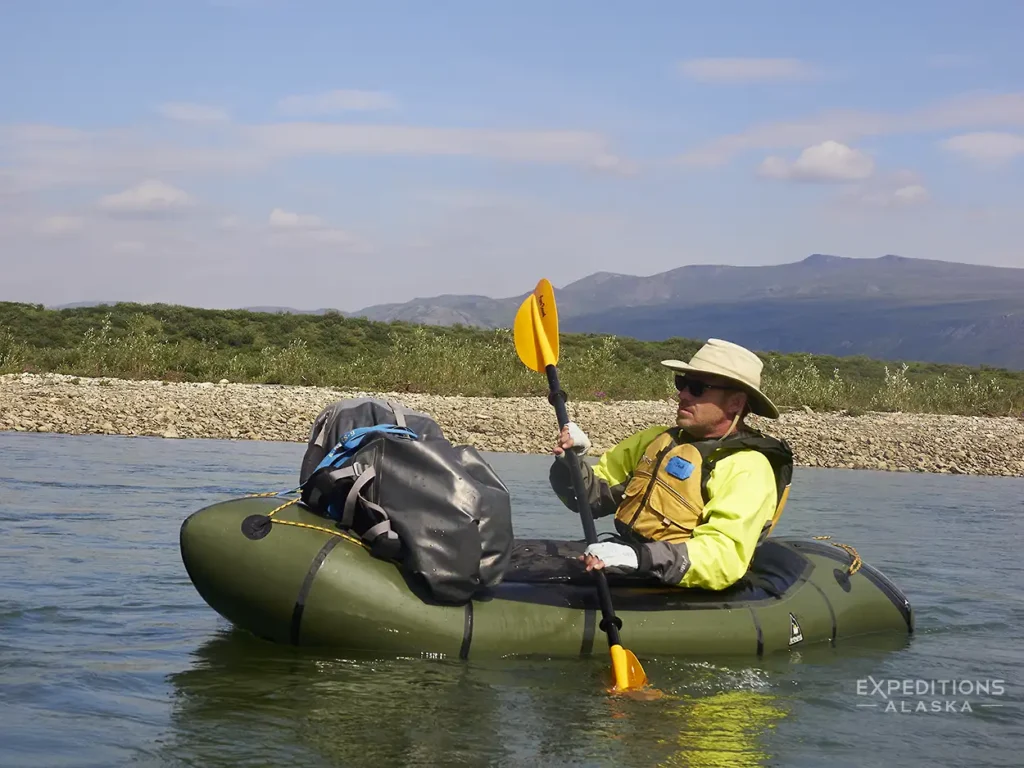
Alaska Noatak River Packrafting trip, Gates of the Arctic National Park.

Float the largest undisturbed watershed in North America, where the Brooks Range opens into a treeless arctic valley unchanged for millennia.


The floatplane banks hard over a granite ridge and the valley opens below us. A ribbon of turquoise water winds through green tundra, flanked by mountains streaked with late snow. The pilot points out the window toward a blue lake tucked against the edge of the valley. That’s Pingo Lake. That’s where we’re going.

Two hours ago we were drinking coffee in Bettles, a village of maybe 50 people accessible only by air. Now we’re threading through the Endicott Mountains, past the spires of the Arrigetch Peaks, with 8,510-foot Mt. Igikpak filling the horizon. The flight into the Noatak headwaters is worth the trip alone. When the pontoons touch down and the engine cuts, the silence is immediate and total.

This is Gates of the Arctic National Park. No roads. No trails. No cell service. Just the largest undisturbed watershed in North America and a week to explore it.

Continue reading…

Do You Need Rain Pants for Alaska Backpacking? (Yes, Here’s Why)

December 3rd, 2025 by Carl D
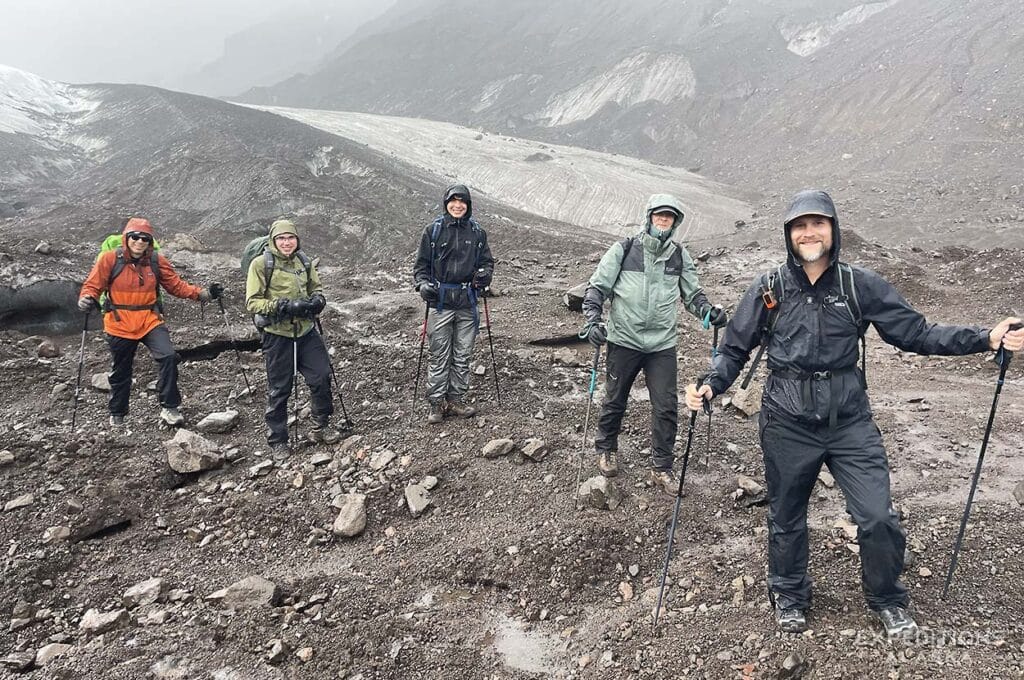
Backpacking in the Rain, Wrangell-St. Elias National Park, Alaska.
Well-dressed group backpacking in the rain, Wrangell-St. Elias National Park, Alaska.

hey Folks,

When you’re packing for a backpacking trip in Alaska’s wet climate it’s important to think beyond just a rain jacket. It can rain a lot. You need to carry rain pants as well.

Does it Really Rain That Much in Alaska?

Travelers planning a trip to Alaska often wonder: Does it really rain that much in Alaska?

The short answer?

Well, I asked Trevor, our backpacking guide extraordinaire, who’s had more than his fair share of wet Alaska backcountry time. Trevor spends most of the summer walking around in the mountains guiding folks who wonder why he’s drier than they are.

“Yes, it rains. But not always in the way you might expect. Duration matters more than volume (typically).”

So how much rain are we talking about?

When it rains in coastal Alaska, it’s usually a lighter, steadier rain rather than a sudden downpour like the Rocky Mountain afternoon thunderstorms or the heavy East Coast rain events you may be used to. Think the Pacific northwest weather patterns.

Continue reading…

Cold Weather Photography Clothing

November 21st, 2025 by Carl D
Cold weather photography tips - from Snowshoeing, McCarthy, Alaska.
Snowshoeing on snow machine trail on Kennicott River, winter, McCarthy, Wrangell-St. Elias National Park and Preserve, Alaska. Click on the image above to view a larger version of this photo.

Key Takeaways: Staying Warm While Photographing

  • Three L’s rule: Loft, Loose, Lots – puffy layers that fit loose, and lots of them
  • Size up everything: Boots and gloves need to be bigger than you think for blood circulation
  • Solve the hand problem: 3-layer glove system + chemical warmers + pockets as warming stations
  • Act before you’re cold: Mitts on early, warming breaks every 30-45 minutes, movement generates heat
  • Know your temperature range: Different cold needs different gear (-10°F vs -35°F is completely different)

Winter Photography Demands Different Gear

The cold in Alaska, in the winter, is incredible.

Its stillness, its silence, its depth, and the intimacy of really feeling alone in the frozen north woods is an experience like no other. It’s almost as if the cold is some thing, some being itself, a tangible reality rather than a temperature. It’s a unique experience, and it’s not at all entirely bad – in fact, I love it.

But I don’t love freezing my tail off. My friend Patrick, longtime Alaska resident and a fantastic photographer says it best, “I like being in the cold, but I don’t like being cold”. #Truth

It’s really an extraordinary experience, and I do look forward to the winter. But I don’t want to be cold; I want to be bundled up and cozy, and enjoy the cold from inside my insulation.

Continue reading…

Glacier Hiking for Backpacking Trips in Alaska

November 6th, 2025 by Carl D
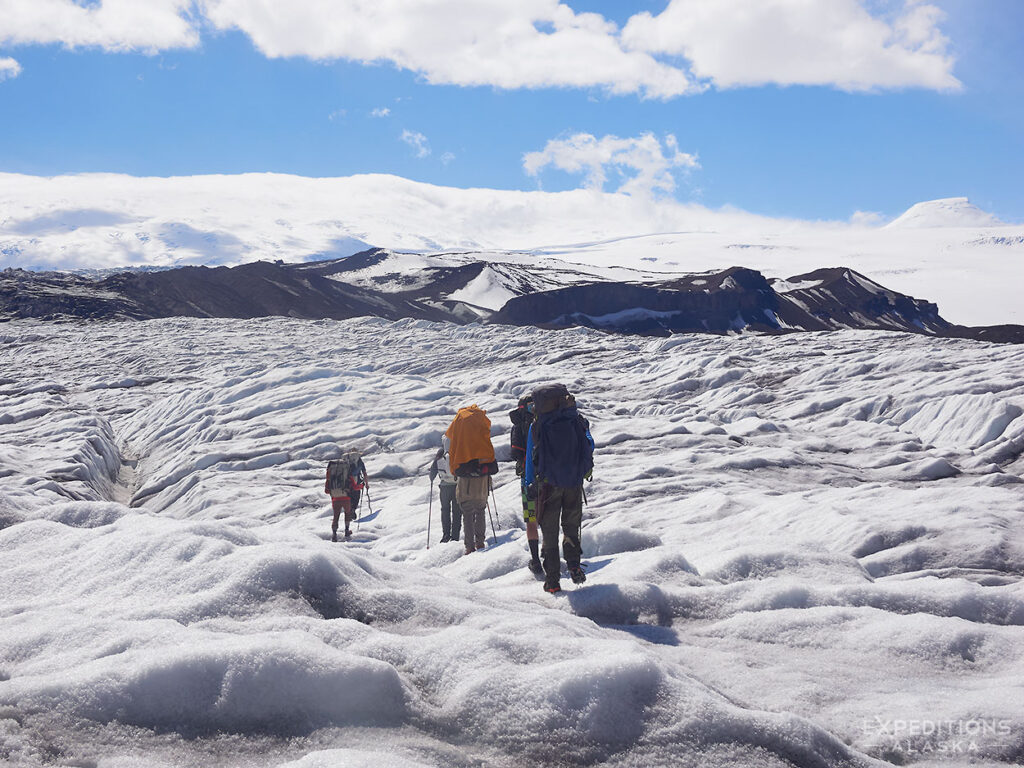
Backpacking on a glacier in Wrangell-St. Elias National Park.
Guide Training in Wrangell-St. Elias National Park.

We run backpacking trips. Lots of them. We spend a lot of time on ice. A LOT of time. Over the years, collectively, the guides at Expeditions Alaska have clocked hundreds of miles walking, camping, relaxing, and exploring, on ice.

It’s such a big part of what we do, glacier travel is an integral part of our Guide Training Camp. I thought we might share some of the notes we reference for guides during that camp.

What You Should Know About Hiking on Glaciers in Alaska

Traction

Kahtoola Microspikes are great

  • “When do I put them on?” As soon as ice is the norm (not moraine/rock).
  • A lot of folks have trouble putting them on. Don’t skimp or rush it. Take your time. Make sure they’re on securely.
Continue reading…

Rafting on the Canning River, ANWR, Alaska

October 14th, 2025 by Carl D

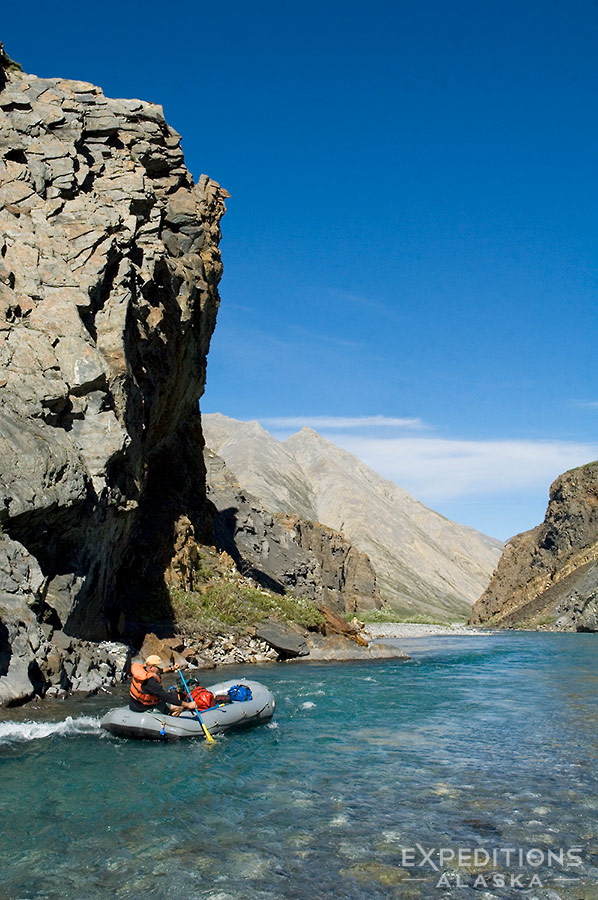
Here’s a photo of us rafting down the Upper Marsh Fork of the Canning River – essentially the headwaters of the Canning in the Brooks Range, close to the continental divide.

How Do We Get Here?

We go to ANWR via Coldfoot, and fly in tot he backcountry from there. Our favorite Alaska air taxi, Coyote Air, drop us off and pick us up for the return to Coldfoot. Then we overnight in Coldfoot and the next day return to Fairbanks.

Some of the trips we drive Fairbanks – Coldfoot, and some we fly. Varies trip to trip.

About The Canning River

The river here has eroded its way through the layers of bedrock to form this really neat little mini-canyon. I hopped out of the boat to take some photos of the run. Actually, we ran it several times, and I shot each time, some horizontals, a few verticals, some wider, some tighter, trying to get different compositions of essentially the same scene. I like this one the most, I think the vertical frame gives heightens the sense of action of the rafting, and accentuates the canyon walls and the mountains – it’s not as spacious as some of the horizontal compositions, but it feels closer to what the experience was for me.

For me, any photograph should strive to do that – present the experience of the photographer. I emphasize that in our Photo Tours.

Continue reading…

Grizzly bear cub twins

December 31st, 2024 by Carl D
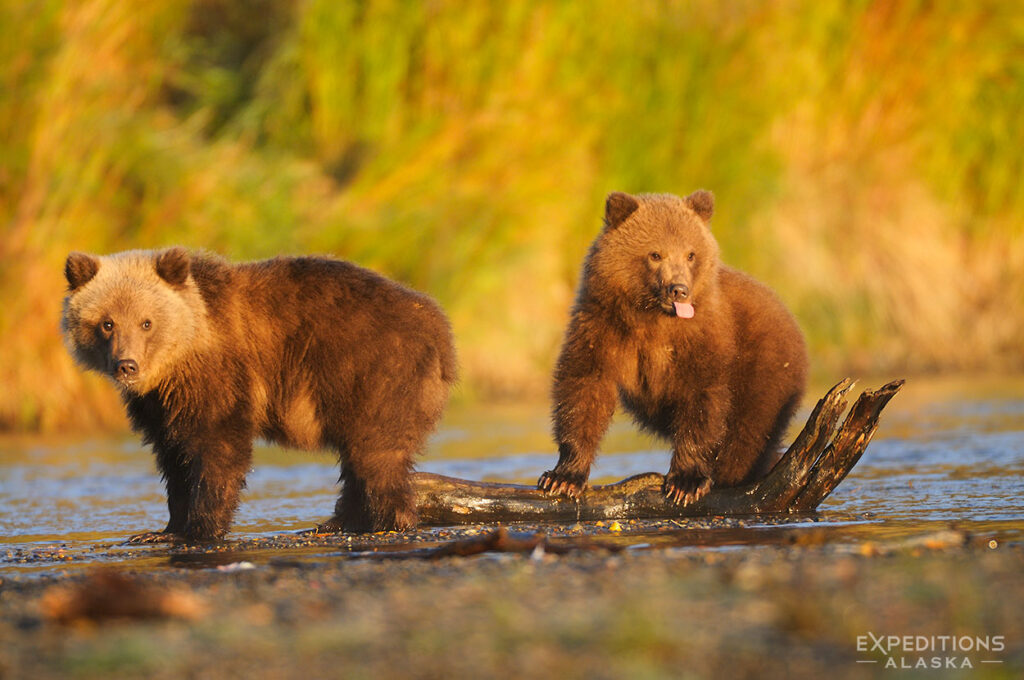
2 grizzly bear cubs, twins, cubs of the year, Katmai National Park, Alaska.
Alaska Bear Photo Tours

Hey Folks,

Had my bear spray handy this afternoon. Even though they might only be little, grizzly bear cubs are pretty bold – bold enough to climb on a stick and poke their tongue out at my camera.

They know full well, of course, that their mother outweighs me by several hundred pounds, is a coupla yards quicker than my aged legs can carry me 😁, is quite a bit stronger, has bigger, pointier teeth, sharper, longer claws, and is a LOT more willing to get in a tussle than I am.

Hence, they’re pretty bold.

Continue reading…

Designating Wilderness: Your Choice

December 27th, 2024 by Carl D
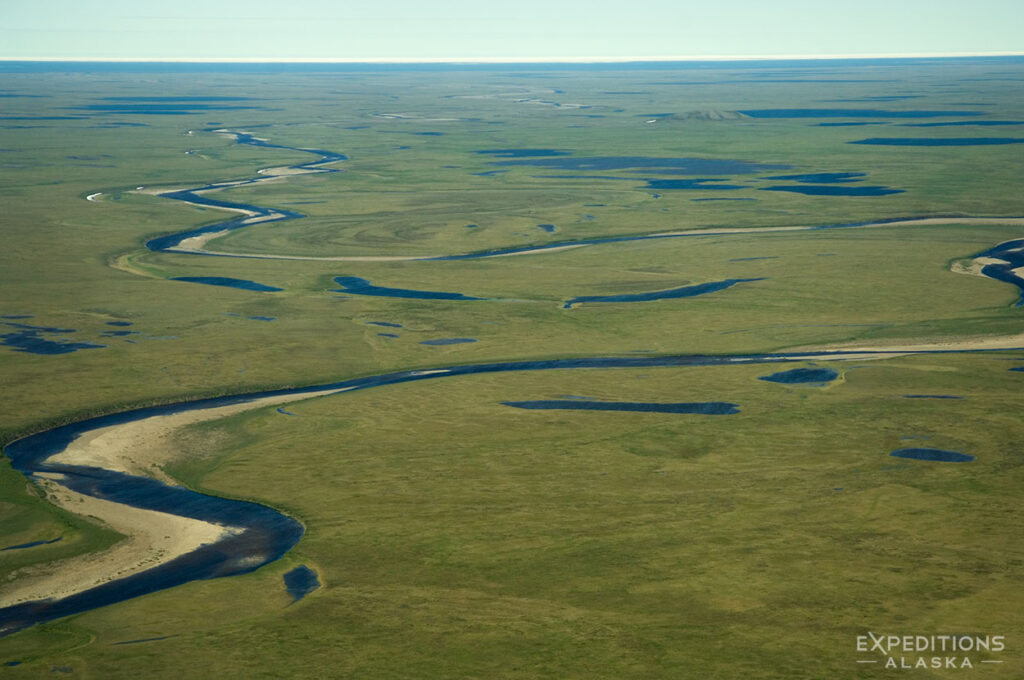
Coastal plain, Arctic National Wildlife Refuge, Alaska (aerial photo).

Hey Folks,

[UPDATED: An older piece of writing I thought might be useful to re-publish nowadays – some things don’t really change.]

The Public Comment Hearing

One night I attended  public comment hearing for the preliminary stages of a Comprehensive Conservation Plan (CCP) for the Arctic National Wildlife Refuge (ANWR). In short, a comment period allows the public to offer information and thoughts on some of the issues they feel might need to be addressed, and oftentimes their thoughts as to how those issues should be addressed. The CCP is a document that “outlines and guides long-term management” of the Refuge.

The US Fish and Wildlife Service (FWS) are the land management agency responsible for managing the Refuge. It’s worth browsing the FWS ANWR webpage for some useful ideas on how this works.

The Debate Over Wilderness Designation

One of the critical topics up for discussion is the designation of  “wilderness” in the Refuge. Currently, nearly half (41%) of the Arctic National Wildlife Refuge 19.3 million acres is designated wilderness. The remaining 10 million acres are not currently designated “wilderness”.

The FWS proposed to study these areas and determine whether or not they qualify as wilderness; the ‘Wilderness Review‘ section of the CCP. A recommendation would then be made to Congress to designate these areas wilderness. Such a designation would render the Refuge off-limits to oil and gas extraction.

Continue reading…

Bear Claws; black, polar and grizzly bear claws

December 17th, 2024 by Carl D
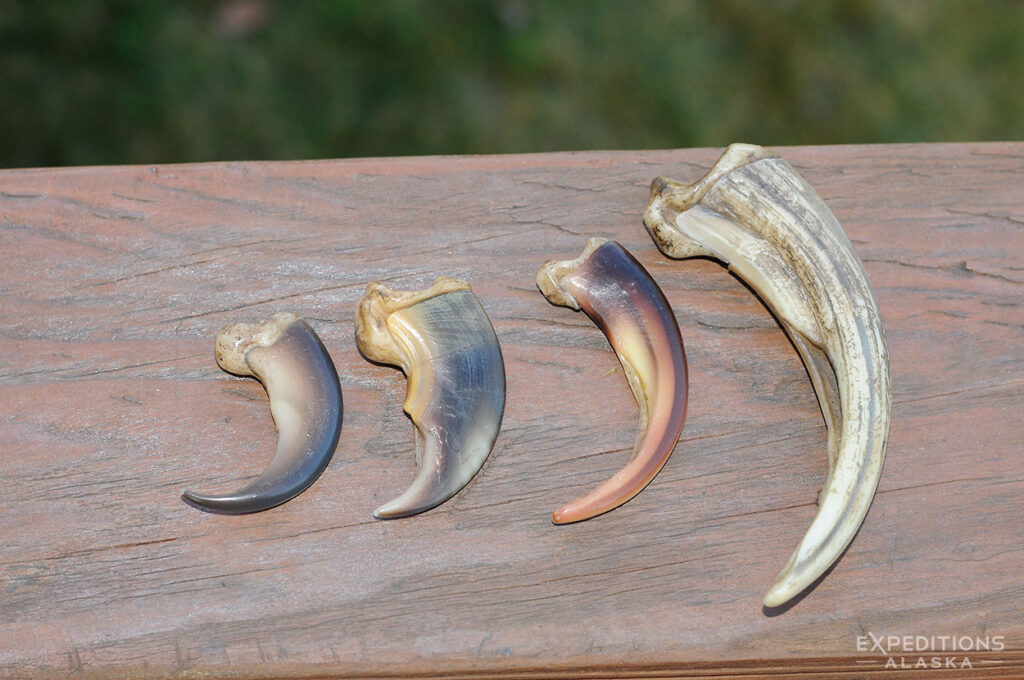
Comparison of Grizzly bear, black bear and polar bear claws
Bear claw comparison: black bear (Ursus americanus), polar bear (Ursus maritimus), grizzly bear (Ursus arctos), and Kodiak brown bear. Click image for larger view.

I thought I’d post this old shot, as it might be of interest to some folks. A photo showing the different size and shapes of claws from various species of American bears. From left to right, the claws are: black bear, polar bear, grizzly bear, coastal brown bear or Kodiak bear. The polar bear is the only true carnivore out of those species, but it’s claws are but a fraction of the size of those belonging to the great grizzly, and in particular, the coastal brown bear.

What Makes Each Species’ Claws Different

The claws in that photo tell you everything about how each bear makes a living.

Continue reading…

Weather in Alaska

November 12th, 2024 by Carl D

Hey Folks,

One of the most common questions we get, every trip, every year, every month, is “What to pack?”

We provide all guests with a ton of info on packing. People often look for a shortcut and then want to “hope for the best”. “Will I be OK with … “ is usually really a question of “I don’t want to bring xyzzy”.

And, of course, you MIGHT be ok without all that gear. You might just nail the weather and enjoy shorts and t-shirt weather the entire time.

But you might not.

Continue reading…

Expeditions Alaska
Visit the wild