The Arctic National Wildlife Refuge is partly protected. It’s federal land managed by the U.S. Fish and Wildlife Service as a National Wildlife Refuge, which carries real protection. But only about 7 million of the refuge’s 19.286 million acres are designated wilderness, the highest level of federal protection. The rest is refuge land without wilderness designation, including the 1002 area on the coastal plain that has been the subject of decades of oil development debate.
What “protected” actually means here
There are layers to federal land protection in the U.S. ANWR sits in a middle category.
National Wildlife Refuge status (the whole 19.286 million acres): Protects the land from outright transfer to private ownership, requires habitat management and wildlife conservation as primary purposes, and limits some industrial activity. Hunting, fishing, and subsistence use are allowed. Many uses are managed.
Undesignated refuge land (the rest, including the 1002 area on the coastal plain): Refuge protection but no wilderness designation. This is where oil development could happen if Congress and the executive branch authorize it.
The 1002 area
The 1002 area is the 1.5-million-acre coastal plain on the north side of the refuge, between the Brooks Range foothills and the Beaufort Sea. It’s named after Section 1002 of ANILCA, the 1980 act that created and expanded the refuge. Section 1002 deferred a decision on whether to allow oil and gas development on the coastal plain, leaving it to future Congresses.
That deferred decision has been contested ever since. The 1002 area sits on top of significant oil reserves. It also sits on top of the calving grounds of the Porcupine Caribou Herd, which the Gwich’in of Arctic Village and surrounding communities have hunted for thousands of years and consider essential to their way of life.
In 2017, the Tax Cuts and Jobs Act opened the 1002 area to oil and gas leasing. Lease sales have been held but with limited industry interest. Subsequent administrations have moved to restrict, then re-allow, then restrict again. The status remains in flux.
What I’ve seen out in the 1002
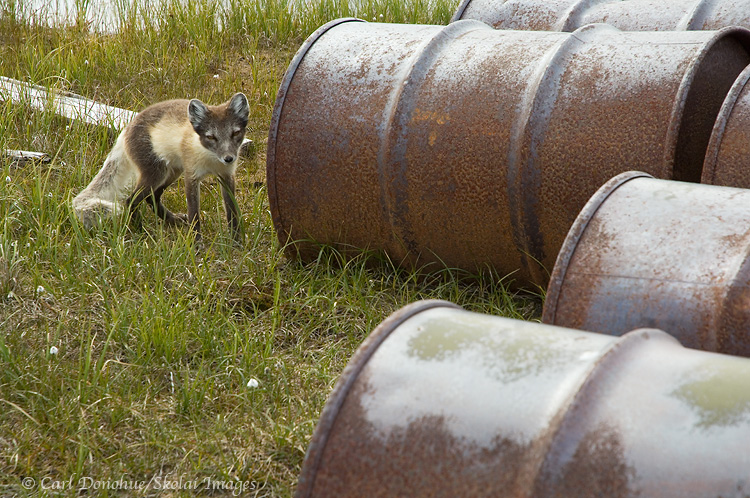
I’ve spent a lot of time out on the 1002 coastal plain, and the place has a sense of space you rarely get anywhere else. The closer you get to the actual coast, the more wildlife concentrates. The corridor right along the coast, maybe a mile and a half wide, has noticeably more activity than country five or ten miles inland. The same holds in reverse coming down out of the mountains. You see a moose here, a bear or a wolf there, a few caribou. Then you reach the coastal plain and there’s just more of everything.
A lot of why is the mosquitoes. The Brooks Range interior in early summer is a mosquito factory. Out close to the shoreline, the marine air drops the bug load enough that animals can rest there. Caribou in particular cling to the first mile or two from the coast during calving, not because the food is better there but because they can stand to be there. The tundra inland is unbearable for them.
More from us on ANWR protection
I’ve written more extensively about ANWR protection, the development fight, and what’s at stake on the Expeditions Alaska blog. The 50 Photos for 50 Years piece covers the refuge’s history and what it would mean to lose its current condition.