
Visit The Wild
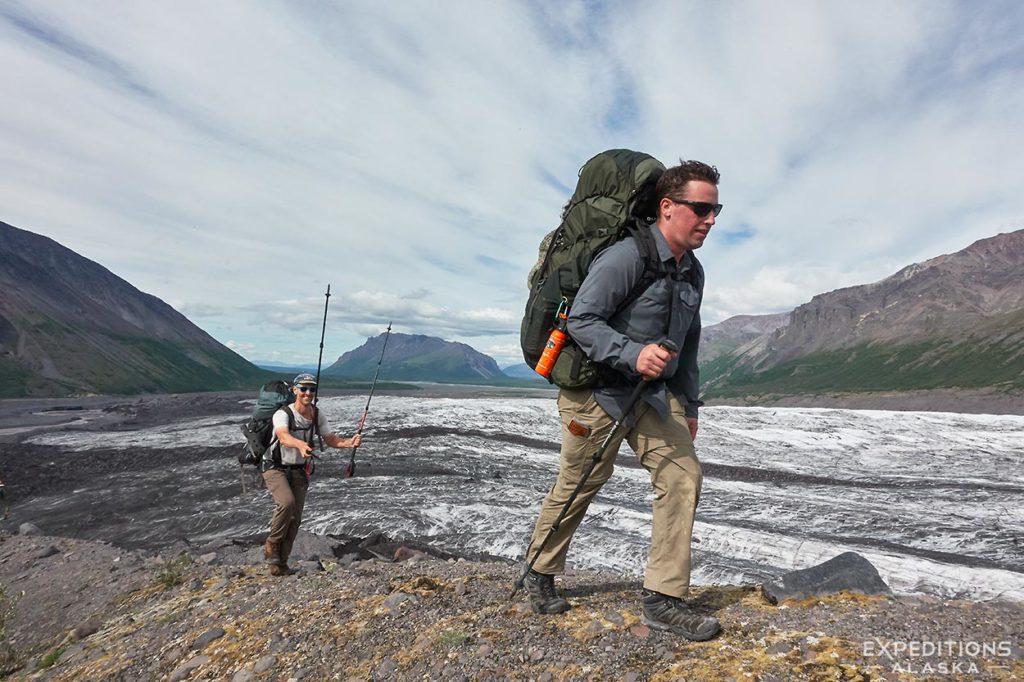
Hiking techniques and terrain challenges specific to Alaska’s backcountry. Learn about off-trail navigation, sidehilling, managing moraines and scree, and the unique skills needed for Alaska’s trail-less wilderness.
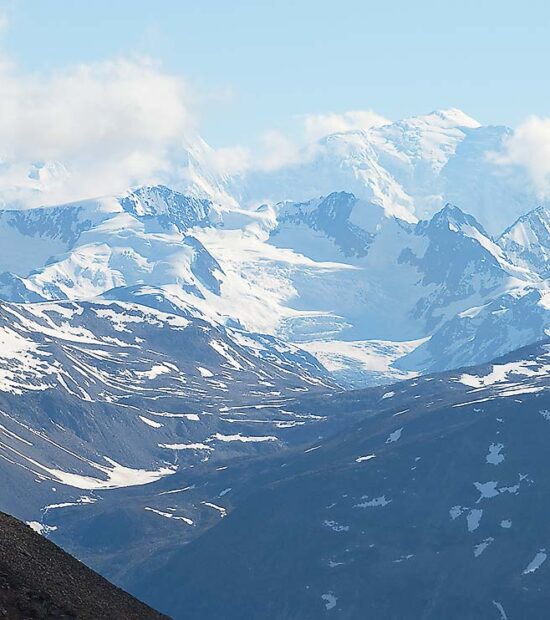
Sidehilling might sound simple, but in Alaska it’s one of the toughest parts of any backpacking trip. Hiking along steep, uneven slopes tests even the strongest hikers, wearing out knees, joints, and muscles. This post explains what sidehilling really feels like, why it’s a challenge, and how to approach it safely while exploring Alaska’s backcountry.
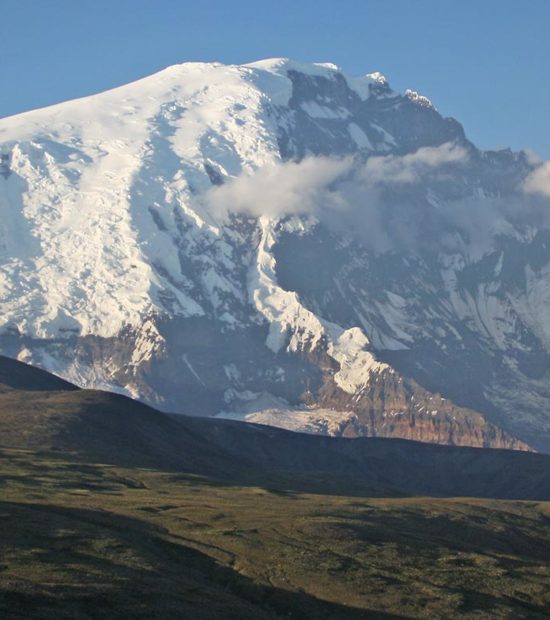
Hey Folks Off-trail backpacking It doesn’t mean what you might think it means. What do we mean, here in Alaska, when we say “off-trail’? Well, what we mean is “no trail”. It’s not the same thing as backpacking through the mountains for a few days on a nice trail, hitting the open alpine terrain where […]
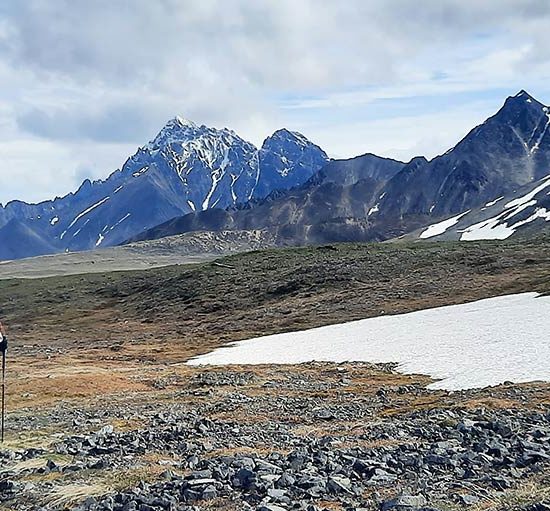
Distances for backpacking in Alaska don’t make the metric you think they do. Here’s why …
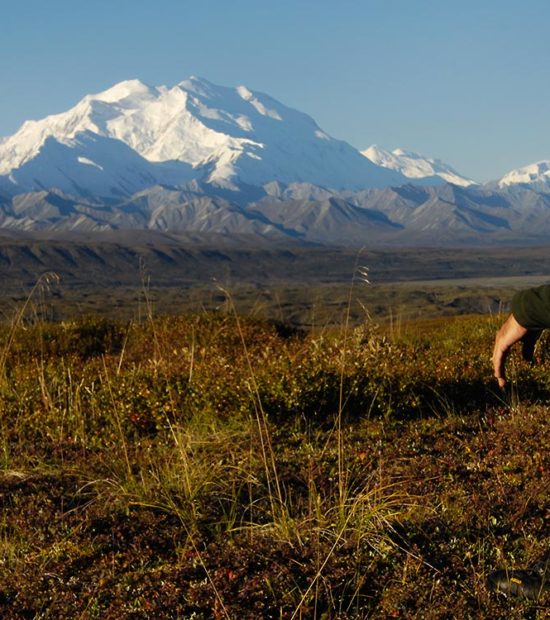
Week-long Alaska hiking trips require different planning than typical trails. The Goat Trail in Wrangell-St. Elias offers serious adventure without extreme difficulty. Denali’s Wyoming Hills demand flexibility with permits. Resurrection Pass provides road-accessible trails, while the Chilkoot crosses into Canada by train.
Best hike? My next one.
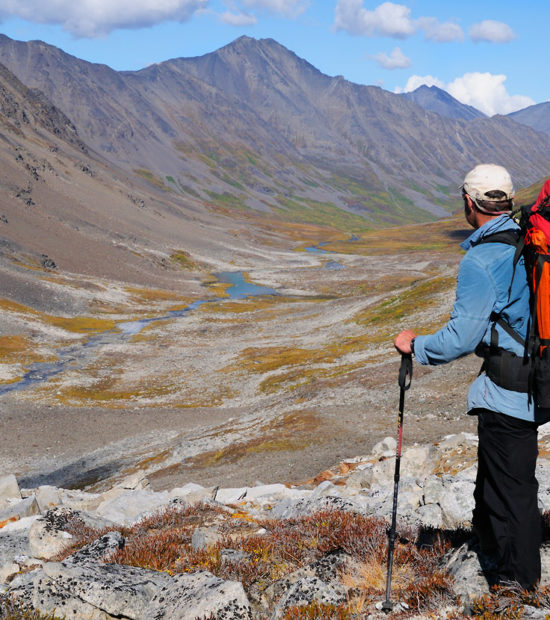
After two decades guiding Alaska backpacking trips, I can’t recommend hiking poles enough. Research shows they significantly reduce muscle soreness and injury risk while improving stability on Alaska’s challenging off-trail terrain—from boulder fields to river crossings. Here’s why poles are essential gear for Alaska backcountry travel.
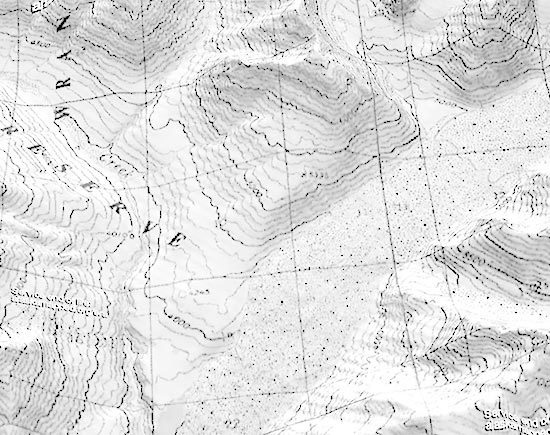
Topo maps aren’t always the best tool. On a recent trip to the Malaspina Glacier, the landscape had changed so much that satellite imagery from Google Earth proved more useful than outdated topos. Tools are contextual.
Sometimes the new stuff works better.
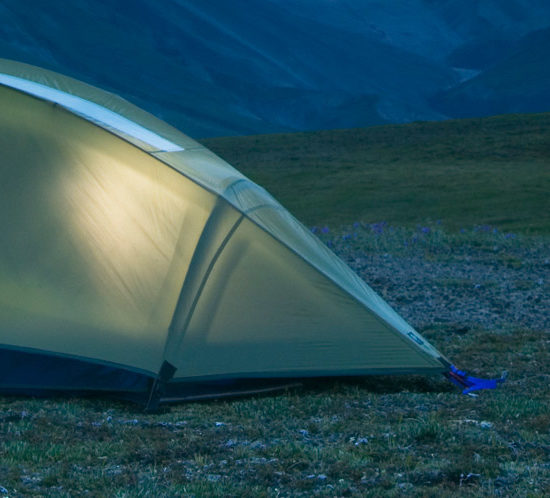
Backpacking campsites in Alaska. How to choose a low impact campsite in off-trail backpacking and hiking trips and trekking trips in Alaska. Leave No Trace camping in Alaska. Campfires and great views at campsites.
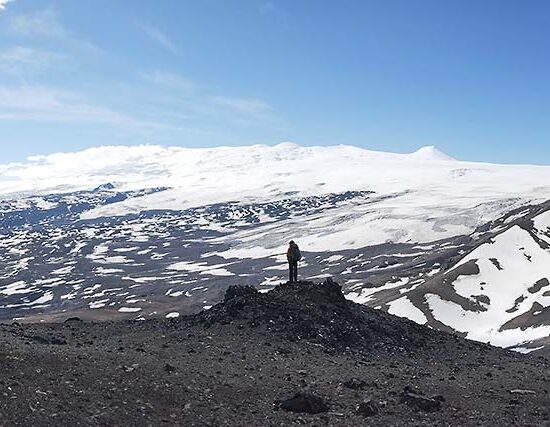
Practical advice on preparing for Alaska’s backpacking season, including daily training, stretching, weight work, hydration, and getting comfortable carrying a loaded pack. A reminder that regular conditioning and properly fitted gear make a huge difference once summer hiking begins.
Hiking Alaska’s trail-less wilderness means dealing with moraine, talus, and scree—miles of unstable rocks that test your balance more than your fitness. Frost-heaved boulders, slippery slopes, and unforgiving terrain demand attention, hiking poles, and practice. Confidence matters more than technique. Go slow, tread light, and learn to trust your footing.