Your Hike
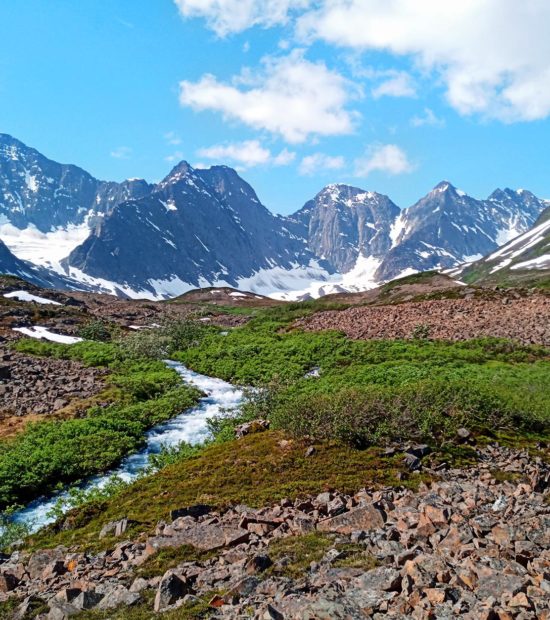
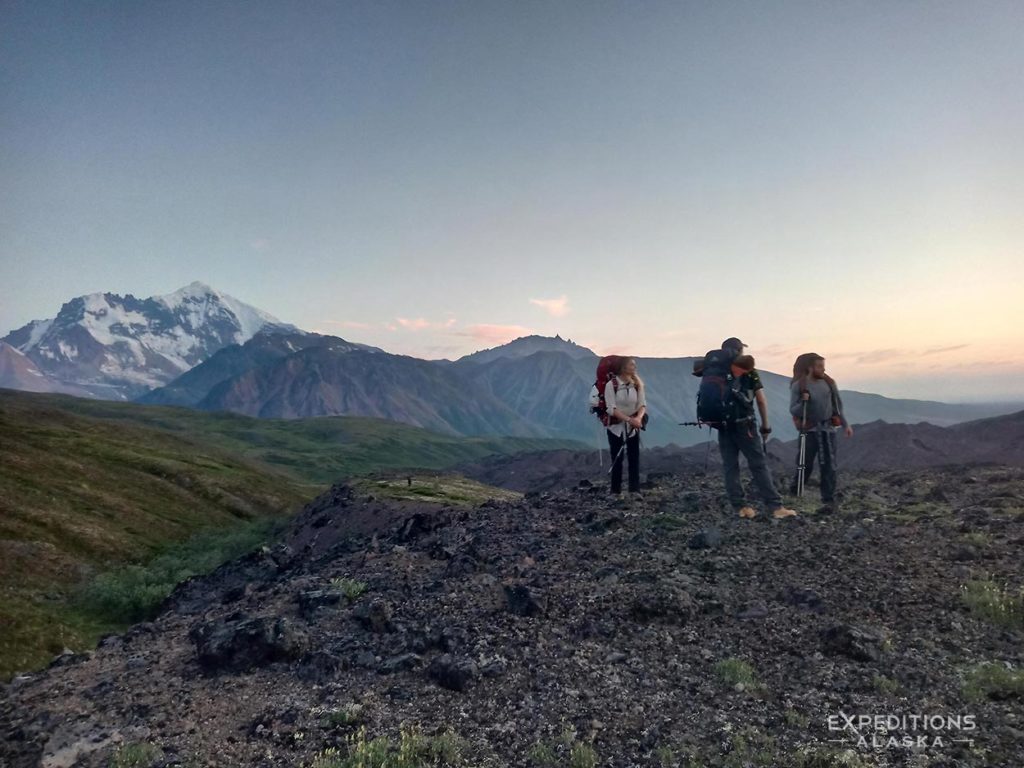
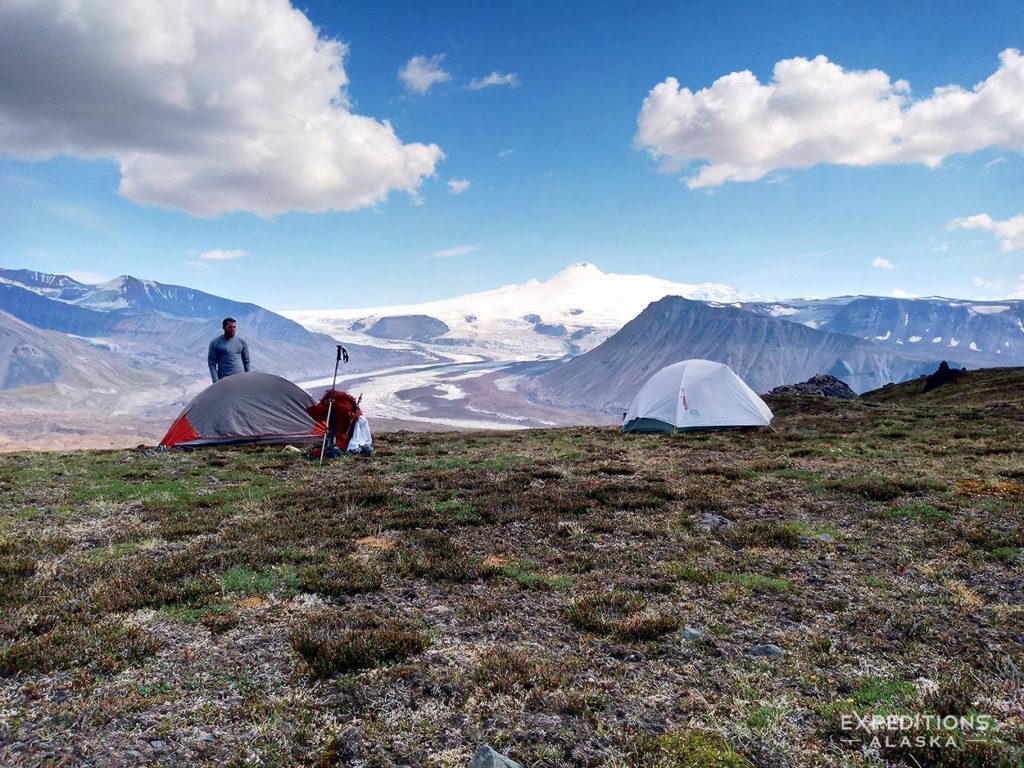
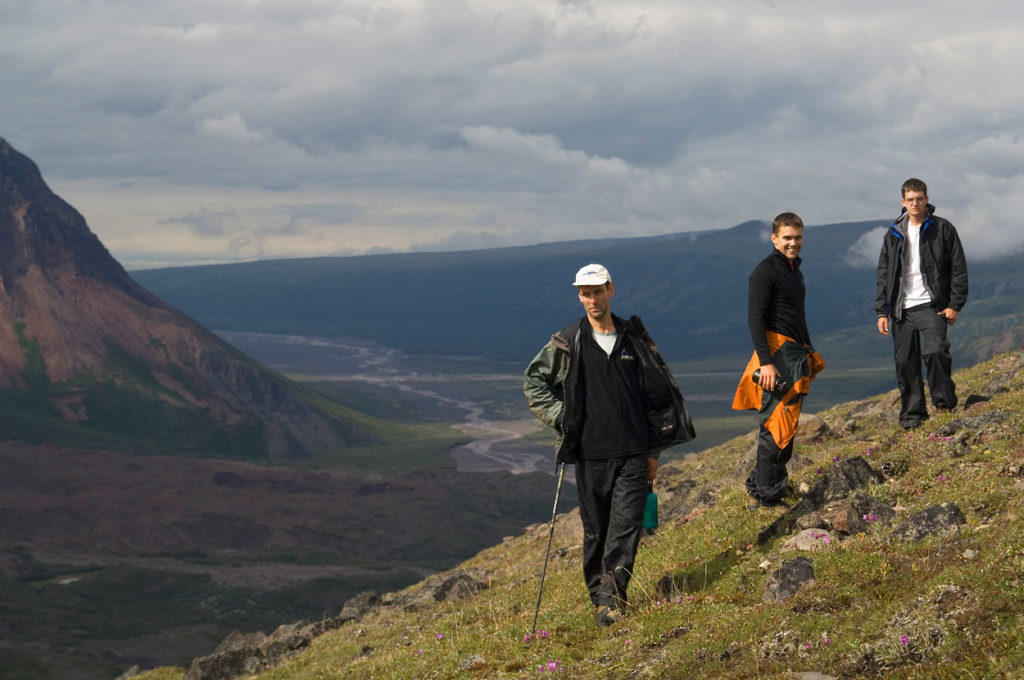
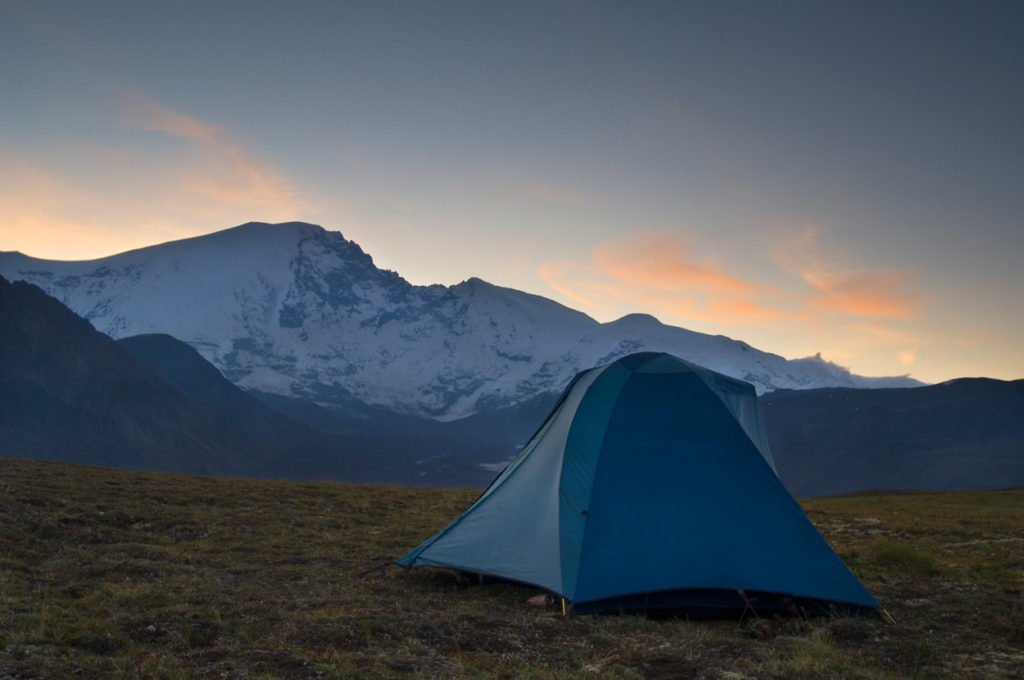
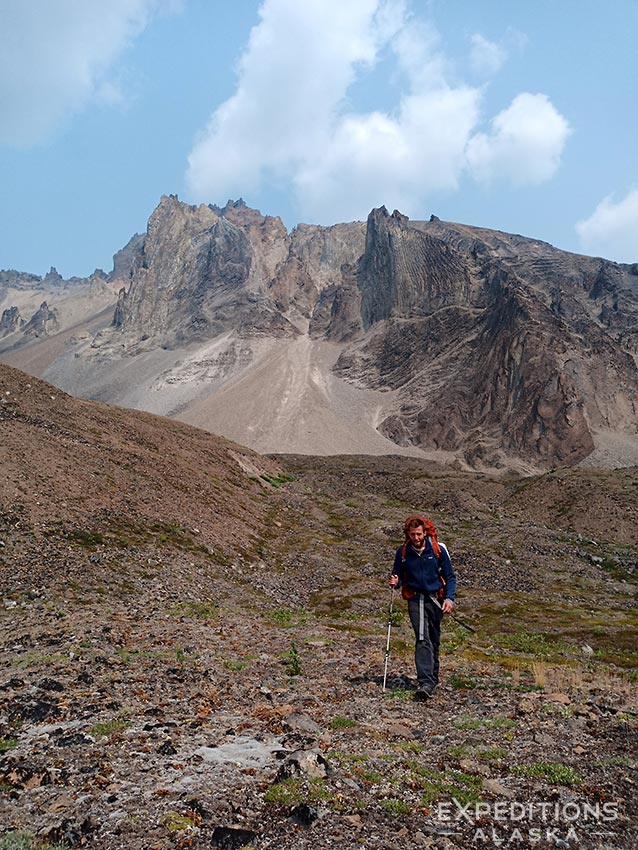
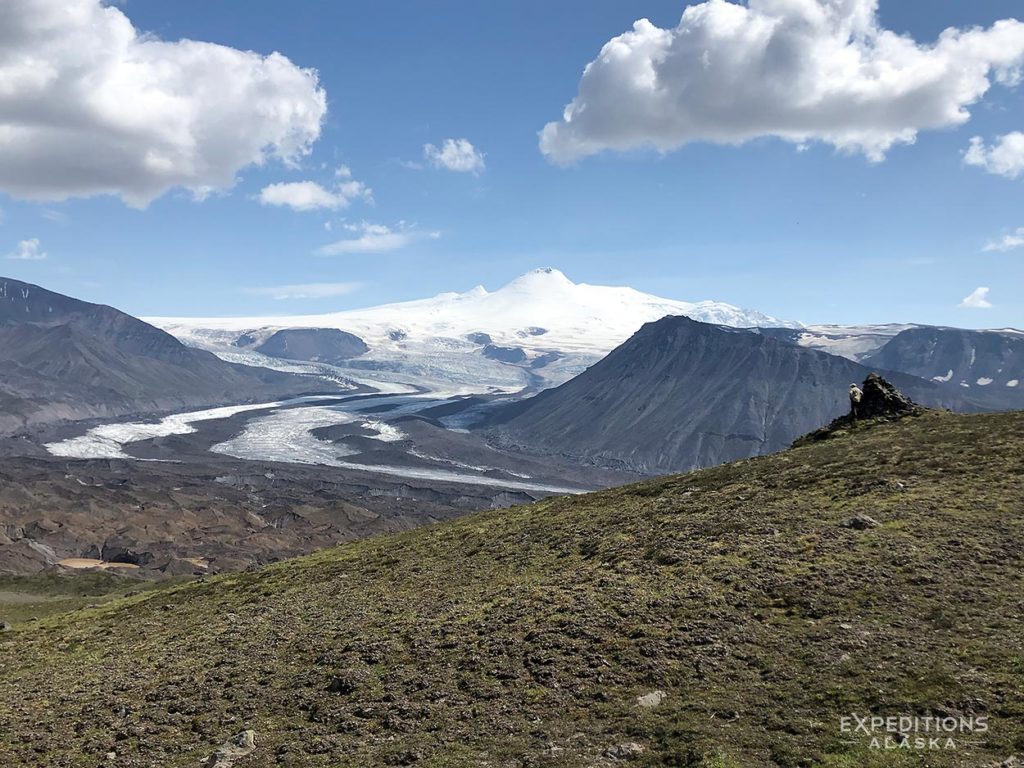
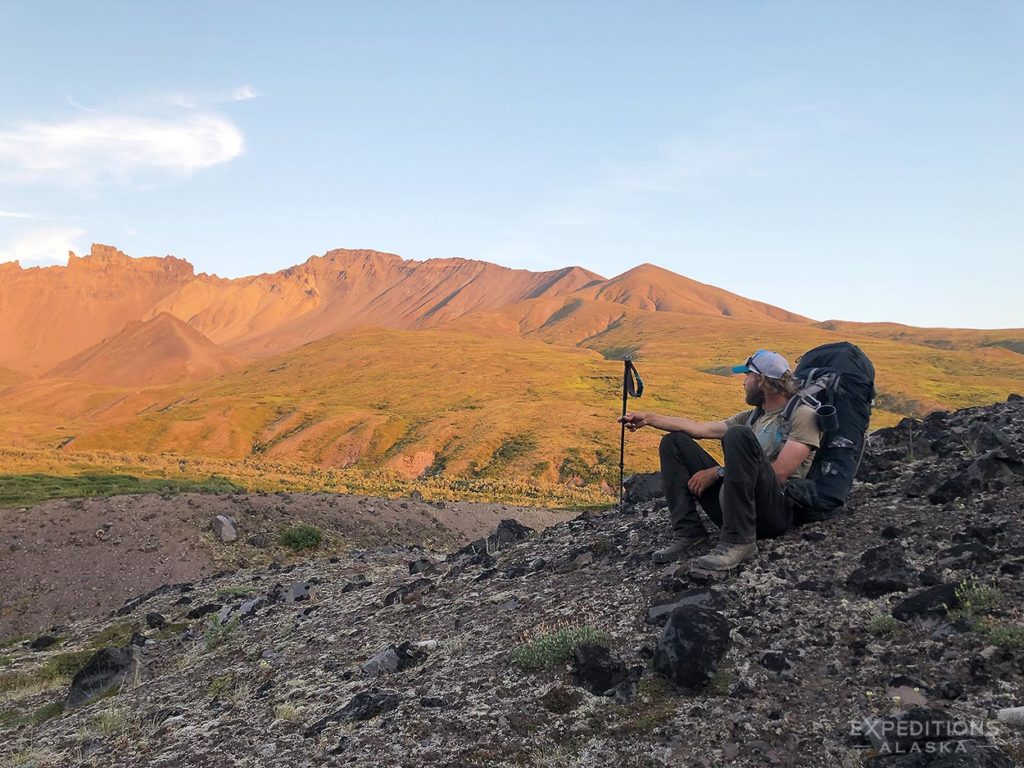
Generally, this trip works great for those folks looking for some big mountain views without too much strenuous effort. It’s a bit of a chore to clamber up on to the Plateau, but only a fairly short walk. Once on the Plateau, we can basecamp, with some killer views right from camp, and day hike, or continue on south and explore the high country here. The hiking on the Plateau is fairly easy, wide open tundra, no brush, no moraine, etc. The descent off the Plateau isn’t too bad, though it’s steep in parts; slow and easy wins that race.
The walk down the Dadina river is a mixture of boreal forest, as we go through the spruce forest and stands of Cottonwood. Expect to encounter some bushwhacking as well.
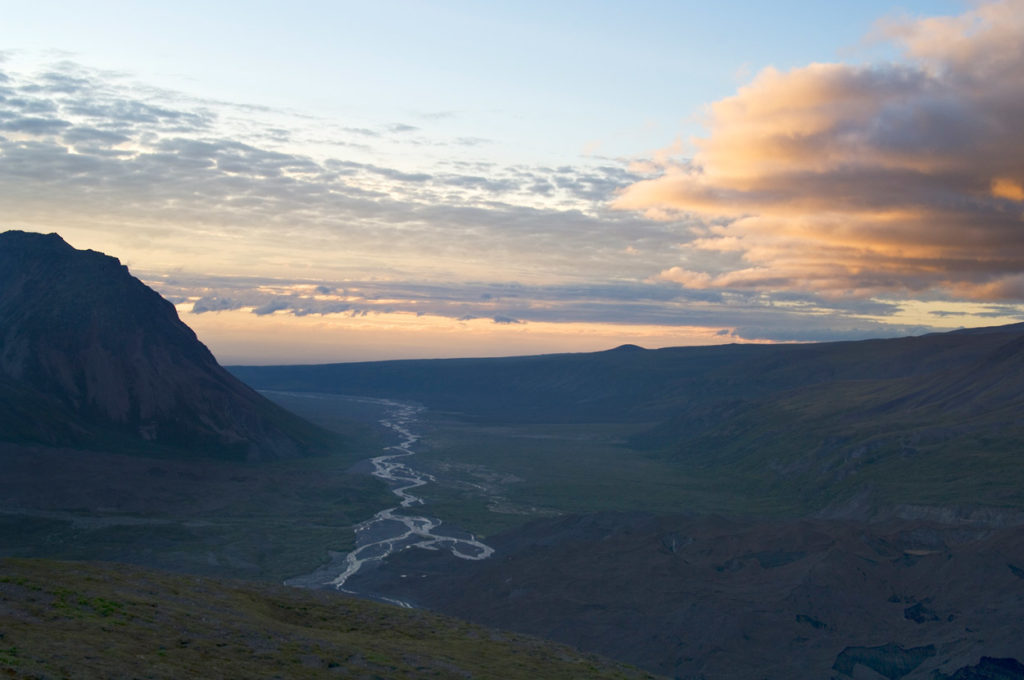
If the river level isn’t too high we can venture out of the forest onto the broad riverbed and hike over the gravel bars, avoiding the forest all together. At times we’ll find old bison trails through that forest that make travel easy.
The bison here are Plains bison, imported into Alaska half a century ago or more. There are only 2 herds of them in the park. Wood bison lived here centuries ago but were driven into extinction several hundred years back.
Overall, a great hike that few people ever make. It offers various possibilities to make it compatible with beginning to advanced hiking levels.
The Place
Wrangell Mountains
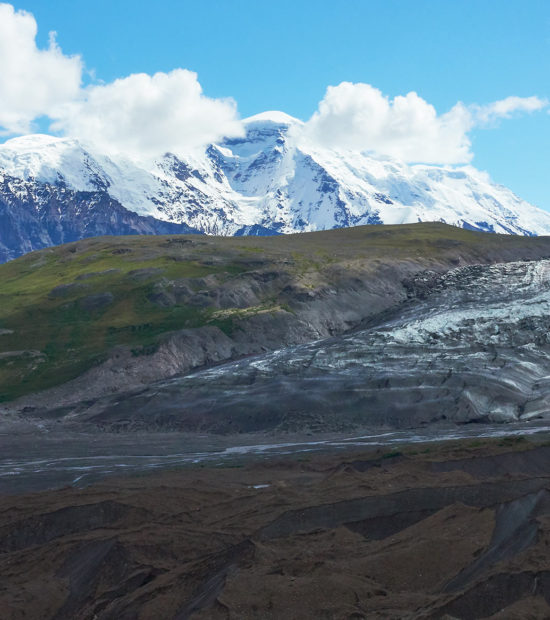
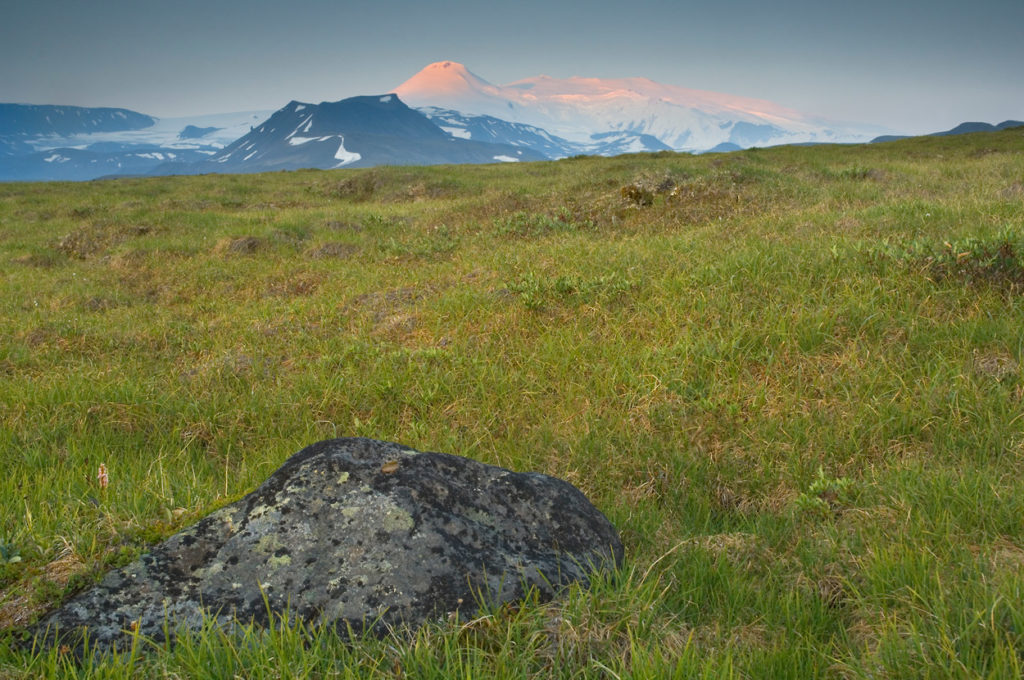
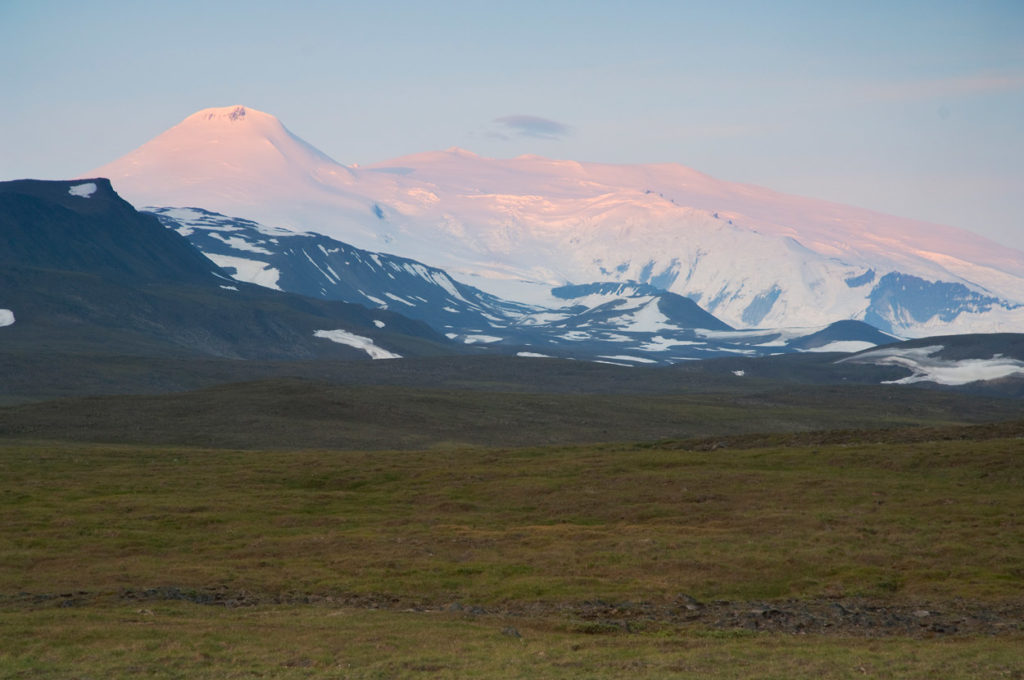
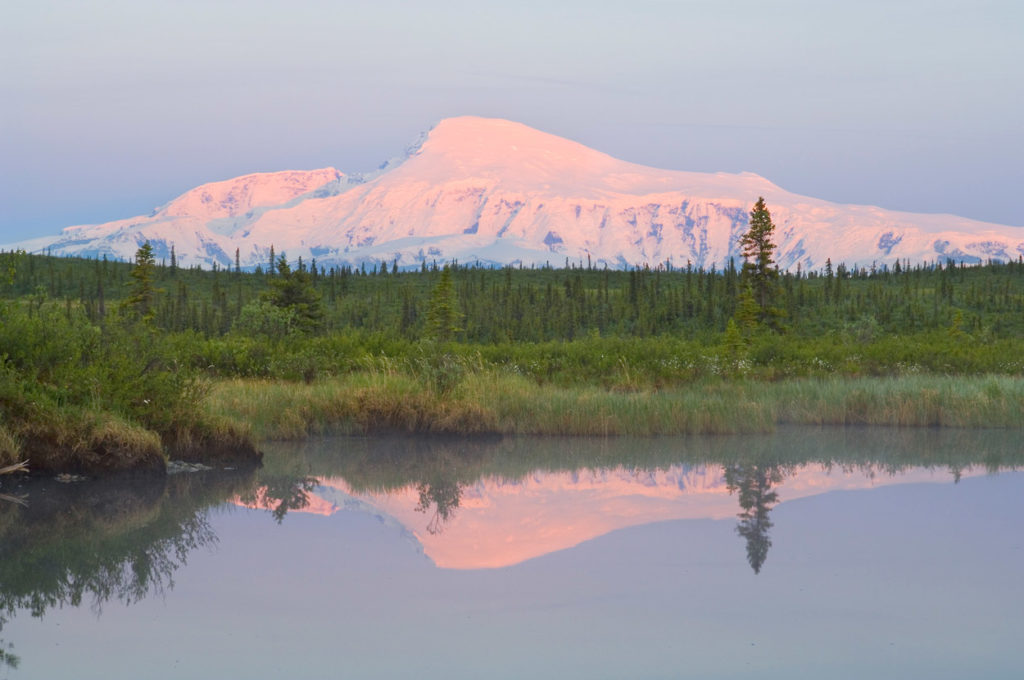
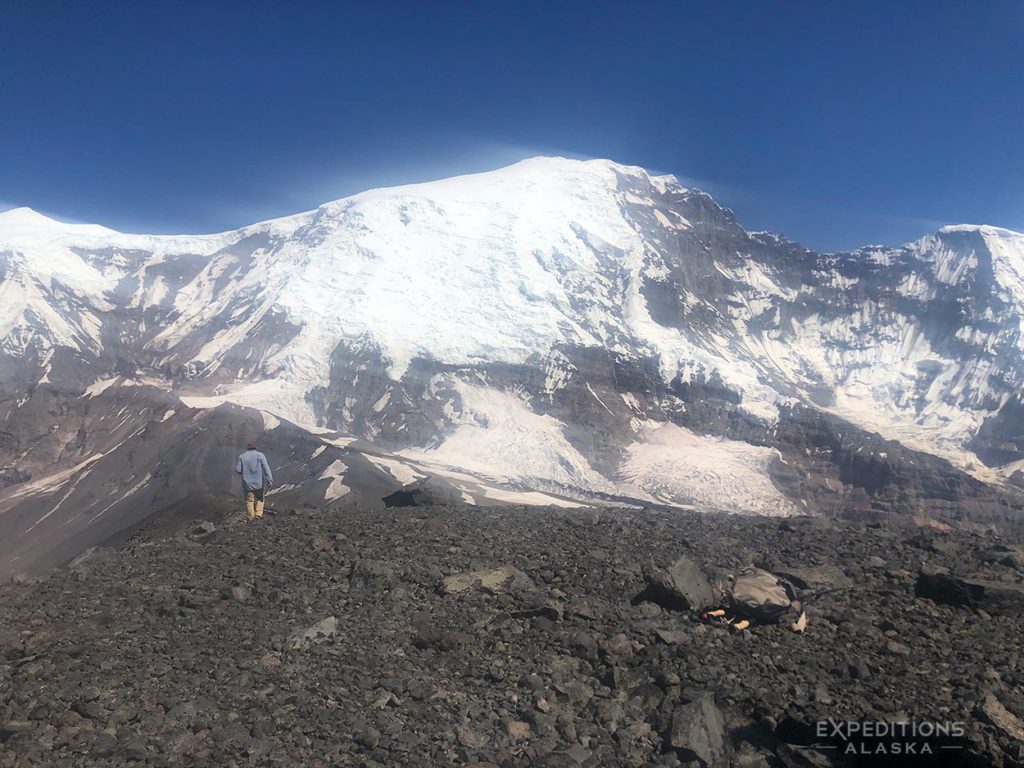
Almost entirely volcanic mountains, the Wrangells include both the second the third highest volcanoes in the US. Mount Wrangell, lying immediately south of our trek, is still active, and is often seen venting during the winter. In fact, it’s venting out my window as I write this. Pretty neat.
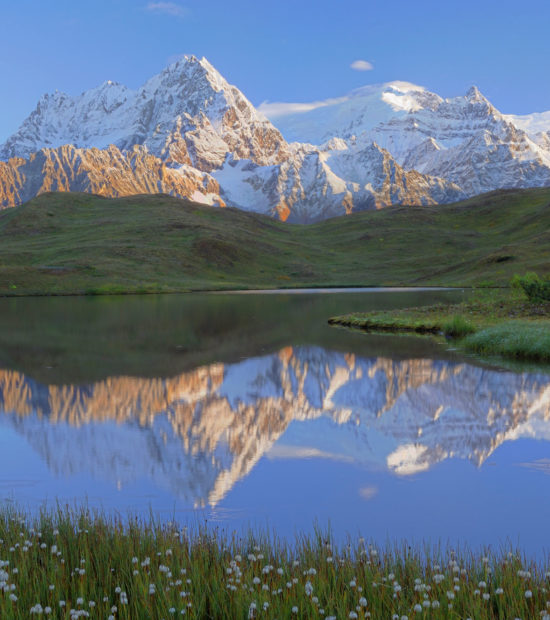
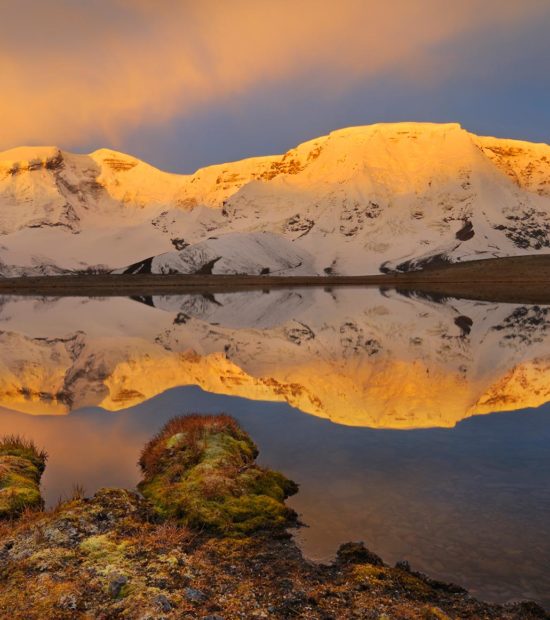
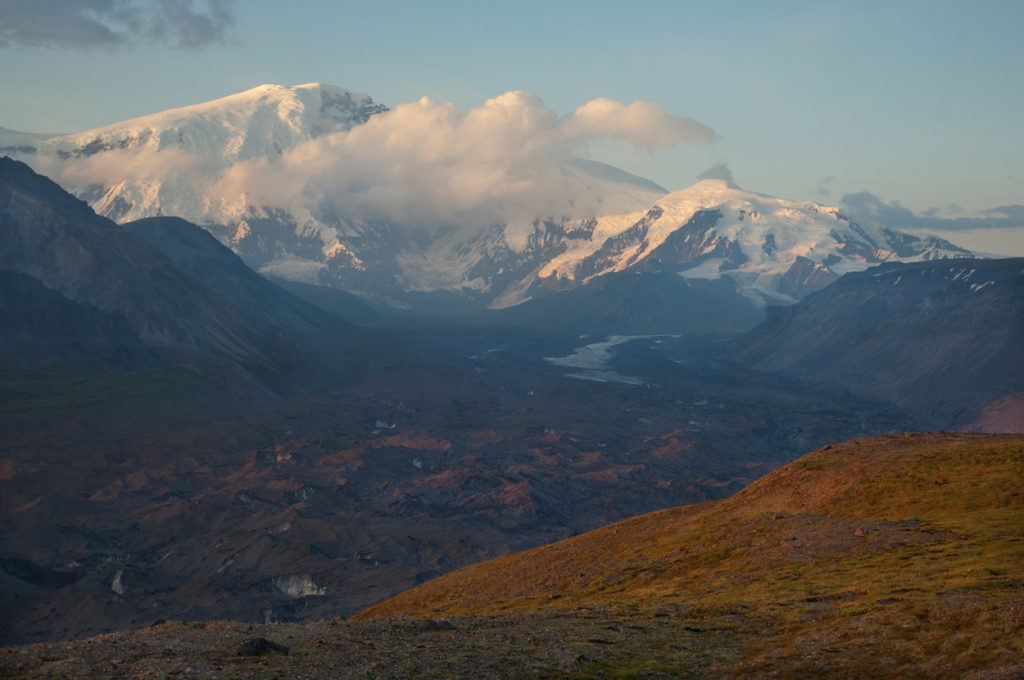
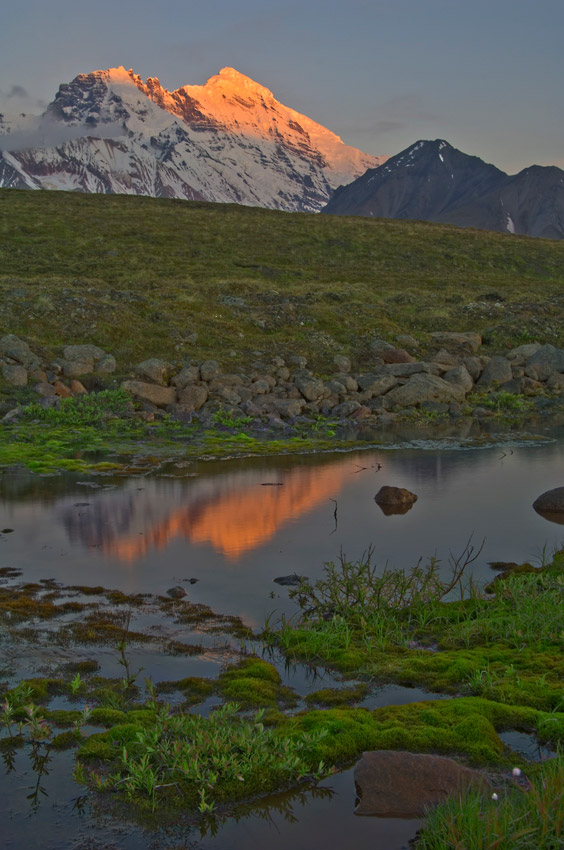
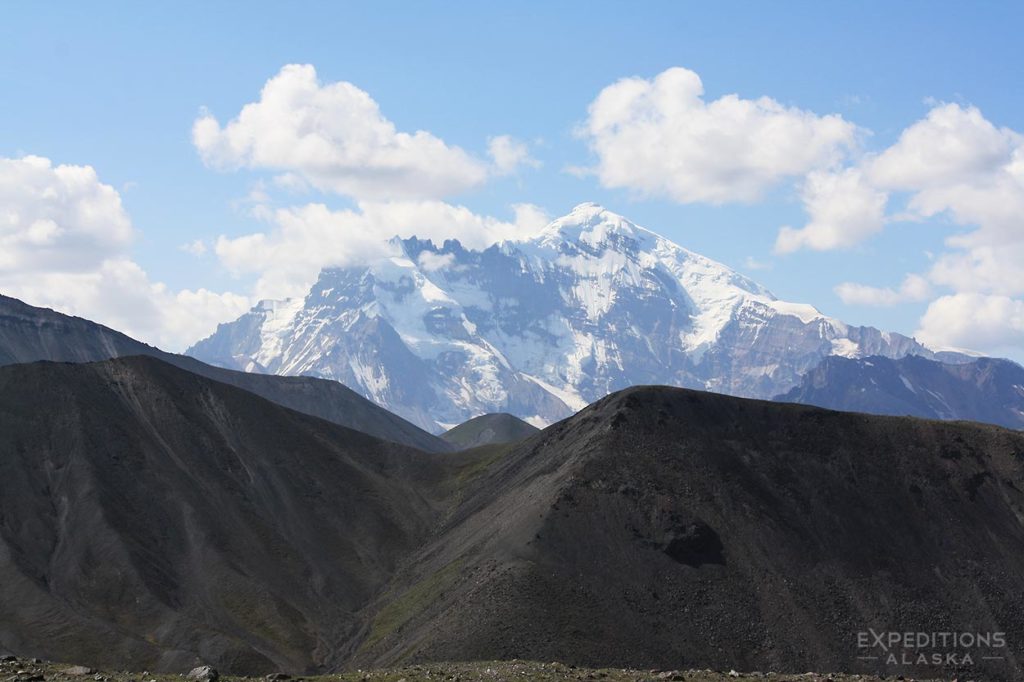
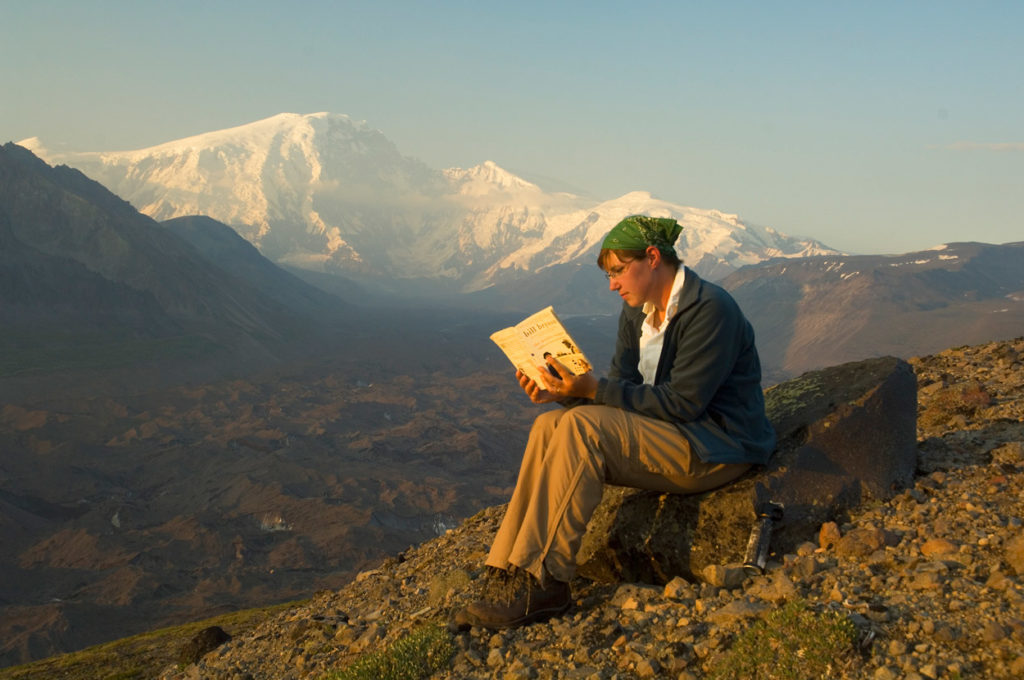
The Wrangells are contagious with three other major mountain ranges in Alaska, the St. Elias range (to the southeast), the Chugach (to the south and west) and the Alaska Range to the north and east. This melting pot of mountains provides some simply astonishing views.
To give you a small idea of the scale of these mountains. Mt. Zanetti is approximately the same height and mass as Mt. St. Helens in Oregon. See image below.
River Names
Both the Sanford and the Dadina River both drain from the Wrangell Mountains into the well known Copper River (also called the Ahtna River, after the native people of the region). “Na” is the Ahtna word for River (Aht-Na translates as River People or People of the River. The Copper River has long been a critical lifeblood to these people.
Many of the official river names in the area end in “Na”: Dadina, Nizina, Lakina, Kuskulana, Chitina, and so on. It’s a little bit absurd that we call these waterways Dadina River, for example, when the “na” in Dadina already stands for “river”.
Chiti is the Ahtna’s word for Copper, so “Chitina River” actually translates as “CopperRiver River”.
Trip Logistics
We’ll pick you up at your hotel in Anchorage and drive to the park. We fly in to the Sanford River from the Glennallen area, which is a few hours drive from Anchorage.
You can leave personal items and an overnight bag in the van.
At the end of our hike we’ll fly back to Glennallen where we can grab some lunch and hit the road for Anchorage. You should be back in Anchorage at your hotel by approximately 6pm at the latest.
As with all logistics and itineraries involving Alaska backcountry trips, the overarching caveat is “this is the plan – we’ll see how it goes”. Weather is always a factor for fly-in/fly-out backcountry trips.
Where Are We?
Trip Itinerary
The hiking itinerary is flexible. The backpacking trip is a relatively short hike, and even doable in a day for strong hikers.
We’ve found doing it over 4-5 days works well. By the time we drive to Glennallen, fly in and get landed at the strip it’s time to camp.
Trip FAQs
-
How are the bugs here?
This trip can be a little buggier than some of the hikes we do in Wrangell-St. Elias National Park. The lower forested areas the Dadina River for example are better mosquito habitat. Particularly earlier in the summer like late June through July.
Bring a headnet and repellent. They’re not heinous like they can be in the Arctic, but they can be uncomfortable.
-
Will we see much wildlife?
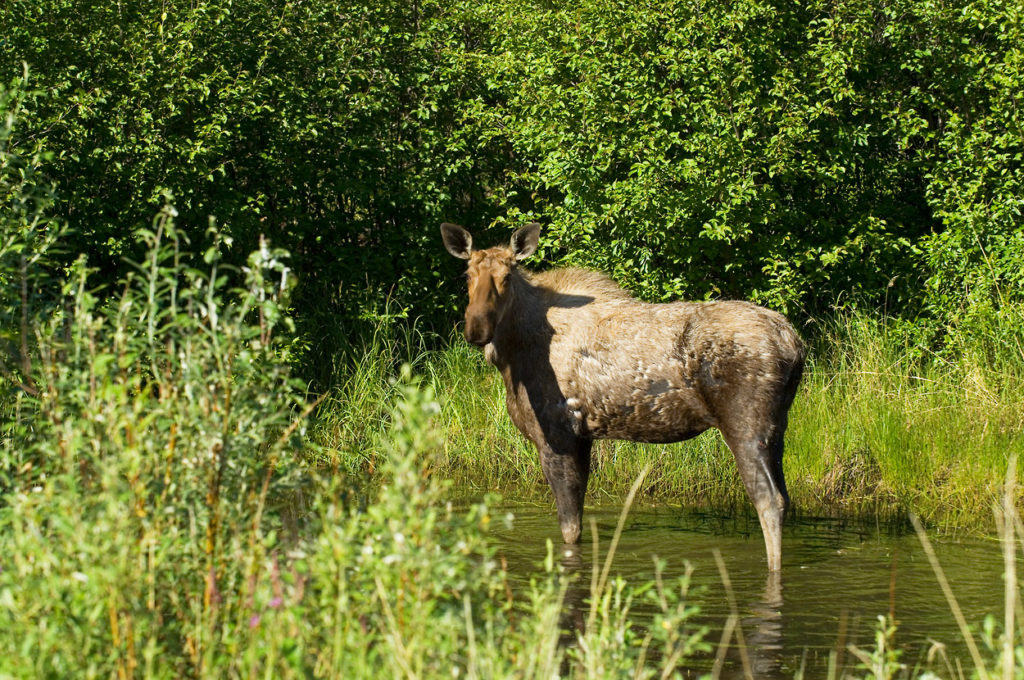
Depends. Possibly. I’ve seen grizzly bear here, black bear, bison, moose, caribou, Dall sheep.
We don’t usually see lots of wildlife but they’re definitely around.
-
What's Included on this trip?
For a full list of what is included please see download the eBook available on this page. General “What’s Included?” info is available here.
-
Do you have a Gear Check List?
Oh yeah. Right here
Upon your reservation I’ll also send out a detailed Trip Information Packet with more than enough information on gear to keep you busy. Until then the above check list is a good outline of what you need.
-
Itinerary caveats
I put trip itineraries online here to give visitors a more detailed look at some of our trips and what options they include.
I can’t over-emphasize that each is simply an example.
What I work hardest on is tailoring trips to the specific interests and abilities and experience of the people who hike with us. No 2 trips are the same. Where possible we don’t use the same campsites when we do a route and we often even vary the route when appropriate to do so.
I try to be flexible with how far we hike each day and how many days we spend in the backcountry. What time we get up in the morning, for example, is largely up to the trip participants (unless for some reason I feel we need to be up and on the trail by a particular time – this rarely happens).
Itineraries are somewhat fluid. As they should be. Weather, hiker experience and many other factors determine the actual trip.
So don’t expect the itinerary for a trip to match an outline of Day 1 we hike abc, Day 2 we hike xyz, etc, etc. It doesn’t (and in my opinion shouldn’t) work that way. The itineraries listed on this site are
a) to outline the travel time and logistics for you, and
b) attempt to help give you some sense of the route and how it goes.
But with wilderness trail-less backpacking routes, these kinds of structured itineraries are really not very useful.
-
What’s A Fully Outfitted Trip Involve?
That is trip dependent.
For backpacking trips, a fully outfitted option includes your tent (one or two person tent), all your kitchenware, food and cooking by Expeditions Alaska. A typical trip, up to 12 days long, costs an additional $450.00 per person for the fully outfitted option ($350 for 4 day trips or shorter).
Available “á la carte” options are (per person)
Tent $50.00/tent
Food/cooking $325.00 (up to 4 day trip duration)
Food/cooking $425 (any trip 5 days or longer)For personal items such as a backpack, or sleeping pad, talk to me prior to your trip and we’ll see if we can possibly arrange something. If you need a pack I recommend you rent a backpack from a reputable local outfitter. They can find and fit a pack to you rather than “making do” with one of mine that may or may not be a good fit for you.
Items such as BRFC, bear spray, fuel, hiking poles are included gratis with Expeditions Alaska trips. See What’s Included? for more info.
-
I Have More Questions
I know you do. I do as well.
I recommend starting with the General Trip FAQ page
More questions? Email me or call me and we’ll go through them.
Upon your reservation I’ll also send out a comprehensive trip information packet that covers just about everything and more you might imagine about your trip.
You May Also Like