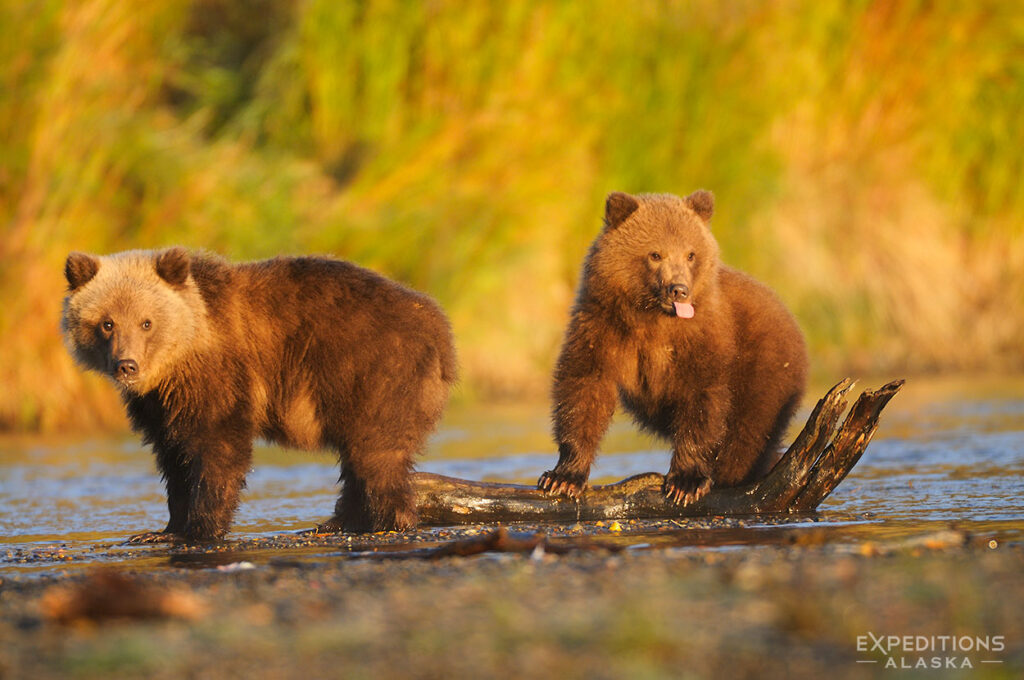
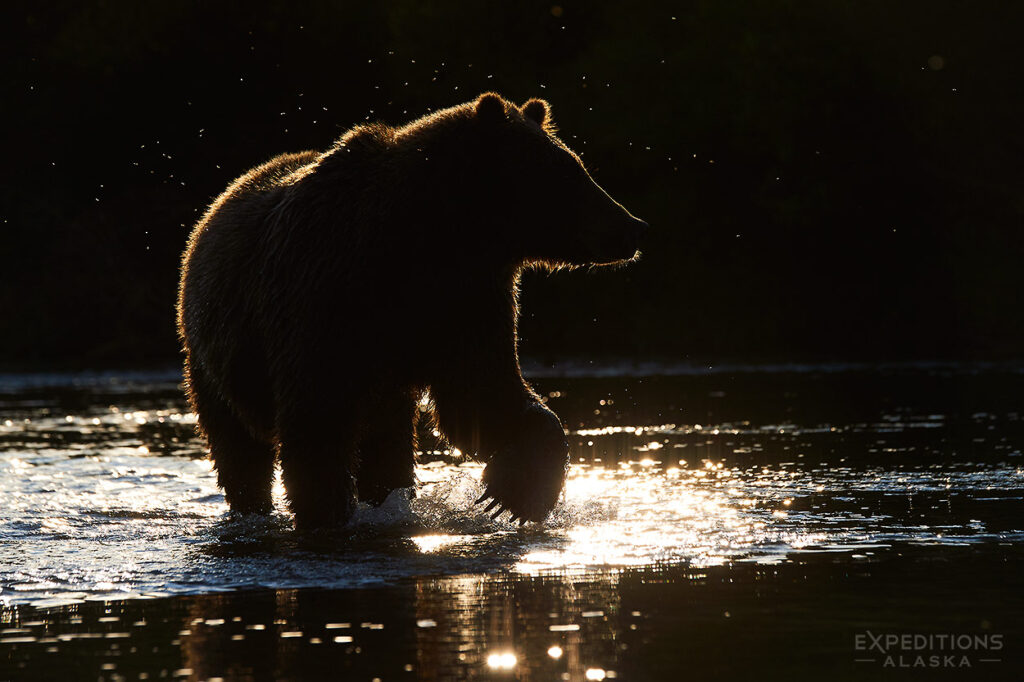
Had my bear spray handy this afternoon. Even though they might only be little, grizzly bear cubs are pretty bold – bold enough to climb on a stick and poke their tongue out at my camera.
They know full well, of course, that their mother outweighs me by several hundred pounds, is a coupla yards quicker than my aged legs can carry me 😁, is quite a bit stronger, has bigger, pointier teeth, sharper, longer claws, and is a LOT more willing to get in a tussle than I am.
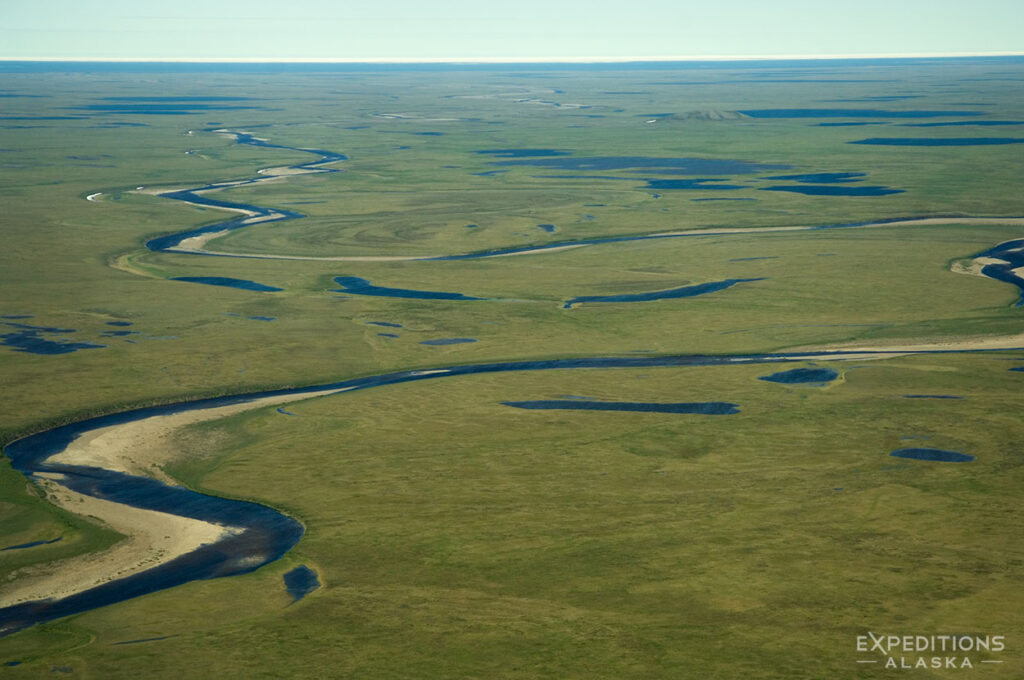
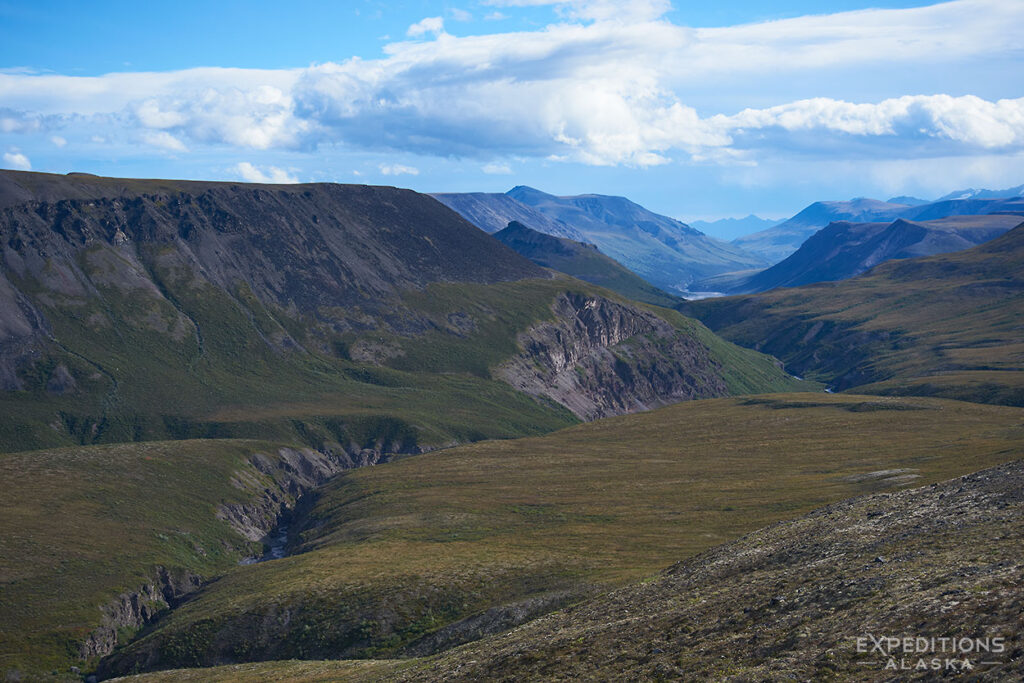
Coastal plain, Arctic National Wildlife Refuge, Alaska (aerial photo).
Hey Folks,
[UPDATED: An older piece of writing I thought might be useful to re-publish nowadays – some things don’t really change.]
The Public Comment Hearing
One night I attended public comment hearing for the preliminary stages of a Comprehensive Conservation Plan (CCP) for the Arctic National Wildlife Refuge (ANWR). In short, a comment period allows the public to offer information and thoughts on some of the issues they feel might need to be addressed, and oftentimes their thoughts as to how those issues should be addressed. The CCP is a document that “outlines and guides long-term management” of the Refuge.
The US Fish and Wildlife Service (FWS) are the land management agency responsible for managing the Refuge. It’s worth browsing the FWS ANWR webpage for some useful ideas on how this works.
The Debate Over Wilderness Designation
One of the critical topics up for discussion is the designation of “wilderness” in the Refuge. Currently, nearly half (41%) of the Arctic National Wildlife Refuge 19.3 million acres is designated wilderness. The remaining 10 million acres are not currently designated “wilderness”.
The FWS proposed to study these areas and determine whether or not they qualify as wilderness; the ‘Wilderness Review‘ section of the CCP. A recommendation would then be made to Congress to designate these areas wilderness. Such a designation would render the Refuge off-limits to oil and gas extraction.
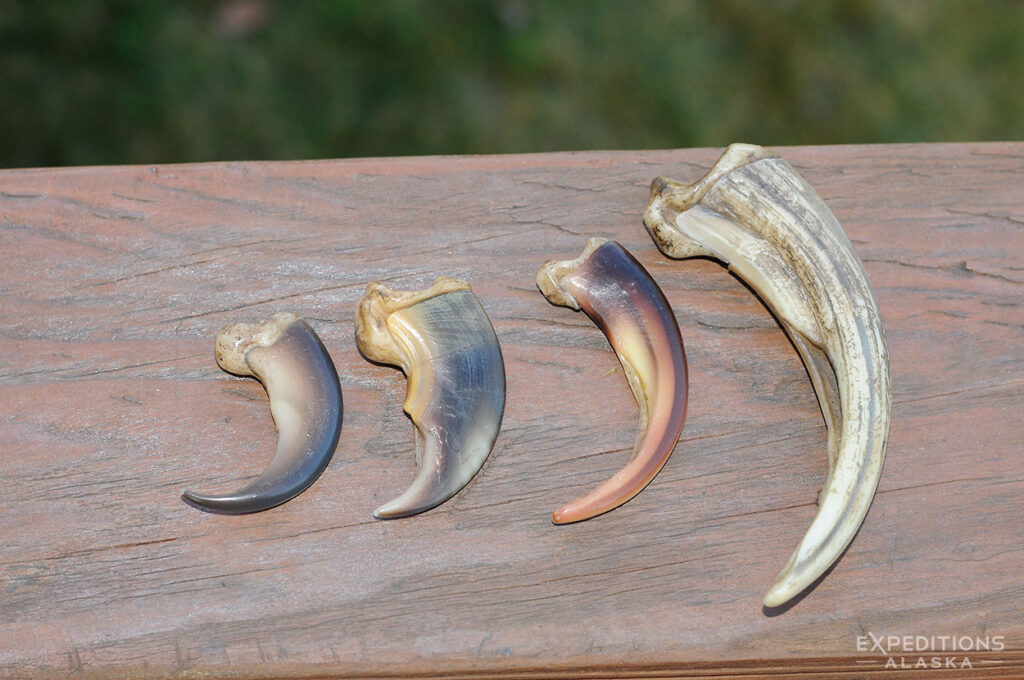
Bear claw comparison: black bear (Ursus americanus), polar bear (Ursus maritimus), grizzly bear (Ursus arctos), and Kodiak brown bear. Click image for larger view.
I thought I’d post this old shot, as it might be of interest to some folks. Since I spend so much time photographing bears of Alaska, I’ll discuss something about their bear claws. A photo showing the different size and shapes of claws from various species of American bears. From left to right, the claws are: black bear, polar bear, grizzly bear, coastal brown bear or Kodiak bear. The polar bear is the only true carnivore out of those species, but it’s claws are but a fraction of the size of those belonging to the great grizzly, and in particular, the coastal brown bear.
What Makes Each Species’ Claws Different
The claws in that photo tell you everything about how each bear makes a living.
One of the most common questions we get, every trip, every year, every month, is “What to pack?”
We provide all guests with a ton of info on packing. People often look for a shortcut and then want to “hope for the best”. “Will I be OK with … “ is usually really a question of “I don’t want to bring xyzzy”.
And, of course, you MIGHT be ok without all that gear. You might just nail the weather and enjoy shorts and t-shirt weather the entire time.
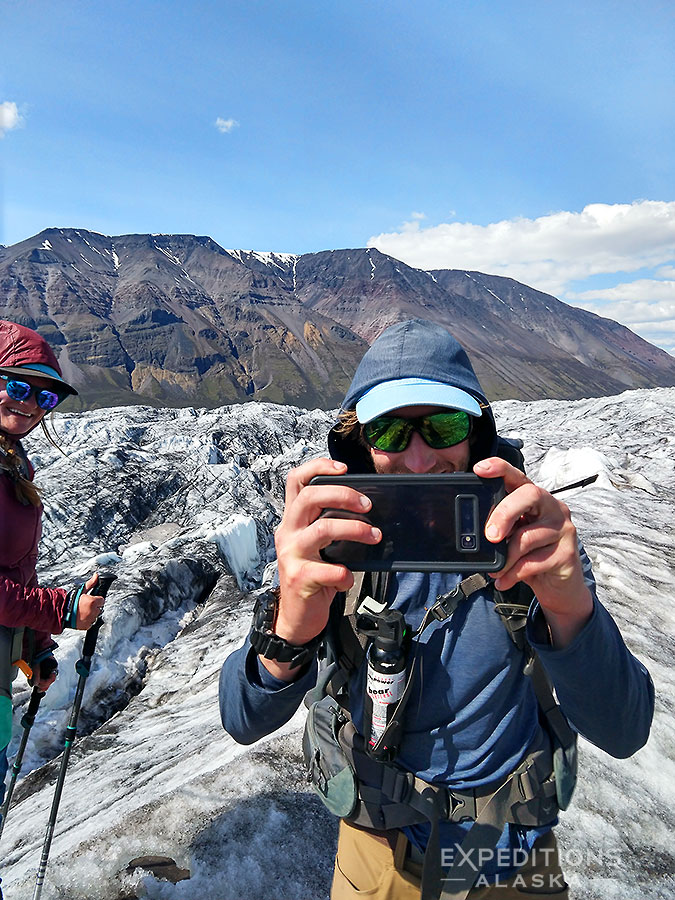
Heart of the Park Backpacking trip, Wrangell-St. Elias National Park, Alaska.
It’s sad that opening up the book on the history of guiding opens up the book on the history of colonization. It definitely does.
That being said, there were early frontier guides that were closer to native life, and some that wanted to destroy it.
Kit Carson and the Frontier Guides
Kit Carson (1809-1868) was in the camp of the former.
In the frontier era, many guides roamed the wilderness, yet none garnered as much admiration as Kit Carson. He never made it to Alaska, but he made it everywhere else. Renowned for his pivotal role in the USA absorbing California and New Mexico, in his later career Carson led the defense against Confederate attempts to seize the nascent American West. To delve deeper into these captivating stories of how our country relied on this man to create a bi-coastal nation, I recommend losing yourself in Hampton Side’s Blood and Thunder. Carson forged close bonds with numerous tribes, fully immersing himself in their languages and lifestyles.
The Wrangell Ramble, out newest backpacking trip. Join us this summer.
Hey Folks,
As most of you folks know, we try to add something new to our little list of Alaska backpacking trips each year. This year, we have one we’re super stoked to announce.
Ten Years in the Making. This little jaunt combines a few trips we’ve run over the years (and still do) with an Exploratory backpacking trip we crushed in 2022, and did not crush in 2021.
The Wrangell Ramble traverses a short section of the northern and north eastern Wrangell Mountain Range. And it holds something for everyone.
Mountain Views? Maybe the best.
High alpine tundra walking? Higher ASL as any trip we run.
After too many years and way too many footsteps across the tundra, I finally happened to be in the right place at the right time. Previous trips had me wet, cold, hungry, and wondering where this infamous mountain actually was (hidden, veiled behind the infernal clouds).
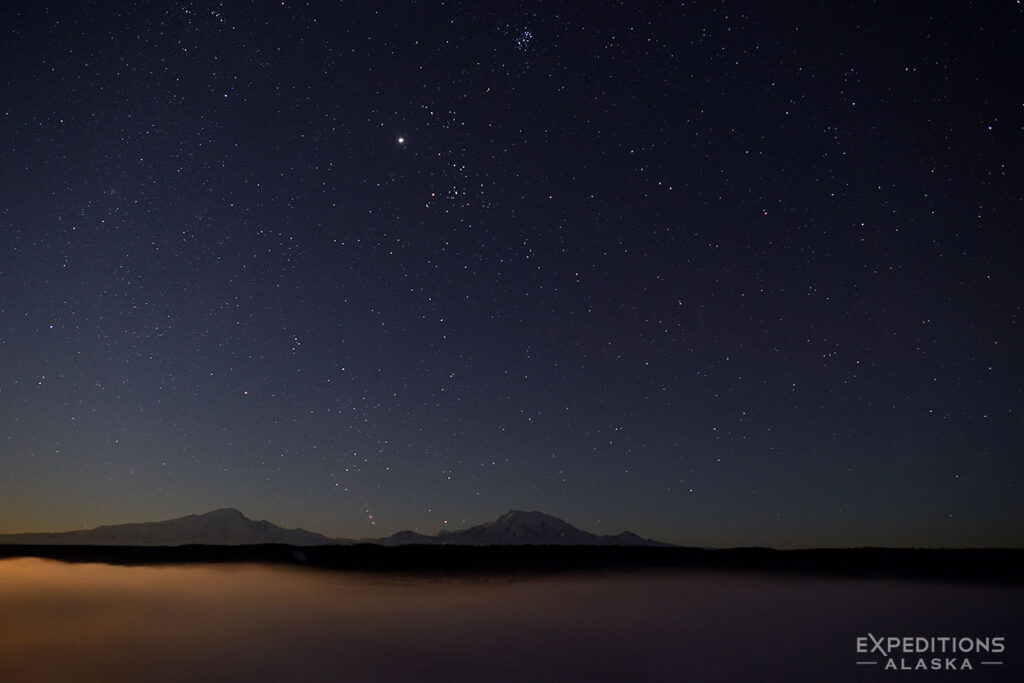
Mt. Sanford, Mt. Drum, the Copper River and the Night Sky. The moon rise to my left threw a nice soft light on the fog over the Copper River Basin. Click on the image above to view a larger version of this photo.
Hey Folks,
With a host of people heading north this winter/spring to photograph the aurora, I thought it might be of some interest to talk a little about the process of shooting photography at night. I know a lot of people have little experience with that, and it really can be a challenge at times. Particularly on a cold frozen night in Alaska when the northern lights start going crazy overhead. We run a couple of Photo Tours for the northern lights, you can check them out here.
So, the first thing I’d suggest, if you haven’t already, is read over my 3 part article on shooting the northern lights. There’s a downloadable PDF at the end of that article you can keep for future reference.
Why Test Shots Matter for Alaska Night Photography
It’s dark. You have a headlamp on, and that gives you a little bit of vision out to maybe 30-50 yards or so. After that, you can’t see too much at all.
The aurora starts to fire up, and you want to shoot it.
You can’t see your foreground and composition. It’s dark. You don’t even know if the foreground is worth shooting. It’s dark. You can’t walk around all over and use your headlamp to see, because (a) there isn’t time, (b) there are other people trying to shoot, (c) you don’t want to track up all the snow by stomping around in it.
So setup your test shots. This is probably the most important part of the process.