Drilling in the Arctic National Wildlife Refuge Passes the US Senate

December 1st, 2017 by Carl D

Hey Folks

Tonight we have some rather ugly news. Sadly, I present to you that portion of the US Tax Bill passed by the US Senate tonight that seriously threatens a place very dear to me. The Arctic National Wildlife Refuge, or ANWR, as it’s casually called.

Click to read it and weep.

These words in the Tax Bill voted on by the US Senate tonight threaten the Arctic National Wildlife Refuge.

“The Secretary shall issue any rights-of-mayor easements across the Coastal Plain for the exploration, development, production or transportation necessary to carry out this section”.

Sad times.

Continue reading…

Rafting in ANWR – Marsh Fork River

November 7th, 2017 by Carl D
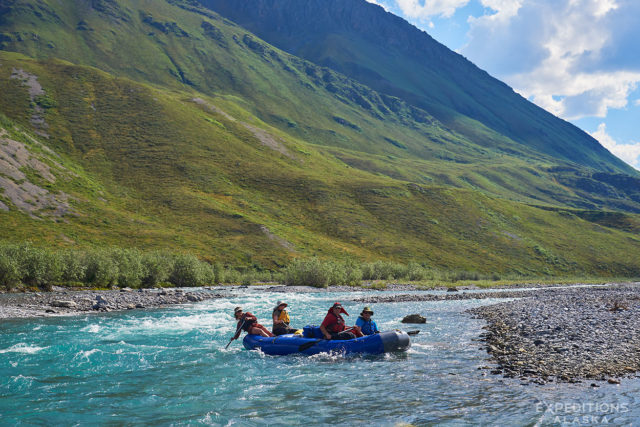
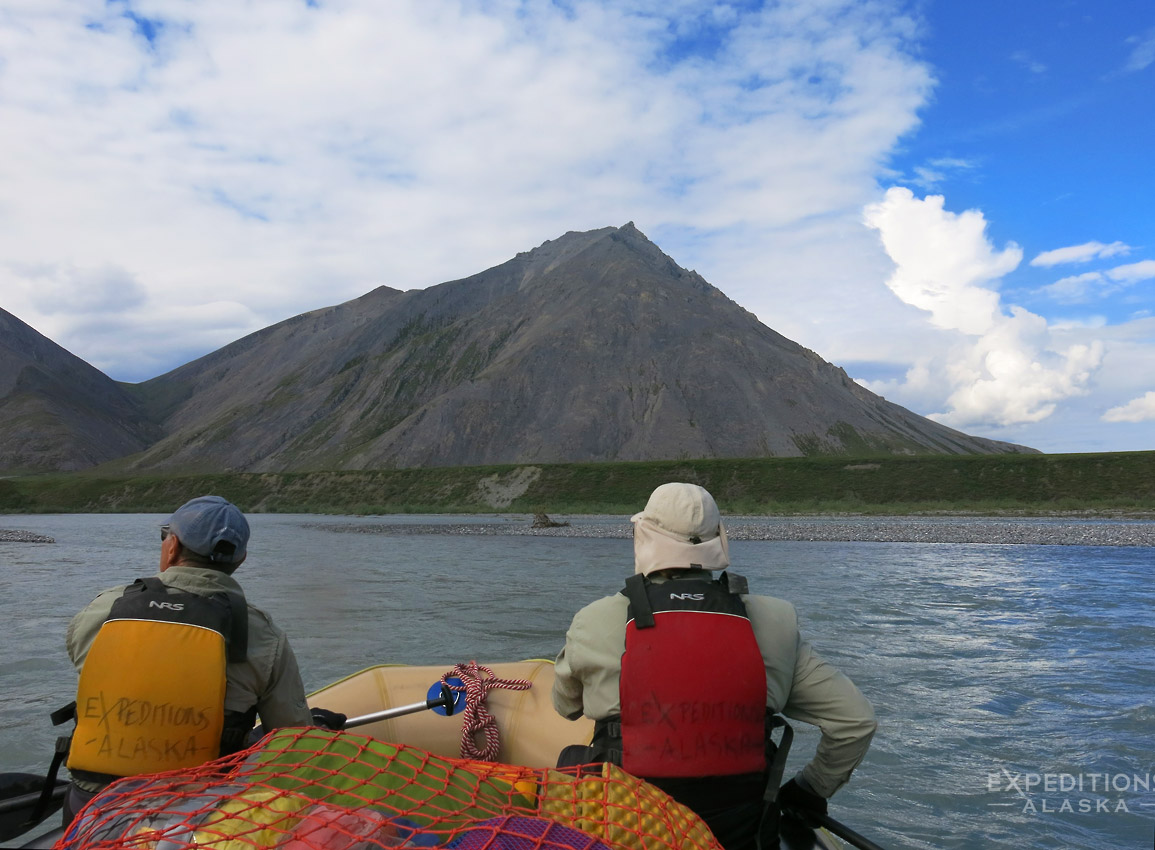
Jule expertly guiding a boat full of rafters and gear down the Marsh Fork River, on our way to the Canning River, Arctic National Wildlife Refuge, ANWR, Alaska.

Hey Folks,

Wow, November is here already. Here’s an image from our Canning River Rafting trip in the ANWR this past summer. This year we took group of 6 people out in the refuge for 12 days, with 2 rafts, tons of food and we all had a blast. Fun trip, a great mix of people, and nice weather.

And because I didn’t get a chance to keep up with the blog too much this past summer (it’s many, many long stories), I’ll add a couple images from this trip for you here as well. Be sure to click the images to see a larger view.

The Marsh Fork is such a beautiful section of river, that gorgeous turquoise water is SO inviting.

Rafting the Marsh Fork River, Arctic National Wildlife Refuge, ANWR, Alaska.
Continue reading…

Tyndall Glacier, Icy Bay

October 23rd, 2017 by Carl D
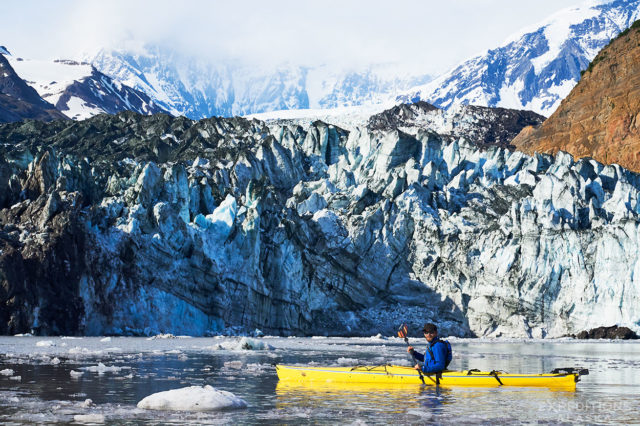
Guide Rhane Pfeiffer Kayaking near Tyndall Glacier, Tan Fjord, Icy Bay, Alaska.

Hey Folks,

Welcome back to the blog. It’s been a long, busy and somewhat crazy season. More on all that later.

Here’s a photo of the Tyndall Glacier from our first trip, way back in June, when Rhane and I guided a Sea Kayaking trip in Icy Bay, before a week hiking and packrafting on the Lost Coast. Good times.

The trip was a blast. Saw a wolverine right by camp, had a nice batch of weather, great camping, great food, and some awesome, awesome kayaking.

The Tyndall Glacier was in the news a good bit recently. A landslide right by the toe of the glacier (out of frame on the left of your view) dumped many, many tons of debris into the Taan Fjord and on top of the glacier. A Tsunami several hundred feet high resulted, scouring the fjord and completely redrawing the landscape. It was amazing to get back to the area and view some of the carnage. I’ll write a review of that for you later. Incredible what power that wave wrought.

The glaciers of this area are a dynamic process. Climate change is a big impact on the region. Glaciers are always retreating and advancing and back and forth, but not quite so much as they seem to be at the moment.

Look for more coming blog posts here over the next few months. The season has wound down a bit, and I’ve time to catch my breath and update the blog. until then, enjoy the view.

Travel safe.

Cheers

Carl


Protect the Arctic

April 16th, 2017 by Carl D
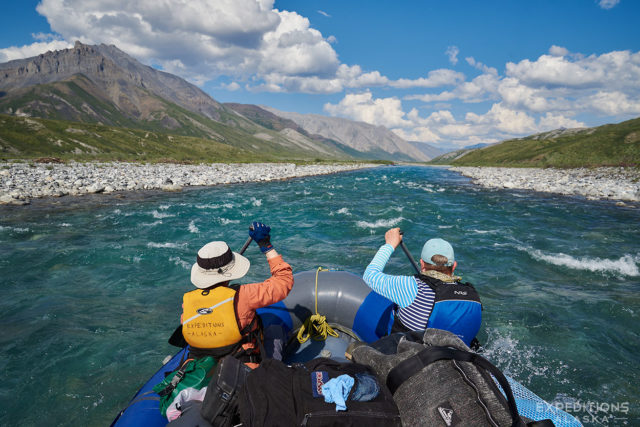
Rafting down Canning River, Arctic National Wildlife Refuge rating trips, ANWR, Alaska.
Jule guides a rafting down the Canning River last summer.

Hey folks,

A nice short video of the Arctic National Wildlife Refuge from We Are The Arctic a grassroots coalition whose mission is to raise awareness for and protection of the Arctic National Wildlife Refuge.

Excellent cinematography that highlights the beauty and the wildness of this special place.

It’s always a treat to return to the refuge. Our 2017 trips to ANWR are full but we’re open to helping you plan a custom trip or scheduling a rafting trip for 2018.

Cheers
Carl


Alaska Hiking – Week Long Backing Trips

April 14th, 2017 by Carl D
A favorite hiking trip, Goat Trail, Wrangell-St. Elias National Park, Alaska
Hiking up to Hole in the Wall, on the Goat Trail, Wrangell-St. Elias National Park.

Hey Folks,

But what’s a weeklong hike?

Hiking trips in Alaska are a little bit different to hiking elsewhere. Alaska itself is a little bit different.

It’s bigger. Wilder. Harder.

Hiking in Alaska is harder than what you’re used to. More correctly, I’d suggest that hiking in Alaska is substantially harder than what you’re used to.

That is the ultimate caveat to this question. What are the best weeklong hikes in Alaska?

Well, best for who? My buddy Todd did a weeklong hike last year in the Alaska Range and he covered 185 miles. So a weeklong hike for a ridiculously fit, ultra light speed freak is probably not going to be the best weeklong hike for you. Or for me.

We’ll look at 5 days hiking time. There’s every possibility you’re going to need at least a day travel either side of the hike getting to and from your AK destination to your trail head. And if your hiking trip involves a bush flight, or two, that could easily be more.

So here are a few of the best hikes or hiking areas for a week long hiking trip in Alaska.

Continue reading…

Gear Review – Rain Gear

April 5th, 2017 by Carl D
Backpacking rain gear Wrangell Mountains Wrangell-St. Elias National Park, Alaska.
Lakina Glacier, your guide and his trusty REI Shuksan Jacket on the Adventures to Oz backpacking trip in Wrangell-St. Elias National Park, Alaska.

Waterproof breathable Rain Gear Review

This isn’t your typical gear review. It’s more my commentary on rain gear and the failings of waterproof breathable rain gear.

Why I’ve Owned 11 Rain Jackets

I’ve bought and worn dozens of rain jackets over the years. Literally, dozens of them. Right now on the rack beside me as I type this I can count 11 rain jackets. Eleven.

Rain gear is an essential item of our backpacking gear list. I NEVER backpack with it. Top and Bottom.

It’s a bit ridiculous. I have everything from my old Aussie Dryzabone to my most recent Outdoor Research Goretex jacket I bought last year. Whatever your jacket, chances are good I’ve owned at least one of those.

And none of them, I mean none of them, work like I want them to. In fact, it’s fair to say none of them work like they did when I first bought them. They work well. Some, amazingly well. For a while. Then they start to fail.

Continue reading…

How big is a polar bear?

March 7th, 2017 by Carl D
Large adult male polar bears can weigh over 1400lbs. Polar bear, Arctic National Wildlife Refuge, Alaska.

Large adult male polar bears can weigh over 1400lbs.

Seriously? How big?

We’ve all heard polar bears are the largest terrestrial carnivore, right? We’ll side-step the rather silly idea of labelling Ursus maritimus (Sea bear), a marine mammal, as a “land-based carnivore” for the moment. Instead consider the point behind it. Polar bears are the largest predator on land. This begs the question “just how big are polar bears?”

That’s a tough question to answer, for a number of reasons.

What does “big” mean? How tall? How heavy? What’s the volume?

Generally animals are measured by weight. Largely because weight can be such a good indicator of health and particularly population health. So we’ll consider the question (for now) of “How heavy is a polar bear?”.

Continue reading…

Backpacking and Trekking Poles

January 10th, 2016 by Carl D
trekking poles for use hiking on on steep terrain Arrigetch Peaks, gates of the arctic National park Alaska
You can see why hiking poles are so handy on this terrain in Alaska. Often no to very little trail, and it can be steep, slippery, rocky, wet, or all of the above.

Hey Folks,

Why Alaska Demands Trekking Poles

I’ve written on the topic of trekking poles in the past. Every year I receive a lot of questions about the use of trekking poles in Alaska. Nothing’s changed. Use them.

Use Hiking Poles

The image above illustrates how useful they can be. Backpacking up or down steep terrain like this, often on very little or no trail, with a heavy pack on your back is challenging. Surprisingly, harder still, for most folks, is hiking across the side of a hill like this. Having that pole on your side to lean in to the hill is a big help.

A lot of folks hiking in the lower 48 don’t use them, and I understand that, for sure. The trail systems there are (generally) so good that I don’t think trekking poles hold quite the same benefit there, even though still useful.

Up here, however, it’s a different matter (so I now provide trekking poles for all our Alaska backcountry trips if you don’t have them or don’t want to deal with packing yours up here).

Continue reading…

Brown Bear Cubs and the Sows That Raise Them

November 10th, 2015 by Carl D
A brown bear sow nurses her year old cub (one of 2) on the sedge grass flats at Hallo Bay, Katmai National Park, Alaska.
A brown bear sow nurses her year old cub (one of 2) on the sedge grass flats at Hallo Bay, Katmai National Park, Alaska. Please click on the image above to view a larger version of the photo.

A brown bear sow nurses her year-old cub on the sedge grass flats at Hallo Bay, in Katmai National Park. She has two cubs this season. This one had just been nursing when I made this photo, while the other sibling, a male, had already taken his fill and wandered over to a nearby wood pile to explore and climb around on.

I can’t think of an animal I enjoy photographing as much as bears. Brown, black, white, or otherwise. They’re often remarkably tolerant of us and all our frenetic clicking and gasps of excitement over what to them is, I’m sure, very ordinary daily life.

How Long Do Brown Bear Cubs Nurse?

Brown bear cubs nurse for anywhere from about 2 to 3 years. It starts inside the winter den, right after birth, when cubs weigh barely a pound and a half and their eyes are still closed. They can’t do much more than crawl and find a nipple.

Those early months in the den, the cubs take in only a small fraction of their total yearly milk. The real change happens after the family emerges in spring. Milk production increases dramatically, and by peak lactation in June and July a single brown bear cub is taking in around 45 ounces of milk per day, according to wildlife biologist Sean Farley’s research on bear lactation for ADF&G. That’s a lot of milk for something that weighed a pound and a half a few months earlier.

A sow has six nipples. The newborns nurse from the lowest pair first. As the cubs get bigger they shift to the upper four, and the sow often stops producing from the bottom two altogether. I’ve watched this progression play out over the course of a summer, same sow, same cubs, and you can see the shift happen as the cubs grow.


Twin brown bear cubs nursing from their sow mother in Hallo Bay, Katmai National Park, Alaska.
A different angle as the cubs nurse

What Does It Sound Like?

This is the part that surprises people. If you’ve never been close to brown bear cubs nursing, it’s hard to convey. They growl and purr and moan while they nurse, making this low motor-like hum. Every cub has its own voice. When a sow has multiple cubs nursing at once, the result is a layered chorus of sounds coming from a tangled mess of fur.

I once watched four cubs nurse simultaneously from their mother. It was a symphony of rumbles and squeaks and contented growling. Pretty incredible when you’re standing twenty feet away and can feel the vibration of it.

Four cubs from one sow is not as uncommon as people think. I’ve seen it a number of times over the years out here. Twins are most typical, and single cubs are common for first-time mothers, but litters of three and four happen regularly in coastal Alaska where the food supply is strong.

Sows and Cubs at Hallo Bay

Hallo Bay sits on the Pacific coast of Katmai National Park. Wide sedge grass flats, good visibility, rich coastal forage before salmon arrive. Sows with cubs are drawn to the open terrain because they can spot approaching threats, particularly adult males. Male bears will kill cubs to bring a female back into breeding condition, and it’s one of the most common natural causes of cub mortality. Sows don’t mess around when it comes to defense. I’ve watched them charge males twice their size without hesitation.

A sow brown bear doesn’t breed while she’s raising cubs, so each litter represents a multi-year commitment. Two years, sometimes three. That’s a long time to be vigilant, to nurse, to teach cubs where to forage, when to run, and what to avoid. It’s also why a sow with cubs is the most dangerous bear encounter in North America. Give them space. Always.

There’s always something happening at Hallo Bay. Sows nursing on the flats. Yearlings wrestling on driftwood. Spring cubs tasting their first mouthful of sedge grass. It’s one of my favorite places to photograph bears after 20 years of coming out here.

Photographing wildlife is an endless array of different experiences. If wildlife photography is your gig, check out this article for a comprehensive guide on how to be better at it. I’ll bet you a dollar there’s at least something in it you didn’t know or hadn’t thought of.

Brown bear cub chewing on a stick at Hallo Bay.
This little brown bear cub playing with a piece of driftwood was fun to watch.

Next year I’ll be at Hallo Bay in early August, running the Alaska Brown Bears and Coastal Wildlife Tour. We run this tour at different times every year, so be sure to watch the trip page for upcoming scheduled dates. And you can always visit this page for a look at all of our Alaska Photo Tours.

In case you didn’t see it, here’s a video of some incredible action from one of these bear tours.


Alaska coastal bear photo tour Hallo Bay.
A well fed young brown bear cub

Cheers

Carl


Like Bears? You’ll Love Our Newsletter

We keep it fun, informative and interesting. No spam. No nonsense. Just tales from Alaska and cool stuff from this amaazing place we get to experience.

"*" indicates required fields

This field is for validation purposes and should be left unchanged.
Name


Aurora Borealis and Photographing the Corona

April 12th, 2015 by Carl D
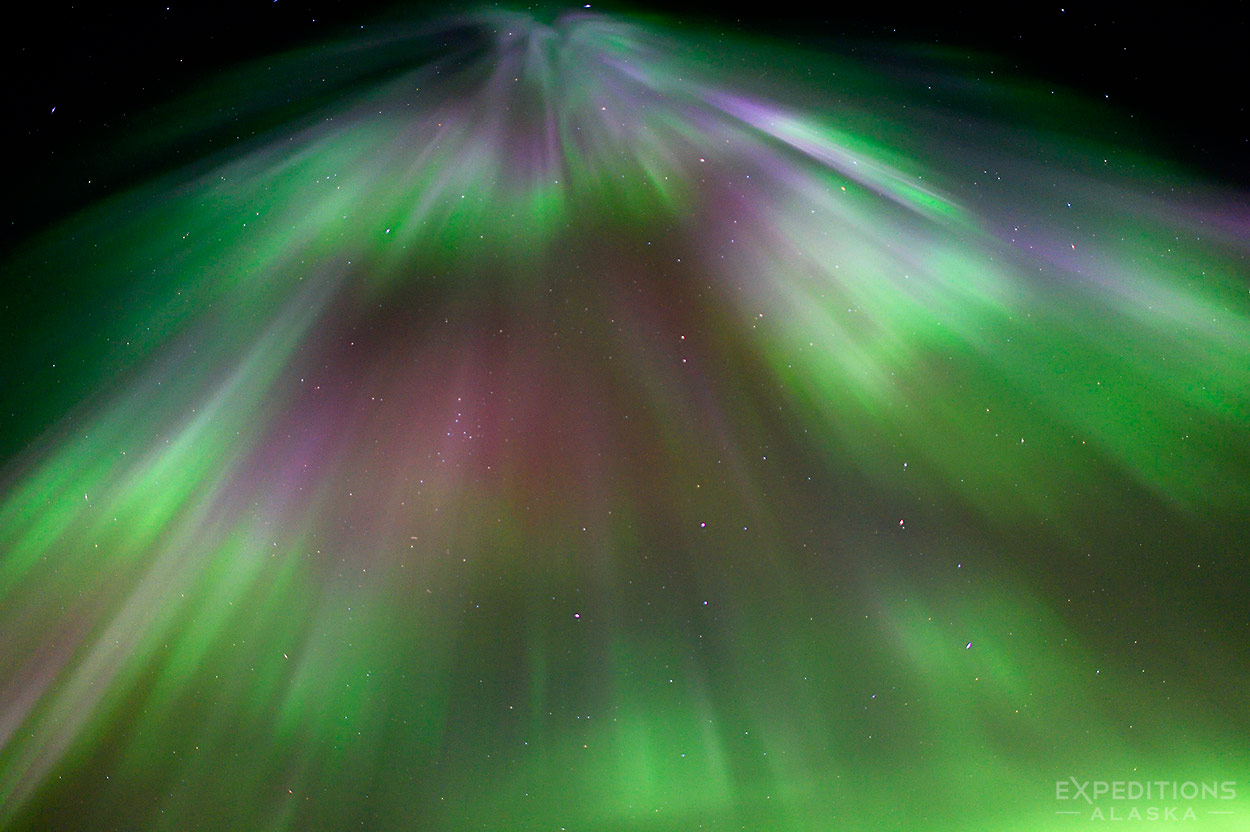
The aurora borealis and corona, photographed in Wrangell-St. Elias National Park, Alaska.
Photographing the aurora borealis and corona, Wrangell-St. Elias National Park, Alaska.

Hey Folks,

As the northern lights season, or aurora borealis season, starts to wind down for those of us here in Alaska, it’s harder and harder to be motivated to get out yet again and spend the night hoping for some nice displays.

Last night I saw the data online looking promising for photographing the northern lights, and the skies here started to clear up a bit; I thought I’d keep an eye skyward.

So after movie-time finished, I checked outside and sure enough, the northern lights were kicking overhead. I grabbed my camera gear, threw on some pants, and headed out.

This shot above is a photo of the aurora borealis corona. I’ve often been asked what the corona is, and why it’s called the corona. No, its not from the famous song, Muy muy muy muy, Corona, by English punk band The Knack.

What is an Aurora Corona?

Folks, the corona is basically the holy grail of aurora hunting.

Appearing right when the lights go absolutely bonkers directly overhead; forcing you to crane your neck until it hurts just to catch it. The aurora borealis (or Australis) corona is actually a trick of perspective where those parallel light rays appear to explode outward from a single point, just like railroad tracks vanishing into the sky.

If you’re lucky enough to witness this “crown” of vibrant color dancing above you, trust me, the frozen fingers and impending chiropractor bill are absolutely worth it.

Why is it Called the Corona?

I’ll tell you a little known secret. The activity or display we call a “corona” is named for a very simple reason;

Continue reading…

Expeditions Alaska
Visit the wild